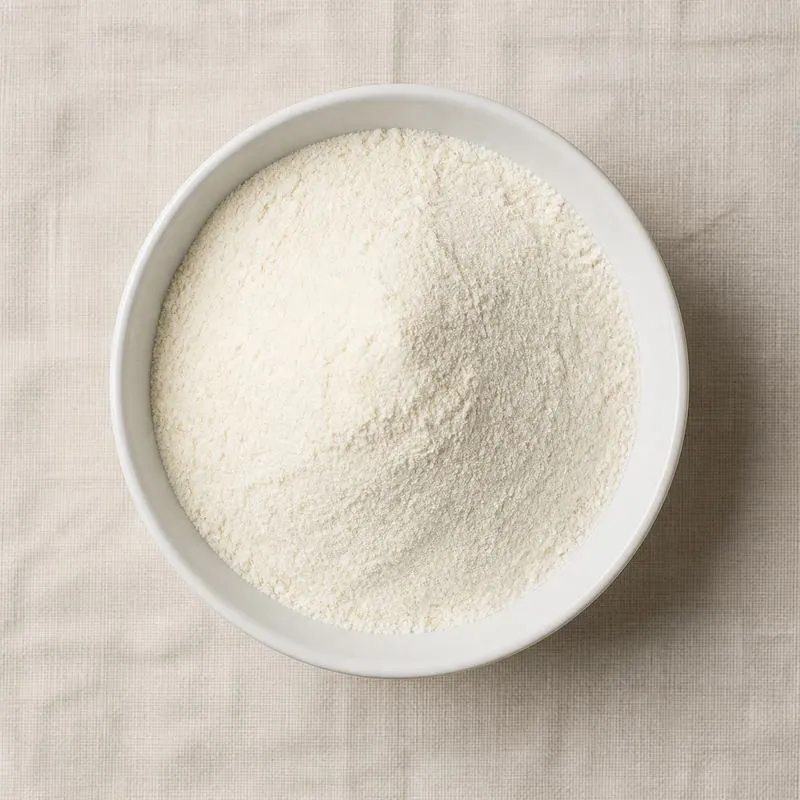
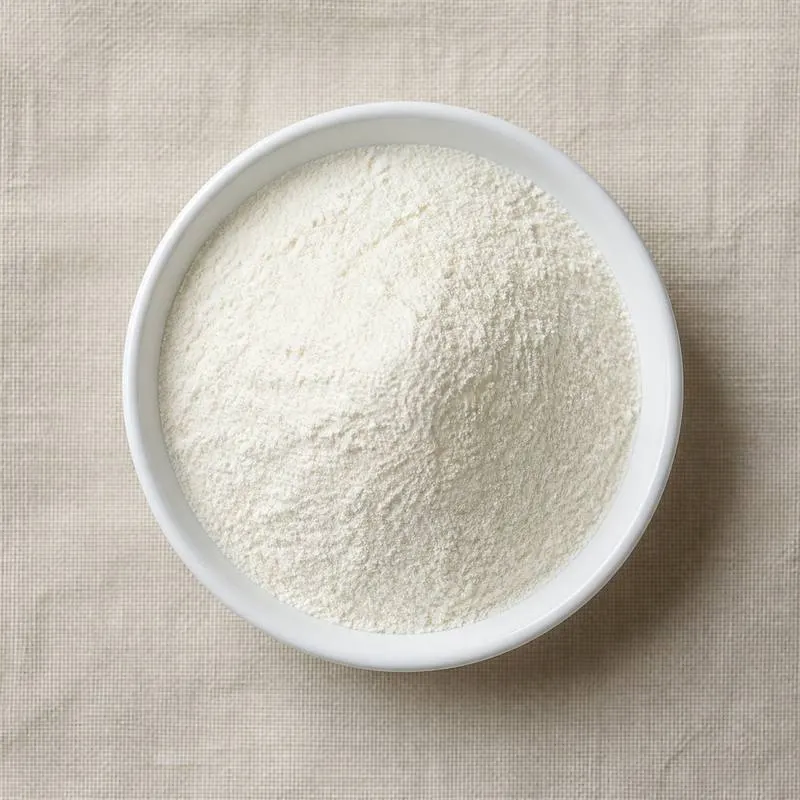
Egg White Flake
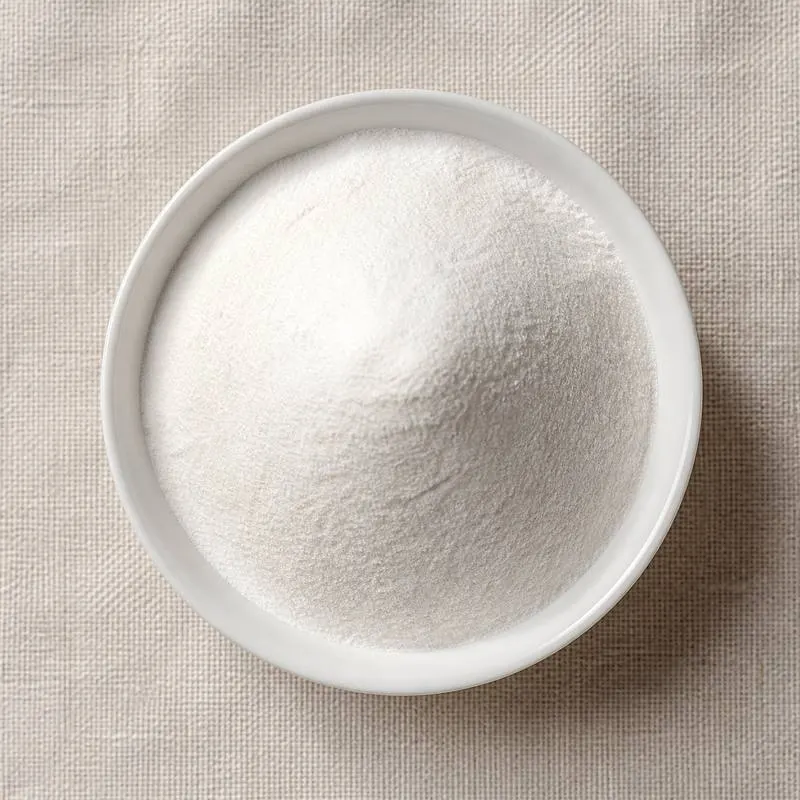
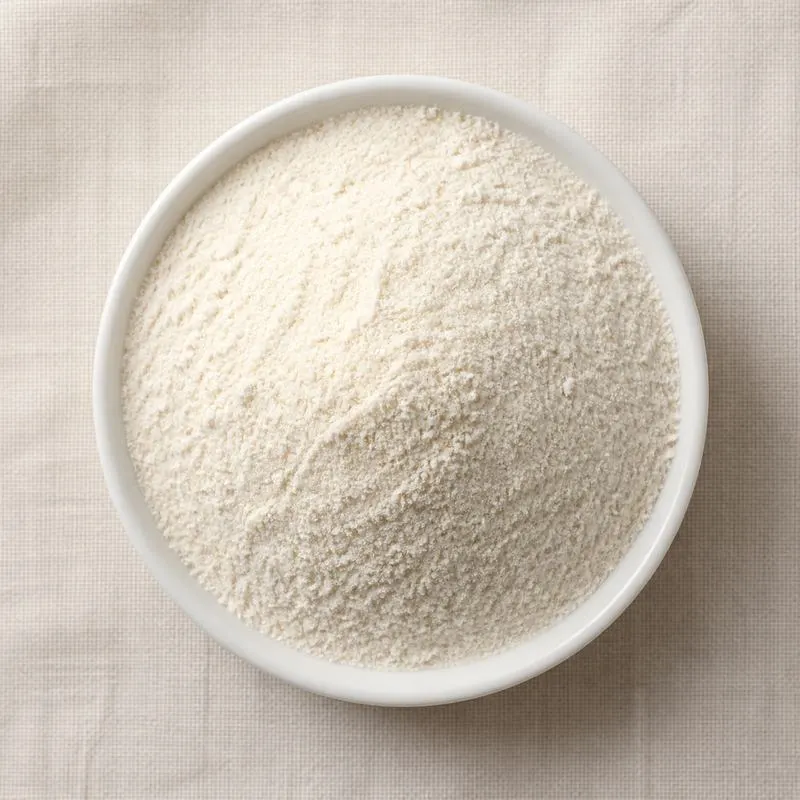
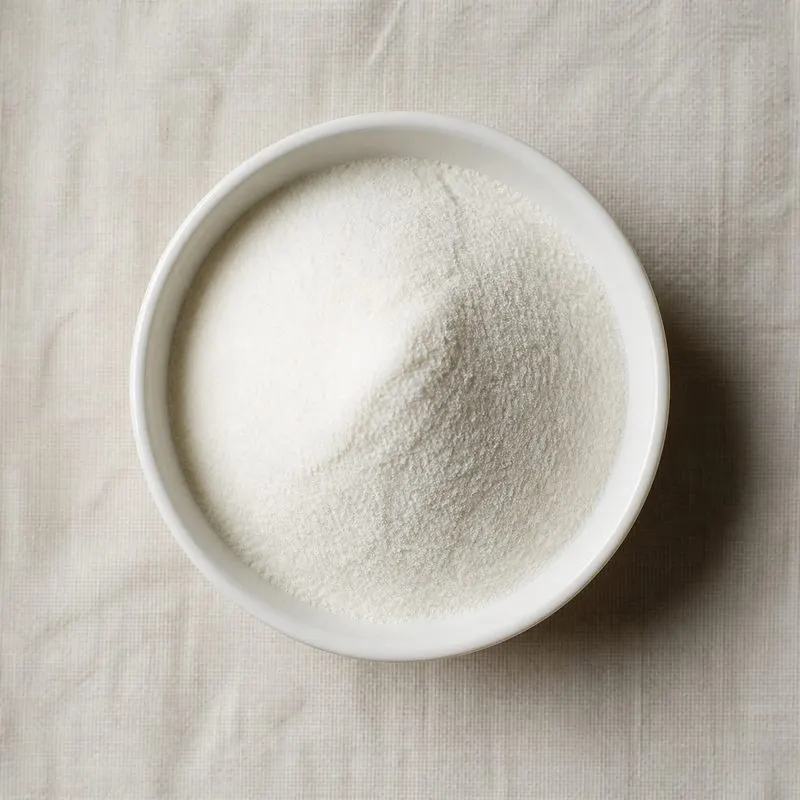
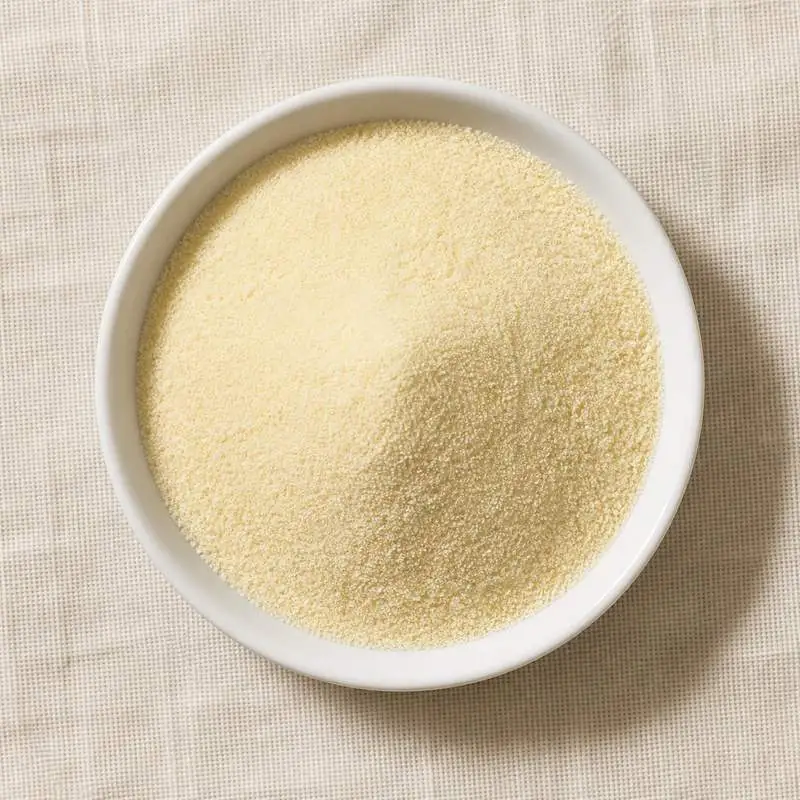
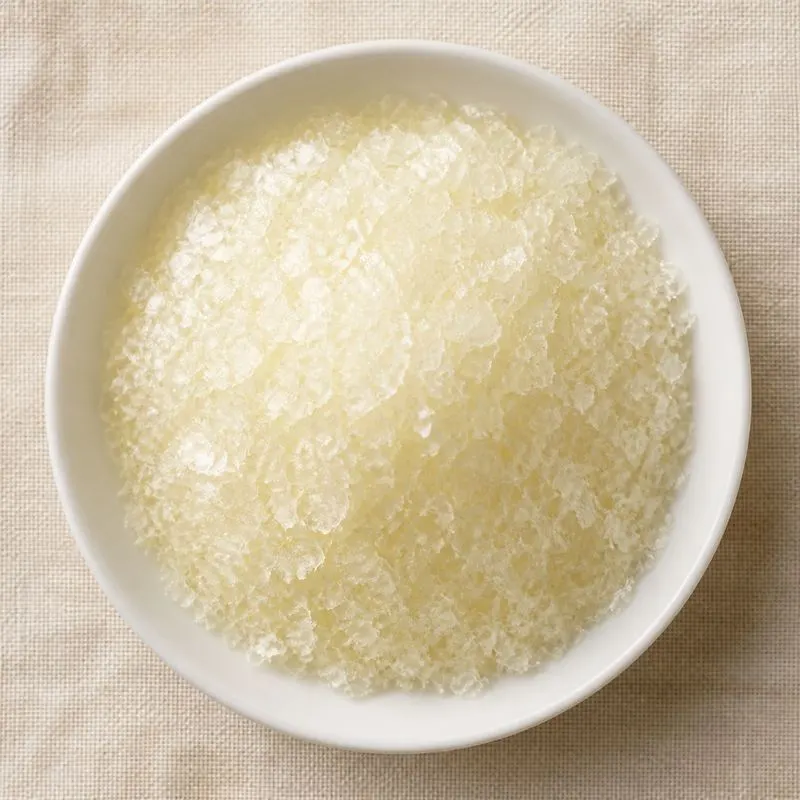
Egg white flake is dried egg albumen presented as thin translucent flakes or crystals rather than as a fine powder, produced by drying desugared liquid egg white in shallow pans or on trays and then breaking the dried sheet into pieces. It is the oldest industrial format for dried egg white and remains in use because the flake dissolves without the lumping that fine albumen powder is prone to and because it is almost dust free to handle.
Composition is close to pure protein, around 80 to 84 percent on an as is basis, with roughly 5 to 8 percent moisture and 5 percent ash and essentially no fat. The protein fraction is a mixture of ovalbumin, ovotransferrin, ovomucoid, ovomucin and lysozyme, and the functional behaviour of the ingredient comes from those proteins unfolding at an air water interface to build a foam and setting into an irreversible gel when heated above roughly 62 degrees Celsius.
Reconstitution is normally at one part flake to seven or eight parts water, and the rehydrated liquid behaves much like fresh egg white although whipping properties are typically slightly better because of the pH change during drying. The flake is hygroscopic and must be kept dry, since absorbed moisture promotes the browning reaction that dried albumen is prone to.
We source bulk Egg White Flake from top China manufacturers for our partners. The manufacturer is in Liaoning. A smaller requirement can ship in a combined container with other ingredients.
Please send the grade you need, the volume and your destination port, and we will come back with a solution and a price.
or call +86-21-6858 0751
- Function
- Protein
Specifications
| Item | Specification |
|---|---|
| Appearance | Pale yellow translucent flakes or crystals, free from foreign matter |
| Odour and Taste | Characteristic mild egg odour, bland taste |
| Protein (as is, N x 6.25) | Not less than 80.0 percent |
| Moisture | Not more than 8.0 percent |
| Fat | Not more than 0.2 percent |
| Ash | Not more than 6.0 percent |
| Residual Glucose | Not more than 0.1 percent |
| pH (10 percent solution) | 6.5 to 9.5 |
| Solubility | Not less than 90.0 percent |
| Whip Time to Peak Foam | Conforms to reference, high whip grades |
| Foam Stability | No visible drainage in 30 minutes at 20 C |
| Lead | Not more than 0.1 mg/kg |
| Total Plate Count | Not more than 25000 cfu/g |
| Enterobacteriaceae | Not more than 10 cfu/g |
| Yeast and Mould | Not more than 100 cfu/g |
| Staphylococcus aureus | Negative in 1 g |
| Salmonella | Negative in 25 g |
Common Markets Grades
Grades divide first by function. High whip grades are made to maximise foam volume and stability and are used in meringue, nougat and marshmallow, and they sometimes carry a small addition of a whipping aid such as sodium lauryl sulphate or triethyl citrate, which must be declared. High gel grades are chosen for their coagulation strength and go into meat, surimi and bakery applications. Standard grades sit between the two and cover general use.
The second axis is heat treatment and microbiology. Dried albumen is normally hot room treated after drying, held for several days at elevated temperature in the pack, which reduces Salmonella and total counts without wetting the product. Pasteurised and hot room treated grades carry the tightest microbiological specification and are used in products that receive no further heat. Physical format is the last distinction, with flake, granular, standard powder and instantised powder all made from the same liquid. The flake is preferred where dissolution behaviour and dust control matter, the powder where fast dispersion in a dry blend is wanted.
Applications
- Meringue, pavlova and macaron production, where foam volume and stability are the whole requirement
- Marshmallow, nougat and aerated confectionery, as the foaming and setting protein
- Royal icing and decorative glazes, where the albumen dries to a hard set film
- Angel food and sponge cakes, contributing both aeration and structure
- Surimi, fish balls and processed meat, where the gelling protein firms the texture and improves the bite
- Protein enrichment of bars and nutrition products, as a fat free complete protein
- Batters and coatings, improving adhesion and crispness
- Wine and juice fining, using albumen to flocculate tannins and haze
- Pet food and feed, as a highly digestible protein binder
China Manufacturers of Egg White Flake
Top Egg White Flake manufacturers in China.

Company names and logos are the property of the manufacturers themselves. They are listed here because our own directory records them as producing this ingredient. A listing is not an endorsement by them, and we do not represent them or speak on their behalf.
Regulatory Status
In the United States dried egg white is an egg product regulated by the Food Safety and Inspection Service of the Department of Agriculture under the Egg Products Inspection Act, which requires continuous inspection of the processing establishment, mandates pasteurisation and prescribes the treatment applied to dried albumen. Standards for dried egg white exist covering composition and the permitted whipping aids, which must be declared on the label. Egg is a major food allergen requiring declaration on any product containing it.
In the European Union dried egg products fall under the hygiene rules for food of animal origin, which set the requirements for egg breaking centres, prohibit the use of cracked and incubated eggs, and require heat treatment of the liquid before drying. Imports must come from listed establishments in approved third countries. Egg is a listed allergen under the food information regulation. Any whipping aid used is a food additive that must be authorised for the relevant food category and declared with its E number. Codex maintains a code of hygienic practice for eggs and egg products, which is the international reference alongside the general standard for contaminants.
Manufacturing Process
Shell eggs are washed, candled and broken, and the white is separated from the yolk on the breaking machine, with separation efficiency controlled tightly because even a trace of yolk fat destroys the whipping performance of the finished albumen. The liquid white is filtered to remove chalazae and shell, then desugared, which is the step that distinguishes dried albumen manufacture from other egg drying. Egg white carries around 0.4 percent glucose, and if that sugar is left in place it reacts with the protein during storage, turning the product brown and insoluble. Removal is achieved by controlled fermentation with a yeast or a lactic culture, or enzymatically with glucose oxidase and catalase.
The desugared liquid is pasteurised on a schedule inside the narrow window that albumen tolerates, then dried. For flake production it is spread in shallow layers in pans or on a belt and dried with warm circulated air over several hours, and the dried sheet is broken and screened into flakes or crystals of the required size. Fine powders are made instead in a spray dryer. The dried albumen is then hot room treated, held in the sealed pack at elevated temperature for several days to reduce the microbial load, before final testing and release.