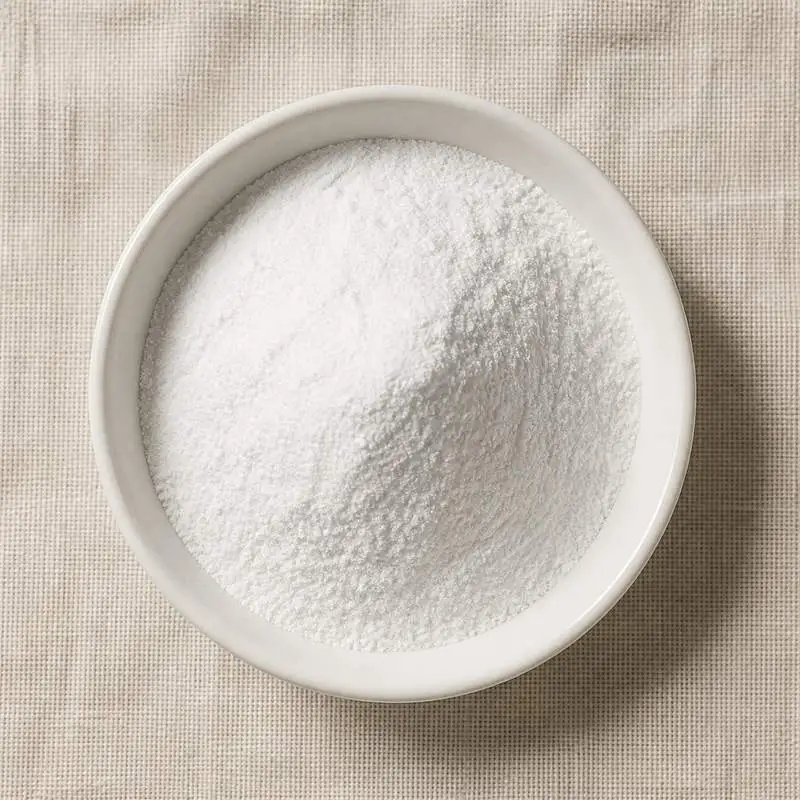
Extruded Grain Crisps
Extruded grain crisps are small expanded pieces of cereal or cereal and protein blend, produced by extrusion cooking and sold as a texture ingredient for bars, chocolate, cereals and snacks rather than as a finished product.
They are made by forcing a moistened blend of rice, wheat, corn, oat or multigrain flour with starch, sugar and salt through a heated extruder, where heat and shear gelatinise the starch into a plastic melt. Pressure release at the die flashes the water to steam and the melt sets into a rigid, open celled foam, which is cut into flakes, discs, curls or shards depending on the die and knife. Protein crisps substitute soy, whey, milk or pea protein isolate for a large part of the cereal flour, and are made in declared protein bands.
The properties that matter in formulation are bulk density, which sets how much volume a given weight occupies and therefore the visual load in a bar, and crispness retention. The expanded structure takes up moisture and fat readily, so an uncoated crisp softens within days in a wet or high fat matrix. Most trade grades are therefore coated with a thin sealing layer of fat, chocolate, sugar or shellac that holds texture through the shelf life of the finished product.
We source bulk Extruded Grain Crisps from top China manufacturers for our partners. The manufacturer is in Henan. A smaller requirement can ship in a combined container with other ingredients.
Please send the grade you need, the volume and your destination port, and we will come back with a solution and a price.
or call +86-21-6858 0751
- Function
- Nutraceutical
Specifications
| Item | Specification |
|---|---|
| Appearance | Uniform pale cream expanded flakes |
| Piece Size | 4.0 to 6.0 mm |
| Bulk Density | 120 to 170 g/L |
| Moisture | Not more than 5.0% |
| Fines through 2 mm sieve | Not more than 2.0% |
| Crude Protein | Not less than 8.0% |
| Total Fat | Not more than 3.0% |
| Total Ash | Not more than 3.0% |
| Foreign Matter | Absent |
| Lead | Not more than 0.2 mg/kg |
| Total Plate Count | Not more than 10,000 CFU/g |
| Yeast and Mould | Not more than 100 CFU/g |
| E. coli | Absent in 1 g |
| Salmonella | Absent in 25 g |
Common Markets Grades
Grades are described by base, by shape and size, and by coating rather than by an assay. Rice, wheat, corn, oat and multigrain crisps are the cereal bases, screened into narrow size bands because a wide size spread segregates during handling and gives uneven distribution in the finished product. Bulk density is specified alongside dimensions, since it determines pieces per kilogram and how the crisp behaves in a mixer without shattering.
Protein crisps form the largest specialised segment and are graded on protein content, commonly from 20 to 80 percent, and on the protein source, since soy, whey, milk and pea crisps differ in flavour, in colour development and in how they behave under compression. Coated grades, sealed with fat, compound chocolate, sugar shell or shellac, are traded separately with the coating weight declared as a percentage of the piece. Gluten free crisps produced on segregated lines, organic certified lots, and coloured or flavoured versions made with fruit and vegetable concentrates are each handled as their own streams.
Applications
- Cereal and protein bars, where crisps break up the chew of a dense binder and add audible texture
- Chocolate tablets and bars, where a sealed crisp gives the snap of a crisp filled chocolate
- Breakfast cereals and granola, as a light component alongside flakes and clusters
- Yoghurt toppings and side pots, where the coating protects against the wet phase
- Ice cream and frozen dessert inclusions, chosen for resistance to moisture migration at low temperature
- Coated and panned confectionery, where the crisp acts as an expanded core
- High protein snacks, where the protein crisp carries both the nutritional claim and the texture
- Meal replacement and instant powders, added as a visible piece that rehydrates in the bowl
- Bakery inclusions and biscuit toppings, folded in or sprinkled for surface texture
China Manufacturers of Extruded Grain Crisps
Top Extruded Grain Crisps manufacturers in China.

Company names and logos are the property of the manufacturers themselves. They are listed here because our own directory records them as producing this ingredient. A listing is not an endorsement by them, and we do not represent them or speak on their behalf.
Regulatory Status
Extruded grain crisps are a compound food ingredient rather than a food additive, so their status follows that of their components. In the United States they are produced under the Food Safety Modernization Act preventive controls rules for human food, with the cereal flours, sugars, fats and protein isolates all being conventional food ingredients, and any added colours limited to those approved for the intended food category. Wheat, soy and milk derived components are named allergens under the Food Allergen Labelling and Consumer Protection Act and must be declared, and a gluten free claim requires compliance with the FDA gluten free labelling rule.
In the European Union the crisps are placed on the market under the general food law and hygiene regulations. Any added colours, emulsifiers or glazing agents are used within the food additives framework and its permitted category lists, with shellac designated E 904 where it is used as the sealing coat. Cereals containing gluten, soy and milk are Annex II allergens under the food information regulation and must be declared. Mycotoxin limits for cereals in the contaminants regulation are the relevant contaminant control for a flour based product, and acrylamide, which forms during the high temperature extrusion of cereal, is addressed by the benchmark levels and mitigation measures set out for cereal based products. Codex covers the material through its general standards and codes of hygienic practice for cereals rather than through a JECFA additive specification.
Manufacturing Process
Production runs on a single or twin screw extruder. Cereal flours, starches and protein isolates are dosed with sugar, salt and minerals into a continuous mixer and preconditioned with water and steam to bring the blend into the working moisture range, which also starts the hydration of the protein where one is present. The conditioned blend is fed to the extruder barrel, where the screws work it under rising temperature and pressure into a plasticised melt, gelatinising the starch and, in protein formulations, partially denaturing and aligning the protein so it will hold the expanded structure.
At the die the pressure drops abruptly, water flashes to steam and the melt expands. A rotating face knife cuts the expanding rope into pieces, with knife speed and die geometry together setting the size and shape, and the wet pieces are conveyed to a hot air or infrared dryer that takes them down to the low moisture that crispness requires. After cooling, coated grades pass to rotating drums or continuous enrobers where fat, compound chocolate, sugar syrup or shellac is sprayed onto the tumbling bed and set with chilled air. The finished crisps are screened to remove fines and agglomerates, passed over magnets and metal detectors, then packed in lined cartons or drums that protect them from moisture pickup in storage.