Fatty Acid Methyl Ester
Fatty acid methyl esters are the esters formed when the fatty acids of a triglyceride oil are transferred onto methanol, giving a mixture of single chain esters and glycerol in place of the original three armed triglyceride.
The composition of a given lot follows its feedstock, so a palm derived ester is dominated by methyl palmitate and methyl oleate, a coconut or palm kernel derived ester by the medium chain methyl laurate and methyl myristate, and a fish or algal derived ester by the long chain polyunsaturated esters of eicosapentaenoic and docosahexaenoic acid. Each individual ester can also be isolated as a pure article of trade.
Physically the esters are far removed from the parent oil. They are mobile liquids or low melting solids of much lower viscosity, with sharply defined boiling points that make them separable by distillation, which is the property that gives the class its industrial value: an oil cannot be distilled without decomposing, but its methyl esters can. They are practically insoluble in water, miscible with hydrocarbon and alcohol solvents, and in the nutritional field they serve chiefly as the intermediate through which omega-3 and other fatty acids are concentrated before being converted to the ethyl ester or re-esterified back into a triglyceride.
We source bulk Fatty Acid Methyl Ester from top China manufacturers for our partners. The manufacturer is in Zhejiang. A smaller requirement can ship in a combined container with other ingredients.
Please send the grade you need, the volume and your destination port, and we will come back with a solution and a price.
or call +86-21-6858 0751

- Function
- Nutraceutical
Specifications
| Item | Specification |
|---|---|
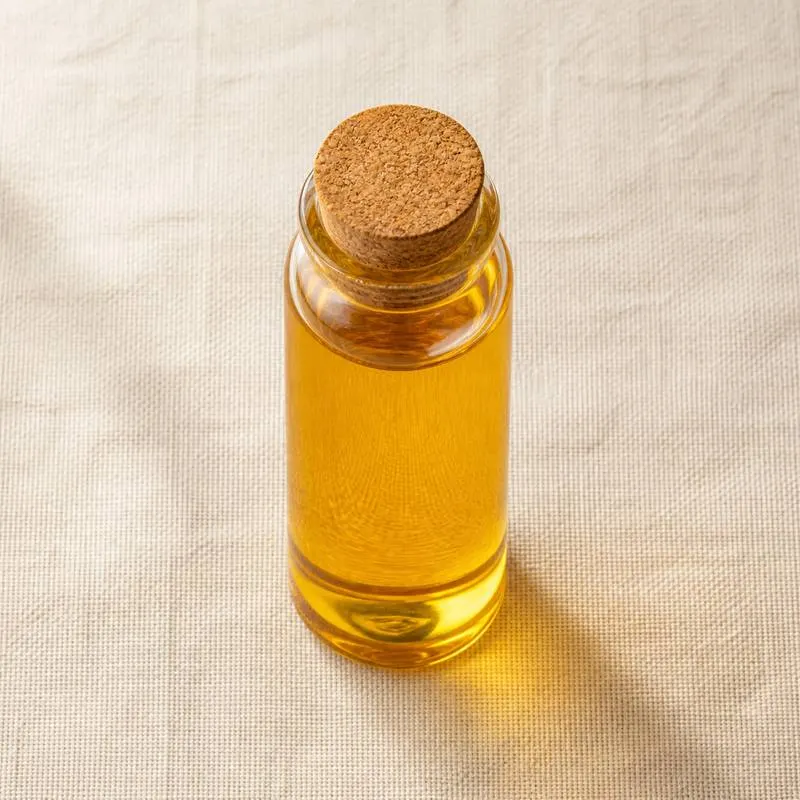
| Appearance | Clear pale yellow mobile liquid |
| Odour | Faint characteristic, free from rancid notes |
| Identification | Chromatographic profile conforms to reference |
| Total Ester Content | Not less than 96.5% |
| Acid Value | Not more than 0.5 mg KOH/g |
| Peroxide Value | Not more than 5.0 meq/kg |
| Anisidine Value | Not more than 20 |
| Free and Total Glycerol | Not more than 0.25% |
| Residual Methanol | Not more than 0.2% |
| Moisture and Volatiles | Not more than 0.05% |
| Unsaponifiable Matter | Not more than 1.5% |
| Sulphated Ash | Not more than 0.02% |
| Lead | Not more than 0.1 mg/kg |
| Arsenic | Not more than 0.1 mg/kg |
Common Markets Grades
The trade divides sharply by end use. Technical and fuel grade esters, the largest volume by far, are specified against biodiesel standards on ester content, acid value, water, glycerol and oxidation stability. Oleochemical grades are specified by chain length distribution and are sold as feedstock for fatty alcohols, sugar esters, sulphonates and emulsifiers. Food and pharmaceutical grades are a much smaller and more tightly specified stream.
Within the food and nutrition segment the material is graded on the fatty acid it concentrates. Distilled single chain esters such as methyl laurate, methyl oleate and methyl linoleate are traded at defined purities for flavour, emulsifier and reference use. Omega-3 methyl esters are specified on eicosapentaenoic and docosahexaenoic acid content, on peroxide and anisidine value and on residual methanol, and are usually intermediates rather than finished articles, since most finished omega-3 supplements sell as ethyl esters or as re-esterified triglycerides. Analytical grade esters of very high purity are sold in small quantities as chromatographic reference standards.
Applications
- Intermediate in omega-3 concentration, where the oil is esterified before distillation and chromatographic enrichment
- Feedstock for fatty alcohols, made by high pressure hydrogenation of the ester
- Manufacture of emulsifiers including sucrose esters, sorbitan esters and monoglycerides by interesterification
- Reference standards for fatty acid profiling by gas chromatography, where oils are converted to esters before injection
- Flavour and fragrance ingredients, where short and medium chain esters carry fruity and waxy notes
- Carrier and solvent in oil soluble vitamin and carotenoid preparations
- Cosmetic emollients and formulation bases built on medium chain esters
- Biodiesel and industrial lubricant manufacture, the largest volume outlet for the class
- Feed fat and energy supplements in animal nutrition
China Manufacturers of Fatty Acid Methyl Ester
Top Fatty Acid Methyl Ester manufacturers in China.
Company names and logos are the property of the manufacturers themselves. They are listed here because our own directory records them as producing this ingredient. A listing is not an endorsement by them, and we do not represent them or speak on their behalf.
Regulatory Status
In the United States, fatty acid methyl esters are not a general purpose food ingredient. Certain individual esters are listed among the synthetic flavouring substances permitted in food, and methyl esters are widely used as processing intermediates that are converted or removed before the finished ingredient is made, with residual methanol controlled in the final product specification. Omega-3 concentrates for the supplement market are normally presented as ethyl esters or re-esterified triglycerides, which are sold as dietary ingredients under the Dietary Supplement Health and Education Act, rather than as methyl esters.
In the European Union the same distinction applies. Individual fatty acid methyl esters appear on the Union list of authorised flavouring substances where they have been evaluated for that purpose, and the class is otherwise handled as an industrial and oleochemical intermediate rather than as a food additive, so it carries no E number. Where a marine oil concentrate is placed on the market for supplement use, it is assessed under the novel food regulation if the specific form lacks a history of significant consumption in the Union, and the contaminants regulation sets maximum levels for dioxins, dioxin like PCBs and heavy metals in marine oils. JECFA has evaluated a number of individual esters as flavouring agents and publishes specifications for them, and the residual solvent and methanol limits applied in practice follow the pharmacopoeial and food grade monographs rather than a single Codex additive listing.
Manufacturing Process
The core reaction is transesterification. A refined vegetable, marine or algal oil is dried and, if the free fatty acid content is high, pre-esterified with methanol under acid catalysis to convert those free acids to esters and avoid soap formation later. The oil is then reacted with excess methanol in the presence of an alkaline catalyst, usually sodium or potassium methoxide, at moderate temperature and pressure. The reaction is run in two stages with intermediate glycerol removal, because taking out the glycerol shifts the equilibrium and drives the conversion towards completion. Enzymatic transesterification with an immobilised lipase is used where a gentler route is needed, as it avoids the alkali and preserves heat sensitive polyunsaturated chains.
The crude ester phase separates from the denser glycerol phase in a settler or centrifuge. It is washed with warm water or treated on an adsorbent to remove residual catalyst, soap, methanol and glycerol, then dried under vacuum. Excess methanol is recovered by flash evaporation and returned to the reactor. Food and pharmaceutical grades then go on to purification: short path or fractional vacuum distillation separates the esters by chain length and removes colour bodies, oxidation products and environmental contaminants, and for omega-3 concentrates a urea complexation step or a chromatographic pass follows to enrich the polyunsaturated fraction. Purified esters are deodorised, stabilised with tocopherol where they are unsaturated, blanketed with nitrogen and packed. Recovered glycerol is refined as a separate co-product.