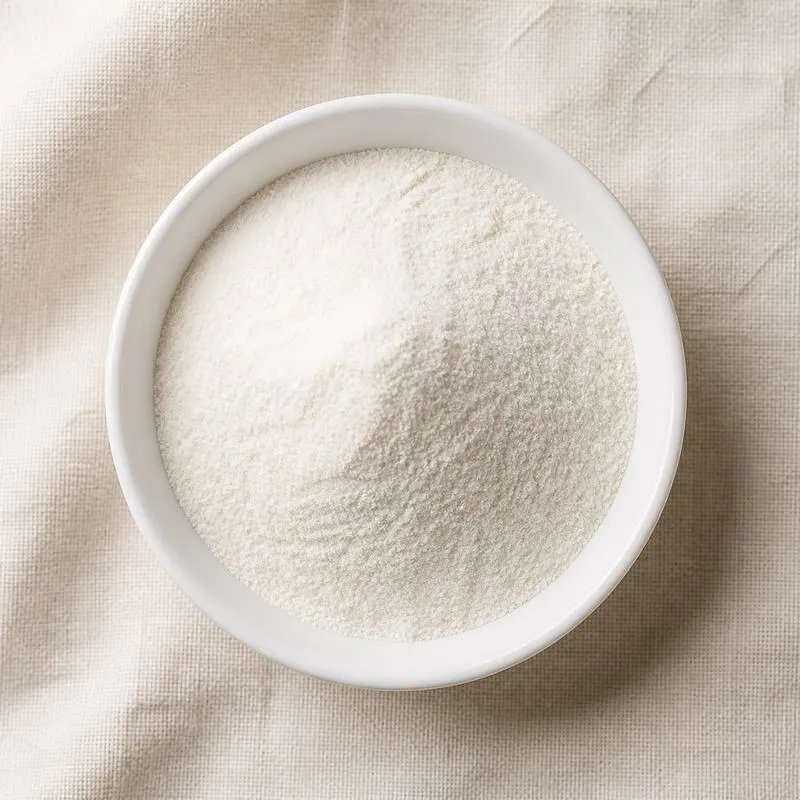
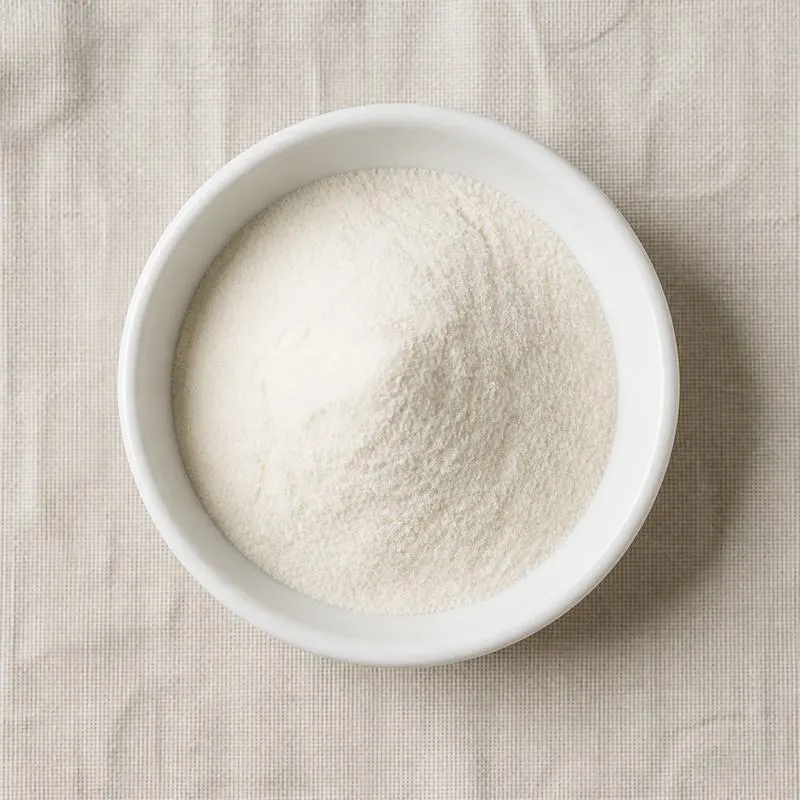
Gelatin Type B
Gelatin type B is the gelatin produced by alkaline conditioning of collagen, in practice mainly from bovine hide split and from demineralised bovine bone. The letter designates the pretreatment rather than the species or the grade.
The alkaline route exists because mature collagen, of the kind found in adult cattle hide and bone, is held together by covalent cross-links that a short acid soak will not break. The stock is therefore held in a saturated calcium hydroxide suspension for weeks, sometimes several months, and during that time the alkali both cleaves those cross-links and deamidates the asparagine and glutamine side chains into aspartic and glutamic acid. That deamidation is the chemical signature of type B: it adds carboxyl groups to the protein and pulls the isoelectric point down to about pH 4.7 to 5.4, against pH 7 to 9 for the acid processed type. In any formulation containing charged polymers or acidified protein, the two types therefore behave quite differently, and they are not substitutable.
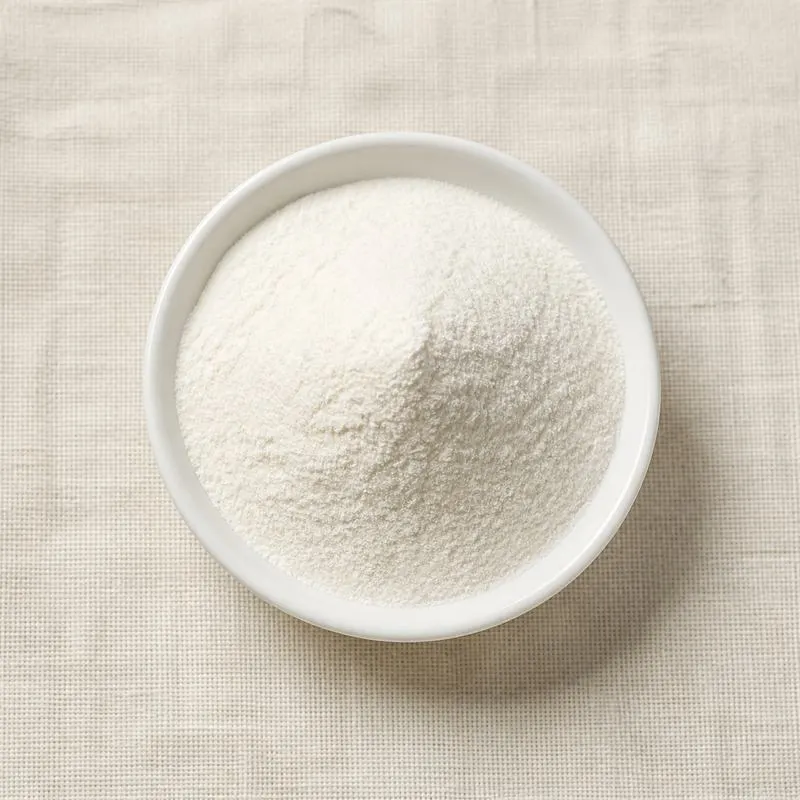
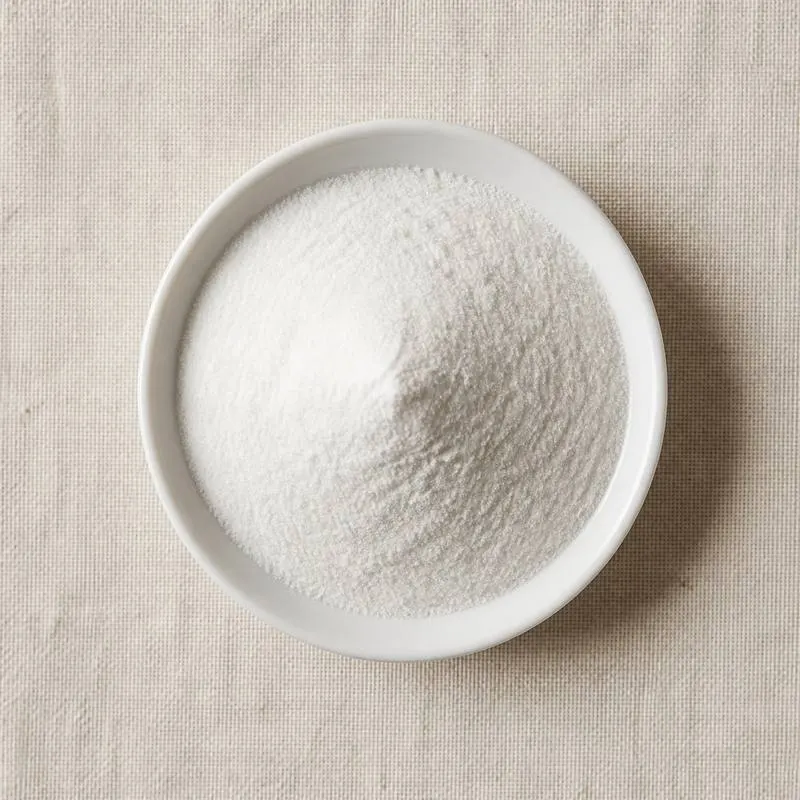
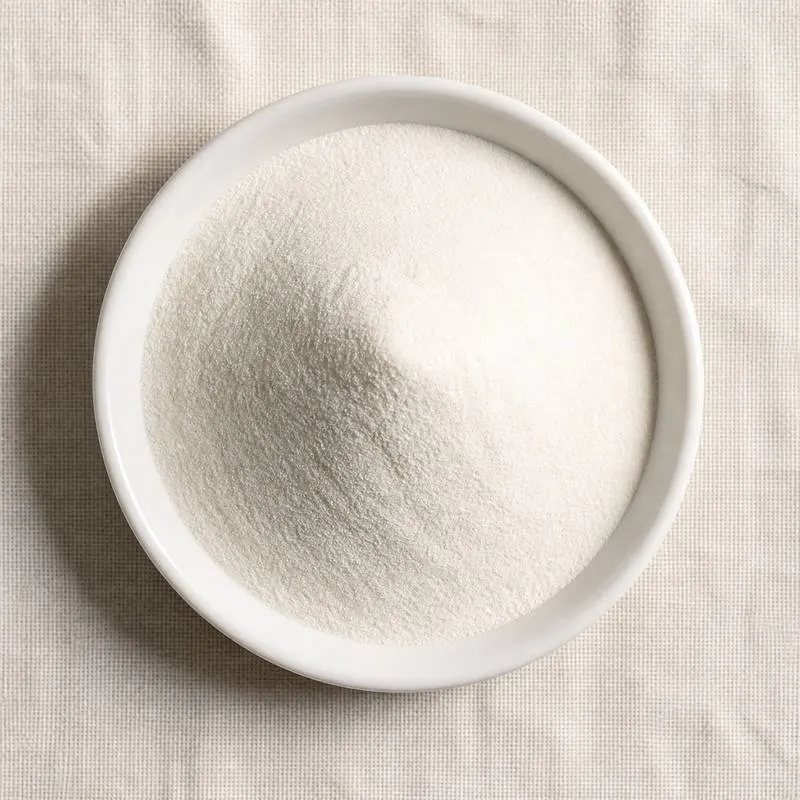
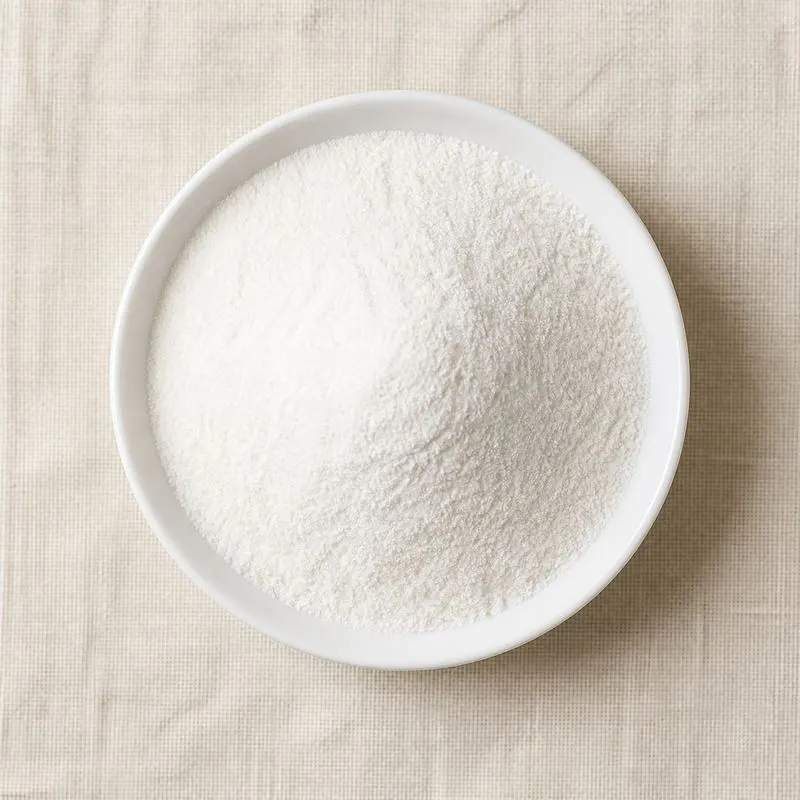
The gelation mechanism is the same as for all gelatin: random coils re-form partial triple helices on cooling below roughly 35 degrees Celsius and melt again just below body temperature. Type B tends to set more slowly and to give a slightly firmer, more elastic gel at equal Bloom. It arrives as pale yellow granules, powder or sheet, swelling in cold water and dissolving above about 40 degrees Celsius.
We source bulk Gelatin Type B from top China manufacturers for our partners. The manufacturer is in Gansu. A smaller requirement can ship in a combined container with other ingredients.
Please send the grade you need, the volume and your destination port, and we will come back with a solution and a price.
or call +86-21-6858 0751
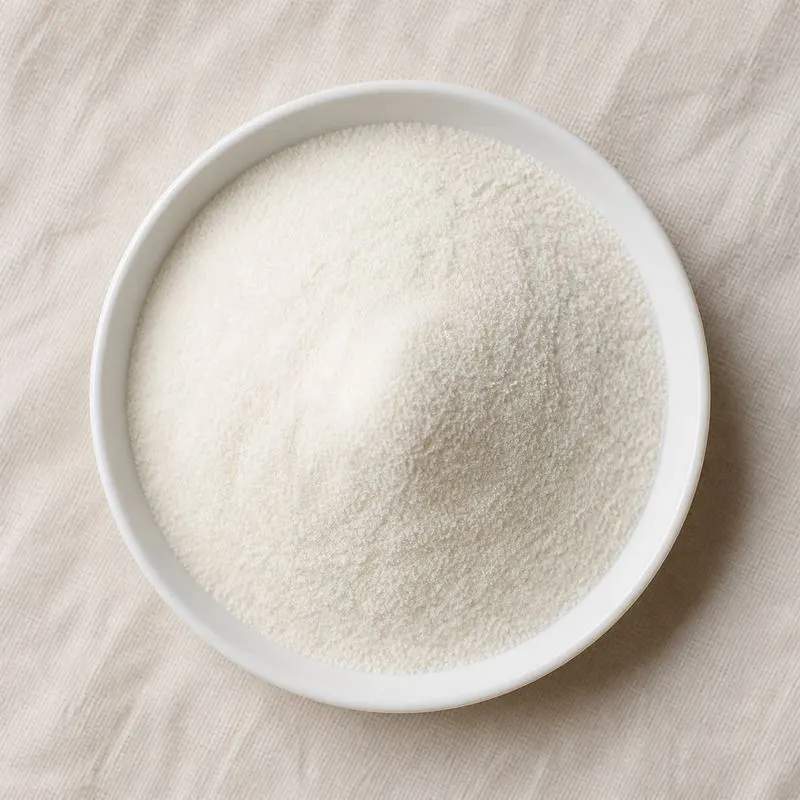
- Function
- Thickener / Hydrocolloid
Specifications
| Item | Specification |
|---|---|
| Appearance | Pale yellow granules or powder, free of foreign matter |
| Odour and Taste | Bland, free of foreign odour |
| Type | Type B, alkali processed, bovine hide or bone origin |
| Bloom Strength | 200 to 220 g |
| Viscosity, 6.67% at 60 degrees Celsius | 3.5 to 5.0 mPa s |
| Isoelectric Point | pH 4.7 to 5.4 |
| Protein, dry basis | Not less than 86.0% |
| Moisture | Not more than 12.0% |
| Ash | Not more than 2.0% |
| pH, 1% solution | 5.0 to 7.0 |
| Transmittance at 620 nm | Not less than 80% |
| Calcium | Not more than 0.5% |
| Sulphur Dioxide | Not more than 50 mg/kg |
| Chromium | Not more than 10 mg/kg |
| Lead | Not more than 1.5 mg/kg |
| Total Plate Count | Not more than 1,000 CFU/g |
| E. coli | Absent in 1 g |
| Salmonella | Absent in 25 g |
Common Markets Grades
Bloom, the gel strength on a standard 6.67 percent gel, is the primary specification, traded from about 80 Bloom for soft set applications to around 260 Bloom for firm gels. Viscosity on a hot solution is specified alongside, since it controls depositing and film behaviour independently of set strength, and bone derived type B typically carries a higher viscosity at a given Bloom than hide derived material.
Raw material is the other main distinction. Hide gelatin gives a cleaner colour and lower ash, while bone gelatin, made from ossein after acid demineralisation, carries a higher viscosity and a characteristic higher ash. Mesh is specified to control dissolution rate. Beyond food grade, pharmaceutical grade complies with the pharmacopoeial monographs and photographic and technical grades are made on the same process. Bovine origin allows halal and kosher certification where the animals were slaughtered accordingly and the supply chain is audited, which is a significant part of the type B trade. Bovine raw material also brings the transmissible spongiform encephalopathy controls that do not apply to porcine gelatin.
Applications
- Marshmallow and aerated confectionery, where the slower set suits the whipping and depositing cycle
- Table jellies and chilled desserts, giving a clear gel that melts at body temperature
- Yoghurt and fermented dairy, controlling body and preventing whey separation in an acidified system
- Reduced fat spreads and dairy analogues, giving a fat-like body from a protein network
- Meat products including aspic, canned hams and pâté, binding released cook juices into a sliceable gel
- Hard capsule shells and tablet coatings in pharmaceutical manufacture
- Gummy sweets and jelly confectionery, often blended with type A to tune set rate and texture
- Micro-encapsulation by coacervation, where the low isoelectric point suits pairing with cationic partners
- Fining of wine, beer and fruit juice, flocculating tannins and haze forming particles
- Photographic emulsion coatings and technical adhesives in the non-food grades
China Manufacturers of Gelatin Type B
Top Gelatin Type B manufacturers in China.
Company names and logos are the property of the manufacturers themselves. They are listed here because our own directory records them as producing this ingredient. A listing is not an endorsement by them, and we do not represent them or speak on their behalf.
Regulatory Status
Gelatin is treated as a food ingredient rather than a food additive in both the United States and the European Union, so type B gelatin carries no E number and is declared simply as gelatin.
In the United States it is an established food ingredient used under the general food framework, with pharmaceutical use governed by the United States Pharmacopeia monograph. In the European Union gelatin for human consumption is regulated as a product of animal origin under the hygiene rules for food of animal origin, which set requirements for permitted raw materials, approved establishments and the treatments applied. Bovine raw material carries additional obligations under the transmissible spongiform encephalopathy rules, which restrict the tissues that may be used, require specified risk material to be excluded, and impose conditions on bone derived material, so the country of origin and the tissue used are documented on every lot. The European Pharmacopoeia carries a monograph for gelatin. Halal and kosher certification is available for bovine gelatin where slaughter and supply chain requirements are met and audited. Codex covers gelatin under the general principles of food hygiene rather than as an additive.
Manufacturing Process
Bovine hide splits are sorted, washed, cut and degreased. Bone stock takes an additional step first: it is crushed, degreased and demineralised in dilute hydrochloric acid over several days, which dissolves the calcium phosphate and leaves the flexible protein matrix known as ossein. Either stock then enters the liming stage, held in a saturated calcium hydroxide suspension for a period measured in weeks, with the liquor turned over periodically. This is the slow, inventory heavy heart of the alkaline process, and its duration is what determines both the extent of deamidation and the Bloom that the extract will yield.
The limed stock is washed extensively and neutralised with acid to bring it to the extraction pH, a step that must be thorough because residual calcium raises ash and clouds the finished gelatin. Extraction follows with hot water in a series of batches at rising temperature, starting near 55 degrees Celsius and finishing close to boiling, with the first extract giving the highest Bloom and successive ones falling away, so each is collected separately and blended later against the order. The dilute extract is filtered, deionised on ion exchange resins, concentrated by evaporation and membrane filtration, sterilised by a short high temperature hold and chilled to a gel. The gel is extruded into noodles and dried on a belt dryer in filtered conditioned air, then ground, sieved and blended to the target Bloom, viscosity and particle size.