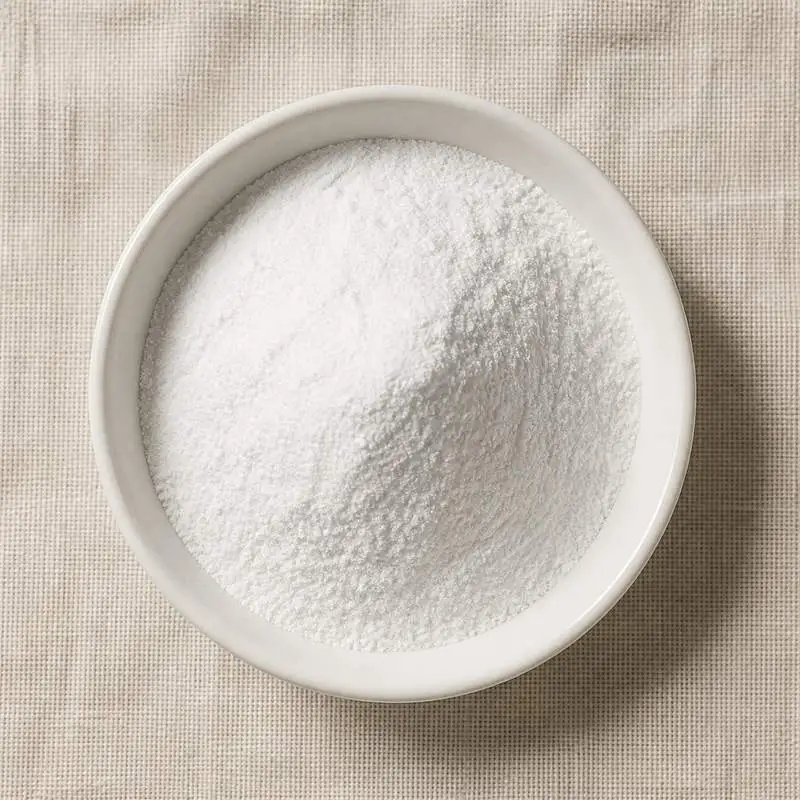
Glucosamine Sulphate
Glucosamine sulphate is the sulphate salt of D-glucosamine, an amino sugar derived from glucose by substitution of an amino group at the second carbon, and it is traded almost entirely as a stabilised double salt with either sodium chloride or potassium chloride.
That stabilisation is not a formulation choice but a chemical necessity. Pure glucosamine sulphate is strongly hygroscopic and unstable, drawing water from the air and degrading within a short period, so the commercial material is crystallised as glucosamine sulphate sodium chloride or glucosamine sulphate potassium chloride, in which the alkali halide locks the crystal lattice and gives a stable, weighable solid. The consequence is that the article of trade contains roughly 65 percent glucosamine base against about 83 percent for the hydrochloride, and label declarations must state whether the figure refers to the double salt or to the glucosamine content.
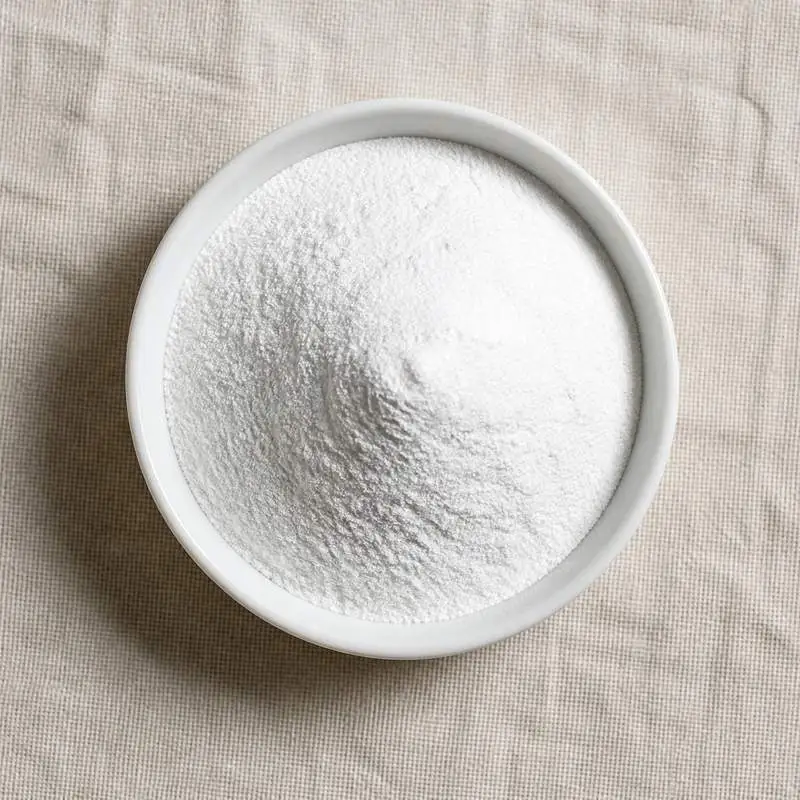
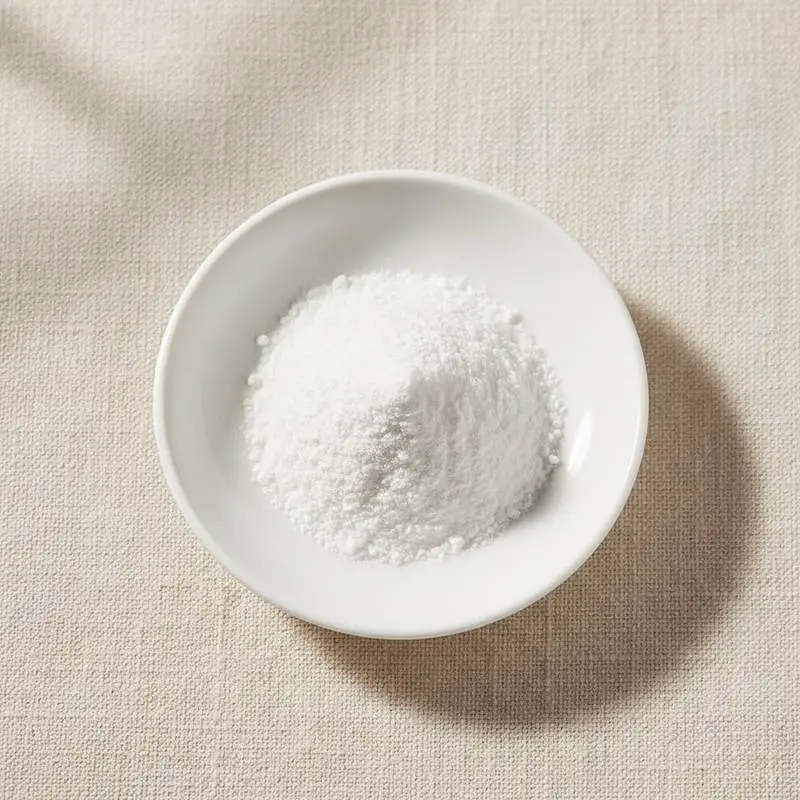
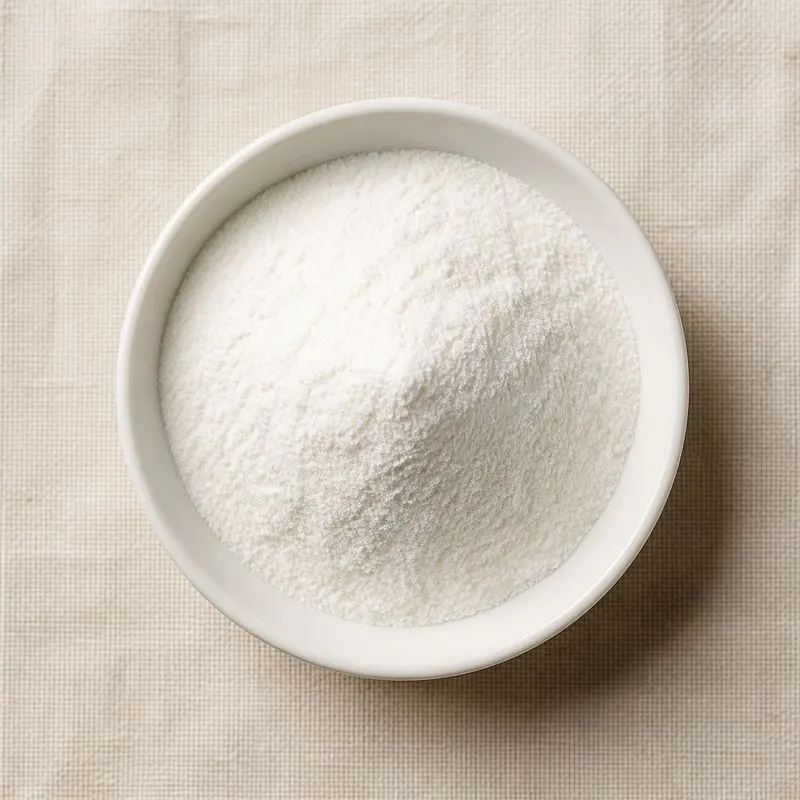
It is a white to off-white crystalline powder, freely soluble in water and practically insoluble in ethanol, giving solutions near neutral to slightly acid, which makes it easier to formulate into beverages than the more acidic hydrochloride. It is the form used in the European clinical literature on osteoarthritis, which is why it is specified in preference to the hydrochloride in many markets even though the two deliver the same amino sugar.
We source bulk Glucosamine Sulphate from top China manufacturers for our partners. The manufacturer is in Shandong. A smaller requirement can ship in a combined container with other ingredients.
Please send the grade you need, the volume and your destination port, and we will come back with a solution and a price.
or call +86-21-6858 0751
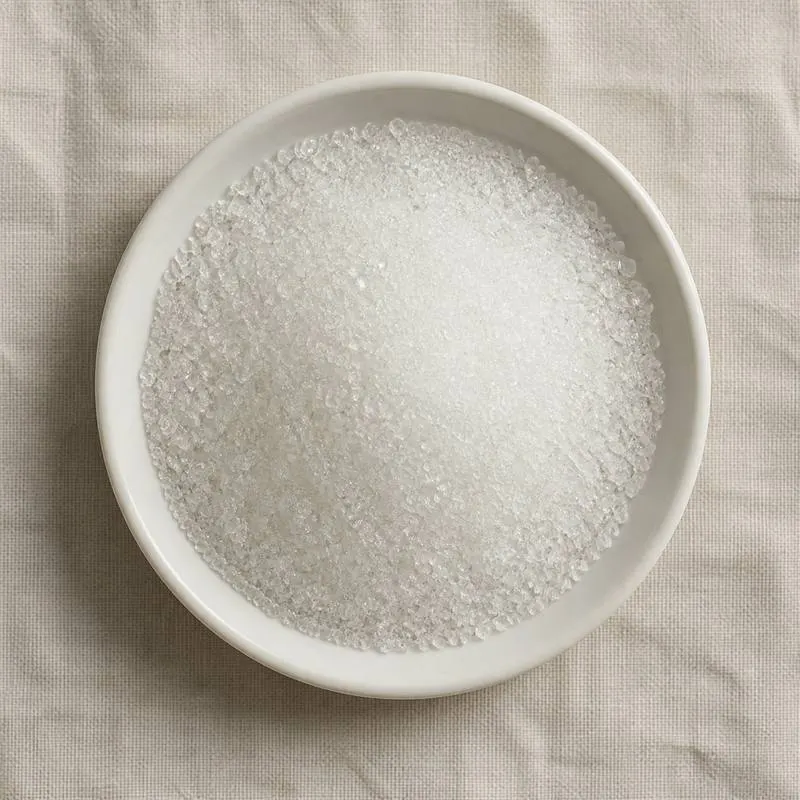
- Function
- Nutraceutical
Specifications
| Item | Specification |
|---|---|
| Appearance | White to off-white crystalline powder |
| Identification | Infrared spectrum conforms to reference; positive for sulphate |
| Glucosamine Sulphate Content | Not less than 98.0% on dried basis |
| Glucosamine Base | Not less than 63.0% |
| Sulphate | 17.0% to 20.0% |
| Potassium | 8.0% to 10.0% |
| Chloride | 7.5% to 9.5% |
| Specific Optical Rotation | Plus 50.0 to plus 55.0 degrees |
| Loss on Drying | Not more than 1.0% |
| pH, 5% solution | 3.5 to 5.5 |
| Lead | Not more than 0.5 mg/kg |
| Arsenic | Not more than 1.0 mg/kg |
| Total Plate Count | Not more than 1,000 CFU/g |
| Salmonella | Absent in 25 g |
Common Markets Grades
The two double salts are traded as separate articles. Glucosamine sulphate sodium chloride and glucosamine sulphate potassium chloride are specified on glucosamine content, on sulphate, and on the sodium or potassium and chloride figures, since those establish that the correct double salt has been formed rather than a physical blend of glucosamine hydrochloride with a sulphate salt, which is a known adulteration in this trade. The potassium form is preferred where sodium intake is a formulation concern.
Pharmaceutical grade meeting the relevant pharmacopoeial monograph, with tighter related substance, residual solvent and heavy metal limits, is produced for the registered joint preparations sold in Europe and elsewhere; supplement grade at comparable assay is the volume product. Raw material origin is the other commercial distinction, between shellfish derived material from crab and shrimp shell chitin, which carries a crustacean allergen declaration, and fermentation or fungal derived material sold as a vegetarian and non-shellfish grade. Physical grades run from fine milled powder for capsules to granulated material for the high dose direct compression tablets the ingredient is usually sold in.
Applications
- Joint health tablets and capsules dosed at gram level, the principal application
- Registered osteoarthritis preparations in markets where the sulphate form is licensed as a medicine
- Combination joint products formulated with chondroitin sulphate, MSM and collagen
- Powdered joint drinks and sachets, where the near neutral pH suits beverage systems better than the hydrochloride
- Functional gummies and chewables in the mobility category
- Sports nutrition products aimed at connective tissue support under training load
- Mobility formulations for older consumers, blended with vitamin D and calcium
- Companion animal joint supplements for dogs, cats and horses
- Topical joint creams and gels, where the salt dissolves readily into the aqueous phase
Brands Using Glucosamine Sulphate
Widely-distributed consumer products that list Glucosamine Sulphate on the ingredient label.
- Jarrow FormulasGlucosamine + Chondroitin + MSM ↗The formula uses glucosamine sulphate stabilised with potassium chloride alongside chondroitin sulphate and MSM.Label verified 2026-08-31
- Jarrow FormulasGlucosamine + Chondroitin, 240 Capsules ↗A two ingredient joint capsule built on potassium chloride stabilised glucosamine sulphate and chondroitin sulphate.Label verified 2026-08-31
- BulkSupplementsGlucosamine Sulfate Capsules ↗Single ingredient capsules of glucosamine sulphate for joint support.Label verified 2026-08-31
- HorbaachGlucosamine Sulfate 1500 mg, 240 Caplets ↗Caplets supplying 1500 mg of glucosamine sulphate per serving for joint support.Label verified 2026-08-31
Brand names, product names and logos are the property of their owners. They appear here as published evidence that the ingredient is used, taken from the brand's own label or website. Their appearance is not an endorsement, and it does not mean the brand buys from us or from any manufacturer listed on this site.
China Manufacturers of Glucosamine Sulphate
Top Glucosamine Sulphate manufacturers in China.

Company names and logos are the property of the manufacturers themselves. They are listed here because our own directory records them as producing this ingredient. A listing is not an endorsement by them, and we do not represent them or speak on their behalf.
Regulatory Status
In the United States, glucosamine sulphate is sold as a dietary ingredient under the Dietary Supplement Health and Education Act, with the stabilised double salt the form on the market. Labelling has been an enforcement focus, since a declaration of glucosamine sulphate must reflect what is actually in the product rather than a blend of the hydrochloride with a separate sulphate source. Crustacean shellfish is a major allergen under the Food Allergen Labelling and Consumer Protection Act, so shellfish derived material must carry that declaration, which is the reason the fermentation derived grade is traded as a separate stream. Claims are limited to structure function statements.
In the European Union, crystalline glucosamine sulphate is licensed as a prescription medicine for osteoarthritis in a number of member states, so the same substance may sit in either the medicines or the food supplement framework depending on its presentation and dose, and national authorities differ on where that line falls. Glucosamine salts were assessed and authorised as novel food ingredients for use in specified food categories, with the Union list setting the conditions of use, and crustaceans are Annex II allergens under the food information regulation. The material is not a food additive and carries no E number, and there is no JECFA specification, so buyers work to the pharmacopoeial monograph, which sets the identity tests that distinguish the genuine double salt from a mixture.
Manufacturing Process
Manufacture proceeds in two stages, first to glucosamine and then to the stabilised double salt. In the established route, crab and shrimp shell is washed, demineralised in dilute hydrochloric acid, deproteinised in dilute alkali and bleached to give purified chitin, which is then hydrolysed in concentrated hydrochloric acid under heat to cleave both the polymer chain and the acetyl groups, yielding glucosamine hydrochloride in acid liquor. The non-shellfish route reaches the same intermediate either by hydrolysing fungal cell wall chitin from a biomass such as Aspergillus niger, or by fermenting an engineered strain of Escherichia coli or Bacillus on glucose to accumulate glucosamine directly, with the product captured from the clarified broth on ion exchange resin.
The glucosamine intermediate is then converted. It is dissolved and treated with sulphuric acid or with a sulphate salt to exchange the counter ion, and sodium chloride or potassium chloride is added in the stoichiometric proportion required to form the double salt. The solution is decolourised on activated carbon, filtered, and concentrated under vacuum, and the double salt is crystallised by cooling and by the addition of ethanol as an antisolvent, which is what forces the mixed lattice to form rather than leaving the components in solution. Crystals are centrifuged, washed with chilled aqueous ethanol, dried under vacuum at low temperature to avoid the browning that heat causes in an amino sugar, then milled or granulated, sieved, assayed for glucosamine, sulphate and the halide, blended and packed with a moisture barrier.