Glycerol Monostearate
Glycerol Monostearate (GMS) is a non-ionic emulsifier consisting of a glycerol molecule esterified with a single stearic acid chain at the 1-position. Its CAS number is 31566-31-1 and it carries the European E number E471 as part of the mono- and diglycerides family.
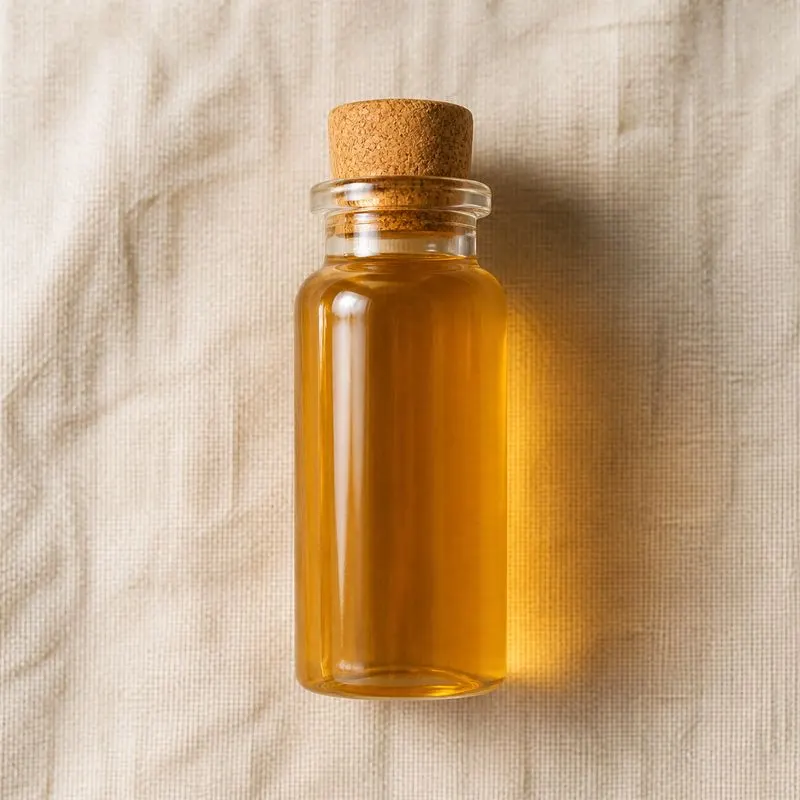
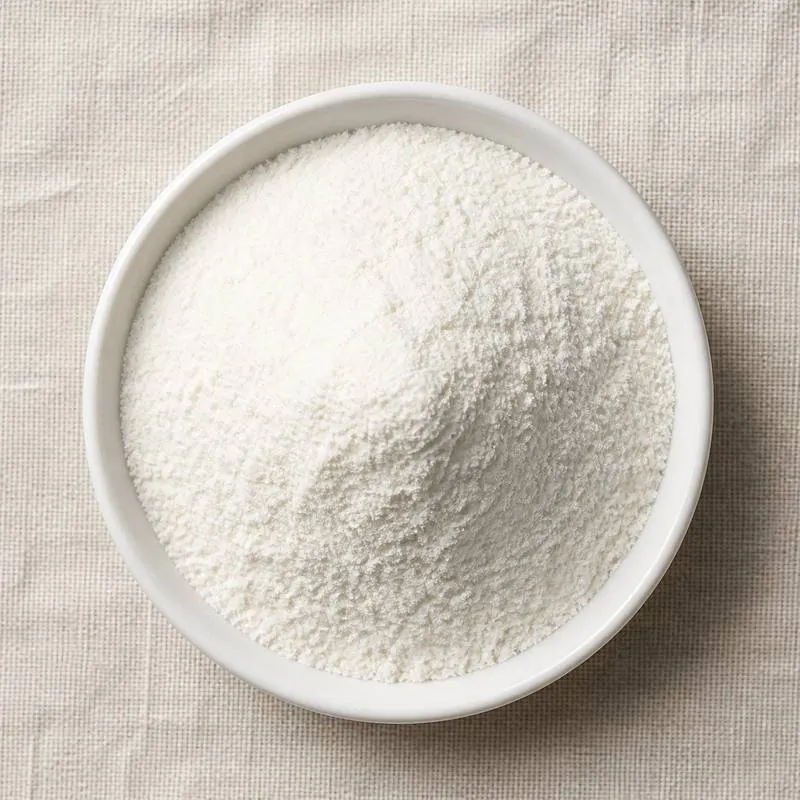
Pure 1-monostearin appears as a waxy white solid with a melting point near 81 degrees Celsius and an HLB of approximately 3.8. Commercial GMS is a mixture of mono-, di-, and triglycerides with a defined monoglyceride content that drives functional performance.
We source bulk Glycerol Monostearate from top China manufacturers for our partners. The manufacturers are in Henan and Zhejiang. For this ingredient the minimum order is 500 kg and a 20-foot container takes 17 MT, and a smaller requirement can ship in a combined container with other ingredients.
Please send the grade you need, the volume and your destination port, and we will come back with a solution and a price.
or call +86-21-6858 0751
- Minimum order
- 500 kg
- Qty in 20' FCL
- 17 MT
- Packaging
- 250 kg plastic drum or 1,000 kg IBC tote
- ISO 9001
- HACCP
- Halal
- Kosher
Specifications
| Item | Specification |
|---|---|
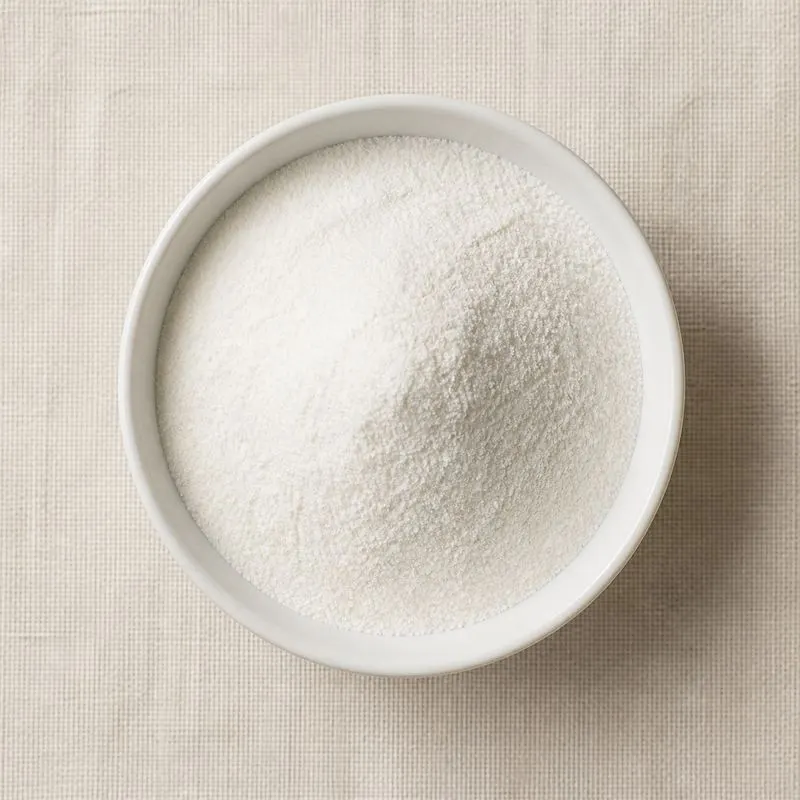
| Appearance | White to off-white waxy flakes, beads, or powder |
| Monoglyceride content | ≥ 40.0% |
| Free glycerol | ≤ 7.0% |
| Acid value | ≤ 5.0 mg KOH/g |
| Iodine value | ≤ 3.0 g I2/100 g |
| Melting point | 58 °C to 65 °C |
| Heavy metals (as Pb) | ≤ 2 mg/kg |
| Arsenic | ≤ 2 mg/kg |
| Lead | ≤ 2 mg/kg |
| Particle size | Flakes, beads, or powder per customer specification |
Common Markets Grades
Industry classifies GMS primarily by alpha-monoglyceride content.
Standard 40 to 50 percent monoglyceride grade is the most common commercial form, produced by direct glycerolysis without distillation. It comes as flakes, beads, or powder and goes into bakery, dairy, and confectionery applications.
Distilled monoglyceride grade contains 90 percent or higher alpha-monoglyceride content. It is manufactured by molecular distillation of the crude glycerolysis product and is the premium choice for ice cream, whipped toppings, and bread softening.
Self-emulsifying GMS is blended with a small percentage of soap or anionic co-emulsifier to give a self-dispersing format used in cosmetic creams and lotions.
Iodine value distinguishes saturated grades (IV below 3) from grades made from partially hydrogenated or palm-based stearin (IV up to 5). Kosher, Halal, RSPO-certified palm-source, and fully plant-derived variants are all available.
Applications
- Bread and bun crumb softening through amylose complexation that slows staling
- Cake batters and sponge cakes for fine aeration and even crumb structure
- Ice cream and frozen desserts as the primary emulsifier driving fat destabilization and dryness
- Whipped toppings, mousses, and aerosol cream products for foam stability
- Margarine, shortening, and spreads for water-droplet stabilisation and spreadability
- Chocolate and compound coatings as a viscosity and bloom modifier
- Peanut butter and nut butters for oil-separation control
- Coffee whiteners and creamers for emulsion stability and whitening power
- Pasta and noodle production to reduce stickiness and cooking losses
- Pharmaceutical creams, ointments, and suppositories as the lipid-phase emulsifier
- Cosmetic moisturizers, sunscreens, and hair conditioners as a co-emulsifier and consistency builder
- Plastic processing as a slip agent and antistatic additive for polyolefin films
Brands Using Glycerol Monostearate
Widely-distributed consumer products that list Glycerol Monostearate on the ingredient label.
- CeraVeHydrating Cream-to-Foam Cleanser ↗Ingredients include 'Glycol Distearate, Glyceryl Stearate, Glyceryl Oleate' among the full INCI list (glyceryl stearate = glycerol monostearate).Label verified 2026-05-24
- CeraVePsoriasis Moisturizing Cream ↗Inactive ingredients: 'WATER, UREA, GLYCERYL STEARATE SE, CETEARYL ALCOHOL, BUTYROSPERMUM PARKII (SHEA) BUTTER...' and 'GLYCERYL STEARATE' also listed.Label verified 2026-05-24
Brand names, product names and logos are the property of their owners. They appear here as published evidence that the ingredient is used, taken from the brand's own label or website. Their appearance is not an endorsement, and it does not mean the brand buys from us or from any manufacturer listed on this site.
China Manufacturers of Glycerol Monostearate
Top Glycerol Monostearate manufacturers in China.
 Henan Chemsino Industry Co., Ltd.7 ingredients in the directory
 Zhejiang Golden Palm Technology Co., Ltd.12 ingredients in the directory
Company names and logos are the property of the manufacturers themselves. They are listed here because our own directory records them as producing this ingredient. A listing is not an endorsement by them, and we do not represent them or speak on their behalf.
How We Help Source Glycerol Monostearate
Direct Factory Sourcing
We run the whole process: selecting the manufacturer from the top Chinese food ingredient producers, negotiating the price, verifying quality, and coordinating the logistics. You deal with us instead of with several factories at once.
Original Packaging and Documents from the Manufacturer
The manufacturer sends your Glycerol Monostearate out of its own factory in the original packing, through to your destination port. The COA, COO, MSDS, TDS and any certifications reach you from the manufacturer as well.
Free Samples and Lead Time
We send 100 to 500 g free for your own laboratory to test and you cover only the courier, usually within 2 to 3 working days. ETD is usually within 7 to 15 days once the order is confirmed, and we check that date against the factory's own manufacturing schedule before we give it to you.
Combined Shipment
We can load Glycerol Monostearate together with other ingredients such as Polyglycerol Esters of Fatty Acids, Non-Dairy Creamer and Mono- and Diglycerides of Fatty Acids into one 20' FCL. If your quantity is small, we can also ship LCL.
Regulatory Status
GMS is approved as a food emulsifier in essentially every regulated market.
In the European Union it is covered by E471 (mono- and diglycerides of fatty acids) and is permitted quantum satis across most food categories under Regulation 1333/2008.
The U.S. Food and Drug Administration classifies mono- and diglycerides as Generally Recognized as Safe under 21 CFR 184.1505 with no quantitative limit beyond Good Manufacturing Practice. Glyceryl monostearate specifically is also listed in 21 CFR 172.755 for use in protective coatings.
JECFA evaluated mono- and diglycerides of fatty acids and assigned an ADI of "not specified." Pharmacopoeial monographs for Glyceryl Monostearate appear in USP-NF, Ph. Eur., and JP.
Animal-source versus plant-source distinction matters for Halal, Kosher, and vegetarian labelling. Most large producers offer documented palm, palm-kernel, or soybean-source material.
Manufacturing Process
The dominant industrial process is direct glycerolysis. Fully hydrogenated vegetable oil or stearin is heated with glycerol at 200 to 240 degrees Celsius under nitrogen in the presence of an alkaline catalyst such as calcium hydroxide or sodium hydroxide.
The reaction redistributes fatty acid chains across the glycerol pool, yielding an equilibrium mixture of approximately 40 to 50 percent monoglycerides, 35 to 45 percent diglycerides, 5 to 15 percent triglycerides, and small amounts of free glycerol. After neutralisation with phosphoric acid the crude product is the standard 40 percent monoglyceride trade grade.
To obtain distilled monoglyceride the crude is fed to a short-path molecular distillation unit operating below 1 mbar absolute pressure. The lighter monoglyceride fraction distills off and is collected as a 90-95 percent alpha-monoglyceride product, while the diglyceride-rich bottoms are returned for re-equilibration or sold as a separate grade.
Direct esterification of stearic acid with glycerol over an acid catalyst is used at smaller scale to produce high-purity 1-monostearin for specialty pharmaceutical and analytical use.