Honokiol
Honokiol is a biphenyl neolignan, CAS 35354-74-6, with the molecular formula C18H18O2 and a molar mass of 266.34 g/mol. Structurally it is two phenol rings joined directly to one another, each carrying an allyl side chain and a hydroxyl group, and it occurs together with its isomer magnolol in the bark and cones of magnolia species, principally Magnolia officinalis and Magnolia obovata. The two isomers differ only in where the hydroxyl and allyl groups sit on the rings, but they separate cleanly by chromatography and command different prices.
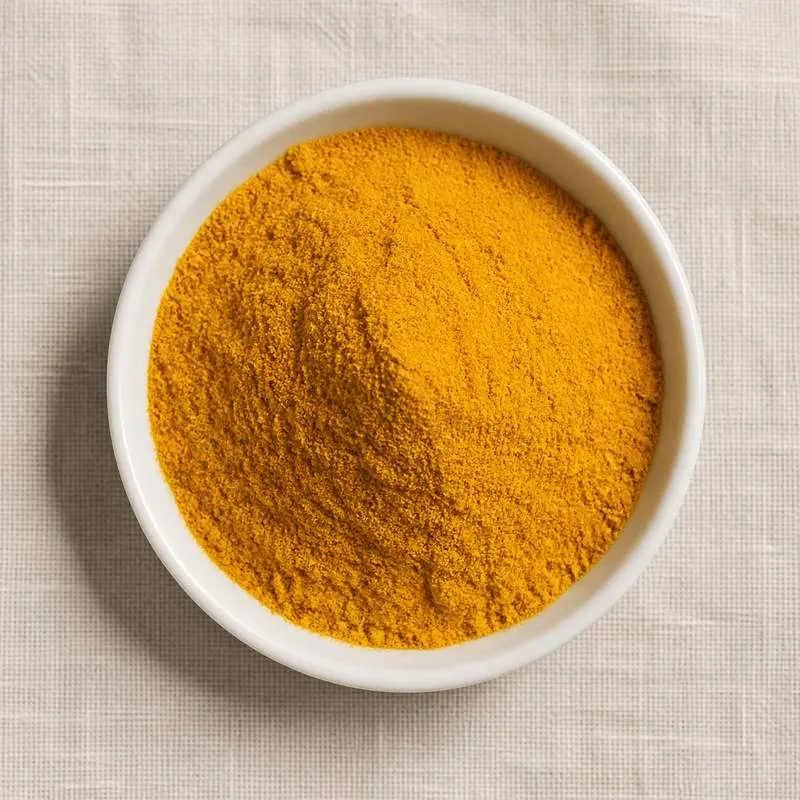
The isolated compound is a white to off-white crystalline powder with a faint characteristic odour and a bitter taste. It melts at around 87 degrees Celsius. Solubility in water is very low, in the order of a few milligrams per litre, while it dissolves readily in ethanol, propylene glycol, vegetable oils and most organic solvents, and this is the single fact that decides how it is formulated: honokiol is delivered in softgels, oil suspensions, cyclodextrin complexes or self-emulsifying systems rather than in clear aqueous products.
The molecule is reasonably stable to heat and to normal food processing but the phenolic hydroxyls oxidise slowly on exposure to air and light, and solutions darken over time. Commercial powder is packed in opaque containers, often under nitrogen, and stored cool and dry. In the plant it sits alongside magnolol at a ratio that varies by species and bark age, and most commercial isolation starts by separating the two.
We source bulk Honokiol from top China manufacturers for our partners. The manufacturer is in Guangdong. A smaller requirement can ship in a combined container with other ingredients.
Please send the grade you need, the volume and your destination port, and we will come back with a solution and a price.
or call +86-21-6858 0751
- Function
- Plant extract
Specifications
| Item | Specification |
|---|---|
| Botanical Source | Magnolia officinalis dried bark |
| Appearance | White to off-white crystalline powder |
| Odour and Taste | Faint characteristic odour, bitter |
| Honokiol by HPLC | ≥ 98.0% |
| Magnolol | ≤ 1.5% |
| Identification | Conforms by HPLC retention time and UV spectrum |
| Melting Range | 85 to 89°C |
| Loss on Drying | ≤ 1.0% |
| Residue on Ignition | ≤ 0.5% |
| Residual Solvent (Ethanol) | ≤ 5,000 mg/kg |
| Heavy Metals (as Pb) | ≤ 10 mg/kg |
| Lead | ≤ 1.0 mg/kg |
| Arsenic | ≤ 1.0 mg/kg |
| Packing and Storage | Opaque container under nitrogen, cool and dry |
Common Markets Grades
The compound is traded on assay and on isomer separation. Bulk grades run at 90, 95 and 98 percent honokiol by HPLC, with the balance in most cases being residual magnolol, and the magnolol figure is quoted separately because a nominal 98 percent honokiol carrying 1.5 percent magnolol is a different product from one carrying trace amounts. Reference grade at 99 percent and above is sold in small quantities for analytical work. Synthetic material exists but the extraction route from magnolia bark dominates the commercial supply.
Below the isolate sit magnolia bark extracts standardised on combined honokiol and magnolol content, commonly at 2, 10, 50, 90 or 98 percent total biphenyls, and these are how the molecule reaches most finished products. Because the two isomers are usually declared together, a buyer wanting honokiol specifically has to specify the individual assay rather than the combined figure. Solubilised presentations are traded as separate items: cyclodextrin complexes, liposomal dispersions, nanoemulsions and oil solutions, all made to work around the aqueous insolubility.
Applications
- Sleep, relaxation and stress supplements, the largest outlet, formulated as softgels or oil suspensions
- Cortisol and mood support formulas, usually alongside magnolol as a combined magnolia extract
- Oral care products, where the biphenyls are used for their activity against oral bacteria in chewing gum, mints and mouthwash
- Weight management and metabolic formulas drawing on the magnolia tradition
- Topical and cosmetic preparations, where the lipophilic molecule dissolves easily in the oil phase
- Chewing gum and breath freshening confectionery, a substantial and long-standing application
- Traditional Chinese herbal preparations reformulated to a defined marker content
- Analytical reference standards for quantifying honokiol in magnolia bark and extracts
- Companion animal calming supplements
Brands Using Honokiol
Widely-distributed consumer products that list Honokiol on the ingredient label.
Brand names, product names and logos are the property of their owners. They appear here as published evidence that the ingredient is used, taken from the brand's own label or website. Their appearance is not an endorsement, and it does not mean the brand buys from us or from any manufacturer listed on this site.
China Manufacturers of Honokiol
Top Honokiol manufacturers in China.

Company names and logos are the property of the manufacturers themselves. They are listed here because our own directory records them as producing this ingredient. A listing is not an endorsement by them, and we do not represent them or speak on their behalf.
Regulatory Status
In the United States magnolia bark and its extracts are marketed as dietary ingredients under the Dietary Supplement Health and Education Act, with manufacture under 21 CFR Part 111. A magnolia bark extract standardised on magnolol and honokiol has been the subject of a generally recognised as safe conclusion for use in chewing gum and mints at defined levels, which is the basis for the oral care applications, and that conclusion is specific to the stated uses rather than a general food clearance. Isolated honokiol at high purity does not have broad food additive status and material offered for research is labelled accordingly.
In the European Union magnolia bark has no significant history of food consumption before May 1997, so magnolia bark extracts and isolated honokiol fall within the scope of the novel food Regulation and require authorisation before being sold as a food or food supplement ingredient. No health claim for honokiol or for magnolia appears on the EU register of authorised claims. Neither JECFA nor Codex has evaluated the compound or published a specification, and there is no European Pharmacopoeia monograph, so trade relies on supplier monographs, the Chinese Pharmacopoeia methods for magnolia bark assay and the accompanying analytical data.
Manufacturing Process
Production starts from the dried stem or root bark of Magnolia officinalis, harvested from cultivated trees, which is inspected, tested for identity and milled to a coarse powder. Extraction is by countercurrent percolation or reflux with ethanol at 70 to 95 percent, since the biphenyls are poorly soluble in water and are recovered almost entirely by alcohol. The liquor is filtered and the ethanol recovered under vacuum to give a crude extract carrying both honokiol and magnolol together with resins and other bark constituents.
Enrichment is by macroporous adsorption resin: the crude concentrate is loaded onto the resin, washed with dilute ethanol to remove polar impurities, then eluted with high strength ethanol to give a total biphenyl fraction of 50 percent and upward. Separating honokiol from magnolol is the step that defines the product, and it is done by preparative or simulated moving bed chromatography on silica or reversed phase media, or in some plants by alkali extraction and fractional crystallisation, which relies on the small difference in acidity between the two phenols. The honokiol-rich fraction is concentrated, recrystallised from an alcohol or a hydrocarbon solvent, filtered, vacuum dried at low temperature and milled, then packed in opaque containers under nitrogen.