Hydroxypropyl Oxidized Starch
Hydroxypropyl oxidised starch is a dual modified starch that has been both etherified with propylene oxide, introducing hydroxypropyl groups onto the glucose units, and oxidised with sodium hypochlorite, introducing carboxyl groups and shortening the chains. The two treatments are carried out sequentially on the granule below its gelatinisation temperature, so the finished material is still a granular powder recoverable by filtration.
Each modification contributes a different property. Hydroxypropylation is a stabilising substitution: the ether linkage is chemically robust, the hydroxypropyl group is bulky and hydrophilic, and its presence lowers the gelatinisation temperature, increases granule swelling and paste clarity, and strongly slows the chain re association that causes a cooled starch paste to cloud, firm and release water. Oxidation is a thinning and whitening treatment: chain scission drops the paste viscosity so the starch can be cooked at high solids, the carboxyl groups add negative charge and adhesion, and the hypochlorite bleaches residual protein and pigment.
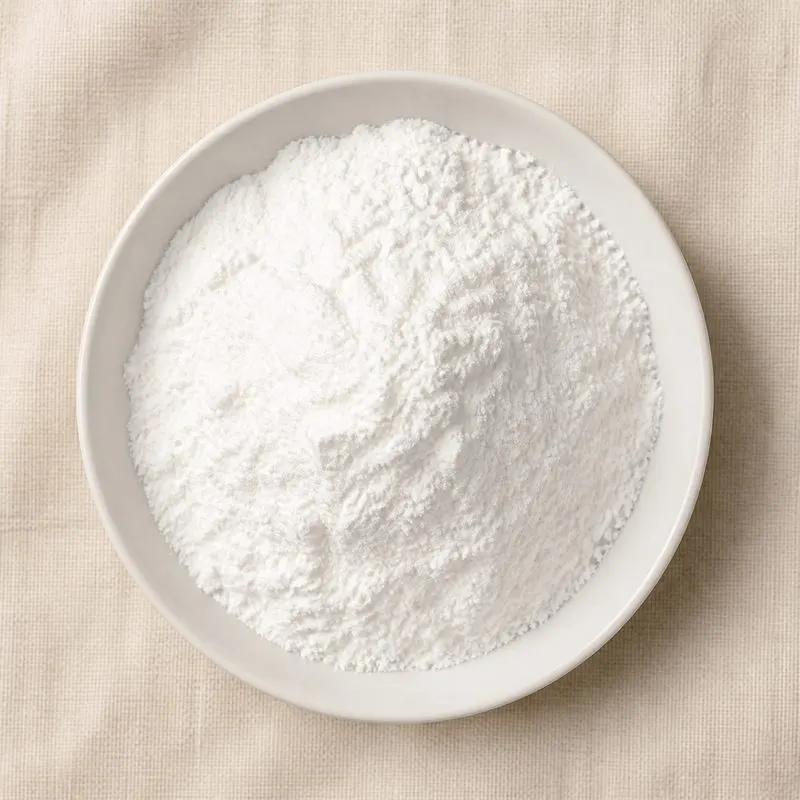
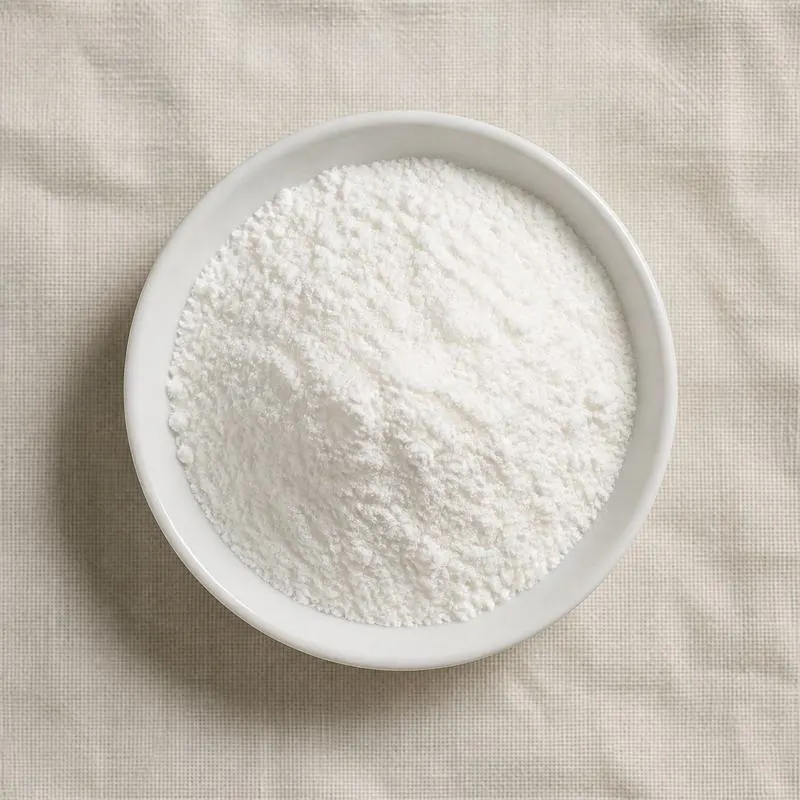
The combination gives a very white, low viscosity, high clarity starch that forms a strong flexible film and yet resists retrogradation in cold storage, which a purely oxidised starch does only partly. It is a bright white free flowing powder, and comes also in a pregelatinised drum dried form for cold water use. Neither modification adds mechanical strength to the granule, so process tolerance under retort and high shear remains limited.
We source bulk Hydroxypropyl Oxidized Starch from top China manufacturers for our partners. The manufacturers are in Jiangsu. A smaller requirement can ship in a combined container with other ingredients.
Please send the grade you need, the volume and your destination port, and we will come back with a solution and a price.
or call +86-21-6858 0751
- Function
- Texturisers
Specifications
| Item | Specification |
|---|---|
| Appearance | Bright white free flowing powder, free of foreign matter |
| Odour and taste | Bland, no chlorine or solvent odour |
| Identification | Iodine stain and granule microscopy conform to starch reference |
| Total starch, dry basis | 96.0 percent minimum |
| Hydroxypropyl groups | 7.0 percent maximum |
| Carboxyl groups | 1.1 percent maximum |
| Propylene chlorohydrin | 1 mg/kg maximum |
| Residual active chlorine | Not detected |
| Moisture | 14.0 percent maximum |
| Ash, dry basis | 0.6 percent maximum |
| pH, 10 percent slurry | 4.5 to 7.0 |
| Sulphur dioxide | 50 mg/kg maximum |
| Lead | 0.5 mg/kg maximum |
| Arsenic | 0.5 mg/kg maximum |
| Total plate count | 10000 cfu/g maximum |
| Yeast and mould | 500 cfu/g maximum |
| E. coli | Absent in 1 g |
| Salmonella | Absent in 25 g |
Common Markets Grades
Grades are set by the two independent variables, the molar substitution of hydroxypropyl groups and the degree of oxidation. Higher hydroxypropyl substitution gives greater cold storage and freeze thaw stability, lower gelatinisation temperature and clearer pastes; heavier oxidation gives thinner pastes at higher solids and greater whiteness. Suppliers quote both a viscosity profile and a substitution level, and the material is bought against the viscosity curve in practice.
Regular maize is the usual base on cost grounds, with tapioca and potato used where clarity and flavour justify the higher cost. Food grade and technical grade are distinguished on residual propylene chlorohydrin, residual active chlorine, microbiology and heavy metals rather than on functionality, and a large share of production goes to paper and textile manufacture rather than to food. Both cook-up granular and pregelatinised instant forms are made.
Applications
- Frozen and chilled sauces and fillings, where hydroxypropylation prevents the clouding and water release that follow cold storage
- Batters and coatings for fried and frozen foods, forming a film that clings to the piece and survives the freeze and the fry
- Confectionery gums and deposited jellies, cooked at high solids because the oxidised chains keep the mass pumpable
- Bakery fillings and glazes, holding clarity and gloss through bake and subsequent storage
- Dairy desserts and puddings, giving a soft, smooth, non setting body
- Instant dessert and dry sauce mixes, in the pregelatinised form that hydrates cold
- Snack and cereal coatings, where adhesion and gloss are required
- Paper surface sizing and coating binders outside food, where high solids application and film flexibility are the requirements
- Textile warp sizing, applied hot at high solids and forming a flexible film on the yarn
China Manufacturers of Hydroxypropyl Oxidized Starch
Top Hydroxypropyl Oxidized Starch manufacturers in China.
 NanTong GaoFeng Biotechnology Co., Ltd.10 ingredients in the directory
 Suzhou Gaofeng Biotechnology Co., Ltd.11 ingredients in the directory
Company names and logos are the property of the manufacturers themselves. They are listed here because our own directory records them as producing this ingredient. A listing is not an endorsement by them, and we do not represent them or speak on their behalf.
Regulatory Status
In the United States 21 CFR 172.892, the regulation covering food starch modified, permits both treatments: it lists propylene oxide as an etherifying agent with a cap on the treatment level and a residual propylene chlorohydrin limit, and sodium hypochlorite as an oxidising agent with its own cap, so a starch treated with both within those limits falls within the regulation and is declared as modified food starch or food starch modified.
The European Union position is different. The food additive framework lists hydroxypropyl starch as E 1440 and oxidised starch as E 1404 as separate authorised additives, but no E number has been assigned to a starch carrying both modifications, so a hydroxypropyl oxidised starch is not among the modified starches authorised for food use in the European Union and would need to be reformulated as one of the listed additives for that market. Codex and JECFA likewise carry specification monographs for hydroxypropyl starch and for oxidised starch individually rather than for the dual modified product. The material is therefore traded principally for markets where it is separately permitted and for technical, paper and textile use.
Manufacturing Process
Native starch, most commonly regular maize, is slurried in water at around 35 to 40 percent solids and adjusted to alkaline pH with sodium hydroxide, with sodium sulphate or sodium chloride added to raise the ionic strength and hold the granule from swelling. Etherification is carried out first. Propylene oxide is charged to the sealed reactor and the batch is held at controlled temperature for several hours while the epoxide opens onto the starch hydroxyl groups to form hydroxypropyl ethers. The reactor is then vented and stripped to remove unreacted propylene oxide, which is volatile and must be brought below the residual limit.
Oxidation follows in the same or a second vessel. Sodium hypochlorite solution is metered in while caustic is dosed continuously to hold the pH, and the reaction is tracked by drawing samples and measuring paste viscosity. When the target viscosity is reached, a reducing agent such as sodium bisulphite is added to destroy residual active chlorine and the batch is neutralised with dilute acid. The starch is washed on a countercurrent hydrocyclone battery or a rotary vacuum filter train to remove sodium chloride, chlorate, propylene glycol formed by hydrolysis of the epoxide, chlorohydrin residues and soluble oxidised fragments. The washed cake is dewatered and flash dried in hot air, then cooled, milled, sieved and packed. A pregelatinised grade is made by cooking and drying the washed slurry on a heated drum and milling the film.