Instant Gelatin
Instant gelatin is gelatin that has been pre-dissolved and re-dried so that it hydrates and thickens in cold water, without the soaking and heating cycle that conventional granular gelatin requires.
Chemically it is the same partially hydrolysed collagen as ordinary gelatin, obtained from bovine hide and bone or from porcine skin, with the same amino acid profile dominated by glycine, proline and hydroxyproline. The difference is physical. Conventional gelatin granules are dense and partly crystalline, so cold water only swells the surface and the mass has to be heated above roughly 40 degrees Celsius to dissolve. Instant grades are dried from solution into a porous, amorphous, agglomerated particle whose chains are already separated, so water penetrates immediately and the gelatin disperses and builds viscosity at ambient temperature.
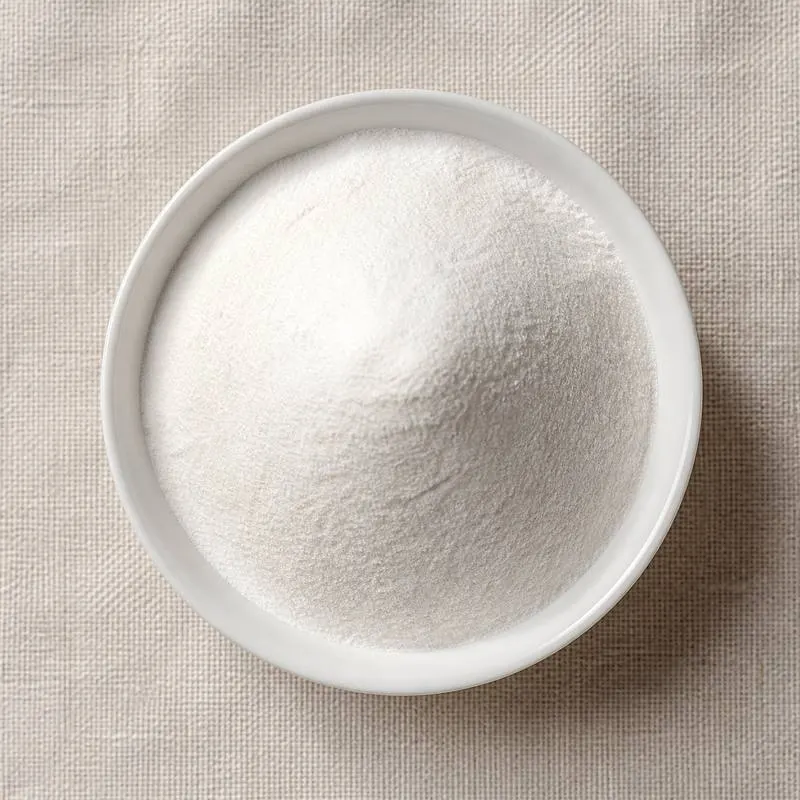
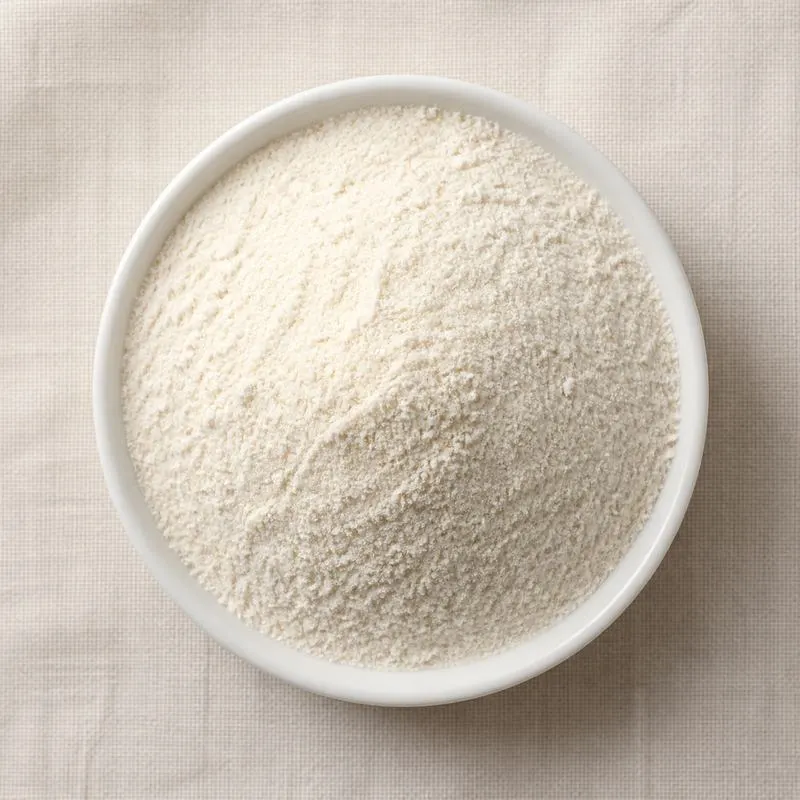
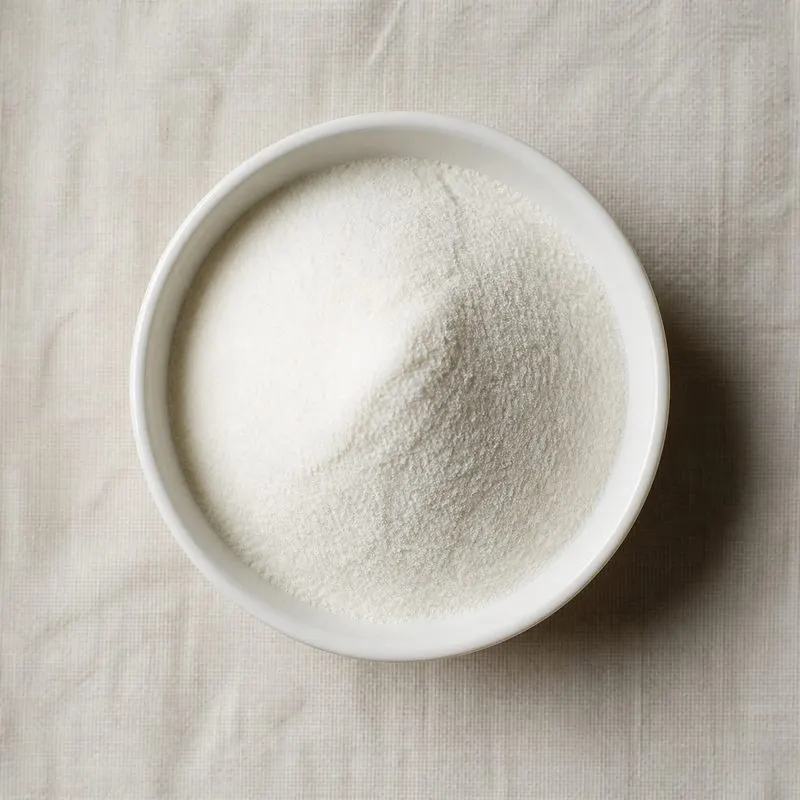
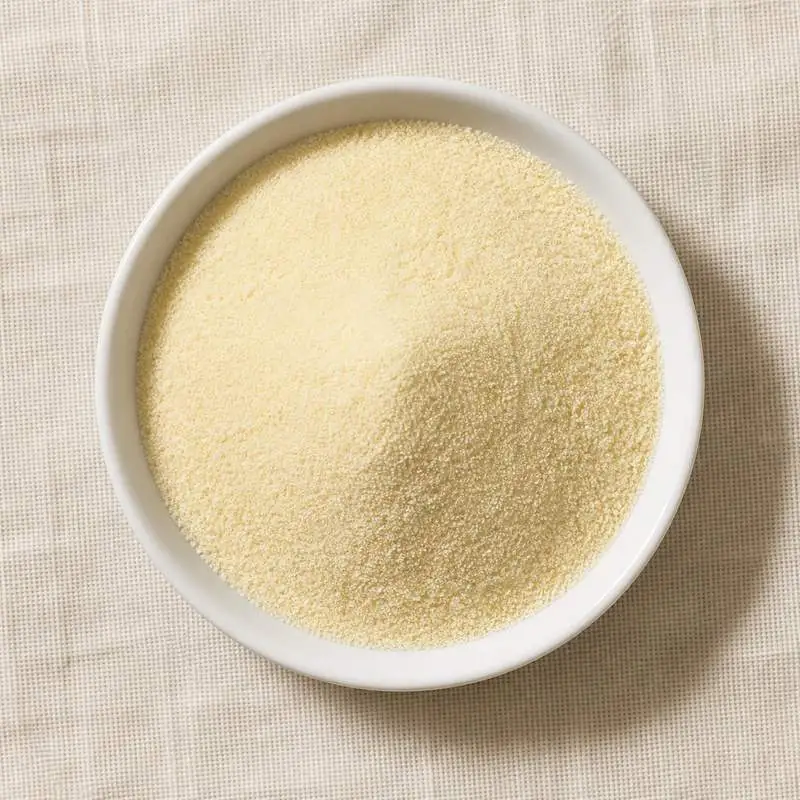
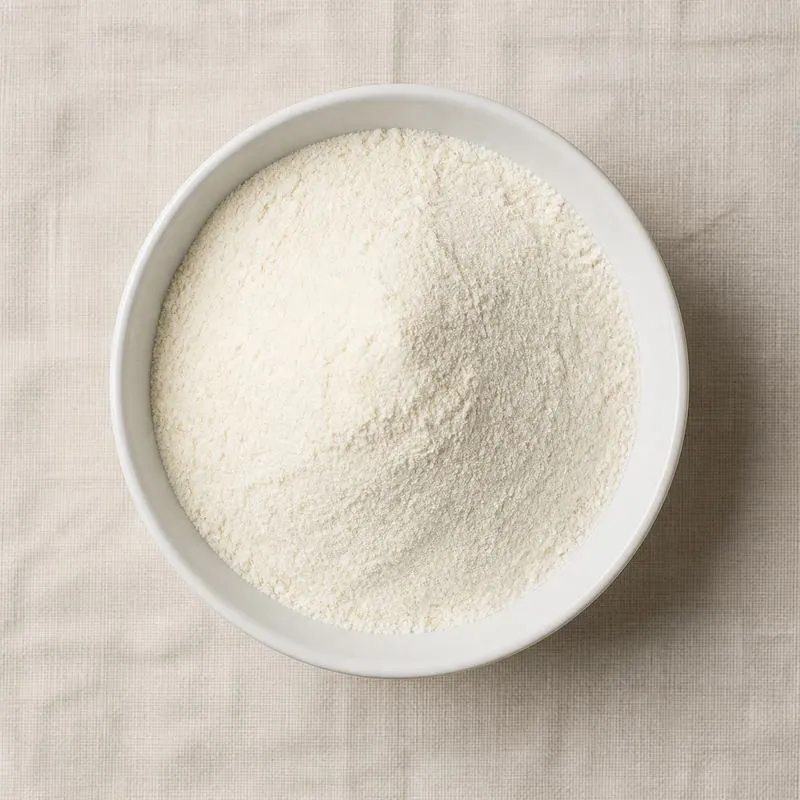
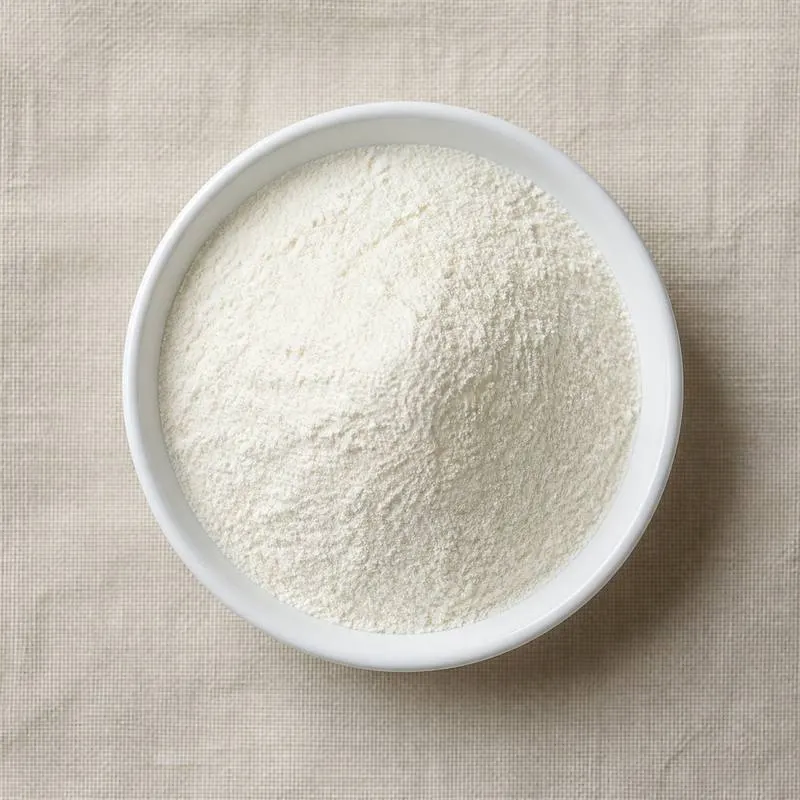
The powder is pale yellow to light amber, low in bulk density, and noticeably hygroscopic, so it is packed in moisture barrier liners. Cold set gels made from it are somewhat softer than a hot dissolved gel of the same gelatin, because processing costs a portion of the gel strength, and they melt near body temperature in the same way, giving the clean release that defines gelatin texture.
We source bulk Instant Gelatin from top China manufacturers for our partners. The manufacturer is in Jiangxi. A smaller requirement can ship in a combined container with other ingredients.
Please send the grade you need, the volume and your destination port, and we will come back with a solution and a price.
or call +86-21-6858 0751
- Function
- Protein
Specifications
| Item | Specification |
|---|---|
| Appearance | Pale yellow to light amber porous granular powder |
| Odour and Taste | Practically odourless and tasteless |
| Gel Strength (6.67% Bloom) | 150 to 250 g, as ordered |
| Cold Water Dispersion | Complete dispersion within 5 minutes at 20 degrees Celsius |
| Viscosity (6.67% at 60 degrees Celsius) | 2.5 to 4.5 mPa.s |
| Moisture | Maximum 12.0% |
| Ash | Maximum 2.0% |
| pH (1% solution) | 4.5 to 6.5 |
| Sulphur Dioxide | Maximum 50 mg/kg |
| Lead | Maximum 1.0 mg/kg |
| Arsenic | Maximum 1.0 mg/kg |
| Total Plate Count | Maximum 1,000 cfu/g |
| Yeast and Mould | Maximum 100 cfu/g |
| Escherichia coli and Salmonella | Absent in 25 g |
Common Markets Grades
Instant grades are described by the same two attributes as conventional gelatin, gel strength in Bloom and origin, together with a third that matters only here, cold water dispersibility. Bloom values in the 150 to 250 range cover most instant material, since very high Bloom gelatin loses proportionally more strength during the instantising step. Bovine hide, bovine bone and porcine skin sources are held separately, with halal and kosher certified bovine lines segregated in production, and fish gelatin instant grades used where both bovine and porcine origin must be avoided.
Particle size is specified more tightly than for standard gelatin, because an agglomerate that is too fine forms lumps as the outer layer hydrates and seals the interior. Lecithinated and co-agglomerated versions blended with sugar or maltodextrin are made for direct consumer dosing in dessert mixes. Cold water swelling gelatin, which hydrates without dissolving and only develops full strength on gentle warming, is a distinct grade traded alongside true cold soluble material, and the two are not interchangeable in a recipe.
Applications
- Instant dessert and mousse mixes prepared by the consumer with cold milk or water
- Cold prepared aspics and savoury jellies in catering, where no heating step is available
- Whipped toppings and aerated fillings, stabilising the foam as it is formed at ambient temperature
- Cheesecake and no bake dessert bases, setting the filling without heating the dairy phase
- Marshmallow and aerated confectionery, where fast hydration shortens the batch cycle
- Protein and collagen drink powders, where a gelatin that dissolves in cold water avoids lumping in the cup
- Yoghurt and fermented dairy products, added for body and syneresis control without a separate melting step
- Frozen dessert and ice cream mixes, controlling ice crystal growth and giving a smoother melt
- Meat products and pate glazes, applied cold as a binding and coating layer
- Pharmaceutical and supplement suspensions, used as a cold processed suspending agent
China Manufacturers of Instant Gelatin
Top Instant Gelatin manufacturers in China.

Company names and logos are the property of the manufacturers themselves. They are listed here because our own directory records them as producing this ingredient. A listing is not an endorsement by them, and we do not represent them or speak on their behalf.
Regulatory Status
In the United States gelatin is a conventional food substance used under good manufacturing practice, and instantising changes only the physical form, not the regulatory position. It is not a food additive requiring a listing, and pharmaceutical and supplement users specify it against the United States Pharmacopeia monograph for gelatin. Bovine raw material must come from tissues and countries consistent with the controls in place against transmissible spongiform encephalopathy, and gelatin production sites handling animal raw material operate under the applicable inspection arrangements.
In the European Union gelatin is a food ingredient without an E number, distinct from the hydrocolloid additives it is often compared with, and it is produced under the specific hygiene rules for products of animal origin, which set out permitted raw materials, treatment conditions and traceability for gelatin plants. The transmissible spongiform encephalopathy regulation governs the use of bovine bone and hide. Gelatin is not a listed allergen, so no emphasis is required in the ingredient list, though the animal origin is normally declared for dietary reasons. Codex and JECFA do not maintain an additive specification for gelatin, treating it as a food ingredient, while the European Pharmacopoeia monograph applies where the material goes into medicinal use.
Manufacturing Process
Manufacture begins with conventional gelatin production. Bovine hide split, crushed bone ossein or porcine skin is pretreated, by alkaline liming over several weeks for type B gelatin or by short acid treatment for type A, then washed and neutralised. The pretreated stock is extracted with hot water in successive stages at rising temperature, and the extracts are filtered, deionised on ion exchange resin, concentrated by evaporation and sterilised.
At this point the route diverges from standard gelatin, which would be chilled to a gel, extruded into noodles and dried in a belt dryer. For instant grades the hot concentrated solution is dried directly from the liquid state, so that no crystalline structure has time to form. Drum drying on heated rolls produces a thin amorphous flake that is scraped off and milled, while spray drying with steam or fluid bed agglomeration produces a porous granule whose particle size is controlled to prevent lump formation on wetting. Some plants instead extrude a concentrated solution through a hot die to expand it into a porous strand that is ground. The dried product is sieved to a narrow particle size band, tested for Bloom and for cold dispersion time, and packed immediately with a moisture barrier because the porous structure takes up water quickly.