Jasmine Flavour
Jasmine Flavour is a compounded flavouring that reproduces the aroma of jasmine blossom, drawn from the two species used commercially, Jasminum sambac and Jasminum grandiflorum. The profile is built on benzyl acetate, which supplies the sweet floral bulk, linalool for the fresh green lift, cis jasmone and methyl jasmonate for the warm jasmine signature, methyl anthranilate for the fruity grape facet, and a small quantity of indole, which is animalic and unpleasant on its own but the blend reads as false without it.
It comes as a water miscible liquid in propylene glycol or ethanol, which is the dominant form because the largest food application is jasmine tea beverages, and also as an oil soluble concentrate and as a spray dried powder for dry mixes. The floral fraction is volatile and thins quickly on open heating, so the flavour is normally dosed cold or after any thermal step. Indole and the aromatic esters darken on exposure to light and air, so material is packed in light shielded containers under nitrogen. Typical dosage in a finished beverage is between 0.02 and 0.1 percent.
We source bulk Jasmine Flavour from top China manufacturers for our partners. The manufacturer is in Fujian. A smaller requirement can ship in a combined container with other ingredients.
Please send the grade you need, the volume and your destination port, and we will come back with a solution and a price.
or call +86-21-6858 0751
- Function
- Flavours and Aromas
Specifications
| Item | Specification |
|---|---|
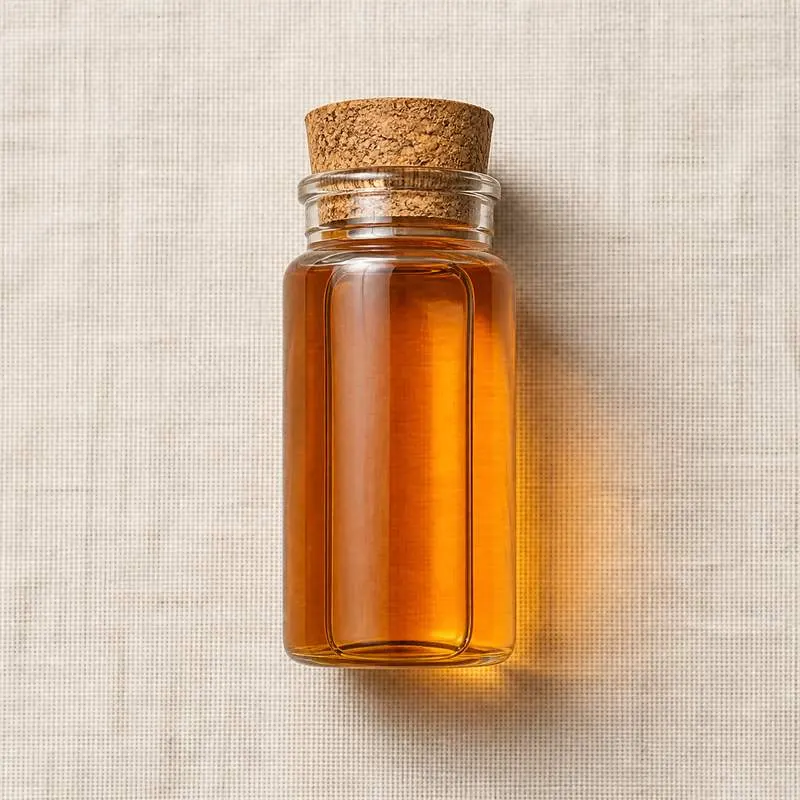
| Appearance | Clear pale yellow to amber liquid, free of sediment |
| Odour | Characteristic jasmine floral, true to reference sample |
| Solubility | Miscible with water at declared dosage, no separation |
| Relative Density at 25 degrees Celsius | 0.980 to 1.070 |
| Refractive Index at 20 degrees Celsius | 1.420 to 1.470 |
| Acid Value | Not more than 5.0 mg KOH per gram |
| Ethanol Content | As declared, plus or minus 2.0 percent |
| Gas Chromatography Profile | Conforms to reference chromatogram |
| Residual Solvent | Not more than 25 mg per kg |
| Lead | Not more than 1.0 mg per kg |
| Arsenic | Not more than 1.0 mg per kg |
| Total Plate Count | Not more than 1000 cfu per gram |
| Yeast and Mould | Not more than 50 cfu per gram |
| Salmonella | Absent in 25 g |
Common Markets Grades
The first distinction is labelling status. Natural grades are built around jasmine absolute or a jasmine tea extract combined with naturally derived esters and terpene alcohols, and are expensive because jasmine absolute requires very large quantities of hand picked flowers. Nature identical grades reproduce the same molecules by synthesis and account for most food volume. Many commercial products carry a small absolute load over a synthetic body so that the natural material sets the character while the synthetics carry the strength.
The second axis is species profile, since sambac gives a greener, more tea like character suited to jasmine tea drinks while grandiflorum is richer and more indolic and suits perfumery and confectionery. Beyond that, buyers specify solubility system, water miscible against oil soluble against emulsion, whether the carrier is alcohol free or propylene glycol free, flavour strength as a recommended dosage band, and halal, kosher and organic certification.
Applications
- Ready to drink jasmine tea beverages, the largest single application by volume
- Instant tea powders and tea based drink mixes
- Milk tea and bubble tea bases, where the flavour must read against dairy fat and sugar
- Confectionery and boiled sweets in floral variants
- Ice cream and frozen desserts, dosed cold into the mix
- Bakery fillings and creams, using a reinforced construction to survive the bake
- Jellies and dessert gels with a floral profile
- Rice and cereal products flavoured to suggest jasmine rice
- Alcoholic ready to drink products and flavoured spirits
- Oral care and fine fragrance applications requiring a floral jasmine accord
China Manufacturers of Jasmine Flavour
Top Jasmine Flavour manufacturers in China.
Company names and logos are the property of the manufacturers themselves. They are listed here because our own directory records them as producing this ingredient. A listing is not an endorsement by them, and we do not represent them or speak on their behalf.
Regulatory Status
In the United States labelling of flavours as natural or artificial follows 21 CFR 101.22. Jasmine absolute and concrete fall among the natural extractives used in flavouring, and the FEMA GRAS programme or 21 CFR 172.515 for synthetic flavouring substances clears the individual synthetic components. Carriers such as propylene glycol, triacetin and gum acacia carry their own clearances, and residual extraction solvent in absolutes is subject to the applicable limits.
In the European Union the framework is Regulation (EC) No 1334/2008, which maintains the Union list of authorised flavouring substances with FL numbers and defines natural flavourings and flavouring preparations. Jasmine absolute obtained from the flower by extraction is a flavouring preparation within that definition. A separate directive governs the extraction solvents used in the production of foodstuffs and sets residue limits for hexane and other permitted solvents. Codex has adopted general guidelines for the use of flavourings, and JECFA has evaluated the benzyl derivatives, the aliphatic and aromatic esters and the indole containing substances in structural groups.
Manufacturing Process
Where natural material is used, the flowers are picked by hand in the early morning while the volatile output is highest and are extracted the same day, because the blossom continues to emit and then degrade after picking. Extraction is by solvent, traditionally hexane, in a rotating or static extractor, and the miscella is concentrated under vacuum to leave a waxy concrete. The concrete is washed with warm ethanol, which dissolves the odourous fraction and leaves the plant waxes behind on chilling, and the ethanol is stripped under vacuum to give the absolute. Supercritical carbon dioxide extraction is used as an alternative that avoids solvent residue.
The synthetic components are made separately. Benzyl acetate is produced by esterification of benzyl alcohol with acetic acid and purified by fractional distillation; linalool is made from myrcene or isolated from terpene feedstocks; cis jasmone and the jasmonates are built by ring closure and side chain elaboration routes and distilled under vacuum. Compounding follows a flavourist formula, with components weighed through a verified dispensary, potent materials such as indole dosed as pre made dilutions, and the blend dissolved in the specified carrier, mixed, held to marry and filtered. Powder grades are emulsified with a carbohydrate carrier and spray dried at a low outlet temperature. Every lot is released against a reference chromatogram and a sensory panel.