Meat Flavour Powder Essence
Meat Flavour Powder Essence is a meat flavour sold as a dry blend, the format known in the Chinese flavour trade as fen zhuang and the one used wherever the finished product is itself a powder. It is not simply a dried version of the paste grade: the reacted flavour concentrate is dried onto a carrier and then blended with salt, monosodium glutamate or yeast extract, the ribonucleotides, sugar and often milled spice, so that the article delivered is a complete dry seasoning base rather than a flavour alone.
The flavour fraction itself is a Maillard reaction product built from a protein hydrolysate, reducing sugars such as xylose and glucose, cysteine and thiamine as sulphur donors, and a fat fraction that supplies the species defining notes. Carrier is usually maltodextrin, salt or a combination, and it typically makes up the larger part of the finished powder by weight.
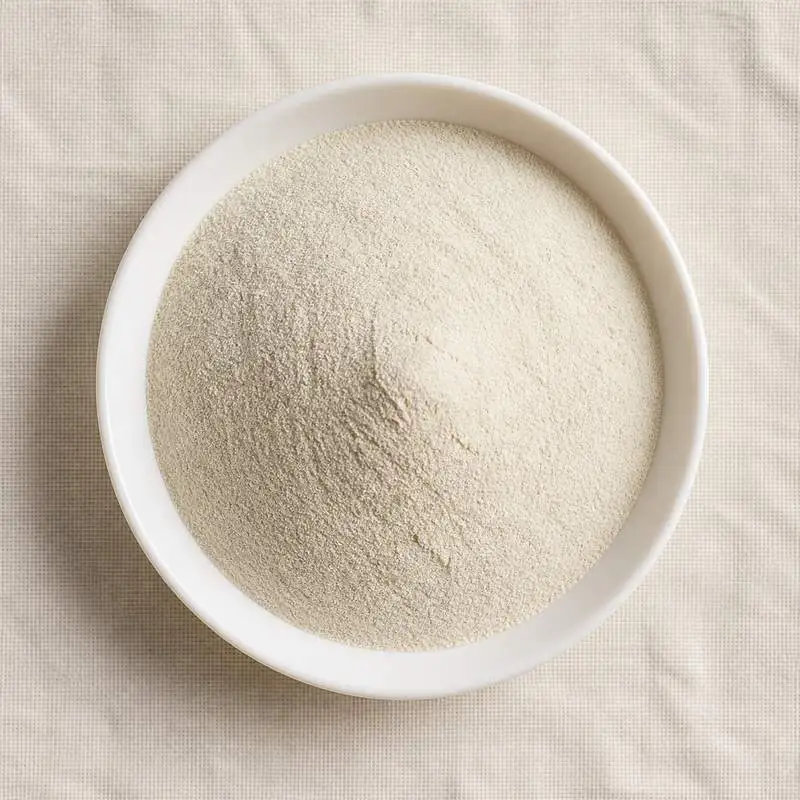
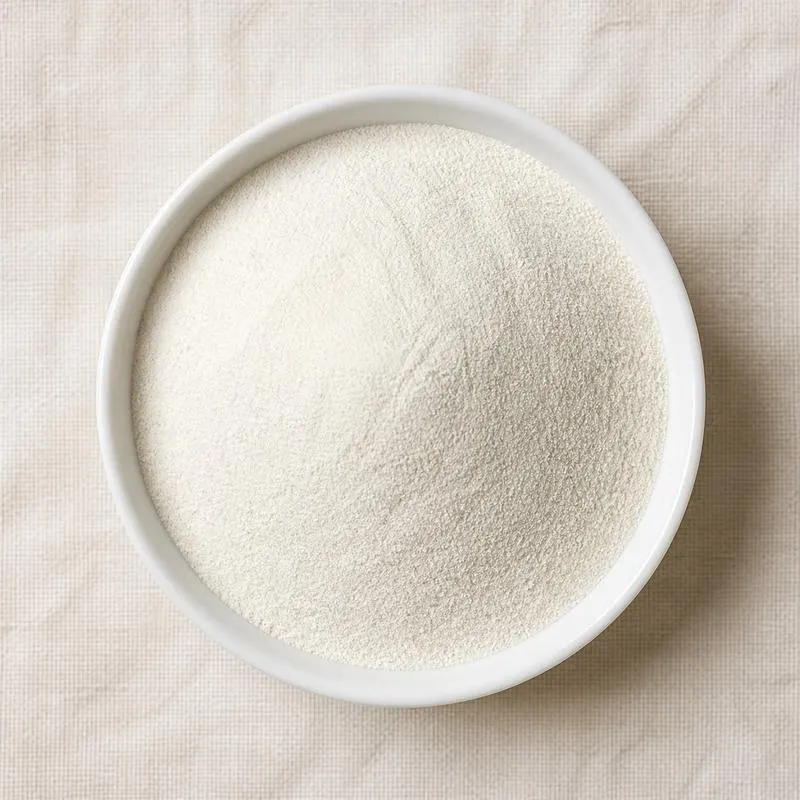
It is a free flowing light to dark brown powder or fine granule, fully water soluble at normal use rates. The blend is hygroscopic because of its salt and hydrolysate content and cakes if held warm and humid, so it is packed in moisture barrier lined bags and stored below 25 degrees Celsius. Some volatile top note is lost during spray drying, which is why powder grades are usually reinforced against the equivalent paste.
We source bulk Meat Flavour Powder Essence from top China manufacturers for our partners. The manufacturer is in Shandong. A smaller requirement can ship in a combined container with other ingredients.
Please send the grade you need, the volume and your destination port, and we will come back with a solution and a price.
or call +86-21-6858 0751
- Function
- Flavours and Aromas
Specifications
| Item | Specification |
|---|---|
| Appearance | Light to dark brown free flowing powder or granule |
| Odour and Taste | Characteristic cooked meat, savoury, no burnt or rancid note |
| Moisture | Not more than 5.0 percent |
| Total Nitrogen | Not less than 2.0 percent |
| Amino Acid Nitrogen | Not less than 0.8 percent |
| Sodium Chloride | As declared, plus or minus 2.0 percent |
| Fat | Not more than 15.0 percent |
| pH at 1 percent solution | 5.0 to 6.5 |
| Sieve Analysis | Not less than 95 percent through 40 mesh |
| Solubility in Water at 60 degrees Celsius | Complete, no insoluble residue |
| 3-MCPD | Not more than 1.0 mg per kg |
| Lead | Not more than 1.0 mg per kg |
| Total Plate Count | Not more than 10000 cfu per gram |
| Salmonella | Absent in 25 g |
Common Markets Grades
Species is the first axis, covering beef, chicken, pork, lamb, duck and seafood, each on a different reaction base. Within each species, roast and grill profiles carry a heavier pyrazine load while boiled and stewed profiles are weighted towards the brothy fraction.
Salt content is the second and most practical axis, running from under 20 percent in industrial concentrates, where the formulator controls the seasoning, to over 50 percent in catering grades where the powder salts the dish as well. Beyond that, buyers specify the carrier system, since maltodextrin gives a neutral base and salt gives a denser and cheaper one, particle size for dry blending against dissolution rate, whether monosodium glutamate is present or umami comes from yeast extract alone, whether an anticaking agent is included, and labelling status. Halal, kosher, vegetarian and non GMO certification is routinely requested.
Applications
- Bouillon cubes and stock granules, where the powder is dry blended with the remaining components
- Instant noodle seasoning sachets, the largest single application by volume
- Snack seasoning dusts for crisps and extruded corn snacks
- Soup, sauce and gravy powders sold to retail and catering
- Dry rubs and marinade powders for poultry and pork
- Savoury biscuit and cracker doughs
- Processed meat, where the powder is scattered during mixing rather than dispersed as a paste
- Ready meal seasoning components requiring a long dry shelf life
- Plant based meat analogue dry blends
- Pet food, applied as a palatant dust on extruded kibble
China Manufacturers of Meat Flavour Powder Essence
Top Meat Flavour Powder Essence manufacturers in China.

Company names and logos are the property of the manufacturers themselves. They are listed here because our own directory records them as producing this ingredient. A listing is not an endorsement by them, and we do not represent them or speak on their behalf.
Regulatory Status
In the United States the product is regulated as a mixture of its components. The reaction flavour fraction is handled as a flavour under 21 CFR 101.22, monosodium glutamate is affirmed as generally recognised as safe under 21 CFR 182.1, the ribonucleotides are recognised flavour enhancers, spices and their oleoresins fall under 21 CFR 182.10 and 182.20, and maltodextrin is an established food ingredient. Hydrolysed protein must be declared by a name identifying the source protein under 21 CFR 102.22.
In the European Union the reaction flavour falls under Regulation (EC) No 1334/2008, which sets the permitted starting materials, reaction conditions and by product limits for thermal process flavourings. The enhancer components carry E numbers under Regulation (EC) No 1333/2008, monosodium glutamate as E 621, disodium inosinate as E 631 and disodium guanylate as E 627, and any anticaking agent carries its own number and conditions of use. Where an acid hydrolysate forms part of the base, the maximum levels for 3-monochloropropane-1,2-diol in the contaminants regulation apply. Codex has adopted general guidelines for flavourings and general standards covering the same additives, and JECFA has evaluated the Maillard derived flavouring groups, the glutamates and the ribonucleotides. Soy, wheat, milk and celery derived components trigger allergen declaration in both jurisdictions.
Manufacturing Process
The protein hydrolysate is prepared by treating soy meal, wheat gluten or an animal protein with a protease at its pH and temperature optimum or with hydrochloric acid under reflux, then inactivating the enzyme or neutralising the acid, filtering out insolubles, decolourising over carbon where an acid route is used, and concentrating the liquor under vacuum. The concentrate is charged to a jacketed pressurised reactor with reducing sugars, cysteine, thiamine and the species appropriate fat and held at controlled temperature, pressure and time while the Maillard fraction develops, then cooled rapidly.
The reacted concentrate is emulsified with maltodextrin, gum or salt carrier and dried in a spray drying tower, with the inlet and outlet temperatures set as low as the moisture target allows so that the volatile fraction is retained. The dried powder is then blended in a ribbon or plough share mixer with salt, monosodium glutamate or yeast extract, nucleotides, sugar and any milled spice, under controlled humidity so that the hygroscopic components do not pick up moisture during handling. Particle size matching between components matters, since a wide spread causes segregation. Granular grades pass through a fluid bed agglomerator, and the finished blend is sieved, metal detected and filled into lined bags.