Monascus Rice
Monascus rice is rice that has been solid state fermented with a filamentous fungus of the genus Monascus, usually Monascus purpureus, until the grain is coloured through by the pigments the mould produces. It is also called red kojic rice or red mould rice, and it is the raw material from which Monascus colour is extracted. In Chinese food manufacture it has been used for more than a thousand years to colour meat, wine and bean curd.
The colouring principles are azaphilone polyketides formed as a family of six related compounds in three colour pairs: the yellow monascin and ankaflavin, the orange rubropunctatin and monascorubrin, and the red monascorubramine and rubropunctamine. The reds are formed when the orange pigments react with amino groups from amino acids or proteins, which is why the shade obtained in a finished food depends on how much protein is present and why the pigment binds so strongly to meat.
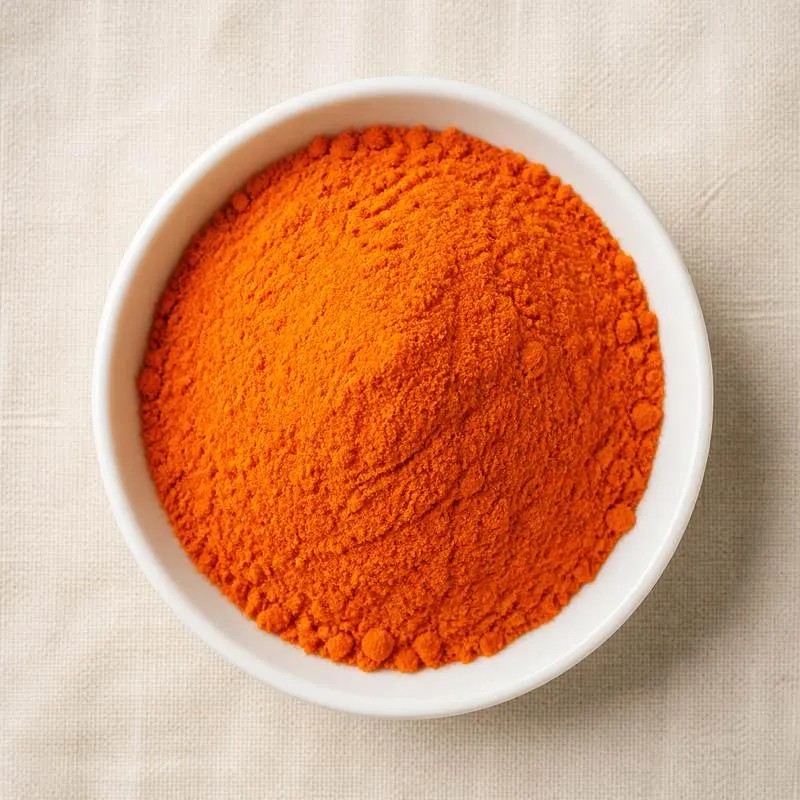
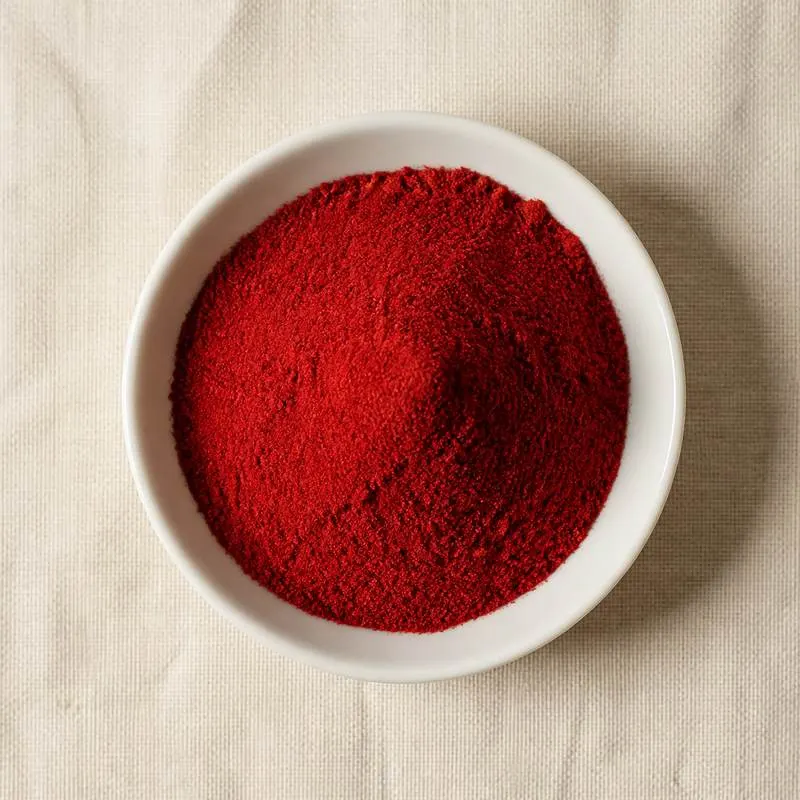
The fermented grain is used whole or milled to a dark red powder, and as extracted colour preparations standardised on colour value. Monascus red is stable to heat and to pH change across the normal food range, which sets it apart from anthocyanin reds, but it fades on prolonged exposure to light. Water soluble, oil soluble and alcohol soluble grades of the extracted colour are made by adjusting the extraction and the amino acid reaction.
We source bulk Monascus Rice from top China manufacturers for our partners. The manufacturer is in Guangdong. A smaller requirement can ship in a combined container with other ingredients.
Please send the grade you need, the volume and your destination port, and we will come back with a solution and a price.
or call +86-21-6858 0751
- Function
- Colorant
Specifications
| Item | Specification |
|---|---|
| Appearance | Dark red to purple red powder or whole grain |
| Colour Value E1% 1cm at 500 nm | 200 minimum |
| Identification | Absorption maximum at 490 to 510 nm in 70% ethanol |
| Loss on Drying | 8.0% maximum |
| Total Ash | 5.0% maximum |
| pH, 1% aqueous suspension | 4.0 to 6.5 |
| Citrinin | 0.2 mg/kg maximum |
| Aflatoxin B1 | 2 micrograms/kg maximum |
| Lead | 2 mg/kg maximum |
| Arsenic | 1 mg/kg maximum |
| Total Plate Count | 10,000 cfu/g maximum |
| Yeast and Mould | 500 cfu/g maximum |
| E. coli | Absent in 5 g |
| Salmonella | Absent in 25 g |
Common Markets Grades
Whole and milled fermented rice is specified by colour value, measured as E1% 1cm near 500 nm in aqueous ethanol, with typical grades at 100 to 1000 colour units per gram, and by the pigment ratio, since the balance of red, orange and yellow determines the shade delivered. Extracted colour preparations are standardised much higher, commonly at colour value 100 to 400 on a maltodextrin carrier or in a liquid concentrate.
Solubility is the second axis. Water soluble Monascus red is produced by carrying out the amino acid reaction with a hydrophilic amine source, giving a colour that dissolves in aqueous systems. Alcohol soluble grades serve rice wine and spirit applications, and oil dispersible grades are made for fatty products. A separate and important distinction concerns the secondary metabolites. Strains and process conditions are selected to suppress citrinin, a nephrotoxic mycotoxin that Monascus can produce, and low citrinin or citrinin free grades carry a tested limit on the certificate. Where the material is intended as a colour rather than as a supplement, low monacolin grades are specified so that the product does not carry pharmacological activity.
Applications
- Cured and roasted meat, char siu and Chinese sausage, where the pigment binds to muscle protein and gives a stable red
- Surimi, fish paste and imitation crab products
- Fermented bean curd and pickled vegetables in Chinese manufacture
- Rice wine and huangjiu, both as a colour and as part of the fermentation starter
- Sauces, marinades and braising liquids in Chinese cooking
- Confectionery, jelly and dessert products in markets where the colour is authorised
- Bakery fillings and steamed buns requiring a heat stable red
- Noodles and rice products coloured through the dough
- Dietary supplements, where the fermented rice itself is the article of commerce rather than the colour
- Pet food, where a fermentation derived red survives extrusion
Brands Using Monascus Rice
Widely-distributed consumer products that list Monascus Rice on the ingredient label.
- Nature's WayRed Yeast Rice ↗A capsule whose supplement facts name the active as red yeast rice (Monascus purpureus) at 600 mg per serving.Label verified 2026-08-31
- CodeageLiposomal Red Yeast Rice+ Platinum ↗A liposomal capsule delivering red yeast rice fermented with Monascus alongside CoQ10.Label verified 2026-08-31
- NutricostRed Yeast Rice 1200 mg ↗Capsules supplying 1200 mg of red yeast rice per serving as the sole active ingredient.Label verified 2026-08-31
- BulkSupplementsRed Yeast Rice Extract Capsules ↗Capsules of red yeast rice extract sold as a single-ingredient supplement.Label verified 2026-08-31
Brand names, product names and logos are the property of their owners. They appear here as published evidence that the ingredient is used, taken from the brand's own label or website. Their appearance is not an endorsement, and it does not mean the brand buys from us or from any manufacturer listed on this site.
China Manufacturers of Monascus Rice
Top Monascus Rice manufacturers in China.
Company names and logos are the property of the manufacturers themselves. They are listed here because our own directory records them as producing this ingredient. A listing is not an endorsement by them, and we do not represent them or speak on their behalf.
Regulatory Status
Monascus colour is authorised in China, Japan and a number of other Asian markets, where it has a long history of food use, but it holds no colour authorisation in the United States or the European Union. There is no colour additive listing for Monascus pigment in 21 CFR Parts 73 or 74, and no E number under Regulation (EC) No 1333/2008, so the colour may not be used in food in either market. Products coloured with it therefore cannot be exported to those markets on that basis, and the destination should be settled before a specification is agreed.
The fermented rice itself is treated separately from the colour. In the United States, red yeast rice preparations containing appreciable monacolin K have been the subject of enforcement on the ground that the substance is chemically identical to a prescription drug, so supplement material is sold with monacolin content controlled and documented. In the European Union monacolins from red yeast rice are restricted by Commission Regulation (EU) 2022/860, which sets a low maximum in food supplements and requires specific labelling. Citrinin is separately limited in food supplements based on rice fermented with red yeast under the contaminants regulation. JECFA has not adopted specifications for Monascus colour and it is not carried in the Codex General Standard for Food Additives.
Manufacturing Process
Long grain rice is washed, soaked and steamed to gelatinise the starch, then cooled and inoculated with a Monascus purpureus starter culture. Fermentation is carried out in solid state, either in trays or in rotating drum bioreactors, over roughly one to two weeks at around 30 degrees Celsius with controlled humidity and periodic turning to maintain aeration and to keep the temperature even through the bed. Pigment formation is a secondary metabolic response and depends heavily on the nitrogen source, the moisture and the aeration, so these are the parameters that determine both yield and the red to orange ratio.
When the grain is fully coloured the fermentation is stopped by drying, usually in a hot air dryer at a temperature low enough to preserve the pigment. Dried grain is either packed whole, milled to powder, or taken forward for extraction. For extracted colour the milled rice is extracted with aqueous ethanol, the miscella is clarified and the solvent recovered under vacuum, and the concentrate is reacted with a selected amino acid to convert the orange pigments to the red form and to set the solubility class. The product is then standardised to colour value, blended with maltodextrin where a powder is required, and spray dried. Citrinin is tested at the fermented rice stage and again on the finished colour.