Mulberry Leaf
Mulberry leaf is the dried foliage of Morus alba L. and, less commonly, of Morus nigra and Morus australis, traded as a botanical raw material rather than as an extract. It has a double commercial life: it is the sole feed of the silkworm and therefore a by-product of sericulture across China and South Asia, and it is a herbal material used for infusion, for traditional preparations and as the feedstock for standardised extracts.
The leaf is nutritionally substantial for a foliage material, running 15 to 25 percent crude protein on a dry basis with a useful amino acid profile, along with dietary fibre, calcium, iron and carotenoids. The constituents of interest to the herbal trade are the iminosugar 1-deoxynojirimycin, present at around a tenth of a percent of the dry leaf, flavonoid glycosides based on quercetin and kaempferol including rutin and isoquercitrin, chlorogenic acid and the alkaloid fagomine.
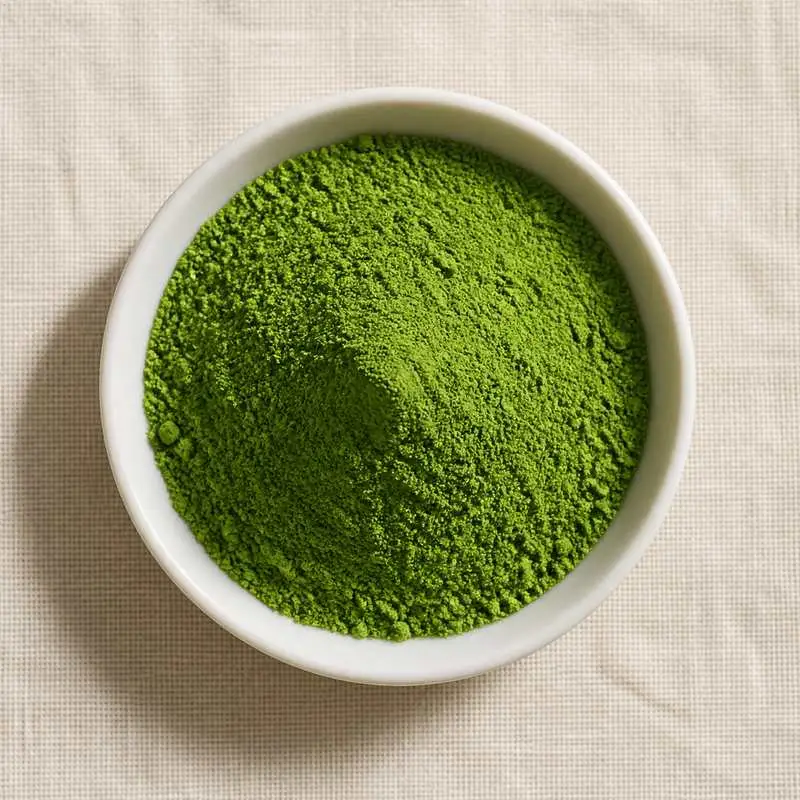
Dried leaf is used whole, cut and sifted for tea bag filling, or milled to a fine green powder. Colour runs from bright green in carefully dried material to olive or yellowish where drying was too hot or too slow, and colour is the first thing a buyer looks at because it tracks how well the chlorophyll and the more fragile constituents survived. The leaf has a mild grassy odour and a faintly bitter, tea-like taste. Dried material is hygroscopic and the chlorophyll fades on exposure to light, so it is packed with a moisture and light barrier.
We source bulk Mulberry Leaf from top China manufacturers for our partners. The manufacturer is in Jiangsu. A smaller requirement can ship in a combined container with other ingredients.
Please send the grade you need, the volume and your destination port, and we will come back with a solution and a price.
or call +86-21-6858 0751
- Function
- Plant extract
Specifications
| Item | Specification |
|---|---|
| Botanical Source | Morus alba L., dried leaf |
| Appearance | Green cut and sifted leaf or fine green powder |
| Crude Protein | ≥ 15.0% on dry basis |
| Total Flavonoids | ≥ 1.0% |
| Identification | Conforms by macroscopic and microscopic examination |
| Moisture | ≤ 10.0% |
| Total Ash | ≤ 12.0% |
| Pesticide Residues | Complies with destination market limits |
| Lead | ≤ 2.0 mg/kg |
| Arsenic | ≤ 1.0 mg/kg |
| Total Plate Count | ≤ 100,000 cfu/g |
| Yeast and Mould | ≤ 1,000 cfu/g |
| E. coli | Negative in 1 g |
| Salmonella | Negative in 25 g |
Common Markets Grades
Physical form is the first grading axis: whole leaf, cut and sifted to a defined sieve range, or milled powder at 80 to 200 mesh. Within each, lots are graded on colour, on stem and petiole content, on the absence of yellowed or diseased leaf and on foreign matter. Harvest timing is a real specification point rather than a marketing one, since young spring leaf carries considerably more 1-deoxynojirimycin and more protein than late season leaf, and the trade prices the two differently.
Processed variants are traded as separate items: steamed and dried leaf for tea, roasted leaf for a darker infusion, freeze dried powder where colour retention matters most, and enzyme-inactivated superfine powder made by blanching and jet milling for use as a green food powder. Frost-fallen leaf, collected after the first frost, is a traditional Chinese grade with its own designation. Organic certified material is widely available, particularly from sericulture regions where pesticide use is already limited because the leaf feeds silkworms. Extracts standardised on 1-deoxynojirimycin or on total flavonoids are made from this material and are a different product.
Applications
- Herbal infusions and mulberry leaf tea, the largest direct outlet for cut and sifted leaf
- Green food powders and smoothie blends, using the superfine milled grade
- Traditional Chinese herbal preparations, where the leaf is a long-established material for heat and respiratory formulas
- Blood sugar management supplements, either as milled leaf or as the feedstock for standardised extract
- Noodles, bakery and confectionery, where the powder contributes green colour and fibre
- Animal feed and aquaculture feed, drawing on the protein content of the leaf meal
- Silkworm rearing, the original and still very large use of fresh leaf
- Cosmetic formulations using the flavonoid fraction in masks and toners
- Feedstock for 1-deoxynojirimycin and flavonoid extraction
Brands Using Mulberry Leaf
Widely-distributed consumer products that list Mulberry Leaf on the ingredient label.
- ProCaps LaboratoriesWhite Mulberry Leaf with Cinnamon ↗Softgels combining a 5 percent 1-deoxynojirimycin extract of white mulberry leaf with cinnamon bark extract for blood sugar support.Label verified 2026-08-31
- Double Wood SupplementsLiquid Chlorophyll ↗The chlorophyll in this liquid supplement is extracted from mulberry leaves and carried in vegetable glycerin.Label verified 2026-08-31
Brand names, product names and logos are the property of their owners. They appear here as published evidence that the ingredient is used, taken from the brand's own label or website. Their appearance is not an endorsement, and it does not mean the brand buys from us or from any manufacturer listed on this site.
China Manufacturers of Mulberry Leaf
Top Mulberry Leaf manufacturers in China.

Company names and logos are the property of the manufacturers themselves. They are listed here because our own directory records them as producing this ingredient. A listing is not an endorsement by them, and we do not represent them or speak on their behalf.
Regulatory Status
In the United States mulberry leaf is marketed as a dietary ingredient under the Dietary Supplement Health and Education Act, with manufacture under 21 CFR Part 111, and mulberry leaf tea has a history of consumption as a herbal infusion. The Food and Drug Administration has not issued a food additive regulation or a generally recognised as safe affirmation specific to mulberry leaf, so its use in conventional foods rests on the manufacturer's own determination, and permitted labelling is limited to structure and function statements. Pesticide residues are controlled through tolerances set by the Environmental Protection Agency.
In the European Union the position for Morus alba leaf is recorded in the Commission novel food catalogue and depends on whether the specific preparation was consumed to a significant degree before May 1997; the leaf as a herbal infusion has a stronger case than concentrated preparations, and status should be confirmed for the form being sold rather than assumed for the species. No health claim for mulberry leaf appears on the EU register of authorised claims. Dried leaf is subject to pesticide maximum residue levels applied with a drying factor, and to the contaminant limits of the contaminants Regulation, including the limits on pyrrolizidine alkaloids in herbal infusions and dried botanicals, which arise from co-harvested weed contamination rather than from the leaf itself. Codex maintains general contaminant standards and a code of hygienic practice applicable to dried botanical materials.
Manufacturing Process
Leaf is harvested by hand or by mechanical cutter, with the timing set by the intended grade. Fresh leaf deteriorates and browns within hours of cutting, so it is moved to the processing site immediately, washed to remove dust and field debris, and inspected. The first processing step for any quality grade is enzyme inactivation, achieved by steam blanching or a short hot water immersion, which denatures the polyphenol oxidase and peroxidase responsible for browning and fixes the green colour.
Drying follows. Forced air drying at 50 to 60 degrees Celsius is the industrial standard, fast enough to prevent yellowing while staying below the temperature at which chlorophyll degrades and the more fragile constituents are lost; shade drying is used in traditional production and freeze drying for the top powder grades. The dried leaf is conditioned to around 8 to 10 percent moisture, then destemmed and passed over aspirators and screens to remove petioles, stems and foreign matter, with optical sorting used on the higher grades. Material for infusion is cut and sifted to the required particle band; material for powder is milled, with jet milling used where a superfine particle size is required, since impact milling generates heat that dulls the colour. The finished leaf passes a metal detector, is steam sterilised where a reduced microbiological count is specified, and is packed in lined cartons or foil bags with a moisture and light barrier.