Quercetin
Quercetin is a flavonol, chemically 3,3',4',5,7-pentahydroxyflavone, with formula C15H10O7 and molar mass 302.24 g/mol in the anhydrous form and 338.27 g/mol as the dihydrate that most commercial material actually is. It is one of the most widely distributed flavonoids in the plant kingdom, occurring mainly as glycosides such as rutin in buckwheat, isoquercitrin in onion and quercitrin in many fruits, with the free aglycone comparatively rare in nature.
Commercial quercetin is used as an antioxidant dietary ingredient rather than as a technological food additive. Its catechol B ring and the 3-hydroxy-4-keto arrangement make it an efficient radical scavenger and metal chelator, and it is the basis of a large supplement category positioned on immune and respiratory support.
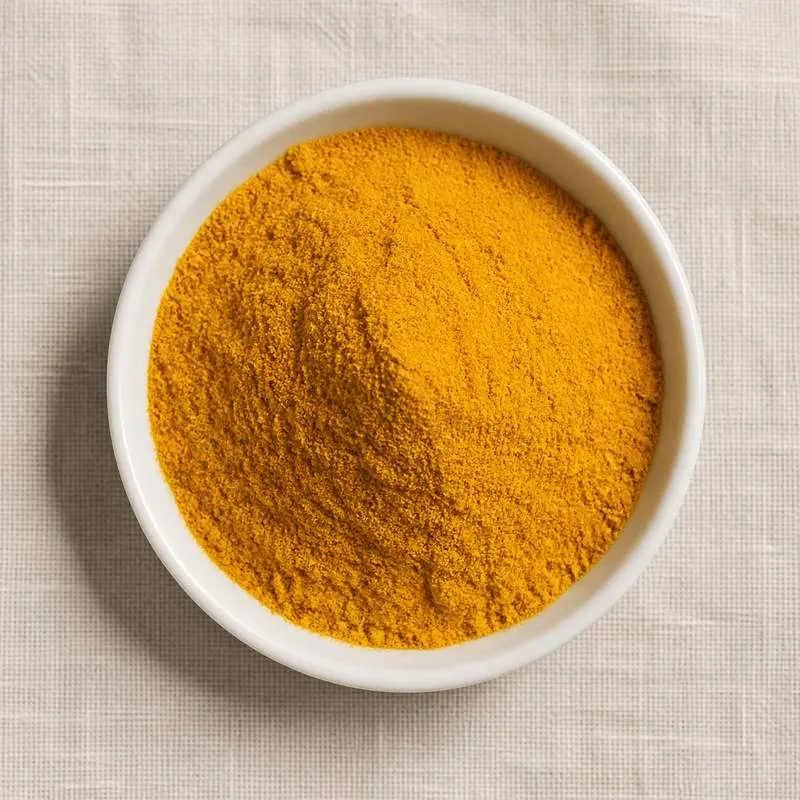
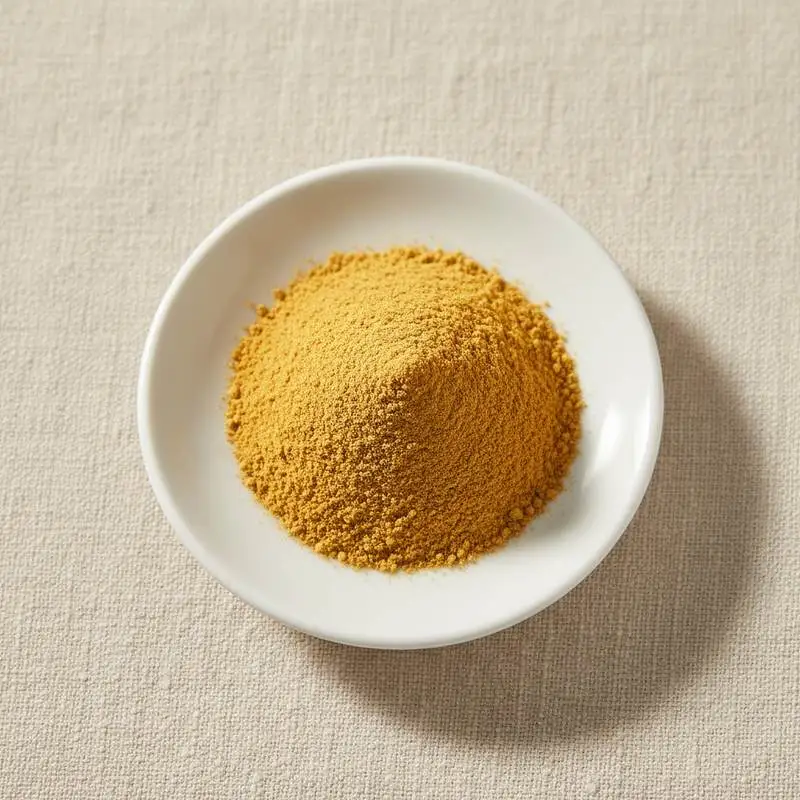
The material is a yellow to greenish yellow crystalline powder, practically insoluble in cold water, sparingly soluble in hot water and in ethanol, and readily soluble in dilute alkali and in dimethyl sulphoxide. That poor aqueous solubility decides formulation, and phytosome, cyclodextrin complexed and solid dispersion versions exist to address it. In alkaline solution the compound oxidises and darkens rapidly, so aqueous applications are held on the acid side and the powder is packed away from light and moisture.
We source bulk Quercetin from top China manufacturers for our partners. The manufacturer is in Guangdong. A smaller requirement can ship in a combined container with other ingredients.
Please send the grade you need, the volume and your destination port, and we will come back with a solution and a price.
or call +86-21-6858 0751
Specifications
| Item | Specification |
|---|---|
| Appearance | Yellow to greenish yellow crystalline powder |
| Odour and Taste | Odourless, bitter |
| Assay on dried basis (HPLC) | ≥ 95.0% |
| Identification | Conforms by HPLC retention, infrared and UV spectrum |
| Rutin Residue | ≤ 1.0% |
| Loss on Drying | 9.0 to 13.0% as dihydrate |
| Residue on Ignition | ≤ 0.5% |
| Particle Size | 100% through 80 mesh |
| Residual Ethanol | ≤ 0.5% |
| Residual Methanol | ≤ 30 mg/kg |
| Heavy Metals (as Pb) | ≤ 10 mg/kg |
| Lead | ≤ 1.0 mg/kg |
| Arsenic | ≤ 1.0 mg/kg |
| Total Plate Count | ≤ 1,000 cfu/g |
| Yeast and Mould | ≤ 100 cfu/g |
| E. coli | Negative |
| Salmonella | Absent in 25 g |
Common Markets Grades
The bulk article is quercetin dihydrate at 95 percent minimum by HPLC, derived from rutin, with 98 percent grades and anhydrous quercetin traded for pharmaceutical and reference use. The specification names whether assay is reported on the dihydrate or on the anhydrous basis, because the same batch gives different numbers under the two conventions. Plant extract grades standardised at 20, 50 or 80 percent quercetin are sold where a botanical declaration is wanted.
Formulation grades are where the trade differentiates. Micronised and nano-milled powders are produced to raise dissolution rate, phospholipid complexes and gamma-cyclodextrin inclusion complexes are sold as enhanced absorption forms, and water dispersible versions are spray dried onto modified starch or blended with a solubiliser. Enzymatically modified isoquercitrin, made by transglycosylating isoquercitrin, is a related but distinct article with far better water solubility and is quoted separately. Source is stated on the certificate, since the feedstock is normally Sophora japonica flower bud or buckwheat rather than a food fruit.
Applications
- Dietary supplements in capsule and tablet form, the dominant outlet for the compound
- Immune and respiratory support formulations, usually combined with vitamin C, zinc and bromelain
- Allergy and seasonal comfort blends, where quercetin is the anchor ingredient
- Sports nutrition products positioned on endurance and antioxidant recovery
- Cardiovascular and metabolic support formulas alongside other polyphenols
- Functional beverages and shots, dosed as a solubilised or cyclodextrin complexed grade
- Skin care serums and creams, formulated on radical scavenging and soothing activity
- Sun care products, where the flavonol absorbs in the ultraviolet range
- Animal feed and pet supplements, used as a natural antioxidant
- Analytical reference material for the assay of flavonoid content in plant products
Brands Using Quercetin
Widely-distributed consumer products that list Quercetin on the ingredient label.
- Double Wood SupplementsQuercetin with Bromelain Capsules ↗A quercetin capsule that adds 100 mg of bromelain per capsule.Label verified 2026-08-31
- Carlson LabsQuercetin Vegetarian Capsules ↗Two vegetarian capsules supply 500 mg of quercetin per serving.Label verified 2026-08-31
- Natural FactorsQuercetin Vegetarian Capsules ↗Supplement facts panel lists 500 mg of quercetin in each vegetarian capsule.Label verified 2026-08-31
Brand names, product names and logos are the property of their owners. They appear here as published evidence that the ingredient is used, taken from the brand's own label or website. Their appearance is not an endorsement, and it does not mean the brand buys from us or from any manufacturer listed on this site.
China Manufacturers of Quercetin
Top Quercetin manufacturers in China.

Company names and logos are the property of the manufacturers themselves. They are listed here because our own directory records them as producing this ingredient. A listing is not an endorsement by them, and we do not represent them or speak on their behalf.
Regulatory Status
In the United States quercetin is marketed as a dietary ingredient under the Dietary Supplement Health and Education Act. High purity quercetin has additionally been the subject of GRAS notices to the Food and Drug Administration covering defined food and beverage uses, to which the agency responded without objection, so food use rests on those conclusions rather than on a general food additive regulation. There is no colour additive listing, so quercetin may not be used to give colour to food in the United States.
In the European Union quercetin carries no E number and is not an authorised food additive. Its use in food supplements is handled at member state level under national rules on substances other than vitamins and minerals, and preparations without a demonstrated history of consumption before May 1997 fall within the scope of Regulation 2015/2283 on novel foods. Enzymatically modified isoquercitrin has been separately authorised as a novel food and as an antioxidant, which is a different regulatory position from that of quercetin itself. The Joint FAO WHO Expert Committee has evaluated enzymatically modified isoquercitrin among flavonoid preparations. Regulation 1223/2009 governs cosmetic use.
Manufacturing Process
Almost all commercial quercetin is made from rutin rather than extracted directly as the aglycone. Dried flower buds of Sophora japonica, or buckwheat herb, are milled and extracted with hot water or dilute alkali, and the liquor is cooled and acidified so that crude rutin crystallises out. The crude rutin is recovered by filtration, washed and recrystallised from aqueous alcohol to a defined purity, and this purified rutin is the starting material for the next stage.
Rutin is then hydrolysed to remove its rutinose sugar, either by heating in dilute mineral acid in an alcoholic medium or, in the cleaner enzymatic route, by treatment with a rhamnosidase and glucosidase preparation at controlled temperature and pH. Acid hydrolysis is faster but generates more degradation products and requires closer control of colour. The liberated quercetin, being far less soluble than rutin, precipitates as the reaction proceeds and is recovered on a centrifuge. The wet cake is redissolved in hot ethanol, treated with activated carbon to remove colour and oxidation products, and recrystallised as the dihydrate. Crystals are washed, dried under vacuum at low temperature, milled to the specified mesh, assayed by HPLC and packed under a moisture and light barrier.