NFC Clear Apple Juice
NFC clear apple juice is pressed apple juice that has been clarified and filtered to a bright liquid and pasteurised without ever being concentrated, so it is packed and shipped at its natural soluble solids rather than reconstituted from a concentrate.
The not from concentrate route matters because evaporation strips volatile aroma and applies a thermal load that flattens flavour, and because the juice never passes through the dilution step in which water quality and reconstitution accuracy become variables. Natural Brix runs from about 11 to 14 depending on variety and season, with titratable acidity of 0.3 to 0.8 percent as malic acid and a pH near 3.3 to 3.9. The sugars are fructose, glucose and sucrose in a ratio characteristic of apple, and sorbitol is present at a level used as an authenticity marker. Clarity is achieved by removing pectin and the phenolic and protein colloids that cause haze, which also lightens the colour to a pale straw or golden yellow.
Packers ship it chilled or frozen in bag in box, drums and tankers, or aseptically filled for ambient storage. Once clarified the juice is a true solution and stays bright without agitation. The two attributes that decide shelf life are non enzymatic browning, which darkens the juice slowly, and any residual haze forming material, which forms a deposit if the filtration was incomplete.
We source bulk NFC Clear Apple Juice from top China manufacturers for our partners. The manufacturer is in Hebei. A smaller requirement can ship in a combined container with other ingredients.
Please send the grade you need, the volume and your destination port, and we will come back with a solution and a price.
or call +86-21-6858 0751
- Function
- Beverage ingredient
Specifications
| Item | Specification |
|---|---|
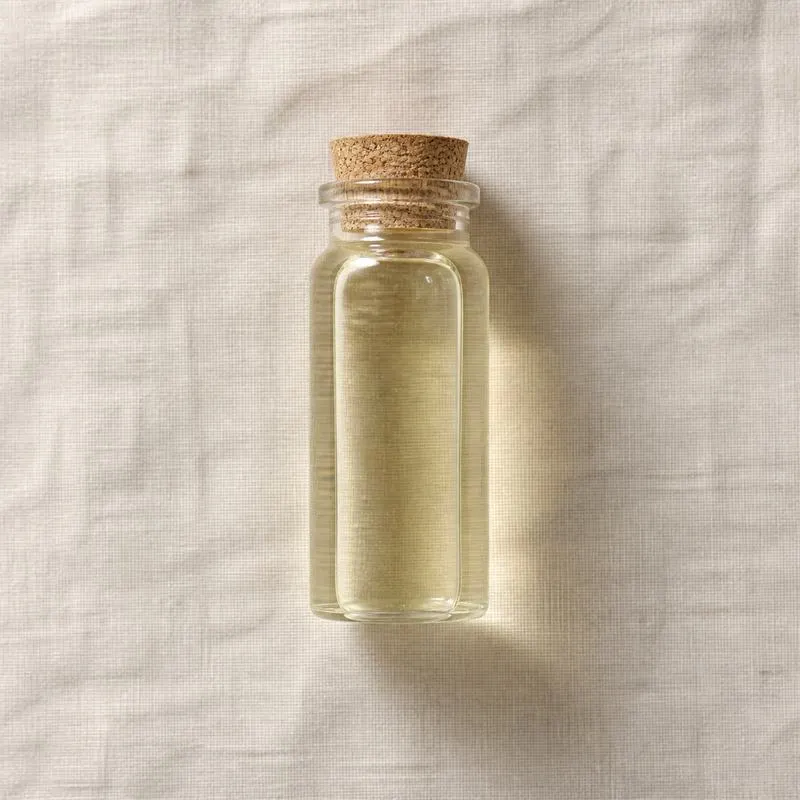
| Appearance | Bright clear liquid, free from sediment and floating matter, pale straw to golden yellow |
| Flavour and odour | Characteristic fresh apple, no cooked, fermented or musty note |
| Soluble solids | 11.0 to 13.5 Brix at 20 degrees Celsius, natural strength |
| pH | 3.3 to 3.9 |
| Titratable acidity as malic acid | 0.3 to 0.8 percent |
| Transmittance at 625 nm | 95 percent minimum |
| Starch and pectin | Negative to iodine and alcohol tests |
| Patulin | 50 microgram per kg maximum |
| Lead | 0.03 mg/kg maximum |
| Inorganic arsenic | 10 microgram per kg maximum |
| Total plate count | 100 cfu/g maximum |
| Yeast and mould | 10 cfu/g maximum |
| Escherichia coli | Negative in 1 g |
| Salmonella | Negative in 25 g |
Common Markets Grades
Grades are set mainly by variety and origin, since a juice pressed from a single cultivar such as Fuji, Gala or Red Delicious differs in the sugar to acid ratio from a blend of dessert and culinary varieties. Blends are made to a target ratio rather than to a variety declaration. Organic certified juice is traded as a separate specification, as is juice from a declared growing region, where the origin is priced separately.
The other distinctions are preservation route and pack format. Chilled pasteurised juice, aseptic ambient juice and frozen juice are all traded from the same press. High pressure processed juice, treated by pressure rather than heat, is sold where a fresh flavour and a chilled distribution model justify the cost. Lots are bought on Brix, titratable acidity, the Brix to acid ratio, transmittance or turbidity, and colour, with patulin and authenticity results reported on the certificate of analysis.
Applications
- Chilled and ambient bottled apple juice sold as a single juice
- Juice blends, where apple is the neutral high volume base carrying stronger flavoured juices
- Juice drinks and flavoured waters dosed to a declared juice percentage
- Children and family beverages formulated without added sugar, using the juice as the sweetening source
- Cider and fruit wine production, where the clarified juice ferments to a bright product
- Vinegar production, as the substrate for alcoholic and then acetic fermentation
- Dairy fruit preparations and drinking yoghurts formulated on a low pH base
- Confectionery and jelly production as a natural sugar and acid source
- Sauces, glazes and marinades, contributing acidity and browning sugars
- Sorbets, ice lollies and frozen desserts
China Manufacturers of NFC Clear Apple Juice
Top NFC Clear Apple Juice manufacturers in China.
Company names and logos are the property of the manufacturers themselves. They are listed here because our own directory records them as producing this ingredient. A listing is not an endorsement by them, and we do not represent them or speak on their behalf.
Regulatory Status
In the United States apple juice is a conventional food and processors operate the hazard analysis and critical control point plan required by 21 CFR Part 120, including the pathogen reduction requirement that applies to juice. The Food and Drug Administration has established an action level for patulin in apple juice and apple juice concentrate of 50 micrograms per kilogram in the single strength juice, and this is the defining specification for apple material. Inorganic arsenic in apple juice is subject to an action level, and the Brix reference value for apple establishes single strength for percentage juice declaration.
In the European Union apple juice falls under the Fruit Juice Directive as amended, which reserves the description fruit juice for material that has not been reconstituted and sets out the permitted treatments, so a not from concentrate declaration is a compositional statement rather than a marketing one. Patulin is subject to a maximum level in fruit juices under the contaminants regulation, and there is a code of practice for its prevention and reduction. Codex maintains a general standard for fruit juices and nectars together with a code of practice for the prevention and reduction of patulin contamination in apple juice. Authenticity against the fruit juice industry reference guidelines is checked routinely because apple juice is a common target for adulteration with sugar syrups.
Manufacturing Process
Apples are received in season, tipped into a flume that washes them, then sorted to remove rotten and mould damaged fruit. That sorting is the critical control for patulin, because the toxin is produced by Penicillium expansum in bruised and rotting tissue and is not destroyed by pasteurisation. Sound fruit is milled to a mash and dosed with pectinase, which breaks down the pectin holding the tissue together so that the mash releases juice, then pressed on a belt or horizontal rotary press. Press cake is sometimes given a second extraction with water for a lower value stream that is kept out of the not from concentrate juice.
The raw juice is screened and centrifuged, then given a further enzyme hold with pectinase and amylase to eliminate residual pectin and starch, both of which would otherwise cause haze. It is fined with gelatine and silica sol to remove haze forming phenolics and protein, then filtered on diatomaceous earth or through a crossflow membrane to a bright liquid. Some lots are passed over an adsorbent resin to reduce patulin and colour. The bright juice is deaerated, pasteurised on a plate heat exchanger, cooled rapidly and filled aseptically, chilled or frozen, with no evaporation stage at any point.