Probiotic Freeze Dried
Freeze dried probiotic is live probiotic biomass that has been preserved by lyophilisation, the removal of water from the frozen state by sublimation under vacuum. It is the dominant commercial form for probiotic cultures because it is the drying method that leaves the highest proportion of cells alive, and because a powder at very low residual moisture is stable in a way that no liquid or frozen culture can be through ordinary distribution.
The reason the method works is that water is taken out without the cell ever passing through a liquid to gas transition at the cell surface. Freezing itself is the more damaging step, since ice crystals rupture membranes and the concentration of solutes in the remaining unfrozen water denatures proteins, which is why the biomass is always mixed with a cryoprotectant before freezing. Sucrose, trehalose, skim milk solids, maltodextrin and combinations of these form a glassy matrix that replaces the hydrogen bonding of water at the membrane surface and immobilises the cell, and the choice of cryoprotectant system is usually the largest single factor in the survival rate a producer achieves.
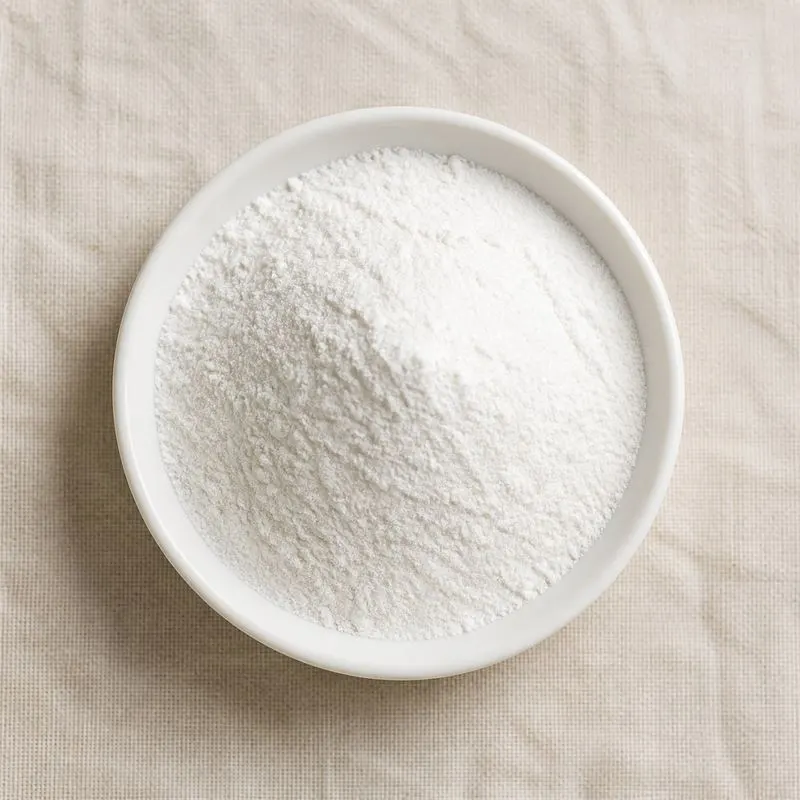
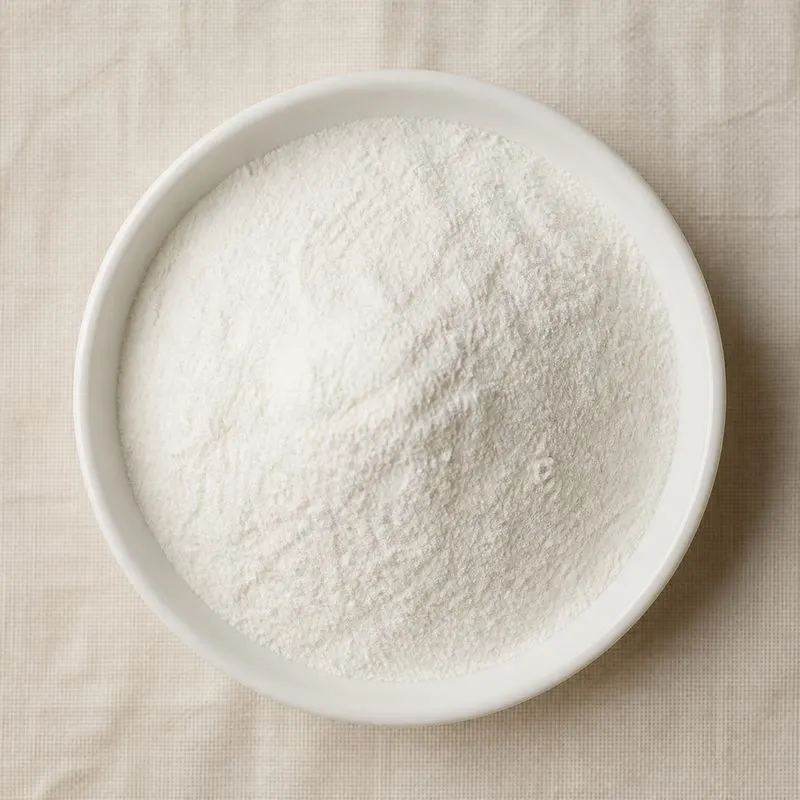
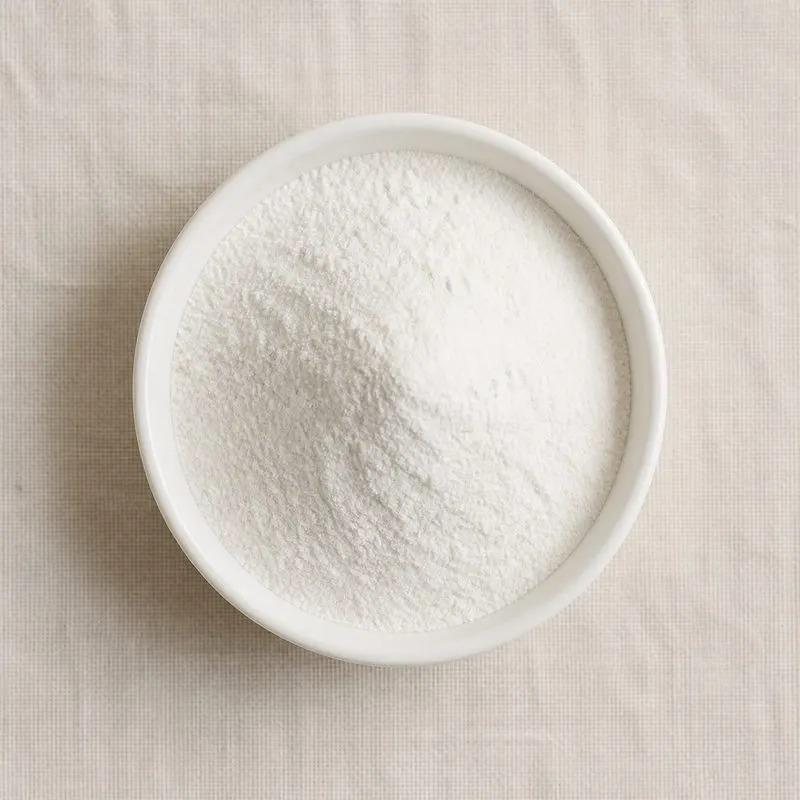
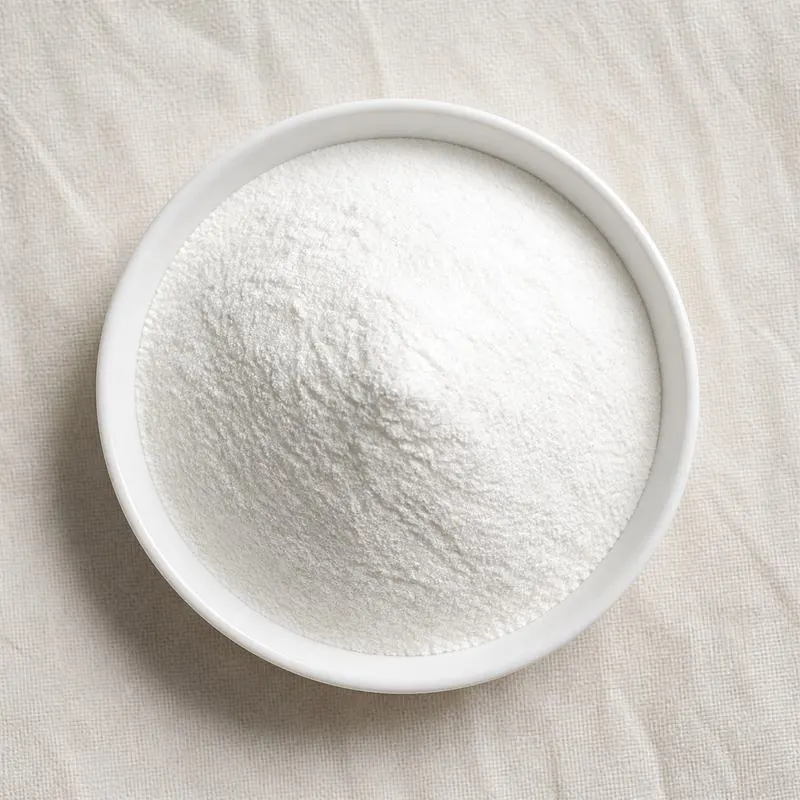
The finished powder is off white to cream, faintly fermented in odour, dispersible rather than soluble, and is specified on viable count in colony forming units per gram rather than on any chemical assay. Residual moisture and water activity are the properties that decide how quickly that count falls in storage, and both are held very low. The powder is hygroscopic and oxygen sensitive, so it is milled, blended and packed under controlled humidity and filled into foil under nitrogen.
We source bulk Probiotic Freeze Dried from top China manufacturers for our partners. The manufacturers are in Shandong. A smaller requirement can ship in a combined container with other ingredients.
Please send the grade you need, the volume and your destination port, and we will come back with a solution and a price.
or call +86-21-6858 0751
- Function
- Probiotic
Specifications
| Item | Specification |
|---|---|
| Appearance | Off white to cream free flowing lyophilised powder |
| Odour | Faintly fermented, free from foreign odour |
| Viable Count at Release | Not less than declared potency including shelf life overage |
| Identification | Strain confirmed by whole genome or ribosomal sequencing |
| Loss on Drying | Not more than 4.0 percent |
| Water Activity | Not more than 0.20 |
| Particle Size | Not less than 95 percent through 60 mesh |
| Bulk Density | 0.35 to 0.60 g/mL |
| Lead | Not more than 1 mg/kg |
| Arsenic | Not more than 1 mg/kg |
| Cadmium | Not more than 0.5 mg/kg |
| Coliforms | Not more than 10 cfu/g |
| Yeast and Mould | Not more than 100 cfu/g |
| Escherichia coli | Absent in 10 g |
| Salmonella | Absent in 25 g |
| Staphylococcus aureus | Absent in 10 g |
Common Markets Grades
Grades are set first by potency. Concentrates carry counts in the hundreds of billions of colony forming units per gram and are intended for dilution by the formulator. Standardised grades have already been diluted with maltodextrin or a similar carrier to a fixed count so that a fixed weight delivers a fixed dose. Both are released against a count that includes an overage above label claim, sized from stability data so that the declared count is still met at the end of the stated shelf life.
The second axis is protection and composition. Plain lyophilised powder is the base offering. Microencapsulated grades apply a lipid, protein or polysaccharide coat after drying and are specified on survival through a defined gastric acid challenge as well as on count. Dairy free grades avoid skim milk solids in the cryoprotectant, which matters both for allergen declaration and for vegan positioning. Single strain material carries a strain deposit number, while multi strain blends declare either the count of each strain or a total, and blends must be assembled from powders of compatible water activity, since a hygroscopic component will draw moisture from a drier one and shorten the life of the whole blend.
Applications
- Capsules and tablets, where the dry powder is the whole dose and the shell provides the barrier
- Stick packs and sachets, where the consumer disperses the powder in water or takes it directly
- Chewable tablets and gummies, where water activity in the base determines whether the culture survives to the end of shelf life
- Infant formula and follow on products, where lyophilised bifidobacteria are added to the dry blend after processing
- Nutritional and meal replacement powders, where the culture is one component of a larger dry blend
- Dairy products, where a direct addition of freeze dried culture avoids the need for an on site propagation step
- Chocolate and fat based confectionery, where the absence of free water gives unusually good survival
- Animal feed and pet food premixes, where dry powder can be blended into a mineral and vitamin carrier
- Clinical nutrition products, where a defined count of a defined strain is required at the point of use
China Manufacturers of Probiotic Freeze Dried
Top Probiotic Freeze Dried manufacturers in China.
 Minsheng Zhongke-jiayi (Shandong) Bioengineering Co., Ltd.2 ingredients in the directory
- Wecare Bioengineering Co., Ltd.1 ingredient in the directory
Company names and logos are the property of the manufacturers themselves. They are listed here because our own directory records them as producing this ingredient. A listing is not an endorsement by them, and we do not represent them or speak on their behalf.
Regulatory Status
In the United States freeze dried probiotic cultures are used as dietary ingredients in supplements and as food ingredients. For food use the usual route is a determination that the specific strain and preparation are generally recognised as safe, and many strains are the subject of notifications to which the Food and Drug Administration has responded without objection. The agency does not recognise probiotic as a regulatory category and does not certify counts, so the declared count is the manufacturer's responsibility and must be met at the point of sale. Claims are limited to structure and function statements with the required disclaimer, and cryoprotectants derived from milk trigger a milk allergen declaration.
In the European Union the safety of the organism is assessed against the qualified presumption of safety list that the European Food Safety Authority maintains, and any species without a history of significant consumption before May 1997 requires novel food authorisation. The word probiotic is regarded by the Commission as an implied health claim, and since no probiotic health claim has been authorised under the nutrition and health claims regulation it cannot generally be used on a label, although several member states permit it as a category description under national positions. Cultures used in feed require authorisation under the feed additives regulation. Internationally the reference framework is the joint guidelines of the Food and Agriculture Organisation and the World Health Organisation, which set out the identification, characterisation and labelling expected of a probiotic strain, including the requirement to declare the viable count at the end of shelf life rather than at manufacture.
Manufacturing Process
Fermentation comes first. A vial from the master cell bank is expanded through seed stages into a production fermenter charged with a carbohydrate source, a nitrogen source such as yeast extract or protein hydrolysate, and mineral salts, and grown under pH control, anaerobically or microaerophilically for lactic acid bacteria and bifidobacteria. Harvest timing is chosen for robustness as much as for yield, since cells taken in the stationary phase generally survive drying better than cells taken in rapid growth.
The broth is concentrated by centrifugation or microfiltration to remove spent medium, and the concentrate is blended with the cryoprotectant solution and held briefly so that the protectant equilibrates around the cells. The suspension is frozen, either on trays in the drier or as pellets dropped into liquid nitrogen, the freezing rate being controlled because it determines ice crystal size. Lyophilisation follows in two stages: primary drying removes the frozen water by sublimation at low shelf temperature and deep vacuum, and secondary drying raises the shelf temperature to desorb the bound water and bring residual moisture down to a low single figure percentage. The dried cake is milled in a low humidity room, assayed for viable count and for water activity, blended with carrier to the declared potency, and filled into aluminium foil laminate under nitrogen. Product is held and shipped refrigerated, and stability studies at several temperatures underpin both the overage and the declared shelf life.