Saw Palmetto Extract
Saw palmetto extract is a lipophilic extract of the ripe berries of Serenoa repens, a dwarf palm native to the southeastern United States, standardised on its content of free fatty acids and phytosterols.
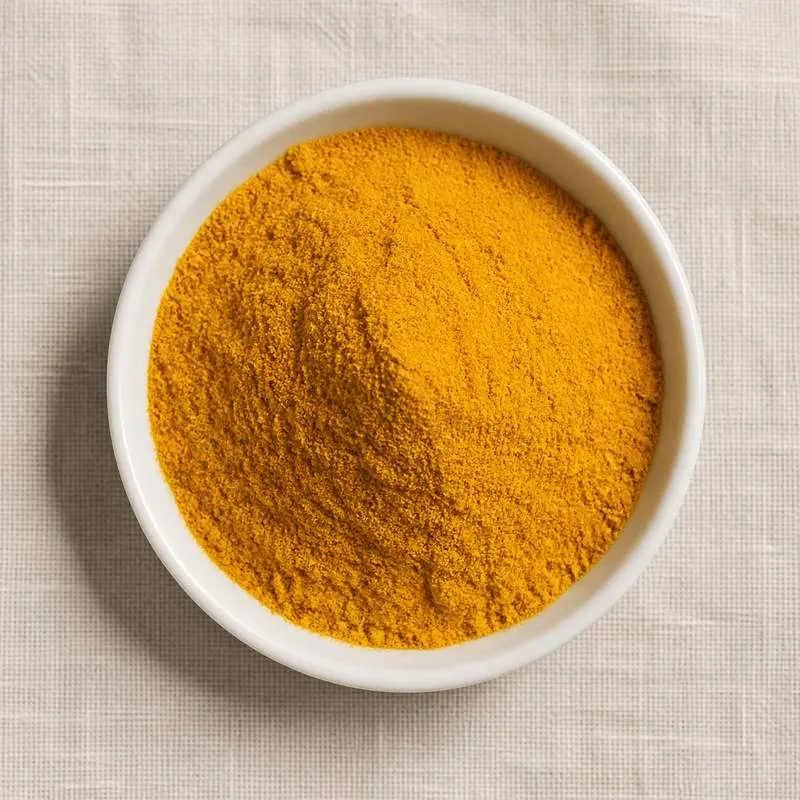
The extract is not a single compound but a lipidosterolic fraction. Roughly 85 to 95 percent of the material is free and esterified fatty acids, dominated by lauric, myristic, oleic and palmitic acids, with a minor fraction of phytosterols including beta-sitosterol, campesterol and stigmasterol, plus long-chain alcohols and triglycerides. Free fatty acid content is the assay a buyer trades on, since it distinguishes a true lipidosterolic extract from a milled berry powder.
The supercritical and hexane extracts are dark brown to reddish-brown oily liquids that are insoluble in water and miscible with vegetable oils and ethanol, making them suited to softgel filling rather than to aqueous formats. A dried powder version, adsorbed onto a carrier or produced by ethanol extraction, is used for tablet and capsule blends but carries a lower fatty acid assay. The oil oxidises on exposure to air and light, so it is packed under nitrogen.
We source bulk Saw Palmetto Extract from top China manufacturers for our partners. The manufacturer is in Fujian. A smaller requirement can ship in a combined container with other ingredients.
Please send the grade you need, the volume and your destination port, and we will come back with a solution and a price.
or call +86-21-6858 0751
- Function
- Plant extract
Specifications
| Item | Specification |
|---|---|
| Appearance | Dark brown to reddish-brown oily liquid |
| Botanical source | Serenoa repens, dried ripe fruit |
| Total fatty acids | 85.0 percent minimum |
| Free fatty acids | 70.0 percent minimum |
| Total sterols | 0.2 percent minimum |
| Identification | Conforms by gas chromatography fatty acid profile |
| Moisture | 1.0 percent maximum |
| Peroxide value | 10 meq per kg maximum |
| Residual solvent | Not detected, supercritical carbon dioxide route |
| Lead | 1.0 ppm maximum |
| Arsenic | 1.0 ppm maximum |
| Total plate count | 1,000 cfu per gram maximum |
| Yeast and mould | 100 cfu per gram maximum |
| E. coli | Negative in 1 gram |
| Salmonella | Negative in 25 grams |
Common Markets Grades
The trade splits along extraction route. Supercritical carbon dioxide extract is the premium specification, typically declaring 85 to 95 percent total fatty acids with no residual solvent, and is the form used in softgels. Hexane extract reaches comparable fatty acid levels at lower cost but carries a residual solvent limit on the certificate. Ethanol extract runs lower, commonly 25 to 45 percent fatty acids, and brings across a larger polar fraction.
Powdered grades are produced either by adsorbing the oleoresin onto maltodextrin or silica, which gives a 25 percent fatty acid product suited to dry blending, or by milling the whole dried berry, which is a food-grade botanical powder rather than a standardised extract and should not be specified against a fatty acid assay. There is no pharmaceutical grade in United States trade, though the extract is registered as a medicine in several European countries and material for those markets is made to a tighter specification with defined limits on individual fatty acids and on sterol content.
Applications
- Men's prostate-health softgels, the dominant application, where the supercritical extract is filled neat or in a vegetable oil base
- Multi-ingredient men's supplement tablets, using the maltodextrin-adsorbed powder for dry blending
- Hair-loss and scalp supplements formulated around the extract's sterol fraction
- Herbal tinctures and liquid drops, using the ethanol extract where an alcoholic base is wanted
- Registered herbal medicinal products in European markets, where saw palmetto is licensed under traditional or well-established use
- Topical scalp serums and shampoos, at low percentages in the oil phase
- Veterinary supplements for urinary support in dogs
- Whole-berry botanical powders for traditional herbal teas and encapsulated crude drug
Brands Using Saw Palmetto Extract
Widely-distributed consumer products that list Saw Palmetto Extract on the ingredient label.
- Nature's WaySaw Palmetto Softgels ↗Nature's Way Saw Palmetto softgels are built on a standardised saw palmetto berry extract sourced from Florida Everglades berries and sold for prostate and urinary support.Label verified 2026-08-31
- NutricostMade With Organic Saw Palmetto Capsules ↗Each two-capsule serving supplies 1,000 mg of organic saw palmetto extract in a vegetarian capsule.Label verified 2026-08-31
- CodeageMen's Daily Probiotic ↗This men's probiotic formula pairs a 50 billion CFU probiotic blend with zinc, saw palmetto extract and organic chicory root inulin.Label verified 2026-08-31
- Naked NutritionNaked Men's Multi Multivitamin Capsules ↗The men's multivitamin lists saw palmetto extract alongside CoQ10, selenium, zinc and a fruit and greens blend.Label verified 2026-08-31
Brand names, product names and logos are the property of their owners. They appear here as published evidence that the ingredient is used, taken from the brand's own label or website. Their appearance is not an endorsement, and it does not mean the brand buys from us or from any manufacturer listed on this site.
China Manufacturers of Saw Palmetto Extract
Top Saw Palmetto Extract manufacturers in China.
Company names and logos are the property of the manufacturers themselves. They are listed here because our own directory records them as producing this ingredient. A listing is not an endorsement by them, and we do not represent them or speak on their behalf.
Regulatory Status
In the United States saw palmetto is a dietary ingredient marketed under the Dietary Supplement Health and Education Act, with a long pre-1994 marketing history, so no new dietary ingredient notification is required for conventional preparations. It is not approved as a food additive and is not GRAS for use in conventional foods. Structure-function claims are permitted with the standard disclaimer; disease claims relating to benign prostatic hyperplasia are not.
In the European Union the extract has no E number and is not a food additive. Serenoa repens fruit preparations hold a European Union herbal monograph from the European Medicines Agency covering well-established and traditional medicinal use, and in several member states the lipidosterolic extract is authorised as a medicinal product rather than sold as a supplement, which places it outside food law in those markets. Where it is sold as a food supplement, national botanical lists decide what may be used. No Codex standard or JECFA specification applies. The plant is protected in Florida and harvest is licensed by the state, so buyers commonly require documentation of legal harvest alongside the certificate of analysis.
Manufacturing Process
Berries are harvested from wild stands in Florida and neighbouring states between late summer and autumn, since the plant is not cultivated at commercial scale. The fruit is dried to reduce moisture below about 10 percent, then destemmed and coarsely milled to open the pericarp where most of the lipid sits. Drying conditions matter, as over-drying degrades the fatty acid profile and under-drying invites mould in storage.
The milled berry is charged to an extraction vessel. In the supercritical route carbon dioxide is compressed above its critical point and passed through the bed at pressures in the region of 250 to 350 bar; the loaded fluid is then depressurised in a separator, where the carbon dioxide flashes off and is recycled and the oleoresin drops out as a liquid. In the solvent route the bed is percolated with hexane or ethanol, the miscella is filtered, and the solvent is stripped under vacuum in a falling-film evaporator followed by a stripping column to bring residual solvent within specification. The crude oleoresin is winterised to drop out waxes, filtered, and either packed as an oil under nitrogen or blended onto a carrier and spray dried to a powder.