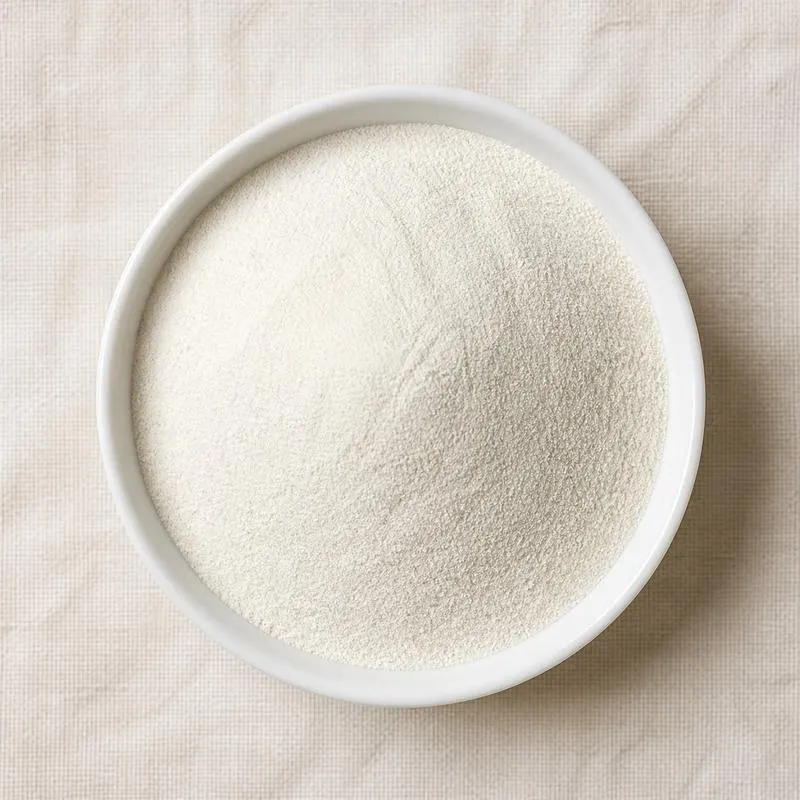
Strong Meat Powder Flavour
Strong meat powder flavour is a high strength savoury flavouring sold as a dry powder, formulated so that a small dosage delivers a pronounced roasted meat character to a finished food. It is the powder counterpart of a reaction meat paste, and the word strong in the trade name refers to the concentration of the reaction base rather than to any particular species direction, with beef, pork and chicken all offered on the same platform.
The character comes from a thermal process reaction rather than from meat as such. Reducing sugars, cysteine and other amino acids, thiamine, a protein hydrolysate and a fat substrate are cooked together to generate the sulphur compounds that define cooked meat, 2 methyl 3 furanthiol and bis 2 methyl 3 furyl disulphide above all, supported by pyrazines for the roasted layer, thiazoles and thiophenes for the meaty depth and Strecker aldehydes for the top notes. A taste fraction of glutamate, ribonucleotides and peptides is normally carried alongside the aroma so that the powder contributes savouriness as well as smell.
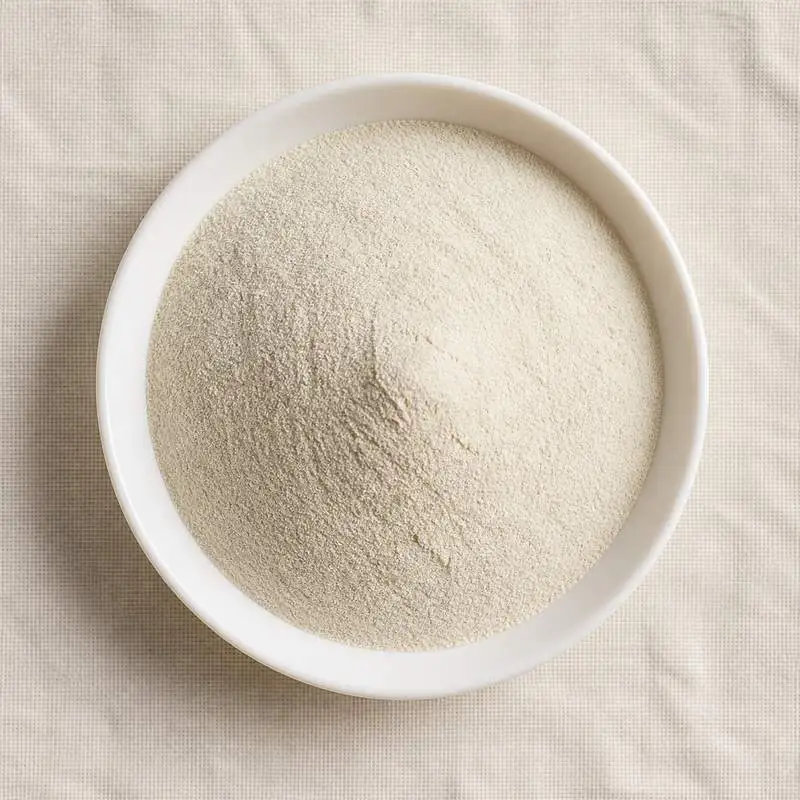
The finished material is a light to dark brown free flowing powder, hygroscopic because of its salt and hydrolysate content, and readily dispersible in hot water. The characterising thiols are volatile and oxidise easily, so high strength grades are usually encapsulated rather than simply plated, and the powder is packed in a foil laminate under nitrogen and dosed as late in a process as the application allows.
We source bulk Strong Meat Powder Flavour from top China manufacturers for our partners. The manufacturer is in Shanghai. A smaller requirement can ship in a combined container with other ingredients.
Please send the grade you need, the volume and your destination port, and we will come back with a solution and a price.
or call +86-21-6858 0751
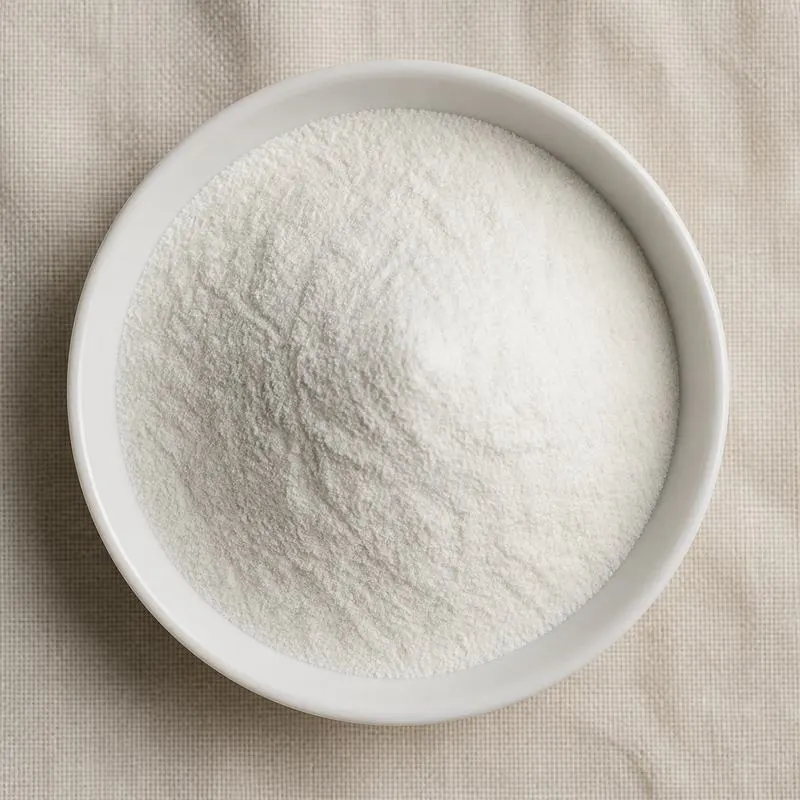
- Function
- Flavours and Aromas
Specifications
| Item | Specification |
|---|---|
| Appearance | Free flowing light to dark brown powder, no lumps |
| Odour and Taste | Characteristic roasted meat of the declared species, no scorched or sour note |
| Identification | Sensory panel and gas chromatography profile conform to retained reference |
| Moisture | Not more than 5.0% |
| Total Oil Load | Not less than 10% as declared per grade |
| Sodium Chloride | As declared per grade |
| Total Nitrogen | Not less than 2.0% on dry basis |
| Solubility | Disperses completely in water at 60 C within 60 seconds |
| pH, 10% aqueous solution | 5.0 to 6.5 |
| Lead | Not more than 1.0 mg/kg |
| Arsenic | Not more than 0.5 mg/kg |
| Total Plate Count | Not more than 10,000 cfu/g |
| Yeast and Mould | Not more than 100 cfu/g |
| Salmonella | Absent in 25 g |
Common Markets Grades
Strength is the primary grade axis and is expressed as a recommended dosage in grams per kilogram of finished food rather than as an assay, since no single marker compound defines the material. Concentrated grades are formulated for dosing at a few tenths of a percent and carry little carrier, while diluted grades on a maltodextrin or salt base are made for uniform distribution in a large dry blend where a very small addition would not disperse.
The second axis is the drying and protection route. Spray dried grades on maltodextrin or modified starch are the standard and lose part of the lightest top notes during drying. Plated grades, in which a liquid flavour is absorbed onto salt or silicon dioxide, retain more of the volatile fraction but are less stable in storage. Encapsulated grades hold the aroma inside a carbohydrate or fat matrix and are specified where the powder must survive extrusion, baking or a long dry storage. Beyond that, grades separate by species direction, by whether the profile is boiled, roasted or grilled, and by declaration, with halal, kosher and vegetarian versions replacing the animal substrate with hydrolysed vegetable protein, yeast extract and plant fat while keeping the same reaction chemistry.
Applications
- Instant noodle seasoning sachets, supplying meat character a dried base cannot generate on rehydration
- Bouillon cubes, granulated stock and dehydrated soup powders
- Snack seasonings tumbled onto crisps, extruded snacks and coated nuts
- Dry seasoning blends and coating mixes where a liquid flavour cannot be used
- Meat analogues and plant protein products, which develop no animal aroma when cooked
- Emulsified sausage and prepared meats, adjusting profile across raw material variation
- Retorted and canned meats and soups, dosed to replace aroma destroyed during sterilisation
- Sauce, gravy and stock bases in central kitchen production
- Extruded and baked savoury products, using an encapsulated grade
- Pet food palatants, where reaction aroma drives first bite acceptance
China Manufacturers of Strong Meat Powder Flavour
Top Strong Meat Powder Flavour manufacturers in China.
Company names and logos are the property of the manufacturers themselves. They are listed here because our own directory records them as producing this ingredient. A listing is not an endorsement by them, and we do not represent them or speak on their behalf.
Regulatory Status
The product is a flavouring rather than a food additive and carries no E number. In the European Union the reaction base falls under the thermal process flavourings provisions of the flavourings framework, which set out the permitted starting materials, limit reaction temperature and duration and cap specified process contaminants in the finished flavouring, while the individual flavouring substances blended in afterwards must appear on the Union list of authorised flavouring substances. The labelling rules of the same framework determine when the term natural may be used.
In the United States reaction flavours of this class are cleared through the FEMA GRAS programme, and the underlying substrates, hydrolysed vegetable protein, yeast extract, rendered fat and spices, are established food ingredients. Manufacture sits under the preventive controls requirements for human food, and a flavouring containing meat or poultry derived material falls additionally under USDA jurisdiction when used in inspected products, and may be subject to import restrictions in markets that control animal derived ingredients. Soy and wheat derived hydrolysates are declarable allergens, and where a savoury base has been made by acid hydrolysis the chloropropanol limits that apply to hydrolysed vegetable protein in the European Union are the relevant contaminant control. Codex addresses the class through its guidelines for the use of flavourings.
Manufacturing Process
The aroma base is produced in a jacketed pressure reactor. Reducing sugars, amino acids including cysteine, thiamine, a protein hydrolysate and a fat or meat substrate are charged with water, the pH is set, and the batch is taken through a defined temperature and time curve above the boiling point of water so that Maillard and Strecker chemistry runs to a roasted rather than a boiled end point. The reacted mass is cooled quickly to stop further browning, neutralised and concentrated under vacuum.
Compounding follows on the cooled concentrate, with heat sensitive top notes, individual aroma chemicals, spice oleoresins and the taste fraction of glutamate, ribonucleotides and yeast extract added and the batch standardised against a retained reference. The compounded base is then emulsified into a feed slurry with maltodextrin, modified starch, salt and an emulsifier, homogenised at high pressure to reduce droplet size, and spray dried in a tower with an inlet and outlet temperature profile chosen to remove water without stripping the aroma. The powder is agglomerated in a fluid bed where free flow and instant dissolution are required, sieved, checked for moisture, bulk density, total oil load and sensory conformity, and packed in a foil laminate under nitrogen.