Sugarcane Polyphenol
Sugarcane polyphenol is a purified phenolic fraction recovered from Saccharum officinarum, isolated from cane juice or from the by-product streams of raw sugar milling and standardised on total polyphenol content.
The fraction is dominated by flavones, principally tricin and its glycosides together with apigenin, luteolin and schaftoside derivatives, alongside hydroxycinnamic acids including chlorogenic, caffeic, ferulic and sinapic acid. Tricin is the compound most often singled out on a certificate because it is comparatively distinctive to cane among commodity crops. The phenolics are the compounds that raw sugar refining is designed to remove, since they carry colour, which is why the refinery's own waste streams are the economically sensible feedstock for an extract.
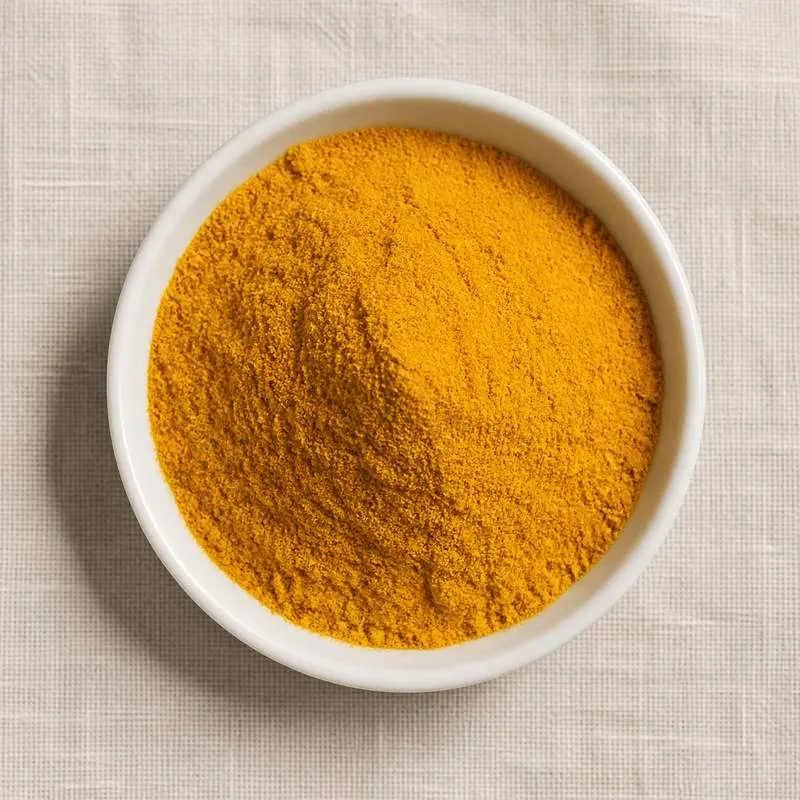
Commercial material is a light brown to reddish-brown free-flowing powder with a faint molasses note. It dissolves readily in water and in aqueous ethanol, giving a coloured solution that darkens as pH rises, and this pH-dependent colour is the practical limit on how much can be used in a pale finished product. The polyphenols are stable through pasteurisation and normal baking, and are more susceptible to oxidative browning in the presence of air and metal ions than to thermal breakdown, so metal chelators are commonly used alongside in liquid formats.
We source bulk Sugarcane Polyphenol from top China manufacturers for our partners. The manufacturer is in Guangxi. A smaller requirement can ship in a combined container with other ingredients.
Please send the grade you need, the volume and your destination port, and we will come back with a solution and a price.
or call +86-21-6858 0751
- Function
- Plant extract
Specifications
| Item | Specification |
|---|---|
| Appearance | Light brown to reddish-brown free-flowing powder |
| Botanical source | Saccharum officinarum, cane juice and mill streams |
| Total polyphenols as gallic acid equivalents | 50.0 percent minimum |
| Total flavones by HPLC | 2.0 percent minimum |
| Identification | HPLC fingerprint conforms to reference standard |
| Residual total sugars | 10.0 percent maximum |
| Water solubility | Complete at 2 percent, no visible sediment |
| pH of 1 percent solution | 4.0 to 6.0 |
| Loss on drying | 6.0 percent maximum |
| Sulphated ash | 8.0 percent maximum |
| Particle size | 100 percent through 80 mesh |
| Residual ethanol | 0.5 percent maximum |
| Lead | 1.0 ppm maximum |
| Arsenic | 1.0 ppm maximum |
| Total plate count | 10,000 cfu per gram maximum |
| Salmonella | Negative in 25 grams |
Common Markets Grades
Grades are declared as total polyphenols by the Folin Ciocalteu method, expressed as gallic acid equivalents, running from 10 to 20 percent for a lightly purified juice concentrate up to 50 and 70 percent for resin-purified material. A separate tricin or total flavone figure by HPLC is increasingly requested, since the Folin figure responds to reducing sugars as well as to phenolics and can flatter a poorly purified batch. Residual sugar content is therefore a useful cross-check and is often specified at 10 percent or less on the higher grades.
Physical forms are spray-dried powder milled to pass 80 mesh, an agglomerated instant grade for sachet and stick-pack drinks, and a maltodextrin-carried grade where the native powder is too hygroscopic to handle. Liquid concentrates run at 20 to 50 percent solids for beverage and dairy plants that prefer to dose a solution. Feedstock declaration matters as a grading point, since material from filter cake, from molasses and from clarified juice differ in mineral load and in colour even at the same nominal assay. Organic-certified cane material is a segregated stream.
Applications
- Antioxidant supplement capsules and tablets sold on total polyphenol content
- Sports recovery drinks and powders, a positioning built on cane polyphenol research in exercise nutrition
- Sugar reduction systems, where the extract restores the molasses depth and mouthfeel lost when unrefined sugar is replaced
- Functional beverages and shots, using the liquid concentrate where the brown colour suits the format
- Bakery and cereal products, where the powder contributes both colour and a caramel background note
- Natural antioxidant addition to fats, sauces and dressings as an alternative to synthetic antioxidants
- Skin-care serums and after-sun products, where cane polyphenols are used in the antioxidant segment
- Animal feed and pet food, added as an antioxidant and palatability component
- Confectionery and chocolate with a raw or unrefined sugar positioning
China Manufacturers of Sugarcane Polyphenol
Top Sugarcane Polyphenol manufacturers in China.

Company names and logos are the property of the manufacturers themselves. They are listed here because our own directory records them as producing this ingredient. A listing is not an endorsement by them, and we do not represent them or speak on their behalf.
Regulatory Status
In the United States sugarcane polyphenol extract is marketed as a dietary ingredient under the Dietary Supplement Health and Education Act. It is not the subject of a food additive regulation, and although sugar and molasses are conventional foods, a selectively enriched phenolic fraction is a different article, so use in conventional food rests on a GRAS determination made and documented by the user rather than on the status of cane sugar. Structure-function claims are permitted with the standard disclaimer, and antioxidant claims must be framed carefully to avoid implying disease benefit.
In the European Union the extract has no E number, as it is a food ingredient and not an additive. The main question is the novel food rules: cane sugar and molasses have an unquestioned history of consumption in the Union, but a concentrated polyphenol preparation produced by resin purification is not automatically covered by that history and may require novel food authorisation, assessed on the specific preparation and its intended use. Where the extract is added to colour another food rather than to nourish it, the guidance distinguishing colouring foods from added colours becomes relevant. No health claim on sugarcane polyphenols has been authorised under the EU nutrition and health claims framework. Codex has no commodity standard for the extract, though the general standard for contaminants applies, and JECFA has not adopted a specification for it.
Manufacturing Process
The feedstock is a sugar mill stream rather than fresh cane grown for the purpose: clarified cane juice taken before crystallisation, the clarifier mud and filter cake pressed off during juice purification, or final molasses. The chosen stream is diluted to a workable viscosity, screened to remove bagasse fines, and clarified by centrifugation or membrane filtration, since suspended solids will otherwise blind the column downstream.
The clarified liquor is loaded onto a macroporous adsorption resin column. The phenolic compounds bind to the resin through hydrophobic interaction while sucrose, reducing sugars, inorganic salts and organic acids pass through unretained, and this single step accounts for most of the enrichment. The loaded column is washed with water to displace residual sugar, then eluted with aqueous ethanol at a strength chosen to match the target assay, with a narrower fraction cut giving the higher grades. The eluate is concentrated under vacuum at moderate temperature, which recovers the ethanol for reuse and protects the phenolics from thermal degradation. The concentrate is polish filtered, standardised with water or a carrier, and spray dried in a tower run at a low outlet temperature to avoid caking the sugar residue. The powder is milled, screened, assayed for total polyphenols and residual sugar, and blended to the declared specification.