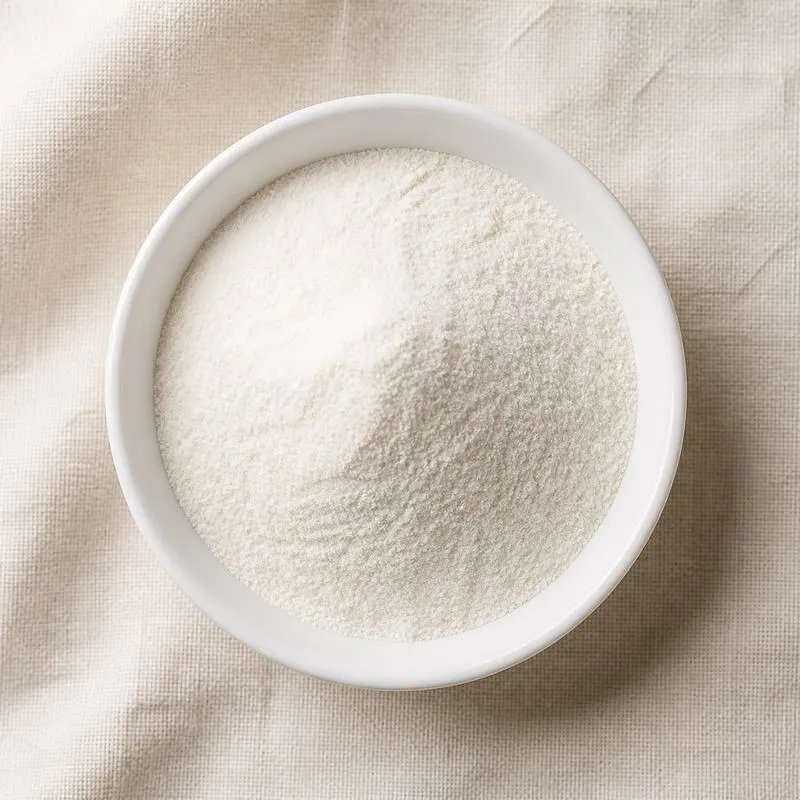
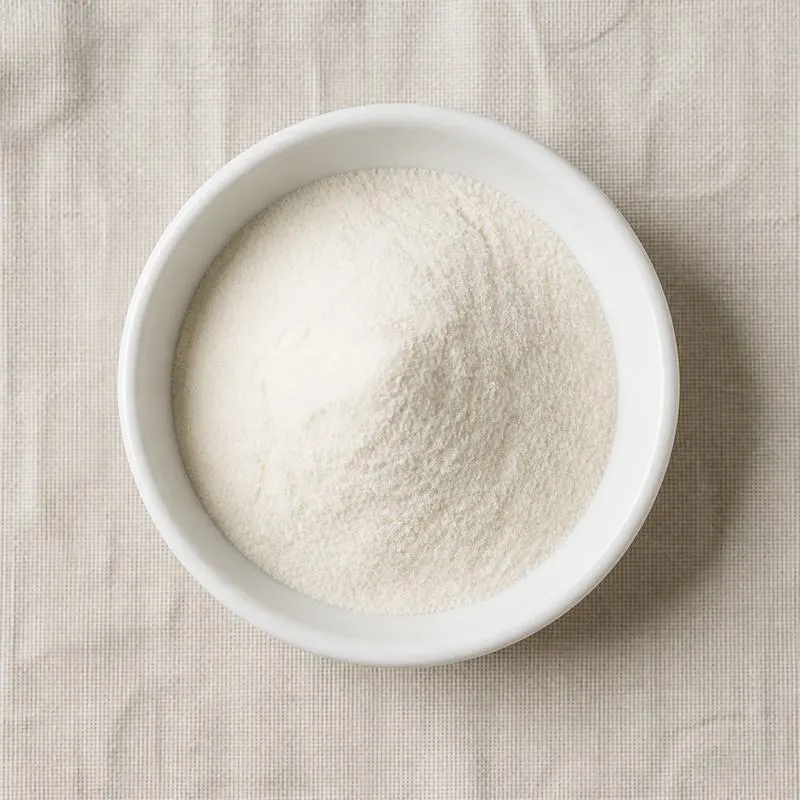
Tamarind Seed Gum
Tamarind Seed Gum, also called tamarind seed polysaccharide or tamarind kernel powder, is a xyloglucan isolated from the endosperm of the seed of Tamarindus indica, the tamarind tree.
Its structure is a cellulose-like β-1,4-linked glucose backbone in which most glucose units carry an α-1,6-linked xylose branch, and a proportion of those xylose units in turn carry a β-1,2-linked galactose. The result is a densely branched, uncharged polymer, and the absence of charge is what sets it apart from the anionic gums: viscosity is almost unaffected by pH, by salt and by calcium, which is unusual among plant hydrocolloids.
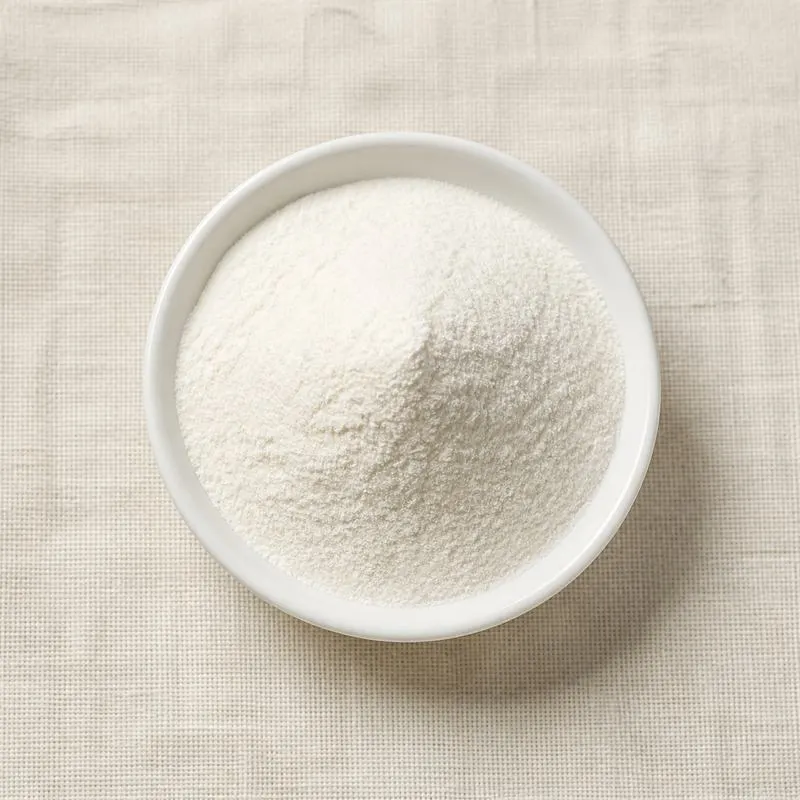
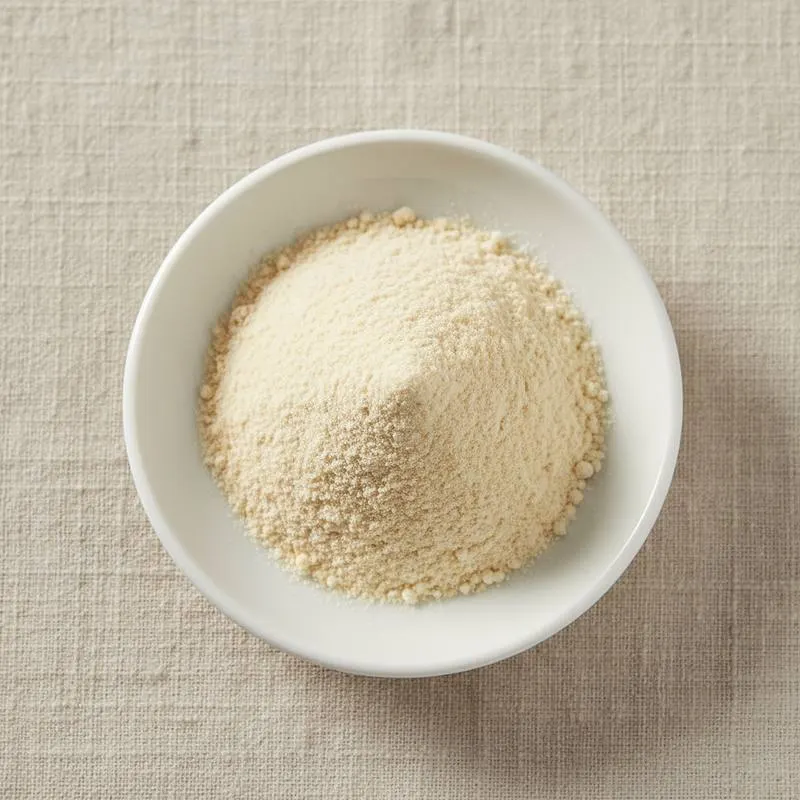
The commercial product is a cream to pale tan powder that hydrates fully only on heating, giving a viscous, moderately clear solution with a smooth non-slimy mouthfeel. Alone it does not gel in water, but it forms a firm thermally stable gel in the presence of high sugar concentrations across a wide pH range, including neutral pH where a high methoxyl pectin would fail. It shows strong synergy with xanthan gum and with galactomannans, holds viscosity through retorting, and gives good freeze thaw stability, all of which drive its use in sauces and processed foods in East Asia.
We source bulk Tamarind Seed Gum from top China manufacturers for our partners. The manufacturer is in Yunnan. A smaller requirement can ship in a combined container with other ingredients.
Please send the grade you need, the volume and your destination port, and we will come back with a solution and a price.
or call +86-21-6858 0751
Specifications
| Item | Specification |
|---|---|
| Appearance | Cream to pale tan free-flowing powder |
| Polysaccharide Content | ≥ 80% on dry basis |
| Identification | Sugar profile positive for glucose, xylose and galactose |
| Viscosity, 1% solution | 300 to 800 mPa.s at 25 °C |
| Protein | ≤ 5.0% |
| Loss on Drying | ≤ 10% |
| Total Ash | ≤ 4.0% |
| pH, 1% solution | 5.0 to 7.0 |
| Residual Solvent | ≤ 0.5% |
| Lead | ≤ 2.0 mg/kg |
| Arsenic | ≤ 1.0 mg/kg |
| Total Plate Count | ≤ 5,000 cfu/g |
| Yeast and Mould | ≤ 300 cfu/g |
| E. coli and Salmonella | Absent in 25 g |
Common Markets Grades
The trade separates crude tamarind kernel powder from purified tamarind seed gum. Kernel powder is simply decorticated and milled seed, still carrying protein, fat, fibre and colour, and it is used in textile sizing, paper and lower cost food applications. Purified food grade gum is extracted into water and alcohol precipitated, giving a lighter powder with lower protein and a cleaner flavour.
Within the food grades the specified parameters are polysaccharide content, viscosity on a one percent solution, protein, colour and mesh, with 80 to 200 mesh the usual range. Deoiled and cold water soluble versions are produced for instant applications, and a partially hydrolysed low viscosity grade is made where the polymer is used for its emulsifying and film forming behaviour rather than for thickening. Application blends pairing tamarind gum with xanthan or starch are also traded for specific sauce and noodle uses.
Applications
- Sauces, ketchup and condiment bases, holding viscosity through retorting and across a wide pH span
- Reduced sugar jams and fruit preparations, where the sugar sensitive gel gives a set at neutral as well as acid pH
- Ice cream and frozen desserts, restricting ice crystal growth and improving freeze thaw stability
- Noodles and rice products, binding water and improving bite and cooking tolerance
- Mayonnaise and dressings, stabilising the emulsion without contributing charge that would interact with acid
- Bakery fillings and glazes, giving heat stable body that survives baking
- Ophthalmic and personal care preparations, as a mucoadhesive film forming polymer
- Processed meat and surimi, holding moisture and improving texture after heat setting
- Textile printing pastes and paper sizing, as a non food use of the crude kernel powder
China Manufacturers of Tamarind Seed Gum
Top Tamarind Seed Gum manufacturers in China.
Company names and logos are the property of the manufacturers themselves. They are listed here because our own directory records them as producing this ingredient. A listing is not an endorsement by them, and we do not represent them or speak on their behalf.
Regulatory Status
Tamarind seed polysaccharide is recognised internationally under INS number 437 and appears in the Codex framework for food additives, and JECFA has considered tamarind seed polysaccharide and published identity and purity specifications for it. Japan is the market where it has the longest formal standing, listed among the existing food additives and used widely in sauces and processed foods.
In the European Union there is no E number for tamarind seed gum, so it is not authorised as a food additive there, and a concentrated preparation of this kind falls to be considered under the novel food framework before it can be placed on the EU market. In the United States it has no standing food additive regulation of its own and is sold on a GRAS basis, which means the supporting safety determination and its documentation are what a buyer should examine rather than a citation in the Code of Federal Regulations.
Manufacturing Process
Tamarind seed is separated from the fruit pulp during tamarind processing, then roasted or heat treated so that the brittle dark seed coat can be cracked off. Decortication is done mechanically, and the pale kernel is milled to tamarind kernel powder, which is the crude form of the product and the starting point for purification.
To make food grade gum the kernel powder is slurried and extracted in hot water, which takes the xyloglucan into solution while protein, fat and fibre are largely left behind or coagulated by the heat. The slurry is centrifuged or filtered to remove insolubles, sometimes decoloured on activated carbon, and then concentrated. The polysaccharide is precipitated by adding ethanol or isopropanol, which also carries away free sugars, salts and residual colour. The precipitate is pressed, washed with fresh alcohol, dried under vacuum or in a flash dryer at a temperature that protects viscosity, then milled, screened and blended across lots to a declared viscosity. Alcohol is recovered by distillation and returned to the process.