Thymoquinone
Thymoquinone is 2-isopropyl-5-methyl-1,4-benzoquinone, CAS 490-91-5, the principal bioactive constituent of the volatile oil of black cumin seed, Nigella sativa. The molecular formula is C10H12O2 with a molar mass of 164.20 g/mol, and the compound belongs to the para-benzoquinone class rather than to the terpene or polyphenol families that dominate most botanical actives.
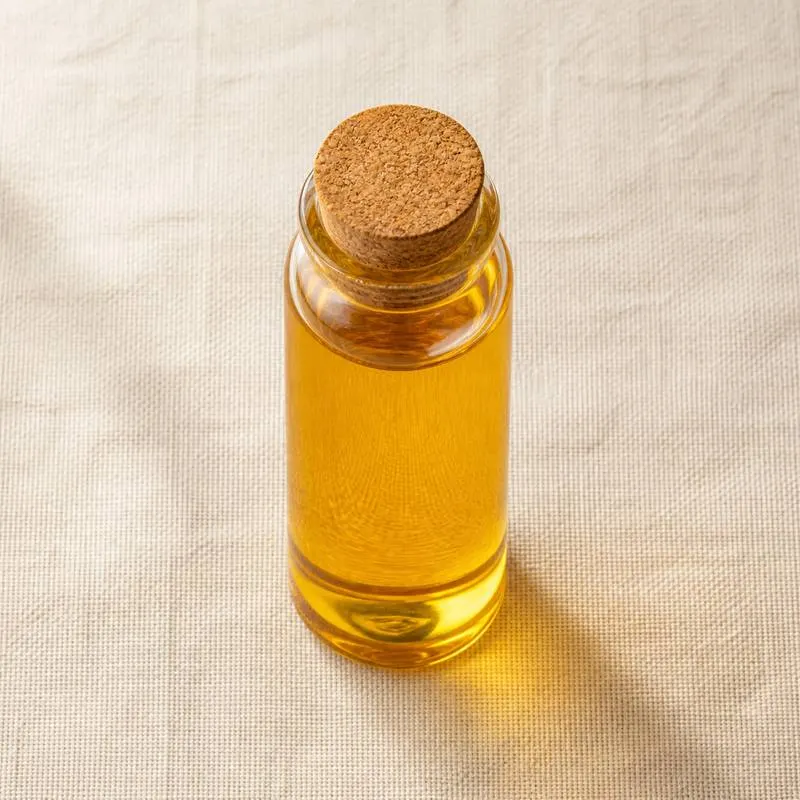
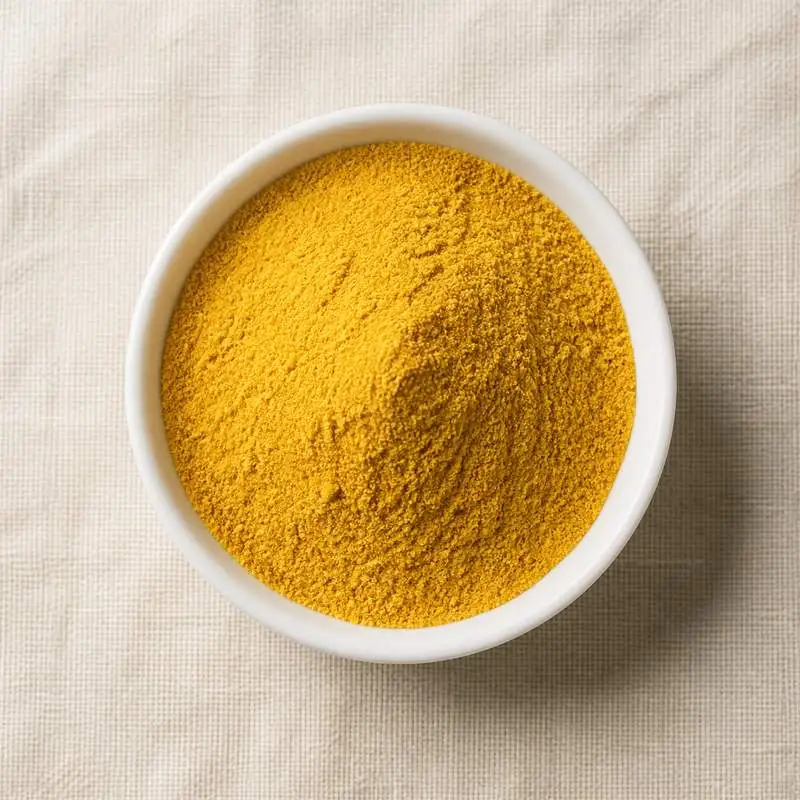
The isolated material is a yellow to bright yellow crystalline powder with a sharp, slightly aromatic odour carried over from the seed oil. It melts at about 45 degrees Celsius, sublimes noticeably above room temperature and is volatile in steam, which limits how hot it can be processed. Solubility in water is low, in the order of hundreds of milligrams per litre, while it dissolves freely in ethanol, propylene glycol, vegetable oils and most organic solvents.
The quinone ring is redox active, which is the basis of the antioxidant and pro-oxidant behaviour reported for the molecule, but it also makes the isolate sensitive to light, alkaline conditions and prolonged heat. Solutions darken and lose assay on exposure, so the crystalline material is packed under inert gas in amber or opaque containers, and finished formats commonly use oil suspension, cyclodextrin complexation or liposomal carriers to improve stability and dispersion.
We source bulk Thymoquinone from top China manufacturers for our partners. The manufacturer is in Shaanxi. A smaller requirement can ship in a combined container with other ingredients.
Please send the grade you need, the volume and your destination port, and we will come back with a solution and a price.
or call +86-21-6858 0751
- Function
- Nutraceutical
Specifications
| Item | Specification |
|---|---|
| Appearance | Yellow crystalline powder |
| Odour | Characteristic, slightly aromatic |
| Assay by HPLC | ≥ 98.0% |
| Identification | Conforms by HPLC retention time and UV spectrum |
| Melting Range | 44 to 47°C |
| Loss on Drying | ≤ 0.5% |
| Residue on Ignition | ≤ 0.5% |
| Residual Solvents | Complies with ICH Q3C limits |
| Heavy Metals (as Pb) | ≤ 10 mg/kg |
| Lead | ≤ 1.0 mg/kg |
| Arsenic | ≤ 1.0 mg/kg |
| Cadmium | ≤ 1.0 mg/kg |
| Mercury | ≤ 0.1 mg/kg |
| Packing and Storage | Under nitrogen in opaque containers, cool and dry |
Common Markets Grades
Two commercially distinct grades are traded. The isolated compound is offered at 98 percent minimum purity as a crystalline powder, produced either by isolation from black seed oil or by chemical synthesis, with the synthetic and natural origins distinguished on the certificate because a natural claim commands a separate specification. A pharmaceutical reference grade at 99 percent and above is sold in small quantities for analytical standards.
The larger volume trade is in standardised black seed oil and black seed extract, quoted on thymoquinone content rather than as the pure isolate. Cold pressed oils typically carry 0.2 to 1.0 percent thymoquinone, supercritical carbon dioxide extracts run from 1 to 5 percent, and concentrated fractions are sold at 5 or 10 percent. Powdered forms are made by spray drying or adsorbing these oil fractions onto maltodextrin, gum acacia or silica at 1 to 10 percent thymoquinone, and microencapsulated and cyclodextrin-complexed grades are used where oxidative stability in a dry blend matters.
Applications
- Black seed oil capsules and softgels, where the declared thymoquinone content is the specification the buyer pays for
- Immune and respiratory health supplements, formulated as oil suspensions or beadlets to keep the quinone stable
- Powdered supplement blends and stick packs, using the maltodextrin-adsorbed or encapsulated grade for dry flow
- Functional beverages and shots, where cyclodextrin complexation is used to disperse the poorly soluble molecule
- Nutricosmetic and oral skin products drawing on the antioxidant profile of the quinone ring
- Topical creams, serums and scalp preparations, where black seed oil fractions are the carrier
- Companion animal supplements and feed additives based on black seed oil meal and pressed cake
- Analytical reference standards for quantifying thymoquinone in seed oils by HPLC
- Traditional herbal preparations reformulated to a defined active content for export markets
Brands Using Thymoquinone
Widely-distributed consumer products that list Thymoquinone on the ingredient label.
- Nature's WayBlack Seed Oil ↗A black seed oil softgel supplying 1,000 mg per two-softgel serving, a source of naturally occurring thymoquinone.Label verified 2026-08-31
- Micro IngredientsOil of Oregano with Black Seed Oil Softgels ↗A softgel pairing oregano oil with Nigella sativa black seed oil, listed as naturally containing carvacrol and thymoquinone.Label verified 2026-08-31
- Micro IngredientsOrganic Oil of Oregano with Black Seed Oil, 4 fl oz Dropper ↗A liquid dropper version of the same oregano and black seed oil blend, described as containing naturally occurring thymoquinone.Label verified 2026-08-31
Brand names, product names and logos are the property of their owners. They appear here as published evidence that the ingredient is used, taken from the brand's own label or website. Their appearance is not an endorsement, and it does not mean the brand buys from us or from any manufacturer listed on this site.
China Manufacturers of Thymoquinone
Top Thymoquinone manufacturers in China.
Company names and logos are the property of the manufacturers themselves. They are listed here because our own directory records them as producing this ingredient. A listing is not an endorsement by them, and we do not represent them or speak on their behalf.
Regulatory Status
In the United States black cumin seed and its oil have a long history of food use, and black seed oil is marketed as a dietary ingredient under the Dietary Supplement Health and Education Act, with manufacture falling under 21 CFR Part 111. Isolated thymoquinone at high purity does not have the same established food history, so a supplier bringing the pure isolate to the United States as a dietary ingredient would normally need to address new dietary ingredient notification. The Food and Drug Administration has not affirmed the isolate as generally recognised as safe.
In the European Union black seed oil obtained by pressing has a history of consumption and is handled as a food, but concentrated thymoquinone fractions and isolated thymoquinone fall within the scope of the novel food Regulation, since a significant degree of concentration beyond traditional intake triggers assessment. No health claim for thymoquinone appears on the EU register of authorised claims. Neither JECFA nor Codex has established a specification for the isolated compound, so buyers rely on supplier monographs and pharmacopoeial style methods rather than an international standard.
Manufacturing Process
The dominant natural route starts from black cumin seed. The cleaned seed is cold pressed or solvent extracted to give a crude fixed oil that carries the volatile fraction, and thymoquinone is then concentrated either by steam distillation of the volatile oil or, more commonly at industrial scale, by supercritical carbon dioxide extraction, which recovers the quinone at moderate temperature and leaves no solvent residue. The enriched fraction is winterised to drop out waxes, then purified by short path or molecular distillation under high vacuum, taking advantage of the compound volatility while keeping the temperature low enough to avoid decomposition. Final polishing to the 98 percent crystalline isolate is done by crystallisation from a hydrocarbon or alcohol solvent, followed by vacuum drying and packing under nitrogen.
A synthetic route is also worked commercially and starts from thymol, the same phenol used for thyme oil chemistry. Oxidation of thymol, historically with chromium reagents and now more often with hydrogen peroxide or oxygen over a metal catalyst, converts the phenol to the para-quinone directly. The crude quinone is washed to remove acidic residues, recrystallised and vacuum dried. Synthetic material is chemically identical but cannot be sold against a natural label.