Titanium Dioxide
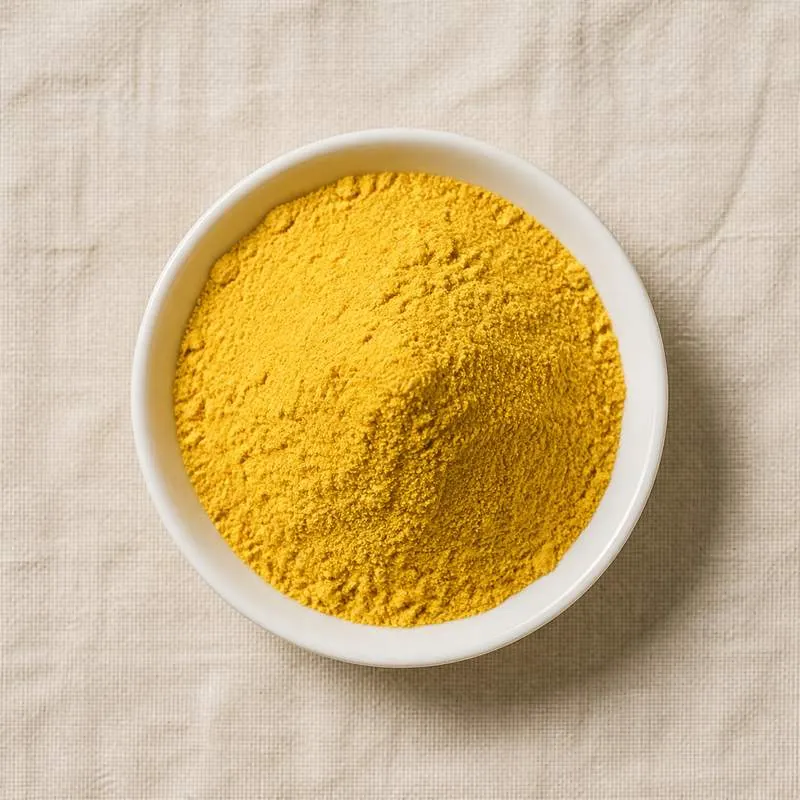
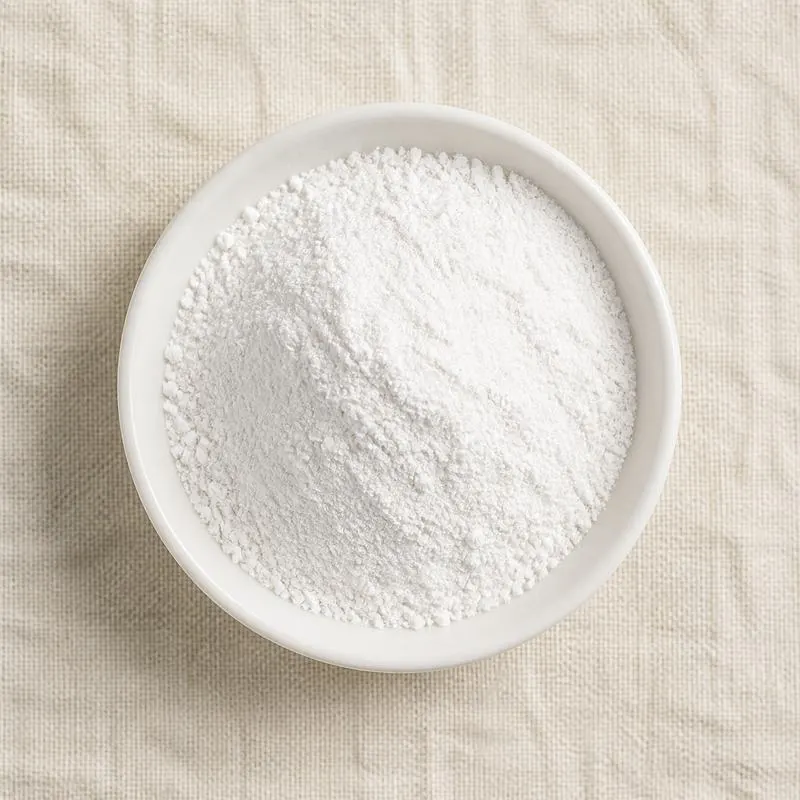
Titanium Dioxide is a bright white inorganic pigment composed of titanium(IV) oxide (TiO₂). In food applications it has historically been used to provide opacity, brightness, and surface whiteness in coatings, fillings, and confectionery centres.
The pigment occurs in three crystalline polymorphs (anatase, rutile, and brookite). The anatase form is the polymorph used in food applications because of its higher refractive whiteness in the visible range, while rutile dominates in paints, coatings, and sunscreens.
It is registered under CAS 13463-67-7. Its regulatory status as a food additive has diverged sharply between jurisdictions. The European Union withdrew approval in 2022, while the United States and most Asian markets continue to permit defined uses.
We source bulk Titanium Dioxide from top China manufacturers for our partners, working with several of them. The manufacturers are in Zhejiang, Jiangsu and Shanghai. For this ingredient the minimum order is 500 kg and a 20-foot container takes 20 MT, and a smaller requirement can ship in a combined container with other ingredients.
Please send the grade you need, the volume and your destination port, and we will come back with a solution and a price.
or call +86-21-6858 0751
- Minimum order
- 500 kg
- Qty in 20' FCL
- 20 MT
- Packaging
- 25 kg kraft paper bag with PE inner liner
- ISO 9001
- HACCP
- Halal
- Kosher
Specifications
Grades / Types Available: Food Grade, Pharma Grade, Feed Grade, Chemical Fiber Grade, Highly Dispersed Food Grade, Liquid Food Grade, Cosmetic Grade
| Item | Specification |
|---|---|
| Appearance | Fine white powder |
| TiO2 Content | ≥99.0% |
| Loss on Drying | ≤0.5% |
| Loss on Ignition | ≤1.0% |
| Water Soluble Matter | ≤0.5% |
| Particle Size (median) | 0.2–0.3 μm |
| Lead | ≤1.0 mg/kg |
| Arsenic | ≤1.0 mg/kg |
| Mercury | ≤1.0 mg/kg |
| Shelf Life | 36 months |
| Purity (Food Grade) | 99.20% min |
| Hydrochloric Acid Solute (Food Grade) | Max 0.25 |
| Water-Soluble Substance (Food Grade) | Max 0.21 |
| Cadmium (Food Grade) | Max 1 ppm |
| Antimony (Food Grade) | Max 2.0 ppm |
| Zinc (Food Grade) | Max 4.0 ppm |
Common Markets Grades
Titanium Dioxide for non-food applications is graded by crystal form, particle size distribution, and surface treatment.
Food-grade titanium dioxide, where still permitted, is a free-flowing white powder in the anatase form, with a median particle size targeted above 100 nm and a tightly controlled fraction of particles below 100 nm.
Pre-dispersed grades in water, glycerin, or propylene glycol carriers are produced for confectionery panning, bakery glaze, and pharmaceutical film-coating systems where dust-free handling and uniform dispersion matter.
Pharmaceutical-grade titanium dioxide (USP, Ph. Eur., JP) is used as an opacifier in tablet coatings, hard and soft capsule shells, and topical creams. These grades meet stricter heavy-metal and lead specifications than the general food grade.
Cosmetic grades, often surface-coated with silica or alumina for compatibility with sunscreen and skincare formulations, are a separate product family from food and pharmaceutical grades and are not interchangeable.
Applications
- Pharmaceutical film coatings on tablets and within hard and soft capsule shells
- Confectionery panning, sugar shells, and bright white chocolate-style coatings (where regional regulation permits)
- Chewing gum coatings and dragee centres (where permitted)
- Bakery icing, frosting, and decorative white piping (where permitted)
- Cake and cupcake fondants for opaque white backgrounds (where permitted)
- Toothpaste as an opacifier and whitening pigment
- Cosmetic foundations, powders, and sunscreens (as a mineral UV filter)
- Paints, coatings, and inks across nearly every industrial sector
- Plastics and polymer masterbatches for white pigmentation
- Paper coatings for brightness and opacity
- Ceramic glazes and porcelain enamels
Brands Using Titanium Dioxide
Widely-distributed consumer products that list Titanium Dioxide on the ingredient label.
- NeutrogenaNeutrogena Ultra Sheer Face Liquid SPF 70 Sunscreen ↗Active ingredients listed as Titanium Dioxide 6.6% and Zinc Oxide 14.4%.Label verified 2026-05-24
- NeutrogenaNeutrogena Mineral Ultra Sheer Dry-Touch SPF 30 Sunscreen Lotion ↗Active ingredients listed as Titanium Dioxide 6.6% and Zinc Oxide 18.0%.Label verified 2026-05-24
- CetaphilCetaphil Sheer Mineral Sunscreen Stick SPF 50 ↗Uses titanium dioxide as a physical UV filter to reflect and scatter UV rays.Label verified 2026-05-24
- CetaphilCetaphil Daily Facial Moisturizer with SPF 50+ ↗Formulated with micronized titanium dioxide as the active mineral UV filter.Label verified 2026-05-24
- La Roche-PosayAnthelios Mineral Tinted Sunscreen for Face SPF 50 ↗Active ingredient listed as Titanium Dioxide 17%.Label verified 2026-05-24
- La Roche-PosayAnthelios UVAir Mineral Serum Sunscreen for Face SPF 50 ↗Active ingredient listed as Titanium Dioxide 2.7%.Label verified 2026-05-24
- EltaMDEltaMD UV Physical Tinted Mineral Sunscreen SPF 41 ↗Mineral sunscreen formulated with titanium dioxide and zinc oxide as active ingredients.Label verified 2026-05-24
- Supergoop!Supergoop! Mineral Unseen Sunscreen SPF 40 ↗Includes 1.33% titanium dioxide along with zinc oxide as active mineral filters.Label verified 2026-05-24
- Supergoop!Supergoop! Mineral Mattescreen SPF 40 ↗Mineral sunscreen using zinc oxide and titanium dioxide as sunscreen actives.Label verified 2026-05-24
- CeraVeCeraVe Hydrating Mineral Sunscreen Face Lotion SPF 50 ↗Mineral, oil-free sunscreen with titanium dioxide and zinc oxide that forms a protective barrier on skin surface.Label verified 2026-05-24
- CeraVeCeraVe Hydrating Mineral Tinted Sunscreen for Face SPF 30 ↗Tinted mineral sunscreen formulated with zinc oxide and titanium dioxide.Label verified 2026-05-24
- CrestCrest toothpastes (general) ↗Crest brand page states most Crest toothpastes contain titanium dioxide as a whitening pigment for colour.Label verified 2026-05-24
- ColgateColgate toothpaste (multiple formulations) ↗Colgate ingredients page lists titanium dioxide as a colouring agent used to give toothpaste its white colour.Label verified 2026-05-24
Brand names, product names and logos are the property of their owners. They appear here as published evidence that the ingredient is used, taken from the brand's own label or website. Their appearance is not an endorsement, and it does not mean the brand buys from us or from any manufacturer listed on this site.
China Manufacturers of Titanium Dioxide
Top Titanium Dioxide manufacturers in China.
 Jiangsu Hongyuan Phar Co., Ltd.1 ingredient in the directory
 Ningbo Yipin Bio-technology Co., Ltd.1 ingredient in the directory
- Shanghai Jianghu Titanium White Product Co., Ltd.2 ingredients in the directory
 Zhejiang Jinghai New Material Co., Ltd.1 ingredient in the directory
Company names and logos are the property of the manufacturers themselves. They are listed here because our own directory records them as producing this ingredient. A listing is not an endorsement by them, and we do not represent them or speak on their behalf.
How We Help Source Titanium Dioxide
Direct Factory Sourcing
We run the whole process: selecting the manufacturer from the top Chinese food ingredient producers, negotiating the price, verifying quality, and coordinating the logistics. You deal with us instead of with several factories at once.
Original Packaging and Documents from the Manufacturer
The manufacturer sends your Titanium Dioxide out of its own factory in the original packing, through to your destination port. The COA, COO, MSDS, TDS and any certifications reach you from the manufacturer as well.
Free Samples and Lead Time
We send 100 to 500 g free for your own laboratory to test and you cover only the courier, usually within 2 to 3 working days. ETD is usually within 7 to 15 days once the order is confirmed, and we check that date against the factory's own manufacturing schedule before we give it to you.
Combined Shipment
We can load Titanium Dioxide together with other ingredients such as Beta Carotene, Caramel Colour and Lycopene into one 20' FCL. If your quantity is small, we can also ship LCL.
Regulatory Status
Titanium Dioxide is treated more differently from market to market than almost any other food colourant.
In the European Union, the European Food Safety Authority concluded in 2021 that titanium dioxide (E171) could no longer be considered safe as a food additive, citing the inability to rule out a genotoxic potential of nano-sized particles. The European Commission adopted Regulation (EU) 2022/63 on 14 January 2022, removing E171 from the list of permitted food additives. The ban took full effect on 7 August 2022.
The United States Food and Drug Administration permits titanium dioxide as a colour additive exempt from certification under 21 CFR 73.575, subject to a maximum use level of 1 percent by weight of the food. The agency reviewed the European decision and as of mid-2026 has not changed its position.
Health Canada and many Asian regulators (including Japan, China, Korea, and the major Southeast Asian markets) continue to permit titanium dioxide as a food additive within defined limits. The colourant remains widely used in pharmaceutical applications across all major markets, including the European Union, under separate medicinal-product rules.
Pharmacopoeial monographs for titanium dioxide appear in the United States Pharmacopeia, the European Pharmacopoeia, and the Japanese Pharmacopoeia. Halal and Kosher certifications are routinely available, since the substance is an inorganic mineral oxide.
Manufacturing Process
Titanium Dioxide is produced industrially by two principal routes from titanium-bearing minerals such as ilmenite and rutile.
The sulphate process digests ilmenite ore in concentrated sulphuric acid, separates iron sulphate, hydrolyses the titanyl sulphate solution to titanium dioxide hydrate, and calcines the hydrate to anatase or rutile. The sulphate route can produce both crystal forms and remains the dominant source of food and pharmaceutical grade material.
The chloride process converts rutile or upgraded ilmenite to titanium tetrachloride by reaction with chlorine in a fluidized bed, purifies the TiCl₄ by distillation, and oxidises it back to TiO₂ at high temperature. The chloride route produces almost exclusively rutile and is the main route for paint, plastics, and high-volume industrial pigment.
For food and pharmaceutical use, the calcined pigment is micronized, classified, and characterised for particle size distribution, heavy metals (lead, arsenic, mercury, antimony), and the fraction of particles below 100 nm. Surface treatments, when used, are limited to silica or alumina coatings that comply with the relevant food or pharmaceutical monograph.