Citric Acid Monohydrate
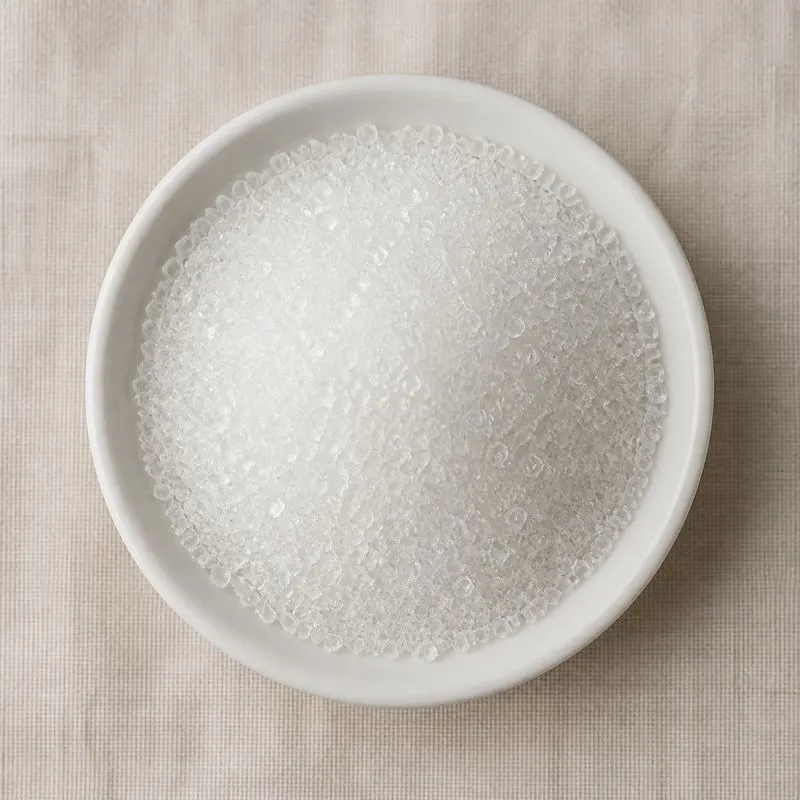
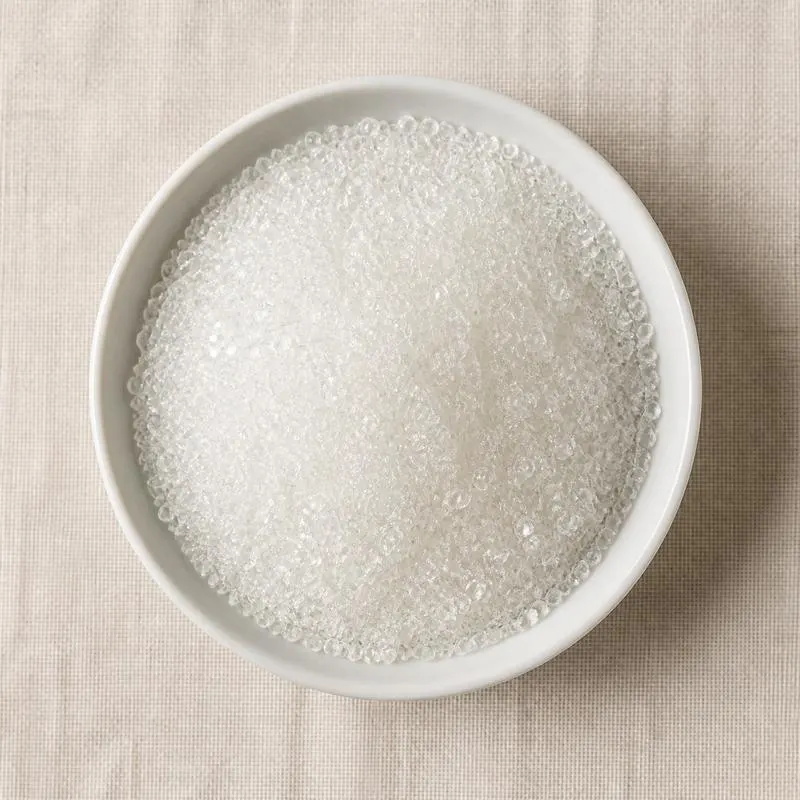
Citric Acid Monohydrate is the hydrated crystalline form of the tribasic α-hydroxy carboxylic acid citric acid, used as an acidulant, buffering agent, flavour enhancer, and metal-ion chelator across food, beverage, pharmaceutical, and cosmetic formulations.
The compound has the formula C₆H₈O₇·H₂O and a molar mass of 210.14 g/mol, of which approximately 8.57 percent is water of crystallisation. It crystallises below 36.6 °C from aqueous solution and remains the thermodynamically stable solid form at ambient temperature.
Like the anhydrous form, the molecule carries three carboxyl groups (pKa1 3.13, pKa2 4.76, pKa3 6.40) that provide strong buffering between pH 3 and pH 6 and a clean sour taste profile in beverages and confectionery.
We source bulk Citric Acid Monohydrate from top China manufacturers for our partners, working with several of them. The manufacturers are in Shandong. For this ingredient the minimum order is 5,000 kg and a 20-foot container takes 25 MT, and a smaller requirement can ship in a combined container with other ingredients.
Please send the grade you need, the volume and your destination port, and we will come back with a solution and a price.
or call +86-21-6858 0751
- Minimum order
- 5,000 kg
- Qty in 20' FCL
- 25 MT
- Packaging
- 25 kg kraft paper bag with PE inner liner
- ISO 9001
- HACCP
- Halal
- Kosher
Specifications
| Item | Specification |
|---|---|
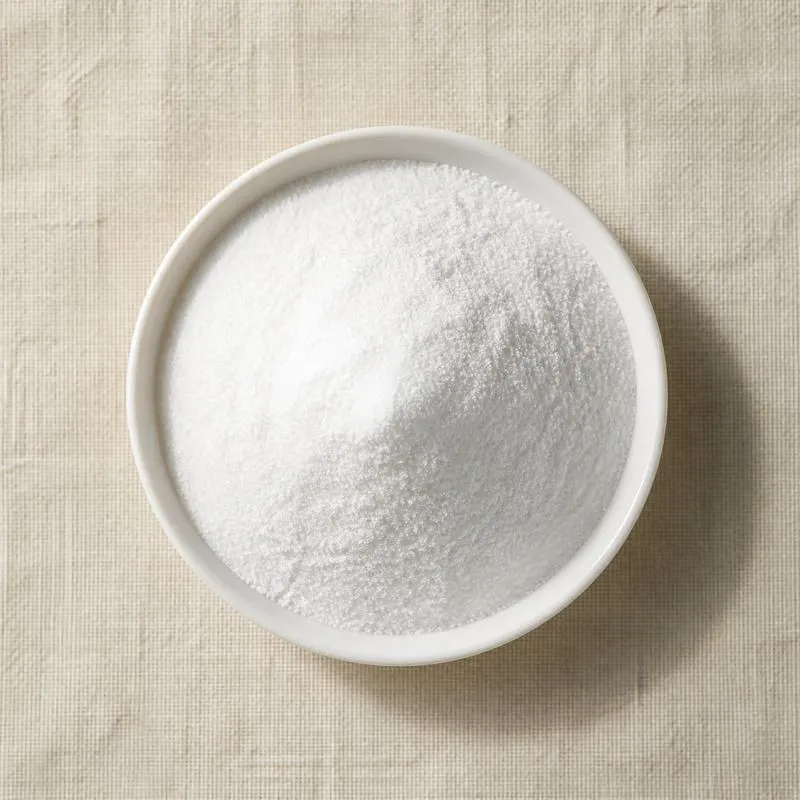
| Appearance | White crystalline powder |
| Purity (Food Grade) | 99.5% min |
| Purity (Pharmaceutical Grade) | 99.5% min |
| Moisture/Loss on Drying | 0.5% max |
| pH | 2.2 - 2.5 |
| Particle Size/Mesh | 100% pass 80 mesh |
| Ash | 0.1% max |
| Heavy Metals | 10 ppm max |
| Lead | 2 ppm max |
| Arsenic | 1 ppm max |
| Total Plate Count | 1000 cfu/g max |
| Yeast & Mold | 100 cfu/g max |
Common Markets Grades
Citric Acid Monohydrate is graded at a minimum assay of 99.5 percent on the anhydrous basis, with tightly controlled limits on sulfated ash, oxalate, and heavy metals.
Particle-size grades range from extra-fine powder through standard fine (30 to 100 mesh), regular granular (12 to 40 mesh), and coarse granular (8 to 30 mesh). Coarse grades resist caking in humid storage and feed cleanly in tableting; fine grades dissolve more rapidly in cold beverage premixes and syrups.
Food, USP, BP, FCC, Ph. Eur., and JP grades share the same chemical specification but differ in documentation, microbial limits, and pyrogen testing. Pharmaceutical grades meet additional residual-solvent and oxalate criteria.
Non-GMO variants, certified to fermentation substrates from non-GM sugar sources, are routinely offered for clean-label beverage and infant-nutrition use. Halal and Kosher certifications are widely available.
Compared with the anhydrous form, the monohydrate is generally chosen where liquid-phase formulations, cold-water reconstitution, or lower-cost dosing are priorities, and where the water of crystallisation does not interfere with shelf life.
Applications
- Carbonated soft drinks, juice drinks, and ready-to-drink teas for tartness and pH adjustment
- Liquid syrups, cordials, and concentrate bases where dissolution speed in cold water matters
- Jams, jellies, marmalades, and fruit preparations as the acid component for pectin gel set
- Sorbet, ice cream, and frozen desserts as a sour note and pH controller
- Confectionery: hard candies, jellies, gummies, and sour-dust coatings
- Canned tomatoes, canned fruit, and pickled vegetables for pH safety and colour retention
- Processed cheese and emulsified cheese sauces as a calcium-chelating melting salt component
- Wine and cider acidification where local regulations allow
- Pharmaceutical syrups, effervescent granules, and oral rehydration salts
- Anticoagulant blood-collection solutions (citrate dextrose, citrate phosphate dextrose)
- Cosmetic shampoos, conditioners, and skin toners as a pH adjuster
- Household cleaners, descalers, and dishwasher rinse aids for limescale and rust removal
Brands Using Citric Acid Monohydrate
Widely-distributed consumer products that list Citric Acid Monohydrate on the ingredient label.
- Coca-Cola (Sprite)Sprite (12 fl oz) ↗Brand label declares 'CITRIC ACID' (the regulatory designation covers both anhydrous and monohydrate forms)Label verified 2026-05-24
- Coca-Cola (Sprite)Sprite Zero Sugar ↗Listed in panel: 'CARBONATED WATER, CITRIC ACID, POTASSIUM CITRATE...'Label verified 2026-05-24
- Coca-Cola (Sprite GB)Sprite (UK) ↗Listed under 'Acids (Citric Acid, Tartaric Acid)'Label verified 2026-05-24
- Coca-Cola (Fanta)Fanta Orange (US) ↗Ingredient panel includes 'CITRIC ACID'Label verified 2026-05-24
- PepsiCo (Pepsi)Pepsi Cola ↗Ingredient panel lists CITRIC ACID after caffeineLabel verified 2026-05-24
- PepsiCo (Pepsi)Diet Pepsi ↗Ingredient panel includes 'CITRIC ACID'Label verified 2026-05-24
- Coca-ColaDiet Coke ↗Ingredient panel lists 'CITRIC ACID'Label verified 2026-05-24
- SunnyDSunnyD Tangy Original ↗Listed in '2% or less of: ... CITRIC ACID'Label verified 2026-05-24
- SunnyDSunnyD Lemonade ↗Listed in ingredient panel as 'CITRIC ACID'Label verified 2026-05-24
- Welch'sWelch's 100% Red Grape Juice ↗Listed as 'Citric Acid (For Tartness)'Label verified 2026-05-24
- Welch'sWelch's 100% White Grape Juice ↗Listed as 'Citric Acid (For Tartness)'Label verified 2026-05-24
- PoweradePowerade ↗Listed in 'LESS THAN 0.5% OF: CITRIC ACID...'Label verified 2026-05-24
- PoweradePowerade Zero ↗Listed in 'LESS THAN 0.5% OF: CITRIC ACID...'Label verified 2026-05-24
- YoplaitYoplait Greek 100 Strawberry ↗Listed in fruit blend with malic acid and citric acidLabel verified 2026-05-24
- Hidden ValleyHidden Valley Original Ranch Seasoning Mix ↗Ingredient panel lists 'Citric Acid'Label verified 2026-05-24
- Smarties Candy CompanySmarties (Original Rolls) ↗Listed: 'DEXTROSE, CITRIC ACID, CALCIUM STEARATE...'Label verified 2026-05-24
- SnappleSnapple Lemon Tea ↗Listed: '...citric acid, lemon juice concentrate...'Label verified 2026-05-24
- SnappleSnapple Peach Tea ↗Listed: '...peach puree, citric acid, vegetable juice concentrate...'Label verified 2026-05-24
Brand names, product names and logos are the property of their owners. They appear here as published evidence that the ingredient is used, taken from the brand's own label or website. Their appearance is not an endorsement, and it does not mean the brand buys from us or from any manufacturer listed on this site.
China Manufacturers of Citric Acid Monohydrate
Top Citric Acid Monohydrate manufacturers in China.
- Natural Biological Group Co., Ltd.9 ingredients in the directory
 RZBC Group Co., Ltd.13 ingredients in the directory
 Ttca Co., Ltd.5 ingredients in the directory
Company names and logos are the property of the manufacturers themselves. They are listed here because our own directory records them as producing this ingredient. A listing is not an endorsement by them, and we do not represent them or speak on their behalf.
How We Help Source Citric Acid Monohydrate
Direct Factory Sourcing
We run the whole process: selecting the manufacturer from the top Chinese food ingredient producers, negotiating the price, verifying quality, and coordinating the logistics. You deal with us instead of with several factories at once.
Original Packaging and Documents from the Manufacturer
The manufacturer sends your Citric Acid Monohydrate out of its own factory in the original packing, through to your destination port. The COA, COO, MSDS, TDS and any certifications reach you from the manufacturer as well.
Free Samples and Lead Time
We send 100 to 500 g free for your own laboratory to test and you cover only the courier, usually within 2 to 3 working days. ETD is usually within 7 to 15 days once the order is confirmed, and we check that date against the factory's own manufacturing schedule before we give it to you.
Combined Shipment
We can load Citric Acid Monohydrate together with other ingredients such as Calcium Acetate, Citric Acid and Glucono-Delta-Lactone into one 20' FCL. If your quantity is small, we can also ship LCL.
Regulatory Status
Citric acid is one of the most universally permitted food additives in the world, and the monohydrate and anhydrous forms share the same regulatory identity.
In the European Union, Regulation (EC) No 1333/2008 lists it as E330 and authorises it at quantum satis in nearly all food categories. Use in infant foods is governed by specific compositional rules.
The U.S. Food and Drug Administration affirms citric acid as Generally Recognized as Safe under 21 CFR 184.1033. Additional specific permissions cover dairy, beverage, and processed-fruit categories.
JECFA has reviewed citric acid and placed it in the ADI 'not specified' category, the most favorable classification, in recognition of its role as a normal metabolite of human energy metabolism.
Monographs appear in the United States Pharmacopeia (USP) as Citric Acid Monohydrate, the European Pharmacopoeia (Ph. Eur.), the British Pharmacopoeia (BP), the Japanese Pharmacopoeia (JP), and the Food Chemicals Codex (FCC). Halal and Kosher certifications are widely available.
Manufacturing Process
Citric Acid Monohydrate is recovered from the same submerged aerobic fermentation as the anhydrous form, with the crystallisation step run at a lower temperature.
The starting culture is Aspergillus niger, grown on a sterilised sugar substrate derived from cane or beet molasses, corn or cassava starch hydrolysates, or refined glucose syrups. Trace manganese is suppressed because even sub-ppm levels of manganese inhibit citrate accumulation.
Fermentation runs aerobically at 28 to 32 °C and pH 2 to 3 for 5 to 10 days. The broth is filtered to remove biomass, and citric acid is recovered by calcium-citrate precipitation followed by sulphuric-acid liberation, or in more modern plants by amine solvent extraction or ion-exchange chromatography.
The clarified citric acid solution is concentrated, decolorised over activated carbon, and then crystallised below 36.6 °C, which is the transition temperature between the two solid forms. Cooling-evaporation crystallisation yields the monohydrate, which is centrifuged, dried under mild conditions to retain the water of crystallisation, and sieved.