Compressed Nata De Coco
Compressed nata de coco is bacterial cellulose produced by fermenting coconut water, then pressed to remove most of its water and shipped as dense blocks or slabs for rehydration at destination. Nata de coco itself is the gel that Komagataeibacter xylinus, long known as Acetobacter xylinum, builds at the surface of a sugared coconut water medium: the organism secretes cellulose microfibrils that assemble into a thick, translucent pellicle, and that pellicle, cut into cubes, is the chewy inclusion familiar from jelly drinks and canned fruit desserts.
Chemically the material is almost pure cellulose, structurally identical to plant cellulose but far finer in fibril dimension and much higher in crystallinity, with no lignin, pectin or hemicellulose to remove. In its finished state it is around ninety nine percent water held in a cellulose network, which is why it contributes texture and dietary fibre but essentially no digestible energy. It is odourless and tasteless once washed, takes up the flavour of whatever syrup it is packed in, and holds its shape through pasteurisation and retorting because the cellulose network is not weakened by heat.
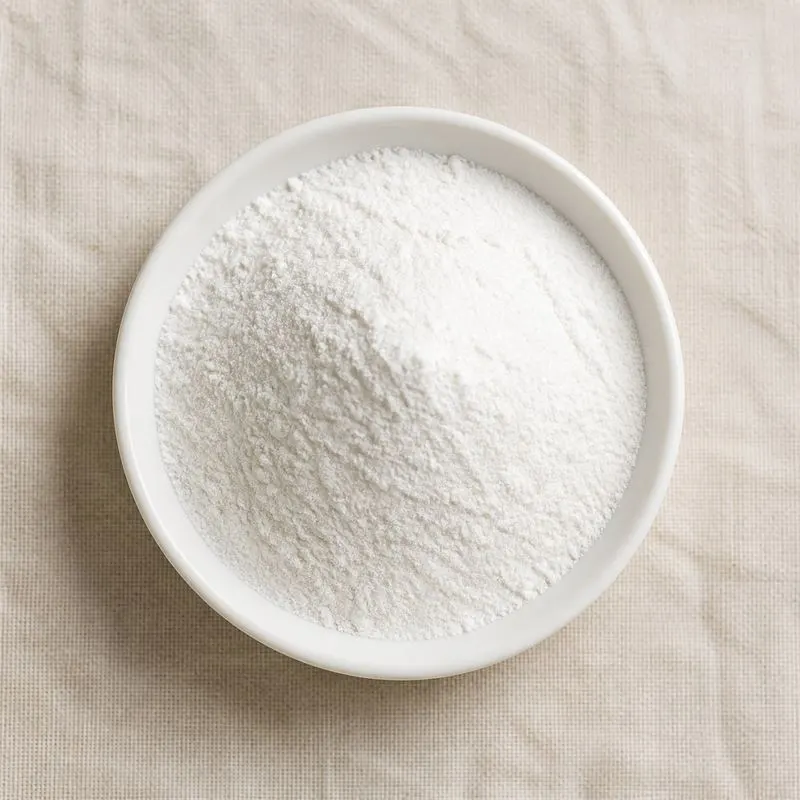
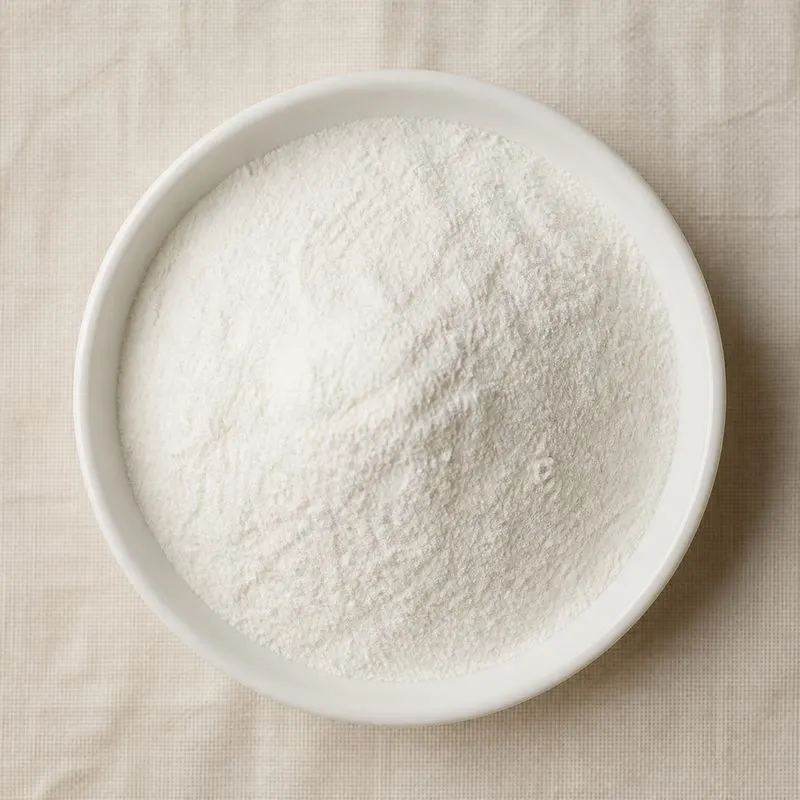
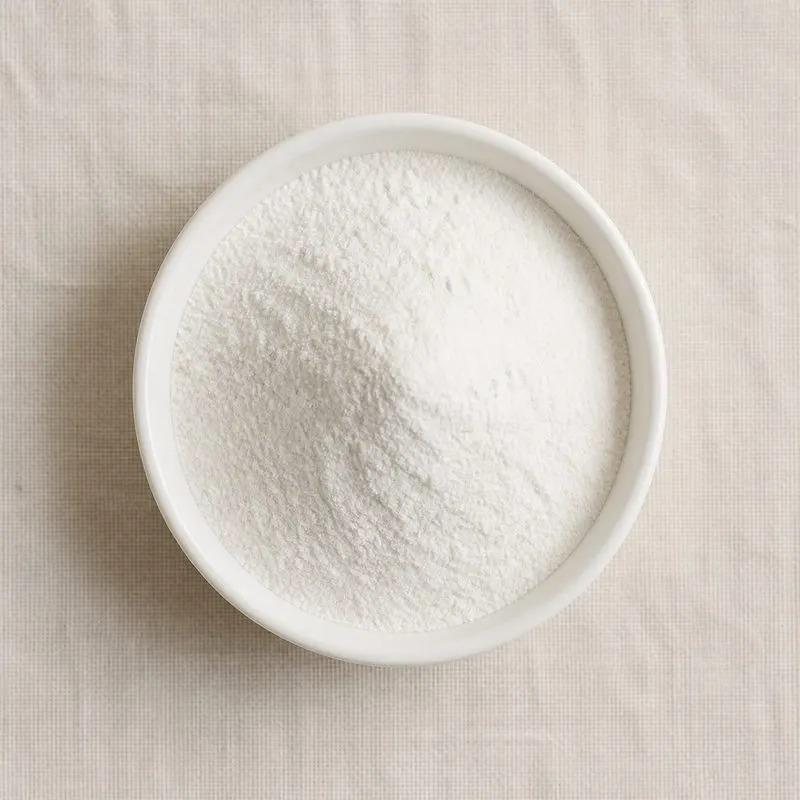
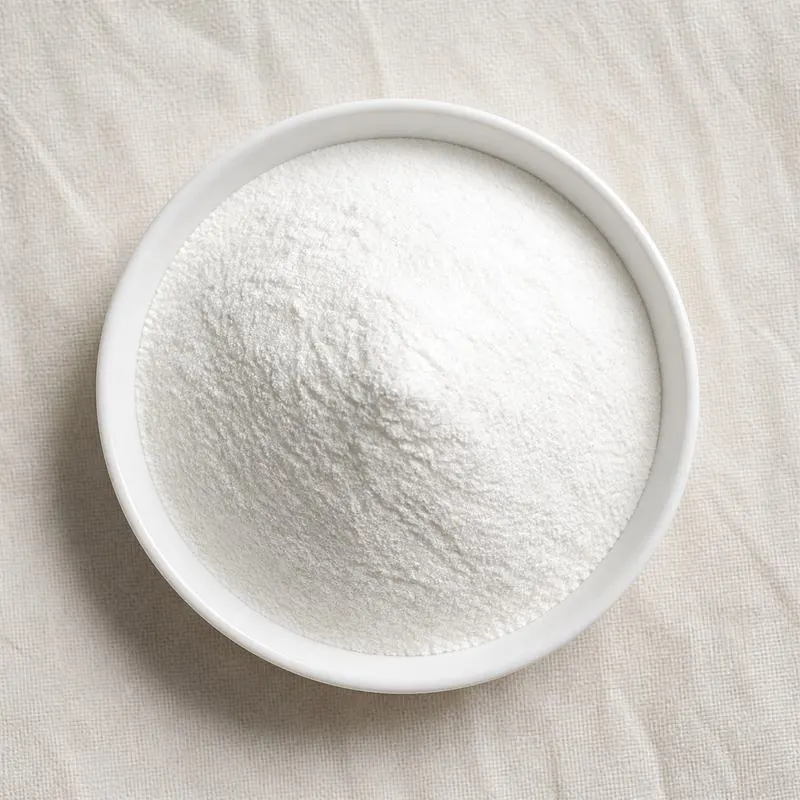
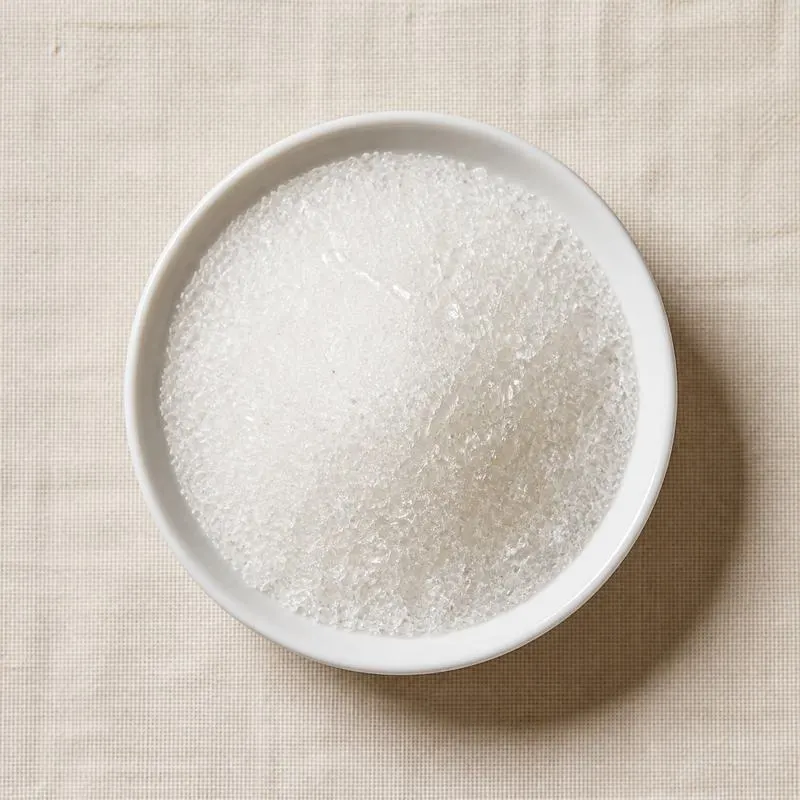
The compressed form exists for a straightforward commercial reason. Shipping a product that is almost entirely water is expensive, so producing countries press the washed cubes or sheets to a fraction of their original weight and export them as compressed blocks in brine or in an acidified holding solution. The importer rehydrates the material in water, cuts or sizes it as required, and packs it in syrup for retail. The compressed material is a firm, off white to pale yellow mass with a slightly acidic odour.
We source bulk Compressed Nata De Coco from top China manufacturers for our partners. The manufacturer is in Hainan. A smaller requirement can ship in a combined container with other ingredients.
Please send the grade you need, the volume and your destination port, and we will come back with a solution and a price.
or call +86-21-6858 0751
- Function
- Probiotic
Specifications
| Item | Specification |
|---|---|
| Appearance | Firm off white to pale yellow compressed blocks or cubes |
| Odour | Faintly acidic, free from fermented or foreign odour |
| Moisture of Compressed Material | Not more than 85.0 percent |
| Rehydration Yield | Not less than declared ratio of finished to compressed weight |
| Cellulose (dry basis) | Not less than 95.0 percent |
| Cube Dimension after Rehydration | 8 to 12 mm as specified |
| pH of Rehydrated Material | 3.5 to 5.0 |
| Residual Acetic Acid | Not more than 0.5 percent |
| Sulphur Dioxide | Not more than 30 mg/kg where bleaching is used |
| Lead | Not more than 0.3 mg/kg |
| Arsenic | Not more than 0.5 mg/kg |
| Total Plate Count | Not more than 1000 cfu/g |
| Yeast and Mould | Not more than 50 cfu/g |
| Escherichia coli | Absent in 10 g |
| Salmonella | Absent in 25 g |
Common Markets Grades
The main grade axis is form and degree of compression. Whole compressed sheets are traded for processors who will cut to their own dimensions, while pre cut compressed cubes are sold where the importer wants a fixed size, commonly a cube of eight to twelve millimetres. Compression ratio, expressed as the weight of finished rehydrated product obtainable per kilogram of compressed material, is the practical trading figure and is a function of how hard the material was pressed and how thick the original pellicle was.
The second axis is the holding medium and treatment. Material held in dilute acid or brine relies on that medium for stability during shipping and requires extensive washing before use. Material that has been bleached or sulphited to lift colour carries a residual sulphur dioxide specification and an allergen declaration obligation, and unbleached grades are traded at a slightly deeper colour for buyers who will not accept sulphite. Beyond that, buyers distinguish by pellicle thickness and firmness, which determine the bite of the finished product, and by whether the material was made on coconut water or on a substituted medium of sugar and nitrogen salts, which affects both texture and how the ingredient may be named.
Applications
- Jelly drinks and bubble tea, where the cubes give the chewy inclusion the format is built around
- Canned and cup fruit desserts, where the cellulose cubes hold their shape through retorting
- Yoghurt and fermented milk with inclusions, where the neutral flavour lets the fruit preparation dominate
- Fruit cocktails and mixed fruit packs, where nata is used as a low cost textural bulking component
- Dietary fibre products, where the material contributes insoluble fibre without digestible carbohydrate
- Reduced calorie desserts and jellies, where volume and texture are wanted without energy
- Ice cream and frozen dessert inclusions, where the cubes stay discrete rather than dissolving
- Bakery fillings and toppings, where the cubes survive baking and retain bite
- Vegan and vegetarian formats, where a plant origin gelatinous texture is required
China Manufacturers of Compressed Nata De Coco
Top Compressed Nata De Coco manufacturers in China.

Company names and logos are the property of the manufacturers themselves. They are listed here because our own directory records them as producing this ingredient. A listing is not an endorsement by them, and we do not represent them or speak on their behalf.
Regulatory Status
In the United States nata de coco is a conventional food, sold under its own name and declared in the ingredient list as nata de coco or as coconut gel, and bacterial cellulose preparations have been the subject of generally recognised as safe determinations for defined food uses. Where a sulphiting agent has been used in processing, any residue at or above ten milligrams per kilogram expressed as sulphur dioxide must be declared on the label, and imported material is examined on the usual grounds of hygiene, additive use and correct labelling.
In the European Union the position is less settled than the length of the product's history in Asia would suggest. Bacterial cellulose does not have an established record of significant consumption within the Union before May 1997, so a preparation may fall within the scope of the novel food regulation and require authorisation, and the fine fibril dimension of the material has drawn attention under the framework covering engineered nanomaterials in food, which imposes its own assessment and labelling requirements. The status of a specific preparation should therefore be confirmed against the novel food catalogue and any authorisation covering it rather than assumed from its use elsewhere. Any sulphite residue above ten milligrams per kilogram requires an allergen declaration, and additives used in the finished syrup pack must be authorised for the relevant category. Codex maintains no commodity standard for nata de coco, and its general standards on hygiene, contaminants and labelling apply, together with regional guidance from coconut producing countries.
Manufacturing Process
Fresh coconut water is filtered and adjusted, since on its own it is too low in sugar and nitrogen to support the yield required. Sugar is added to raise the fermentable carbohydrate, a nitrogen source such as ammonium sulphate or ammonium phosphate is included, and the medium is acidified with acetic acid to a pH around four, which both suits the organism and suppresses competitors. The medium is boiled, dispensed into shallow trays, cooled, and inoculated with a starter culture of Komagataeibacter xylinus.
Fermentation is static and aerobic and takes place at the air interface, because the organism needs oxygen and builds its cellulose only at the surface. Over seven to fourteen days at ambient tropical temperature a firm pellicle several centimetres thick forms across the tray and is then lifted off. The raw pellicle is strongly acidic and holds residual medium and bacteria, so it is cut into sheets or cubes and given repeated boiling and washing cycles in clean water, with a neutralisation step, until the acid has been removed and the material is microbiologically clean and free of odour. Where a whiter product is required a bleaching or sulphiting step is applied at this point. The washed material is then pressed mechanically to expel most of the retained water, and the compressed blocks are packed into drums with an acidified holding solution or brine that keeps them stable through shipping. At destination the blocks are rehydrated in water, sized, and cooked in sugar syrup with flavour and acidulant before packing.