Dehydrated Ginger
Dehydrated Ginger is the moisture-reduced rhizome of Zingiber officinale, processed to a shelf-stable form while keeping the characteristic warm, pungent profile of the fresh root.
The starting rhizome contains roughly 80 percent water. Industrial drying brings this down to 8 to 12 percent, yielding a hard, fibrous material that can be sold as whole hands, splits, slices, granules, or powder. The dehydrated form is the global trading currency of the ginger industry.
We source bulk Dehydrated Ginger from top China manufacturers for our partners, working with several of them. The manufacturers are mostly in Shandong, Anhui and Hebei. For this ingredient the minimum order is 500 kg and a 20-foot container takes 9 MT, and a smaller requirement can ship in a combined container with other ingredients.
Please send the grade you need, the volume and your destination port, and we will come back with a solution and a price.
or call +86-21-6858 0751
- Minimum order
- 500 kg
- Qty in 20' FCL
- 9 MT
- Packaging
- 25 kg kraft paper bag with PE inner liner
- ISO 9001
- HACCP
- Halal
- Kosher
Specifications
| Item | Specification |
|---|---|
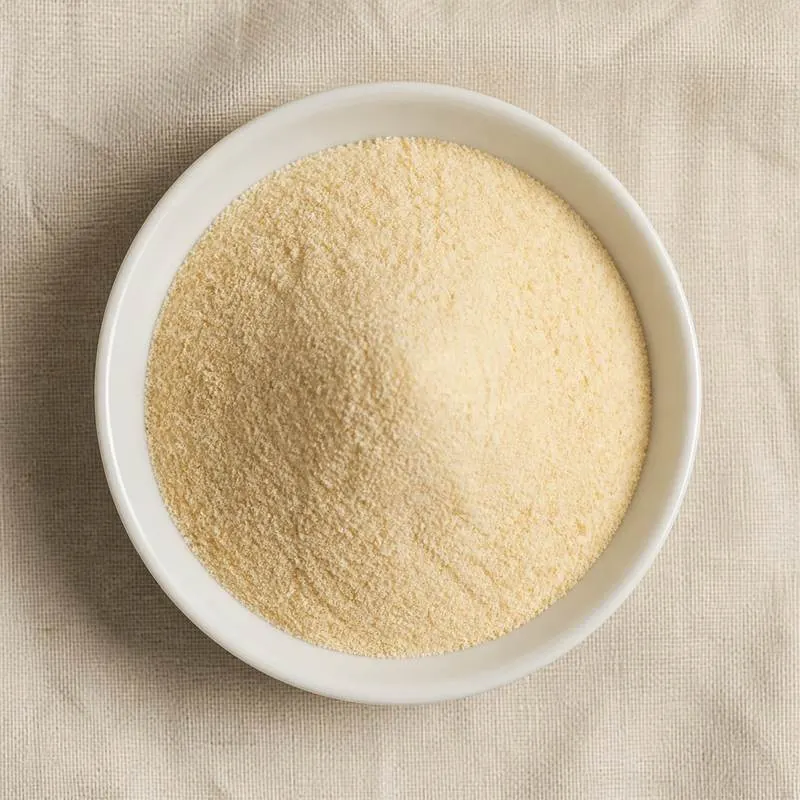
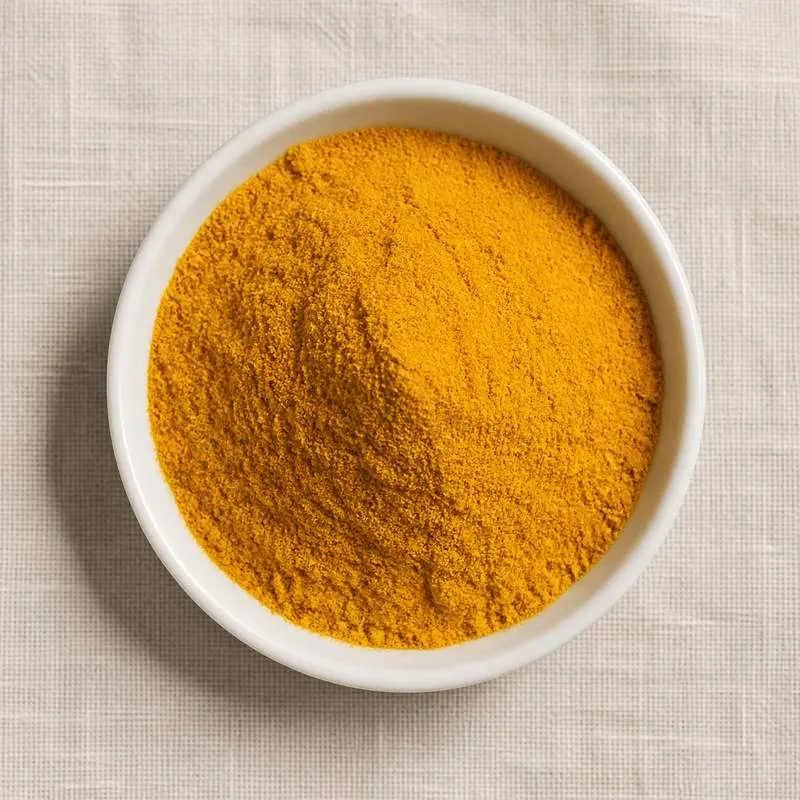
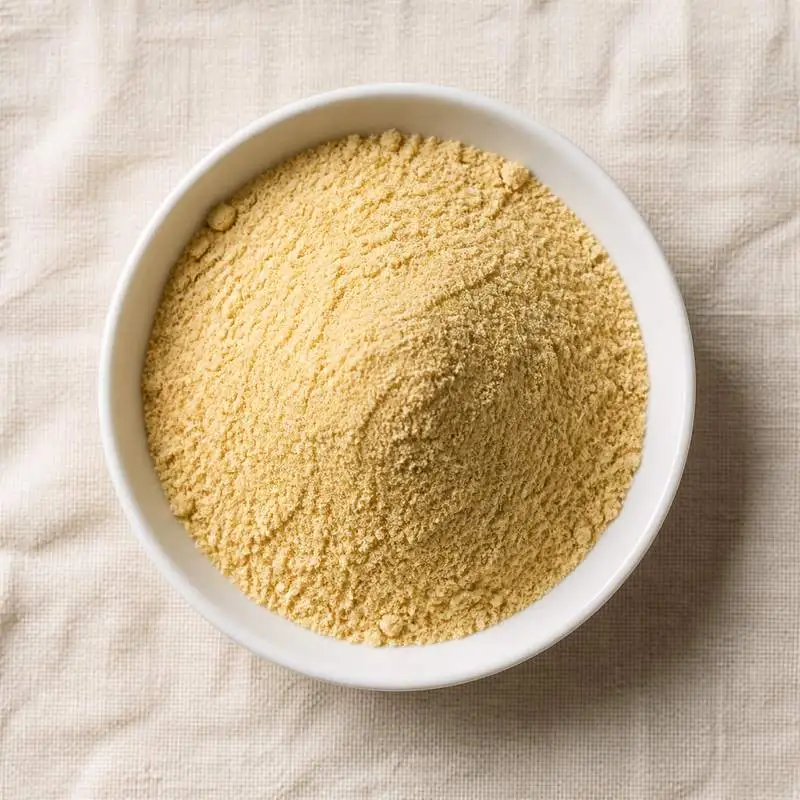
| Appearance | Pale yellow to light beige free-flowing powder |
| Moisture | ≤ 10.0% |
| Volatile oil content | ≥ 1.5 mL/100 g |
| Total ash | ≤ 8.0% |
| Acid-insoluble ash | ≤ 1.5% |
| Crude fiber | ≤ 7.0% (peeled) / ≤ 10.0% (unpeeled) |
| Lead | ≤ 2 mg/kg |
| Arsenic | ≤ 1 mg/kg |
| Total plate count | ≤ 100,000 cfu/g |
| Salmonella | Absent in 25 g |
| Particle size | Granules 8 to 26 mesh, powder 60 to 200 mesh, or per customer specification |
Common Markets Grades
Ginger is graded by origin, peeling, and particle format.
Origin matters because volatile-oil content and pungency vary widely. Cochin and Calicut ginger from Kerala are the lemony, citrus-toned reference. Nigerian ginger is the most pungent. Chinese ginger sits in the middle, with the largest export volume. Australian and Fijian gingers are premium small-volume origins.
Peeled (decorticated) ginger commands a higher price than unpeeled material because it has a lighter colour and lower fibre content. Bleached or limed grades use a calcium hydroxide dip to brighten the surface, though clean-label customers avoid these.
Particle formats run from whole splits down to slices, granules (1 to 3 mm), and powder (typically 60 to 80 mesh). Volatile-oil content and gingerol assay are routinely specified on certificates of analysis.
Applications
- Bakery applications: gingerbread, ginger snaps, spice cakes, and seasonal cookies
- Curry powders and Asian spice blends
- Beverage extracts for ginger ale, ginger beer, and herbal teas
- Confectionery: crystallised ginger, ginger chews, and chocolate-coated pieces
- Pickling and chutney production
- Meat marinades, particularly for poultry and pork
- Instant beverage powders and chai mixes
- Soup and bouillon seasoning
- Nutraceutical and herbal supplement bases
- Animal feed for digestive support in livestock
- Cosmetic and personal care formulations seeking a warming note
- Pet treats and functional pet food blends
Brands Using Dehydrated Ginger
Widely-distributed consumer products that list Dehydrated Ginger on the ingredient label.
- McCormickMcCormick Ground Ginger (1.5 oz) ↗Ingredients: Ginger and Sulfiting Agent (added to preserve colour). Dried/dehydrated ginger rhizome (Zingiber officinale).Label verified 2026-05-24
- McCormickMcCormick Gourmet Organic Ground Ginger (1.25 oz) ↗Pure organic dehydrated ginger rhizome; non-GMO and kosher.Label verified 2026-05-24
- Simply OrganicSimply Organic Ground Ginger Root (1.64 oz) ↗Single ingredient: organic ground ginger root (Zingiber officinale). Non-irradiated, no ETO.Label verified 2026-05-24
- Frontier Co-opFrontier Co-op Ground Ginger Root, Organic (4.09 oz) ↗Single-ingredient ground dehydrated organic ginger rhizome.Label verified 2026-05-24
- Frontier Co-opFrontier Co-op Ginger, Ground, Regenerative Organic Certified (1.31 oz) ↗Single-ingredient dehydrated ginger root; ROC certified.Label verified 2026-05-24
- Spice IslandsSpice Islands Ground Ginger ↗Single-ingredient dehydrated ground ginger sourced from China; pungent, lemony flavour.Label verified 2026-05-24
Brand names, product names and logos are the property of their owners. They appear here as published evidence that the ingredient is used, taken from the brand's own label or website. Their appearance is not an endorsement, and it does not mean the brand buys from us or from any manufacturer listed on this site.
China Manufacturers of Dehydrated Ginger
Top Dehydrated Ginger manufacturers in China.
 Chiping Shengkang Foodstuff Co., Ltd.1 ingredient in the directory
- Fullrich Food & Spice Ingredients (Anhui) Co., Ltd.2 ingredients in the directory
 Hebei Huayu Yongcheng Food Co., Ltd.4 ingredients in the directory
 Henan Sunny Foodstuff Co., Ltd.5 ingredients in the directory
 Linquan Zerun Plant & Spice Co., Ltd.9 ingredients in the directory
 Linyi Hengmao Foods Co., Ltd.4 ingredients in the directory
Company names and logos are the property of the manufacturers themselves. They are listed here because our own directory records them as producing this ingredient. A listing is not an endorsement by them, and we do not represent them or speak on their behalf.
How We Help Source Dehydrated Ginger
Direct Factory Sourcing
We run the whole process: selecting the manufacturer from the top Chinese food ingredient producers, negotiating the price, verifying quality, and coordinating the logistics. You deal with us instead of with several factories at once.
Original Packaging and Documents from the Manufacturer
The manufacturer sends your Dehydrated Ginger out of its own factory in the original packing, through to your destination port. The COA, COO, MSDS, TDS and any certifications reach you from the manufacturer as well.
Free Samples and Lead Time
We send 100 to 500 g free for your own laboratory to test and you cover only the courier, usually within 2 to 3 working days. ETD is usually within 7 to 15 days once the order is confirmed, and we check that date against the factory's own manufacturing schedule before we give it to you.
Combined Shipment
We can load Dehydrated Ginger together with other ingredients such as Astaxanthin, Dehydrated Garlic and Lutein into one 20' FCL. If your quantity is small, we can also ship LCL.
Regulatory Status
Dehydrated ginger is a culinary spice and is not assigned an E number. It does not require a food-additive authorisation in any major market.
The U.S. FDA places dried ginger under its general spice and natural seasoning provisions and recognises it as GRAS when used as a flavouring.
The European Spice Association publishes voluntary minima for moisture, ash, volatile oil, and microbiological cleanliness. ESA guidance is widely treated as the industry default for commercial contracts.
Pharmacopoeial monographs for Zingiberis Rhizoma appear in the European Pharmacopoeia, the United States Pharmacopeia, and the Chinese Pharmacopoeia for use in herbal and traditional medicine preparations. Organic, Kosher, and Halal certifications are routinely available.
Manufacturing Process
Ginger rhizomes are harvested 8 to 10 months after planting, when the aerial leaves yellow and dry back. Mature rhizomes destined for drying are washed, then either peeled by hand, rotary drum, or chemical lye treatment.
Peeled hands are sliced or split lengthwise to expose the inner tissue and accelerate drying. Sun drying on raised concrete floors is still common in India and West Africa for traditional grades. Mechanical drying in solar tunnels or hot-air cabinets is the norm for export-grade material.
Drying air temperatures are kept below 60 C to preserve the volatile oil fraction. Gingerol, the principal pungent compound in fresh ginger, slowly dehydrates during drying to form shogaols, which are more pungent on a weight basis but carry a different flavour note. The ratio of gingerol to shogaol in the finished product is therefore set by drying time and temperature.
After drying the rhizomes are graded for colour and broken-piece content. Slices and splits go out as they are; the balance is milled to granules or powder and sieved to specification before packaging.