Delicious Fish Flavour
Delicious fish flavour is a compounded savoury flavouring formulated to give cooked fish and general marine character to a food. Most industrial grades are reaction flavourings rather than simple blends, built by heating a fish protein hydrolysate with reducing sugars and sulphur bearing precursors so that the cooked notes are generated in the vessel rather than dosed in.
Three groups of compounds define the target. Bromophenols, chiefly 2,6-dibromophenol and its relatives, carry the clean sea and iodine note that separates a convincing marine flavour from a merely savoury one, and they act at extremely low concentration. Trimethylamine and related nitrogen compounds carry the fishy character proper, which is desirable in small amounts and immediately comes across as spoilage in larger ones, so their level is the single most delicate balance in the formula. Carbonyls from the oxidation of long chain polyunsaturated fatty acids, together with pyrazines and sulphur heterocycles from the Maillard reaction, supply the cooked, fried or grilled facets.
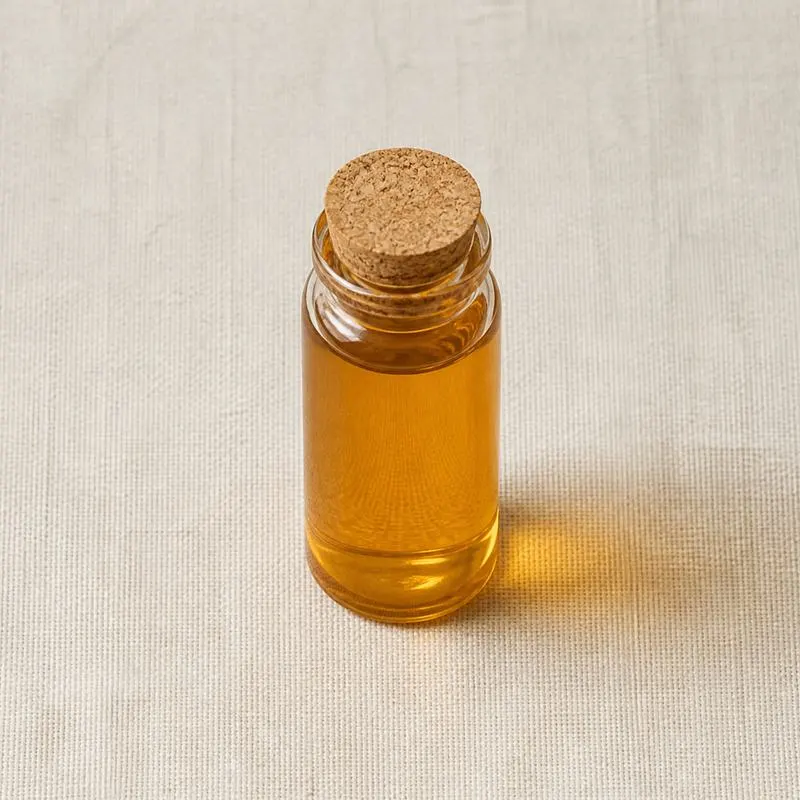
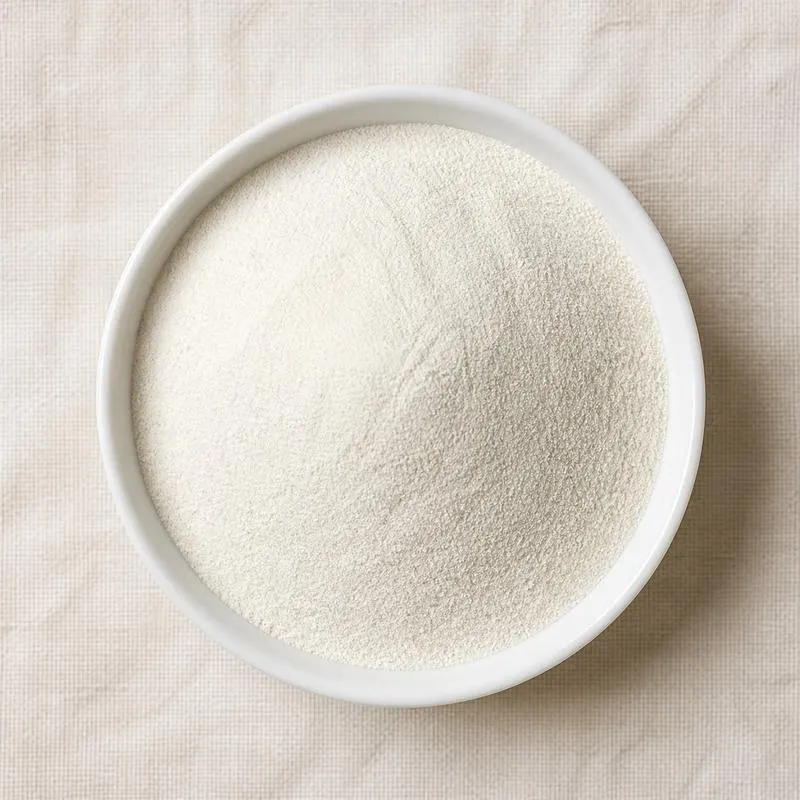
The taste base under that aroma comes from free amino acids and peptides released during hydrolysis, reinforced with glutamate and the ribonucleotides. The flavour comes as a brown paste, an oil dispersed liquid and a spray dried powder, with paste grades carrying the reaction body and a topping liquid usually added to restore volatiles lost in drying.
We source bulk Delicious Fish Flavour from top China manufacturers for our partners. The manufacturer is in Shanghai. A smaller requirement can ship in a combined container with other ingredients.
Please send the grade you need, the volume and your destination port, and we will come back with a solution and a price.
or call +86-21-6858 0751
- Function
- Flavours and Aromas
Specifications
| Item | Specification |
|---|---|
| Appearance | Brown paste, oil dispersion or free flowing light brown powder |
| Odour and Flavour | Characteristic cooked fish, clean marine, matching retained reference |
| Total Nitrogen | Not less than 2.0 percent |
| Amino Acid Nitrogen | Not less than 0.8 percent |
| Sodium Chloride | To formula, within 1.0 percent absolute of target |
| Moisture, powder grade | Not more than 5.0 percent |
| pH, 10 percent solution | 5.0 to 6.5 |
| Peroxide Value of Oil Phase | Not more than 5 meq/kg |
| Histamine | Within the applicable limit for the destination market |
| Solubility | Disperses fully in water at 60 °C |
| Lead | Not more than 1 mg/kg |
| Arsenic | Not more than 0.5 mg/kg |
| Total Plate Count | Not more than 10,000 cfu/g |
| E. coli | Absent in 1 g |
| Salmonella | Absent in 25 g |
Common Markets Grades
Grades divide first by whether real fish material is present. Grades built on fish hydrolysate, fish extract or fish oil carry a fuller, more authentic character and must declare fish as an allergen, while fully compounded grades built on plant hydrolysate, yeast extract and aroma chemicals avoid the allergen and can serve vegetarian and analogue work at the cost of some depth.
Grades divide second by profile, since white fish, oily fish, grilled fish, fish broth, dried fish and specific species profiles such as tuna, anchovy and eel are formulated separately and are not interchangeable. Physical form is the third axis, with paste for wet systems, oil dispersion for seasoning oils and frying, and spray dried and encapsulated powder for dry blends and instant products. Concentration is stated as a dosage rate rather than an assay, and heat stable grades are formulated for retort and extrusion. Halal, kosher and non-genetically-modified declarations follow the raw materials, and species and origin documentation applies wherever genuine fish material is used.
Applications
- Instant noodle seafood soup bases, in both the powder sachet and the seasoning oil
- Surimi, fish balls, fish cakes and crab stick analogues
- Fish and seafood snack seasoning, applied in an oil slurry during tumbling
- Retorted and frozen seafood ready meals, restoring character lost in processing
- Fish soup, congee and hotpot bases
- Coated and breaded fish products, dosed into the batter or breader
- Dumpling and bun fillings with a seafood positioning
- Plant based seafood analogues, where the base contributes no marine character
- Pet food, as an in-mix flavour or coating palatant for cat products in particular
- Compound seasoning and bottled sauce manufacture, as a marine component
China Manufacturers of Delicious Fish Flavour
Top Delicious Fish Flavour manufacturers in China.
Company names and logos are the property of the manufacturers themselves. They are listed here because our own directory records them as producing this ingredient. A listing is not an endorsement by them, and we do not represent them or speak on their behalf.
Regulatory Status
In the United States a flavour containing fishery material is subject to the seafood hazard analysis and critical control point regulation at 21 CFR 123 as well as to the preventive controls rules, and histamine is the controlling hazard for raw material from histidine rich species. The individual flavouring substances used hold FEMA GRAS status, and labelling follows 21 CFR 101.22, which determines whether the declaration reads natural flavour or artificial flavour. Fish is a major food allergen and must be declared, hydrolysed protein must be named by source, and monosodium glutamate where present is declared by name.
In the European Union thermal process flavourings are a defined category under Regulation (EC) No 1334/2008, which sets the temperature, time and starting material conditions under which they may be produced and fixes maximum levels for certain substances that can form during heating, so product made within those conditions needs no individual authorisation and carries no E number. Any enhancer present is an additive under Regulation (EC) No 1333/2008, with monosodium glutamate as E621 and the ribonucleotide salts in the E627 to E635 range. Fishery raw material requires an establishment approved under Regulation (EC) No 853/2004, histamine criteria in Regulation (EC) No 2073/2005 apply, and fish must be declared as an allergen. Codex is relevant through its general guidelines for the use of flavourings and its code of practice for fish and fishery products.
Manufacturing Process
Fish trim, frames and small pelagic species are received frozen, thawed under control, ground and charged to a jacketed reactor with water. The slurry is heated briefly to inactivate native enzymes, then cooled to the working temperature of the added proteases and digested until the target degree of hydrolysis is reached. Control of this step is what decides bitterness, since excessive endopeptidase action generates bitter hydrophobic peptides that cannot be removed afterwards, so an exopeptidase is normally included to clip them back. The enzymes are inactivated by a high temperature hold and the digest is centrifuged, with bone and insoluble solids removed and the oil fraction taken off and either refined separately or returned in a controlled amount.
The clarified hydrolysate is concentrated under vacuum and charged back to the reactor with reducing sugars, cysteine, thiamine, fat and any species specific extract, adjusted to a mildly acid pH and heated with agitation between ninety five and one hundred and twenty degrees Celsius until the aroma reaches the intended point, then cooled quickly to stop the reaction. Trace bromophenols and top note flavours are added after cooling, since they would be destroyed by the reaction conditions. Paste grades are filled directly, oil grades are dispersed and homogenised into refined oil, and powder grades are homogenised with maltodextrin or modified starch and spray dried, then agglomerated and top note sprayed. Release covers nitrogen, salt, moisture, histamine and microbiology, with a sensory panel against a retained reference supported by gas chromatography.