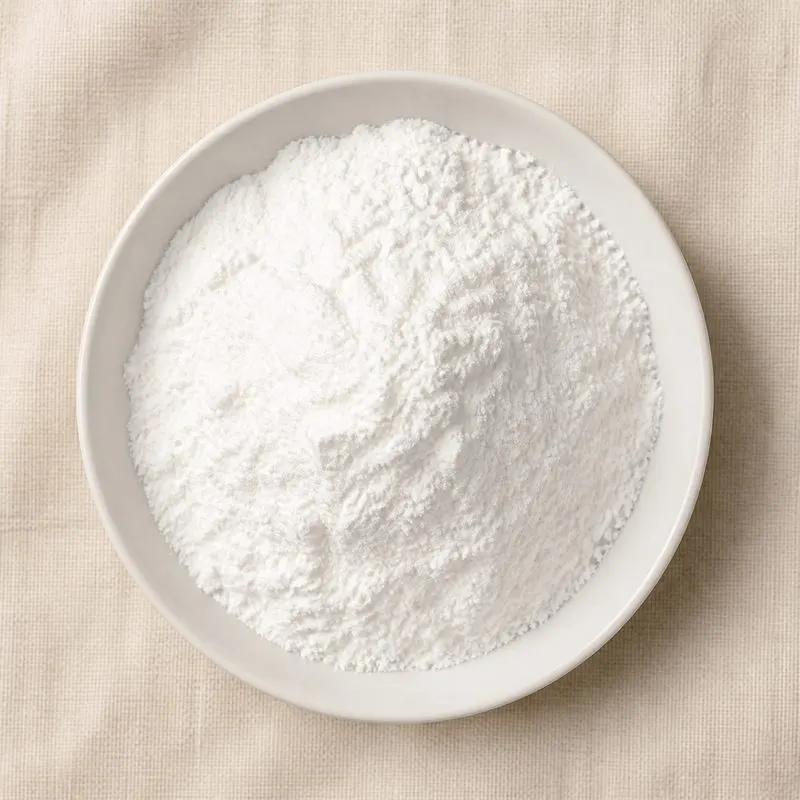
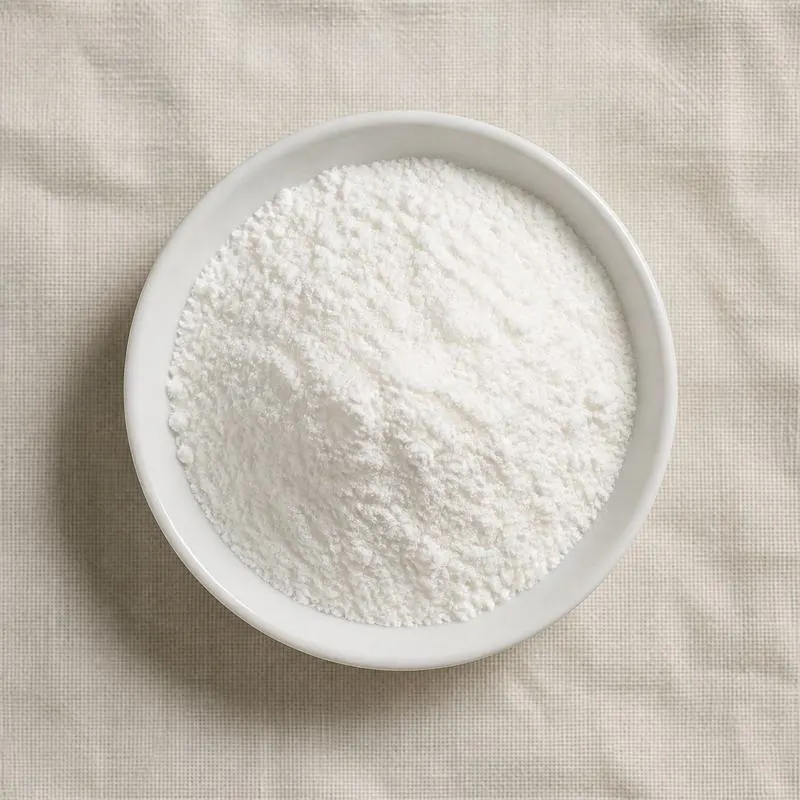
Edible Corn Starch
Edible corn starch is food grade native maize starch, the purified starch fraction separated from the endosperm of Zea mays by wet milling. The qualifier edible distinguishes it from the industrial grades of the same material sold into paper, textile, adhesive and oil drilling markets, where microbiological limits, residual sulphur dioxide and heavy metal controls are looser and appearance matters less.
Chemically it is a mixture of about 25 to 28 percent amylose, the essentially linear glucose polymer, and the balance amylopectin, the highly branched one. The granules are polygonal, 5 to 25 micrometres across, and contain small residues of protein and lipid that cereal starches never entirely lose, which is why a cooked maize starch paste is opaque and carries a faint cereal note where a tapioca or potato paste is clear and neutral.
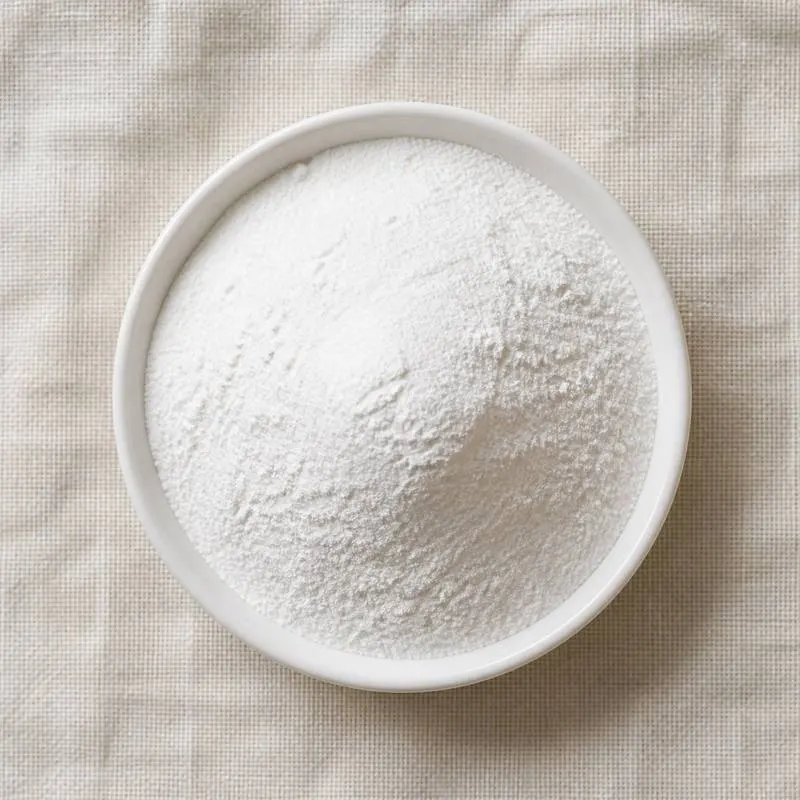
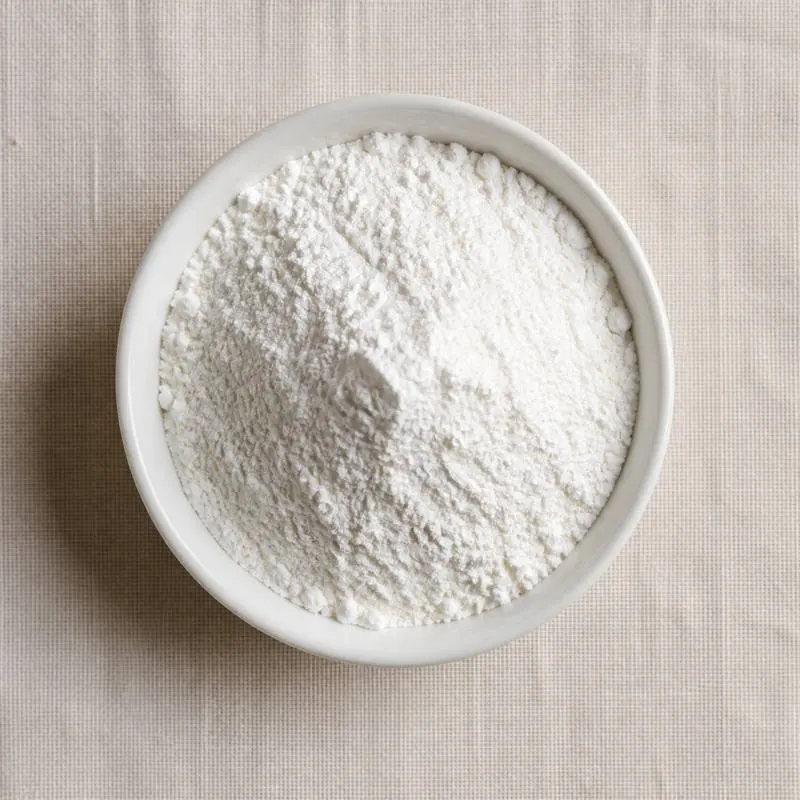
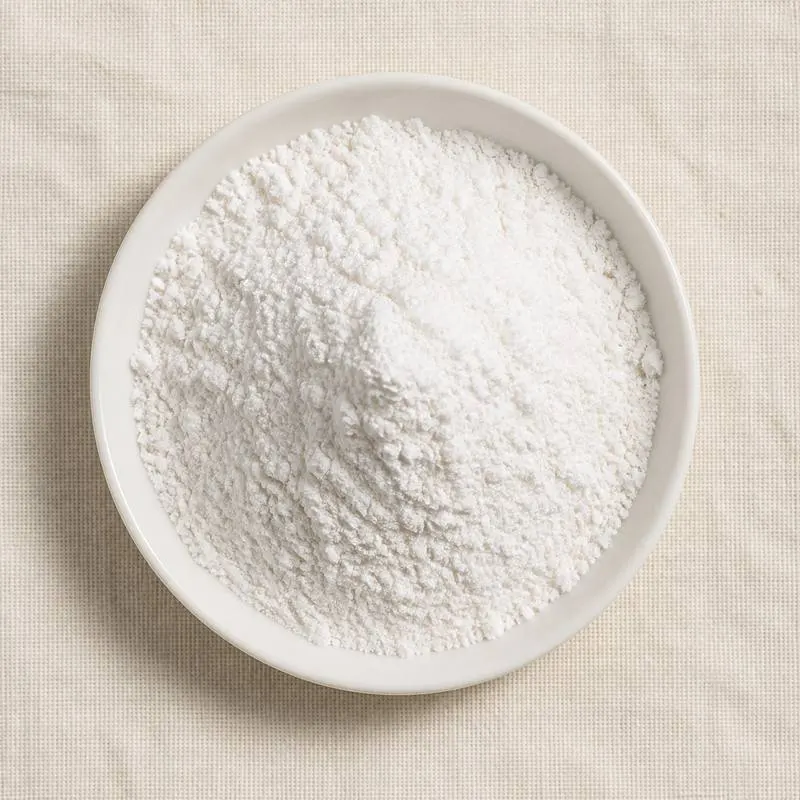
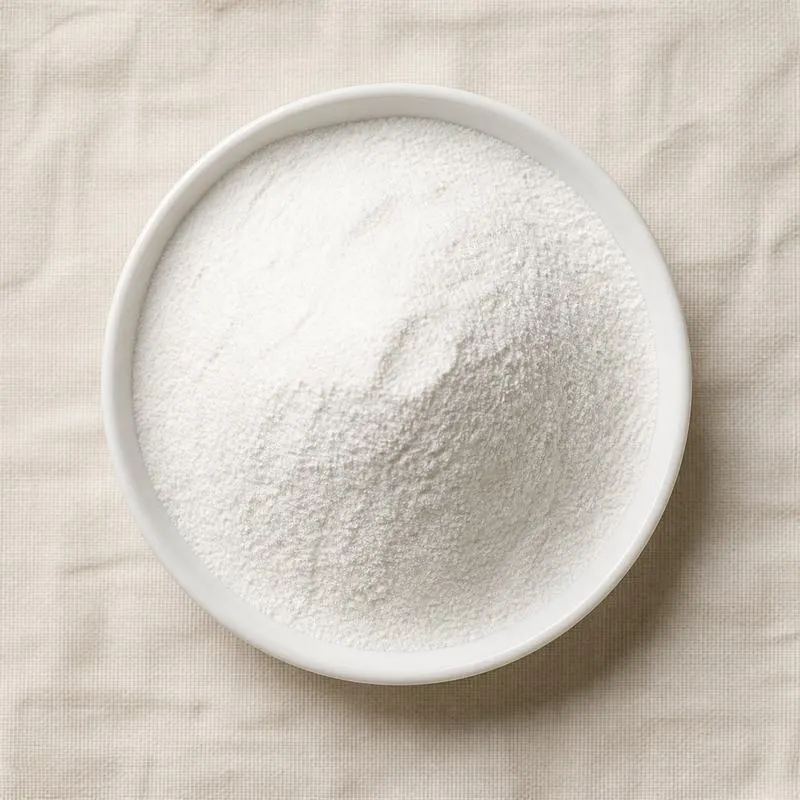
It gelatinises between about 62 and 72 degrees Celsius, swelling to a thick paste that on cooling sets to a firm, opaque, short textured gel, because the amylose fraction realigns as the temperature falls. That same tendency to retrograde causes clouding and water release in chilled and frozen storage, and it is the limitation that drives most of the modified starch industry. The granule is also fragile under prolonged heat, shear and acid. Edible corn starch is a white, free flowing, faintly squeaky powder, insoluble in cold water.
We source bulk Edible Corn Starch from top China manufacturers for our partners. A smaller requirement can ship in a combined container with other ingredients.
Please send the grade you need, the volume and your destination port, and we will come back with a solution and a price.
or call +86-21-6858 0751
- Function
- Texturisers
Specifications
| Item | Specification |
|---|---|
| Appearance | White free flowing powder, free of foreign matter |
| Odour and taste | Neutral, faint cereal note, no musty odour |
| Identification | Blue with iodine solution; granules conform to maize under microscope |
| Starch content, dry basis | 98.0 percent minimum |
| Moisture | 14.0 percent maximum |
| Protein, nitrogen times 6.25, dry basis | 0.35 percent maximum |
| Fat | 0.15 percent maximum |
| Ash, dry basis | 0.15 percent maximum |
| Whiteness | 92 minimum |
| pH, 10 percent slurry | 4.5 to 7.0 |
| Specks per square decimetre | 3 maximum |
| Sulphur dioxide | 30 mg/kg maximum |
| Lead | 0.5 mg/kg maximum |
| Arsenic | 0.5 mg/kg maximum |
| Total plate count | 10000 cfu/g maximum |
| Yeast and mould | 500 cfu/g maximum |
| E. coli | Absent in 1 g |
| Salmonella | Absent in 25 g |
Common Markets Grades
Native food grade corn starch is the base article, traded on starch content, moisture, whiteness, protein, ash, pH and viscosity, with viscosity quoted as a Brabender or rapid visco analyser peak. Whiteness and speck count are the practical quality differentiators between mills. Pharmaceutical grade meets the maize starch monographs of the USP-NF and the European Pharmacopoeia and is used as a tablet disintegrant and diluent.
Two botanical variants sit alongside the standard article. Waxy maize starch, from maize bred to contain essentially no amylose, gives a clear cohesive paste that does not set to a gel and retrogrades very little. High amylose maize starch, at 50 to 70 percent amylose, gelatinises only under pressure and gives firm, fast setting gels and a high resistant starch content. Beyond these, the same base is converted into the whole modified starch family, and into maltodextrin, glucose syrup and crystalline dextrose downstream. Organic and non genetically modified certified lines are produced from identity preserved maize.
Applications
- Soups, sauces and gravies, as the standard thickener where an opaque body and a firm set on cooling are acceptable
- Custards, puddings and dessert mixes, where the firm short gel is the intended texture
- Bakery, in cakes and biscuits, where it dilutes gluten and gives a softer, more tender crumb
- Batters and coatings for fried foods, forming a crisp crust as the amylose retrogrades on cooling
- Confectionery moulding beds, where the dry powder takes the impression into which sweets are deposited
- Processed meat and sausage, binding water and holding it through cooking
- Baking powder, as the inert carrier and moisture barrier between the acid and the bicarbonate
- Pharmaceutical tablets, as a disintegrant, diluent and binder in the compressed tablet
- Anticaking and dusting agent in grated cheese, confectionery and powder blends
- Feedstock for glucose syrup, maltodextrin, dextrose and modified starch manufacture
Brands Using Edible Corn Starch
Widely-distributed consumer products that list Edible Corn Starch on the ingredient label.
- Anthonys GoodsOrganic Corn Starch ↗Bagged USDA certified organic corn starch sold as a batch tested gluten free thickener for soups, sauces and gravies.Label verified 2026-08-31
- Edward & SonsPremier Japan Organic Gluten Free Hoisin Sauce ↗Hoisin sauce whose ingredient list names tapioca starch or corn starch as the thickener.Label verified 2026-08-31
Brand names, product names and logos are the property of their owners. They appear here as published evidence that the ingredient is used, taken from the brand's own label or website. Their appearance is not an endorsement, and it does not mean the brand buys from us or from any manufacturer listed on this site.
China Manufacturers of Edible Corn Starch
Top Edible Corn Starch manufacturers in China.
Company names and logos are the property of the manufacturers themselves. They are listed here because our own directory records them as producing this ingredient. A listing is not an endorsement by them, and we do not represent them or speak on their behalf.
Regulatory Status
Native corn starch is a food, not a food additive. In the United States it is a common food ingredient labelled as corn starch, is treated as generally recognised as safe in its ordinary uses, and the Food Chemicals Codex starch monograph sets its identity and purity criteria. The USP-NF maize starch monograph governs pharmaceutical use. Only chemically modified starches fall under 21 CFR 172.892 and are labelled as modified food starch.
In the European Union native starches carry no E number and are regulated as foods, with only chemically modified starches falling within the food additives framework. The residual sulphur dioxide carried over from the steeping stage is subject to the sulphite declaration threshold, which requires labelling above ten milligrams per kilogram, and starch specifications are written to stay comfortably below it. Codex maintains a general standard covering the composition and quality of edible starches. Maize is not a declarable allergen and corn starch is naturally free of gluten, which makes it a standard ingredient in gluten free formulation.
Manufacturing Process
Cleaned maize is steeped for one to two days in warm water containing dilute sulphur dioxide, which softens the kernel, loosens the protein matrix that holds the starch granules and inhibits microbial growth. The steeped grain is coarsely ground in a degerminating mill and the buoyant germ, which carries the oil, is floated off in hydrocyclones and sent for oil extraction. The remaining slurry is finely milled to release the starch from the fibre, and the fibre is screened out on pressure curved sieves and washed in counter current flow to recover entrained starch.
What remains is a mill starch stream containing starch and gluten protein. These are separated in a disc nozzle centrifuge on the density difference between them, with the lighter gluten drawn off and dewatered for feed while the heavier starch passes on. The starch is then refined through a multistage countercurrent hydrocyclone battery, typically ten to fifteen stages, each displacing more residual protein and soluble matter with fresh water until protein is brought below specification. The refined starch milk is dewatered on a vacuum drum filter or peeler centrifuge to a cake around 60 percent solids, then dried in a flash drier in a stream of hot air with a residence time short enough that no granule gelatinises. The dried starch is cooled, sieved, passed over a magnet and metal detector and packed.