Hawthorn Enzymatic Hydrolysis
Hawthorn enzymatic hydrolysis product is an extract of hawthorn fruit, principally Crataegus pinnatifida and Crataegus monogyna, made by treating the milled fruit with cell wall degrading enzymes before or during aqueous extraction rather than relying on solvent and heat alone. Hawthorn fruit is unusually rich in pectin, and that pectin traps soluble solids in the pulp, raises viscosity and makes the crude extract very hard to filter. Enzymatic treatment with pectinase and cellulase depolymerises it, which both frees the entrapped actives and turns an unworkable mash into a filterable liquor.
The extract carries the characteristic hawthorn fraction: oligomeric proanthocyanidins, flavonoids such as hyperoside, vitexin and rutin, phenolic acids including chlorogenic acid, and a substantial load of organic acids, mainly citric and malic, that give the material its sourness. Enzymatic hydrolysis also releases oligosaccharides and low molecular weight pectin fragments that a conventional extraction would leave behind.
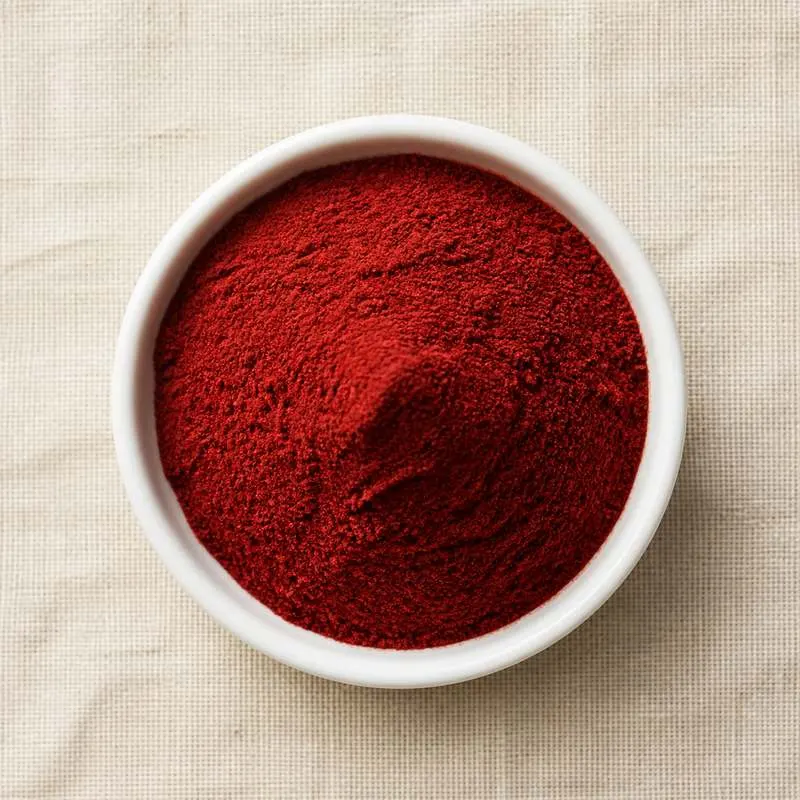
It reaches the trade as a red-brown to dark brown powder, or as a clear concentrated liquid at 40 to 70 degrees Brix. The powder is hygroscopic, dissolves readily in water to a clear acidic solution, and is markedly more soluble and less prone to hazing than a conventionally extracted hawthorn powder.
We source bulk Hawthorn Enzymatic Hydrolysis from top China manufacturers for our partners. The manufacturer is in Sichuan. A smaller requirement can ship in a combined container with other ingredients.
Please send the grade you need, the volume and your destination port, and we will come back with a solution and a price.
or call +86-21-6858 0751
- Function
- Plant extract
Specifications
| Item | Specification |
|---|---|
| Appearance | Red-brown to dark brown free-flowing powder |
| Odour and Taste | Characteristic hawthorn fruit odour, sour |
| Identification | Conforms by TLC and HPLC against hyperoside reference |
| Total Flavonoids | Not less than 5.0% as hyperoside |
| Proanthocyanidins | Not less than 10.0% |
| Solubility | Clear solution at 1% in water, no visible haze |
| pH of 1% Solution | 3.0-4.5 |
| Loss on Drying | Not more than 6.0% |
| Total Ash | Not more than 5.0% |
| Particle Size | 100% through 80 mesh |
| Residual Ethanol | Not more than 0.5% |
| Lead | Not more than 2.0 mg/kg |
| Arsenic | Not more than 1.0 mg/kg |
| Total Plate Count | Not more than 10,000 cfu/g |
| Yeast and Mould | Not more than 100 cfu/g |
| E. coli | Absent in 1 g |
| Salmonella | Absent in 25 g |
Common Markets Grades
The main grades are a spray dried powder, usually standardised on total flavonoids at 2 to 10 percent by UV colourimetry or on proanthocyanidins at 5 to 25 percent, and a liquid concentrate specified on soluble solids and titratable acidity. Ratio extracts at 4:1, 10:1 and 20:1 are traded where no marker is required. Because enzymatic hydrolysis is applied to a fruit rather than to a leaf, the resulting product is a food-type extract high in sugars and acids and should not be confused with hawthorn leaf and flower extract, which is a different botanical part with a different flavonoid profile.
Physical options are 80 mesh standard powder, water soluble grades carried on maltodextrin, granulated instant grades for sachets, and clarified liquid concentrate for beverage work. Decolourised grades are available where the natural red-brown would be unacceptable in a pale product. Buyers commonly also specify residual pectin or clarity after reconstitution, since the whole point of the enzymatic route is a clean solution, and a lot that hazes indicates incomplete hydrolysis.
Applications
- Cardiovascular support supplements in capsule and tablet form, the traditional positioning for hawthorn preparations
- Digestive and appetite formulas, which is the use hawthorn fruit has in Chinese practice as a food-moving herb
- Hawthorn juice drinks and fruit beverages, where the clarified concentrate gives colour, sourness and clarity in one ingredient
- Instant beverage granules and sachets, using the water soluble powder
- Confectionery including hawthorn jellies, rolls and chews, a large traditional category in the Chinese market
- Herbal tea blends and infusion bags, combined with chrysanthemum, cassia seed and liquorice
- Yoghurt and dairy fruit preparations, contributing fruit acidity and a natural red-brown shade
- Traditional Chinese decoction granules and compound formulas built on shan zha
- Sports nutrition and antioxidant blends, using the proanthocyanidin fraction alongside grape seed and pine bark extracts
- Pet supplements marketed for cardiac and digestive support in companion animals
China Manufacturers of Hawthorn Enzymatic Hydrolysis
Top Hawthorn Enzymatic Hydrolysis manufacturers in China.

Company names and logos are the property of the manufacturers themselves. They are listed here because our own directory records them as producing this ingredient. A listing is not an endorsement by them, and we do not represent them or speak on their behalf.
Regulatory Status
In the United States hawthorn is a long-established dietary ingredient under DSHEA, and hawthorn berries and extract also appear among the natural substances used in food. An enzymatically hydrolysed fruit extract is close in composition to a conventional fruit extract and is normally handled on the same basis, though the enzyme preparations used must themselves be food grade and suitable for use in food processing, and they are processing aids rather than ingredients so are not usually declared. Use in a conventional food rests on the fruit's status as a food and, for concentrated preparations, on a GRAS conclusion for the specific use. Claims are limited to structure and function statements with the standard disclaimer, since cardiovascular disease claims are not permitted.
In the European Union the extract is a food ingredient rather than a food additive and carries no E number. Hawthorn fruit has a history of food and supplement use in the EU, so a conventional fruit extract generally falls outside the Novel Food Regulation, while a highly enriched phenolic fraction may not. Hawthorn leaf and flower preparations are separately the subject of traditional herbal medicinal product registrations in several member states, and a product presented with medicinal claims would fall under medicines law rather than food law. Enzymes used in processing must be permitted food enzymes. No health claim for hawthorn appears on the EU authorised list. Codex has no commodity standard for this extract.
Manufacturing Process
Dried or fresh hawthorn fruit is washed, destoned and milled or pulped, since the stone carries little of value and would blunt the mill. The pulp is slurried in water and brought to the temperature and pH window the enzyme preparation requires, typically 45 to 55 degrees Celsius at pH 4 to 5, and dosed with a pectinase and cellulase blend. The hydrolysis is held for one to three hours under gentle agitation and is tracked by viscosity or by reducing sugar release, then stopped by raising the temperature above the enzyme inactivation point, which also serves as the pasteurisation step.
The hydrolysed mash separates far more readily than an untreated one, so it is decanted or pressed and then clarified through a plate filter or a ceramic membrane. Where a higher marker assay is wanted the clarified liquor is loaded onto macroporous resin, water washed to strip sugars and organic acids, and eluted with ethanol to recover the flavonoid and proanthocyanidin fraction. The liquor is concentrated in a falling film vacuum evaporator at a low boiling temperature to protect the heat sensitive phenolics, then either filled as concentrate or blended with carrier and spray dried. The powder is sieved, assayed and packed under a moisture barrier liner.