Hydrolyzed Vegetable Protein Compound
Hydrolysed Vegetable Protein Compound is a blended savoury seasoning in which hydrolysed vegetable protein is the base and other components are added to complete a ready to use taste system. The typical construction combines the hydrolysate with salt, monosodium glutamate or yeast extract, the ribonucleotides disodium inosinate and disodium guanylate, a small sugar or maltodextrin fraction for bulk and browning, and often a reaction flavour or milled spice for a directional profile such as chicken, beef or vegetable.
The hydrolysate itself supplies free amino acids and short peptides, with free glutamic acid the dominant taste active. Adding nucleotides to that base is what distinguishes the compound from plain hydrolysate, because glutamate and the ribonucleotides act on the umami receptor together and produce an intensity greater than the sum of the two dosed separately. In practice a formulator replaces several separate additions with one ingredient.
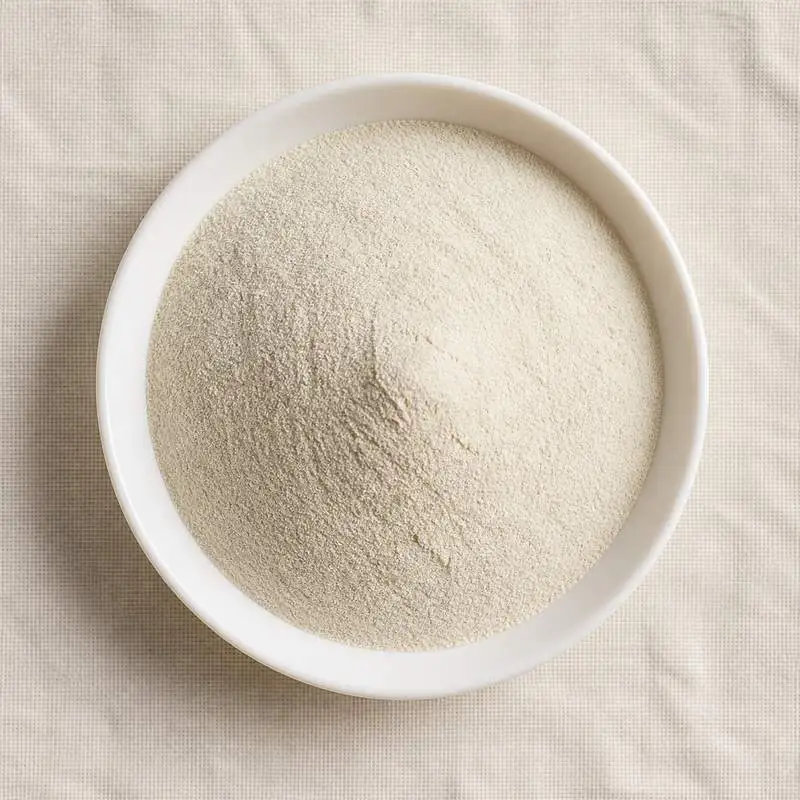
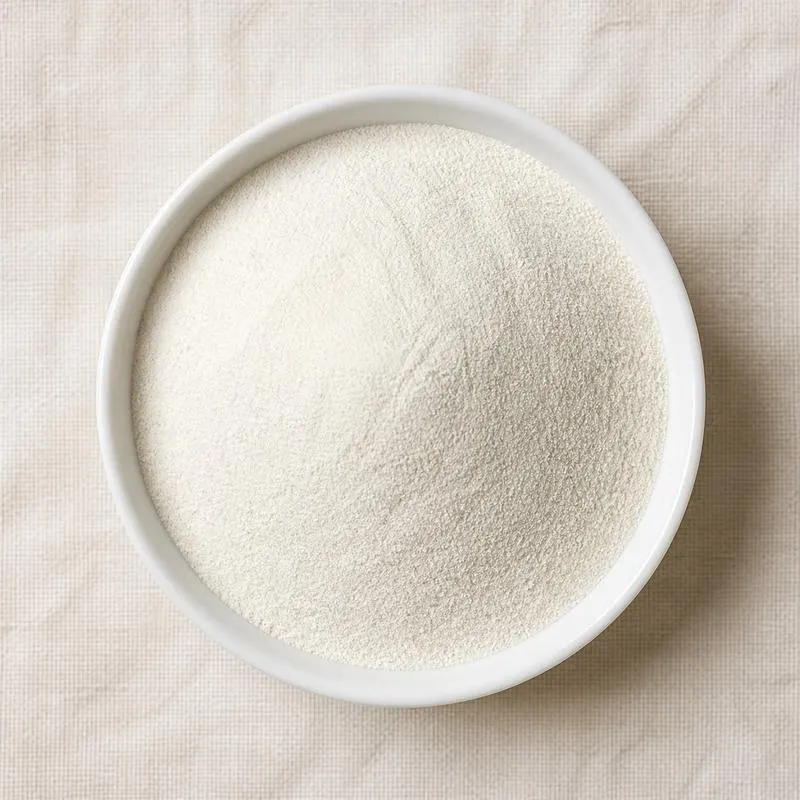
It is a light to dark brown free flowing powder or granule, fully water soluble, and less often a liquid or paste. The blend is heat stable through boiling, retort and extrusion, and hygroscopic enough to require moisture barrier packaging.
We source bulk Hydrolyzed Vegetable Protein Compound from top China manufacturers for our partners. The manufacturer is in Shanghai. A smaller requirement can ship in a combined container with other ingredients.
Please send the grade you need, the volume and your destination port, and we will come back with a solution and a price.
or call +86-21-6858 0751
- Function
- Flavours and Aromas
Specifications
| Item | Specification |
|---|---|
| Appearance | Light to dark brown free flowing powder or granule |
| Odour and Taste | Characteristic savoury and brothy, no burnt or bitter note |
| Moisture | Not more than 5.0 percent |
| Total Nitrogen | Not less than 2.5 percent |
| Amino Acid Nitrogen | Not less than 1.5 percent |
| Sodium Chloride | As declared, plus or minus 2.0 percent |
| Combined Ribonucleotides as I plus G | As declared, plus or minus 0.5 percent |
| pH at 5 percent solution | 5.0 to 6.5 |
| Sieve Analysis | Not less than 95 percent through 40 mesh |
| 3-MCPD | Not more than 1.0 mg per kg |
| Lead | Not more than 1.0 mg per kg |
| Arsenic | Not more than 0.5 mg per kg |
| Total Plate Count | Not more than 10000 cfu per gram |
| Salmonella | Absent in 25 g |
Common Markets Grades
Grades are defined first by the hydrolysate used. Acid hydrolysed bases give the darker colour and stronger savoury character and are specified against chloropropanol limits. Enzyme hydrolysed bases are lighter and milder, carry no chloropropanols, and are chosen where a clean label matters. Protein source is specified alongside, since soy and wheat carry allergen declarations while maize and pea do not.
The second axis is the umami system. Standard grades use monosodium glutamate as the bulk of the enhancer load; MSG free grades build the same intensity from yeast extract and nucleotides alone. Salt content is the third, running from under 20 percent in industrial concentrates to over 50 percent in catering grades where the compound salts the dish as well. Beyond that, buyers specify combined nucleotide level as I plus G, particle size for dry blending against dissolution rate, whether an anticaking agent is present, and non GMO, halal, kosher and vegetarian certification.
Applications
- Bouillon cubes and stock granules, where the compound replaces several separate savoury additions
- Instant noodle seasoning sachets, giving the broth its savoury backbone on reconstitution
- Snack seasoning dusts for crisps and extruded corn snacks
- Soup, sauce and gravy powders sold to retail and catering
- Processed meat such as sausage, ham and meatball, deepening the meat character
- Retort ready meals, where heat stability is the reason for choosing it over a volatile flavour
- Plant based meat analogues, masking legume protein off notes while building savoury depth
- Marinades and brines, where full water solubility allows even distribution during tumbling
- Reduced salt formulations, where the nucleotide fraction offsets lost saltiness perception
- Pet food palatants applied as a coating on extruded kibble
China Manufacturers of Hydrolyzed Vegetable Protein Compound
Top Hydrolyzed Vegetable Protein Compound manufacturers in China.

Company names and logos are the property of the manufacturers themselves. They are listed here because our own directory records them as producing this ingredient. A listing is not an endorsement by them, and we do not represent them or speak on their behalf.
Regulatory Status
In the United States the blend is regulated as a mixture of its components rather than as a single additive. Hydrolysed vegetable protein must be declared by a name identifying the source protein under 21 CFR 102.22, monosodium glutamate is affirmed as generally recognised as safe under 21 CFR 182.1, the ribonucleotides are recognised flavour enhancers, and yeast extract and spices are established food ingredients. Where the hydrolysate contributes flavour it is also handled under 21 CFR 101.22, and the Food and Drug Administration has issued guidance on limiting chloropropanol formation in acid hydrolysed vegetable protein.
In the European Union the enhancer components carry E numbers under Regulation (EC) No 1333/2008, monosodium glutamate as E 621, disodium inosinate as E 631 and disodium guanylate as E 627, each with defined conditions of use. The hydrolysate itself is a food ingredient declared by name, subject to the maximum levels for 3-monochloropropane-1,2-diol set in the contaminants regulation. Codex has adopted general standards covering the same enhancers and a general standard for contaminants addressing the chloropropanols, and JECFA has evaluated the glutamates, the ribonucleotides and 3-monochloropropane-1,2-diol. Soy, wheat, celery and mustard derived components trigger allergen declaration in both jurisdictions.
Manufacturing Process
The hydrolysate base is produced first. Defatted soy meal, wheat gluten or maize gluten is hydrolysed either with hydrochloric acid under reflux or with a bacterial or fungal protease at its optimum, then neutralised or heat inactivated as the route requires. The acid route is followed by filtration of the insoluble humin, decolourisation over activated carbon and an alkaline refining step that reduces 3-monochloropropane-1,2-diol formed during hydrolysis. The refined liquor is concentrated in a falling film evaporator under vacuum and spray dried into powder.
Compounding follows in a ribbon or plough share mixer under controlled humidity. The dried hydrolysate is weighed with salt, monosodium glutamate or yeast extract, nucleotides, maltodextrin and any reaction flavour or milled spice, and blended to a specified homogeneity. Particle size matching between components matters, since a wide spread causes segregation in handling and filling. Granular grades pass through a fluid bed agglomerator to build particle size and improve wetting. The blend is sieved, passed through a magnet and metal detector, and filled into moisture barrier lined bags or drums.