Icosapent Ethyl
Icosapent ethyl is the ethyl ester of eicosapentaenoic acid, a twenty-carbon omega-3 fatty acid with five cis double bonds, sold as a highly concentrated single-species oil rather than as a mixed fish oil.
Converting the free fatty acid to its ethyl ester lowers the boiling point enough for the individual chains to be separated by distillation, which is what makes concentration above the 18 percent eicosapentaenoic acid found in natural fish oil possible at all. Commercial material runs from around 70 percent up to 96 percent or higher, with docosahexaenoic acid deliberately reduced to a trace so that the biological effect can be attributed to eicosapentaenoic acid alone. Highly purified icosapent ethyl at 96 percent is the active substance of a licensed prescription medicine for severe hypertriglyceridaemia.
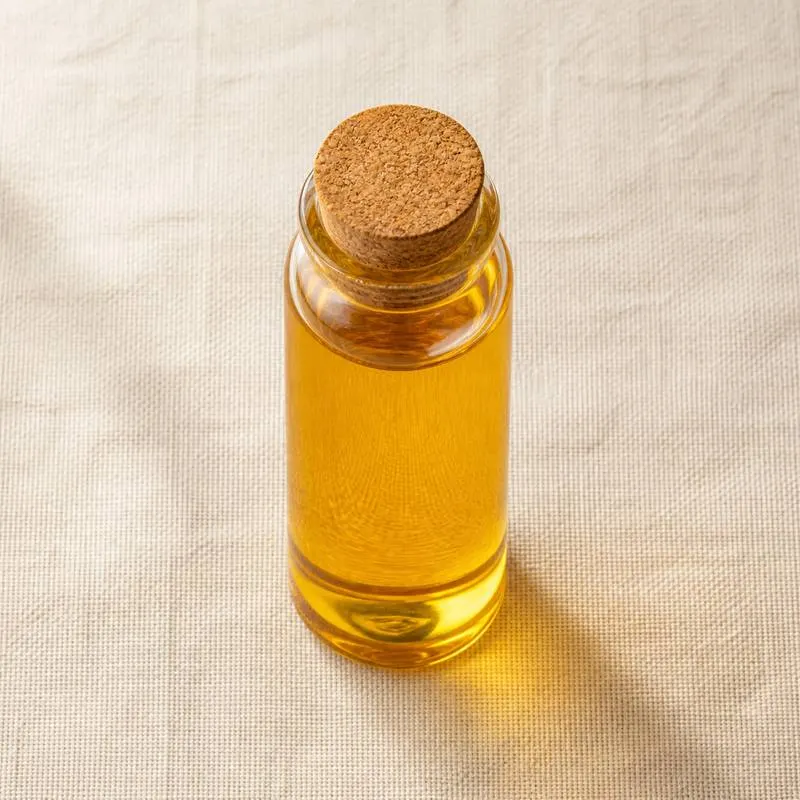
The product is a pale yellow, mobile oil with a faint marine odour, insoluble in water and miscible with vegetable oils, ethanol and hexane. Five methylene-interrupted double bonds make it among the most oxidation-prone materials in the food chain, so it is stabilised with mixed tocopherols, blanketed with nitrogen at every transfer, held cold and shipped in fully filled opaque drums. Peroxide and anisidine values are tracked as the primary stability indicators, and the oil is almost always encapsulated in softgels rather than dosed into an open food system.
We source bulk Icosapent Ethyl from top China manufacturers for our partners. The manufacturer is in Sichuan. A smaller requirement can ship in a combined container with other ingredients.
Please send the grade you need, the volume and your destination port, and we will come back with a solution and a price.
or call +86-21-6858 0751
- Function
- Nutraceutical
Specifications
| Item | Specification |
|---|---|
| Appearance | Clear pale yellow oily liquid |
| Odour | Faint characteristic marine odour |
| Assay, eicosapentaenoic acid ethyl ester | Not less than 96.0 percent of total fatty acids |
| Docosahexaenoic acid ethyl ester | Not more than 1.0 percent |
| Identification | Gas chromatographic retention conforms to reference standard |
| Acid value | Not more than 0.5 mg KOH/g |
| Peroxide value | Not more than 5.0 meq/kg |
| Anisidine value | Not more than 20 |
| Moisture and volatiles | Not more than 0.1 percent |
| Unsaponifiable matter | Not more than 1.5 percent |
| Residual ethanol | Not more than 5000 mg/kg |
| Mixed tocopherols added | 2000 to 5000 mg/kg |
| Lead | Not more than 0.1 mg/kg |
| Arsenic | Not more than 0.1 mg/kg |
| Mercury | Not more than 0.1 mg/kg |
| Dioxins and dioxin-like PCBs | Not more than 2.0 pg WHO-TEQ/g |
Common Markets Grades
Grades are set by eicosapentaenoic acid content and by the intended regulatory pathway. Nutraceutical concentrates are traded at 50, 70 and 80 percent eicosapentaenoic acid as ethyl ester, generally quoted alongside the total omega-3 figure and the residual docosahexaenoic acid. Above that sit high-purity grades at 90 and 95 percent, made by chromatographic separation rather than by distillation alone.
Pharmaceutical grade is a distinct specification at not less than 96 percent eicosapentaenoic acid ethyl ester, controlled to pharmacopoeial requirements for related fatty acid esters, oxidation indices, residual solvents and environmental contaminants, and manufactured under pharmaceutical good manufacturing practice with full batch documentation. The corresponding triglyceride form, in which the ethyl ester is re-esterified back onto a glycerol backbone, is a separate product traded for the supplement market and is not interchangeable with the ethyl ester on a specification sheet. Physical options are limited to bulk oil, oil pre-stabilised with a declared antioxidant system, and microencapsulated powder at 10 to 30 percent oil load for dry applications.
Applications
- Prescription softgel capsules for severe hypertriglyceridaemia, using the high-purity pharmaceutical grade
- Omega-3 dietary supplement softgels positioned on cardiovascular and triglyceride support
- Eicosapentaenoic-acid-dominant supplements for mood and cognitive formulations, where the ratio to docosahexaenoic acid is the selling specification
- Joint and inflammation support blends combined with curcumin or glucosamine
- Sports nutrition recovery capsules aimed at exercise-induced inflammation
- Microencapsulated powders for fortified milk powders, bars and instant beverages
- Medical nutrition and enteral formulas for patients requiring a defined omega-3 intake
- Infant and maternal supplements where an eicosapentaenoic acid contribution is specified alongside docosahexaenoic acid
- Pet supplements for skin, coat and joint support in dogs and cats
China Manufacturers of Icosapent Ethyl
Top Icosapent Ethyl manufacturers in China.

Company names and logos are the property of the manufacturers themselves. They are listed here because our own directory records them as producing this ingredient. A listing is not an endorsement by them, and we do not represent them or speak on their behalf.
Regulatory Status
In the United States icosapent ethyl at high purity is an approved prescription drug substance, and a monograph for it appears in the United States Pharmacopeia. On the food and supplement side, omega-3 ethyl ester concentrates are marketed as dietary ingredients under the Dietary Supplement Health and Education Act, and several eicosapentaenoic and docosahexaenoic acid oils have been the subject of GRAS notifications for defined uses in conventional foods, with FDA issuing no-objection letters; the agency has also allowed qualified health claims relating eicosapentaenoic and docosahexaenoic acid intake to coronary heart disease risk. The ethyl ester form is not automatically covered by a GRAS conclusion written for a triglyceride oil, so the specific form matters when a food application is intended.
In the European Union the ethyl ester is described in the European Pharmacopoeia monographs covering omega-3 acid ethyl esters, and highly concentrated preparations are authorised as medicinal products in several member states. For food use, several eicosapentaenoic acid rich oils and their ethyl esters have been authorised as novel foods under Regulation (EU) 2015/2283 and are listed in the Union list with conditions of use, so a supplier must be able to point to the specific authorised entry that its oil corresponds to. Codex Alimentarius covers the raw material through the Standard for Fish Oils, which includes named fatty acid profiles and quality parameters such as peroxide and anisidine values, and international trade specifications commonly reference the voluntary monograph published by the global omega-3 trade association.
Manufacturing Process
Crude fish oil, typically from anchovy, sardine or menhaden, is refined through degumming, alkali neutralisation, bleaching with activated earth and winterisation to remove phospholipids, free fatty acids, colour bodies and saturated stearins. The refined oil is then transesterified: it is reacted with excess anhydrous ethanol under sodium or potassium ethoxide catalysis at 60 to 80 degrees Celsius, which cleaves the triglycerides and converts the fatty acids into a mixture of ethyl esters while releasing glycerol. Glycerol is separated by settling, the catalyst is neutralised and washed out, and the ester mixture is dried under vacuum.
Concentration follows in stages. Short-path or falling-film molecular distillation under high vacuum removes the shorter and more saturated esters and lifts the omega-3 fraction to around 50 to 70 percent. Urea complexation may be used at this point, since saturated and monounsaturated esters form crystalline inclusion complexes with urea and can be filtered off, leaving the polyunsaturates in the filtrate. Final separation of eicosapentaenoic acid from docosahexaenoic acid and from the closely eluting C20 esters is done by preparative chromatography, most often simulated moving bed chromatography on a reversed-phase or silver-ion stationary phase, which is the only economic way to reach 96 percent purity. The purified ester is stripped of solvent, deodorised by short-contact steam stripping under vacuum, dosed with mixed tocopherols and filtered, then filled under nitrogen into drums or passed directly to softgel encapsulation.