Marigold Extract
Marigold extract is the oleoresin obtained from the dried flower petals of the Aztec marigold, Tagetes erecta, and is the intermediate from which almost all commercial lutein is made.
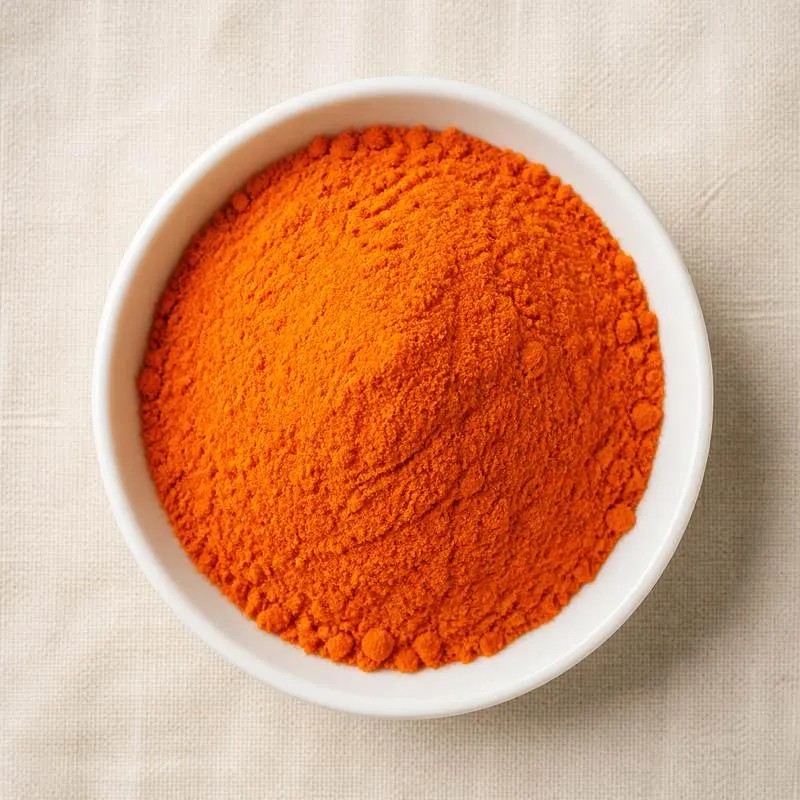
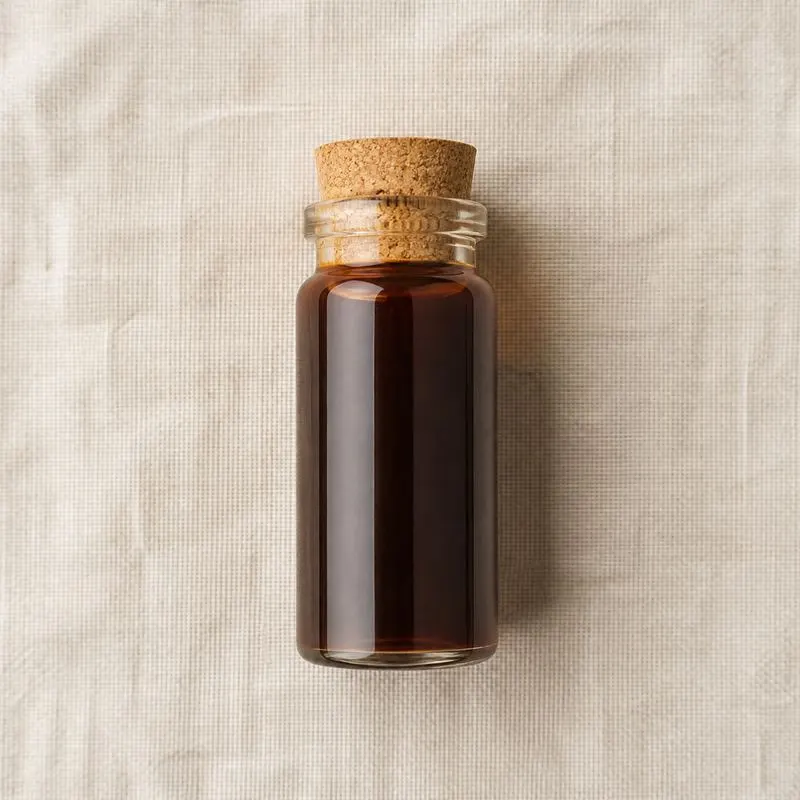
The extract is a dark orange to reddish brown viscous paste consisting of xanthophyll carotenoids dispersed in the natural lipids of the petal. Lutein accounts for the great majority of the carotenoid fraction, with smaller amounts of zeaxanthin, violaxanthin and beta carotene alongside it, and in the unsaponified extract these pigments are present almost entirely as fatty acid diesters rather than as free alcohols. Petal waxes, chlorophyll traces and flower lipids make up the balance.
The material is oil soluble and insoluble in water, and it moves in bulk as a paste that must be warmed before it will pump. Its extended polyene chromophore is readily oxidised, so the extract is stabilised with tocopherols, filled under nitrogen and held cool and dark. Downstream it is either saponified to make lutein concentrates and dispersible powders, or used directly as a fat soluble pigment in feed and in oil continuous foods.
We source bulk Marigold Extract from top China manufacturers for our partners. The manufacturer is in Yunnan. A smaller requirement can ship in a combined container with other ingredients.
Please send the grade you need, the volume and your destination port, and we will come back with a solution and a price.
or call +86-21-6858 0751
- Function
- Colorant
Specifications
| Item | Specification |
|---|---|
| Appearance | Dark orange to reddish brown viscous paste |
| Odour | Characteristic of marigold flower |
| Total Xanthophylls | ≥ 15.0% as lutein esters by HPLC |
| Lutein as Proportion of Xanthophylls | ≥ 85% |
| Identification | Absorption maximum near 445 nm in hexane |
| Moisture | ≤ 2.0% |
| Acid Value | ≤ 15 mg KOH/g |
| Sulphated Ash | ≤ 2.0% |
| Residual Hexane | ≤ 25 mg/kg |
| Lead | ≤ 2.0 mg/kg |
| Arsenic | ≤ 1.0 mg/kg |
| Total Plate Count | ≤ 1,000 cfu/g |
| Yeast and Mould | ≤ 100 cfu/g |
| Salmonella | Absent in 25 g |
Common Markets Grades
The primary distinction is between unsaponified and saponified extract. Unsaponified oleoresin is declared on total xanthophyll content as the esters, typically in the range of 5 to 20 percent, and is the standard feed pigment and the feedstock for further processing. Saponified extract has been treated with alkali to cleave the esters, and is declared on free lutein, commonly at 20 to 40 percent for a paste and higher for a crystalline concentrate.
Extracts are further specified by solvent route, with hexane extraction the industry default and supercritical carbon dioxide extraction offered where a solvent free declaration is required, and by the zeaxanthin to lutein ratio, which varies with cultivar and with any isomerisation step applied afterwards. Feed grades on a mineral or vegetable carrier at 1 to 2 percent xanthophyll are sold as free flowing powders rather than as pastes.
Applications
- Feedstock for lutein crystal and cold water dispersible lutein powder production
- Poultry feed pigmentation, where the xanthophylls deposit in egg yolk and in skin and shank colour
- Aquaculture feed for salmonids and ornamental fish, contributing to flesh and skin colour
- Pet food and treat formulations, both for surface colour and as a declared carotenoid source
- Oil based food systems including dressings, margarine and fat spreads that need a natural yellow
- Soft gelatin capsules and oil filled supplement dose forms, dosed directly as an oleoresin
- Bakery fats and cream fillings, where the pigment stays in the fat phase
- Cosmetic oils and balms, used as a natural colour and as a carotenoid claim ingredient
Brands Using Marigold Extract
Widely-distributed consumer products that list Marigold Extract on the ingredient label.
- Nature's WayLutein ↗The supplement facts panel lists FloraGLO lutein and zeaxanthin carotenoids from Aztec marigold flower extract.Label verified 2026-08-31
- Country LifeLutein 20 mg ↗The supplement facts panel gives 20 mg lutein and 4 mg zeaxanthin isomers, both from Aztec marigold flower extract.Label verified 2026-08-31
- CodeageAmen Eyes Lutein Zeaxanthin ↗A daily eye capsule whose lutein and zeaxanthin are described as sourced from marigold extract.Label verified 2026-08-31
Brand names, product names and logos are the property of their owners. They appear here as published evidence that the ingredient is used, taken from the brand's own label or website. Their appearance is not an endorsement, and it does not mean the brand buys from us or from any manufacturer listed on this site.
China Manufacturers of Marigold Extract
Top Marigold Extract manufacturers in China.
Company names and logos are the property of the manufacturers themselves. They are listed here because our own directory records them as producing this ingredient. A listing is not an endorsement by them, and we do not represent them or speak on their behalf.
Regulatory Status
In the European Union the carotenoid isolated from this extract is authorised as the food colour E161b lutein, defined in the additive specifications as being obtained from Tagetes erecta, and the identity and purity criteria for that entry are what a food grade extract is assessed against. The oleoresin as such is an intermediate rather than a separately listed additive.
In the United States 21 CFR 73.295 lists Tagetes meal and extract as a colour additive exempt from certification, but restricts that listing to use in chicken feed and does not permit the extract as a food colour. Lutein preparations derived from the extract are used in food and beverage on the basis of generally recognised as safe determinations notified to the Food and Drug Administration, and in supplements as a dietary ingredient. JECFA has evaluated lutein from Tagetes erecta and published specifications for it. Where the extract is destined for food or supplement use, residual hexane is the specification item that receives the most attention.
Manufacturing Process
Marigold is grown as a field crop and the flower heads are picked at full bloom. The wet heads are ensiled in covered pits for one to two weeks, which drops the moisture, breaks down the petal cell wall and makes the pigment far easier to release, and the ensiled mass is then dried to around 10 percent moisture and pressed into pellets. Pelletising raises the bulk density and gives the solvent an open bed to percolate through.
The pellets are extracted with hexane in counter current flow in a continuous or batch extractor. The miscella is filtered and the solvent is stripped in a falling film and then a thin film evaporator under vacuum, with a final steam or nitrogen stripping stage to bring residual solvent down to specification. The crude oleoresin is polished by filtration or centrifugation to remove fines and precipitated wax, standardised to the declared xanthophyll content by adding refined vegetable oil, stabilised with tocopherols, and drummed hot under nitrogen. Saponified grades take the same oleoresin on to alkaline hydrolysis in alcohol, followed by washing and crystallisation to isolate free lutein.