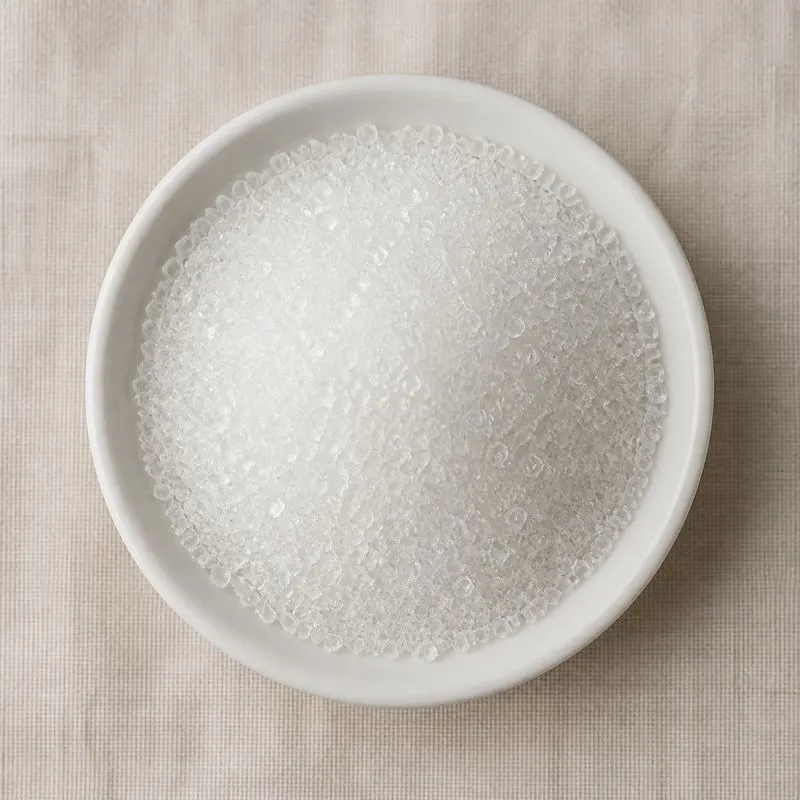
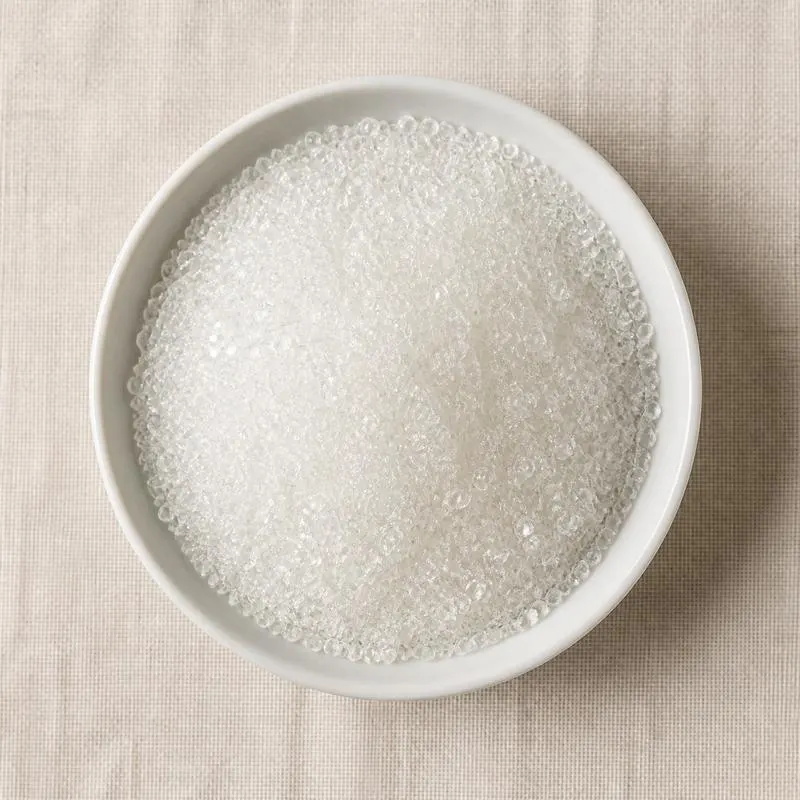
Monosodium Fumarate
Monosodium Fumarate is the mono-sodium salt of fumaric acid, a four-carbon unsaturated dicarboxylic acid that occurs naturally in the tricarboxylic acid cycle. It functions in food systems as an acidity regulator, buffering agent, and antioxidant synergist.
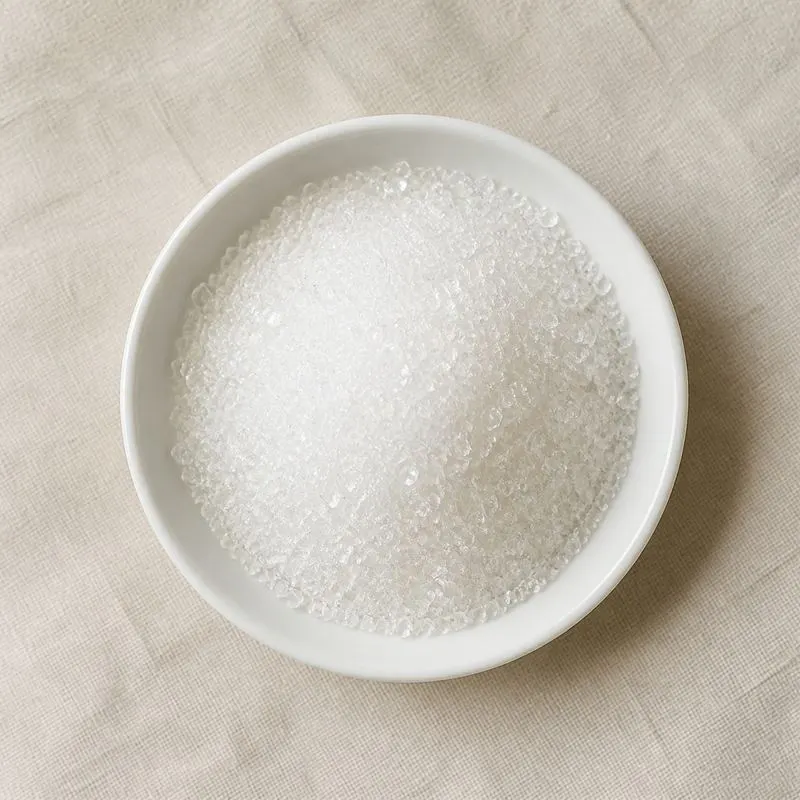
The compound carries the formula C₄H₃NaO₄ (molar mass 138.06 g/mol) and is also referred to as sodium hydrogen fumarate. It is a white to off-white crystalline powder that is moderately soluble in water and largely insoluble in cold organic solvents.
We source bulk Monosodium Fumarate from top China manufacturers for our partners. The manufacturers are in Shaanxi and Shandong. A smaller requirement can ship in a combined container with other ingredients.
Please send the grade you need, the volume and your destination port, and we will come back with a solution and a price.
or call +86-21-6858 0751
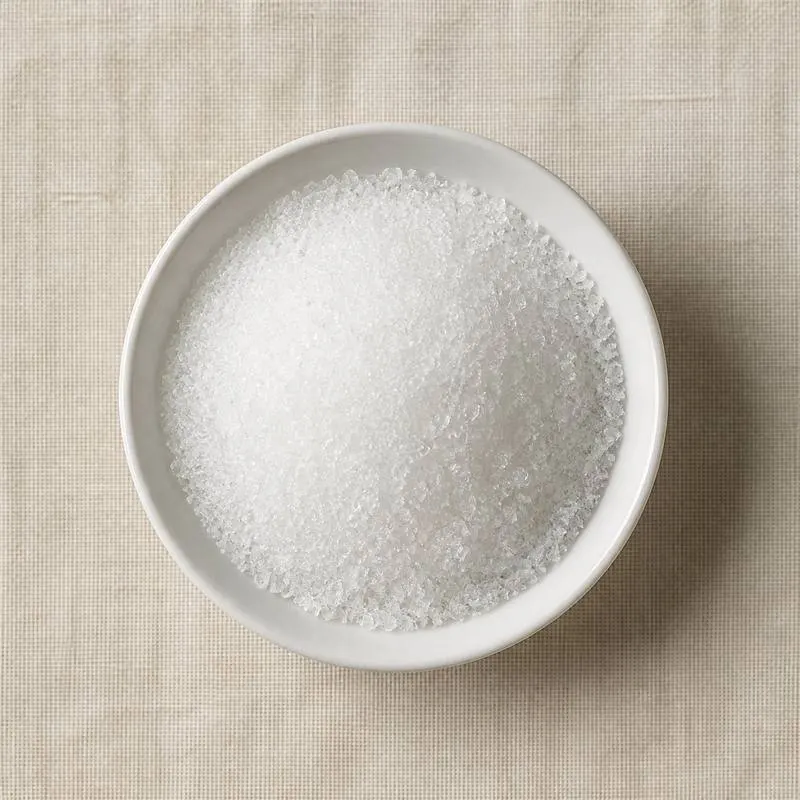
- Packaging
- 25 kg kraft paper bag with PE inner liner
- ISO 9001
- HACCP
- Halal
- Kosher
Specifications
| Item | Specification |
|---|---|
| Appearance | White to off-white crystalline powder |
| Assay (dried basis) | ≥ 99.0% |
| Sodium (as Na) | 16.0-17.2% |
| pH (1% solution) | 3.5-4.5 |
| Loss on Drying | ≤ 0.5% |
| Residue on Ignition (as Na₂CO₃) | 37.0-39.5% |
| Maleic Acid | ≤ 0.1% |
| Sulphate | ≤ 0.05% |
| Chloride | ≤ 0.05% |
| Particle Size | 60-100 mesh, ≥ 95% passing |
| Heavy Metals (as Pb) | ≤ 10 mg/kg |
| Lead | ≤ 2 mg/kg |
| Arsenic | ≤ 3 mg/kg |
| Total Plate Count | ≤ 1,000 cfu/g |
| Salmonella | Negative/25g |
Common Markets Grades
Monosodium Fumarate comes in three grades: food, technical and pharmaceutical.
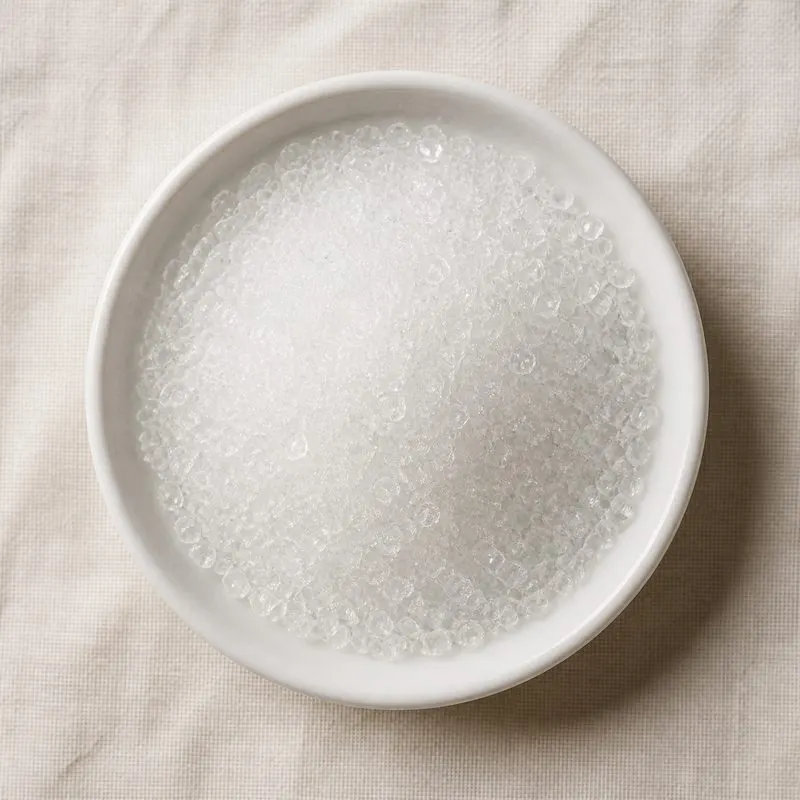
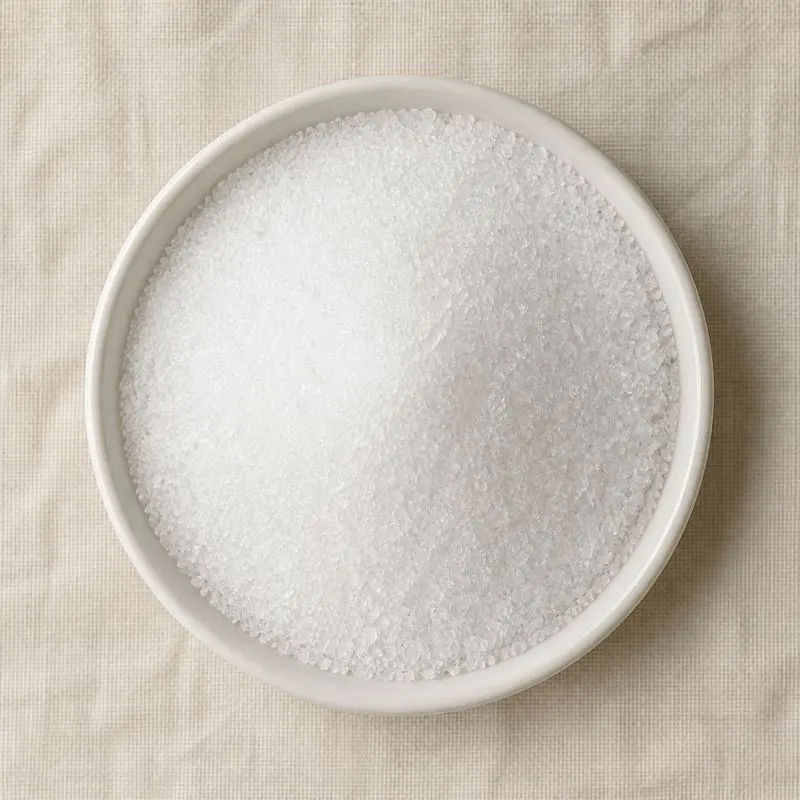
Food-grade material runs at 99.0 percent minimum assay, a fine to medium crystalline powder. Typical particle size is in the 60 to 100 mesh range, with a granular 20 to 40 mesh option available for direct-compression and dry-blend applications where dust control matters.
Technical-grade material carries 98.0 percent assay and serves industrial buffering and rosin acid modification in non-food applications. The lower specification reflects looser limits on heavy metals and residual moisture rather than a meaningfully different production route.
Pharmaceutical-grade material reaches 99.5 percent or higher, with tight controls on iron, lead, arsenic, and residual solvents. It is used in oral dose forms where fumarate provides both a buffering function and a small mineral contribution.
Applications
- Acidity regulator and buffering agent in fruit-flavoured beverages
- pH stabiliser in powdered drink mixes and effervescent tablets
- Leavening acid component in bakery powders, particularly tortillas and refrigerated doughs
- Buffering aid in gelatin desserts and pudding mixes
- Acid component in sour confectionery and hard candies
- pH control in canned fruit, jams, and fruit preparations
- Stabiliser in dry pet food formulations
- Buffering and chelation aid in processed cheese spreads
- Component of dry mix flavour systems for instant noodles and savory snacks
- Mineral component in nutritional supplements and electrolyte blends
- Antioxidant synergist in lard, animal fats, and fat-containing dry mixes
- pH adjuster in cosmetic and personal care formulations
China Manufacturers of Monosodium Fumarate
Top Monosodium Fumarate manufacturers in China.
 Jiaoda Rising Weinan Chemical Technology Co., Ltd.5 ingredients in the directory
 Qingdao Fuso Refining & Processing Co., Ltd.7 ingredients in the directory
Company names and logos are the property of the manufacturers themselves. They are listed here because our own directory records them as producing this ingredient. A listing is not an endorsement by them, and we do not represent them or speak on their behalf.
How We Help Source Monosodium Fumarate
Direct Factory Sourcing
We run the whole process: selecting the manufacturer from the top Chinese food ingredient producers, negotiating the price, verifying quality, and coordinating the logistics. You deal with us instead of with several factories at once.
Original Packaging and Documents from the Manufacturer
The manufacturer sends your Monosodium Fumarate out of its own factory in the original packing, through to your destination port. The COA, COO, MSDS, TDS and any certifications reach you from the manufacturer as well.
Free Samples and Lead Time
We send 100 to 500 g free for your own laboratory to test and you cover only the courier, usually within 2 to 3 working days. ETD is usually within 7 to 15 days once the order is confirmed, and we check that date against the factory's own manufacturing schedule before we give it to you.
Combined Shipment
We can load Monosodium Fumarate together with other ingredients such as Calcium Acetate, Citric Acid and Glucono-Delta-Lactone into one 20' FCL. If your quantity is small, we can also ship LCL.
Regulatory Status
Monosodium Fumarate is approved as a food additive across the major regulated markets.
In the European Union it is covered under the fumarate family with E number E365 (sodium fumarate). It is permitted in a range of food categories including chewing gum, gelatin desserts, sugar confectionery, and dry beverage mixes, subject to category-specific maximum levels.
The U.S. Food and Drug Administration recognises fumaric acid and its sodium salts as generally recognized as safe (GRAS) under 21 CFR 172.350 for use as a dietary supplement, flavour enhancer, and pH control agent at levels consistent with good manufacturing practice.
JECFA has evaluated fumaric acid and its salts and concluded that they are acceptable for food use, with metabolism proceeding through the normal tricarboxylic acid cycle.
Pharmacopoeial monographs for fumaric acid appear in the United States Pharmacopeia (USP) and the European Pharmacopoeia (Ph. Eur.). National food chemicals codices including the Food Chemicals Codex (FCC) cover the monosodium salt.
Halal and Kosher certifications are routinely available, since the typical fermentation feedstock and the neutralising alkali are of non-animal origin. Non-GMO variants are produced from non-GMO glucose feedstocks where the market requires them.
Manufacturing Process
Industrial manufacture of monosodium fumarate begins with fumaric acid as the starting material.
Fumaric acid itself is produced either by catalytic isomerisation of maleic acid (obtained from butane or benzene oxidation) or by microbial fermentation using strains of Rhizopus oryzae on glucose-based feedstocks. Both routes give a crystalline acid that meets food-grade specifications after recrystallisation.
The acid is dissolved in hot water and neutralised with a controlled charge of sodium hydroxide or sodium carbonate to reach the mono-sodium endpoint, typically around pH 3.0 to 3.5. Because fumaric acid is diprotic, careful stoichiometry is required to avoid drifting into di-sodium territory.
The neutralised solution is concentrated by evaporation under reduced pressure, then crystallised by cooling. The crystals are recovered by centrifugation, washed with chilled water or dilute ethanol, dried in a fluidized-bed dryer, and milled or granulated to the target particle size before packing in lined fibre drums or polyethylene-lined bags.