Precipitated Silica
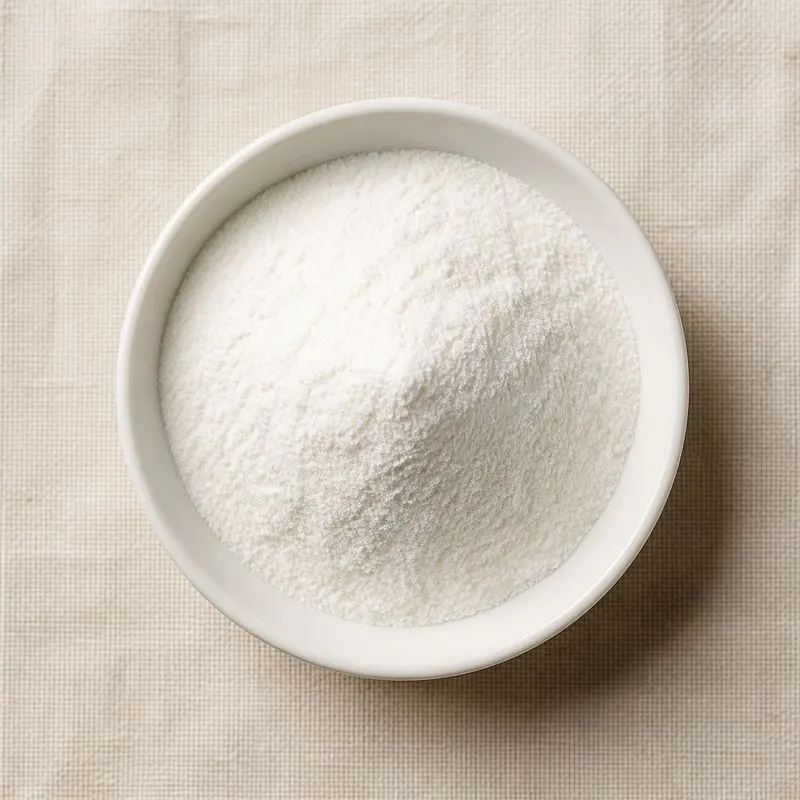
Precipitated silica is synthetic amorphous silicon dioxide, SiO2, produced by acidifying a solution of sodium silicate so that silica comes out of solution as a finely divided hydrated solid. It is one of the two main synthetic amorphous silicas in food use; the other is fumed or pyrogenic silica, and both are covered by the additive designation silicon dioxide.
Its function in food is physical rather than chemical. The particles are aggregates of primary particles in the tens of nanometres, fused into porous structures with a specific surface area typically between 150 and 250 square metres per gram. That structure adsorbs moisture and oil and sits between larger particles, which is why the material works as an anticaking agent, a flow aid, a carrier for liquid flavours and vitamins, and a defoamer. It is chemically inert, contributes no taste, odour or colour, and passes through the gut unabsorbed.
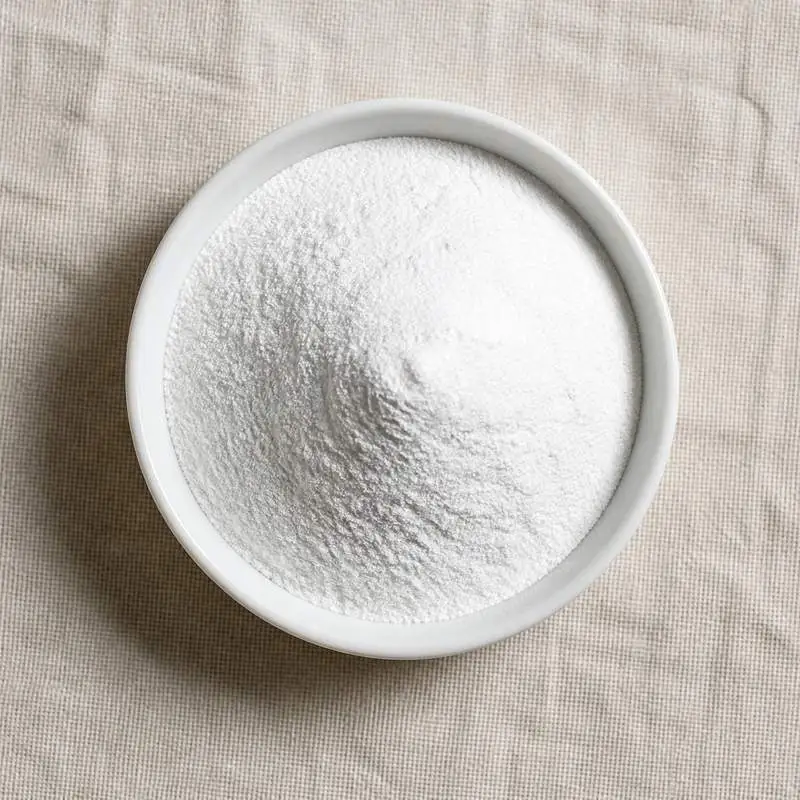
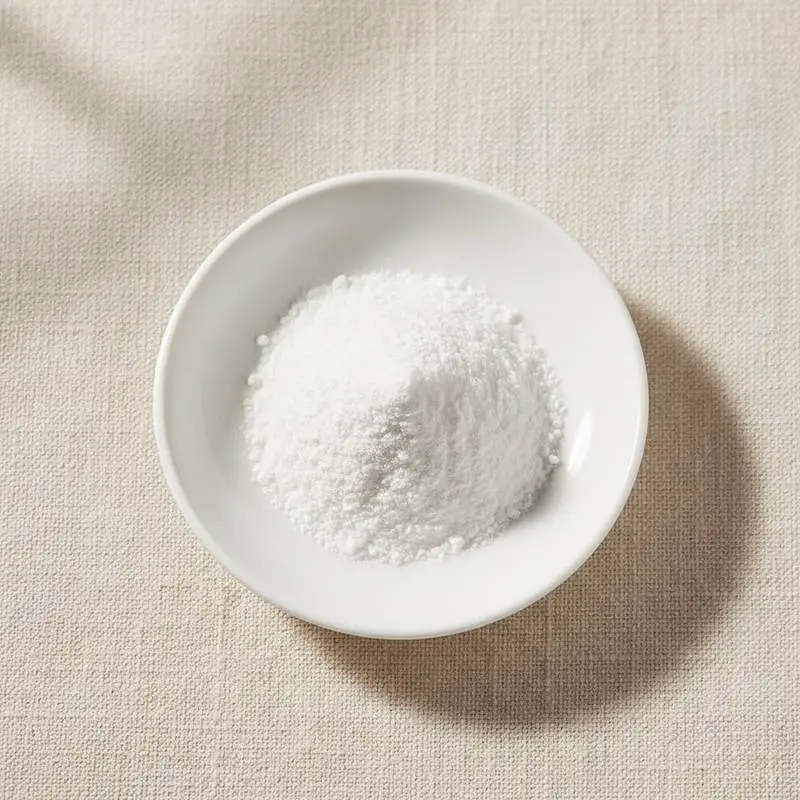
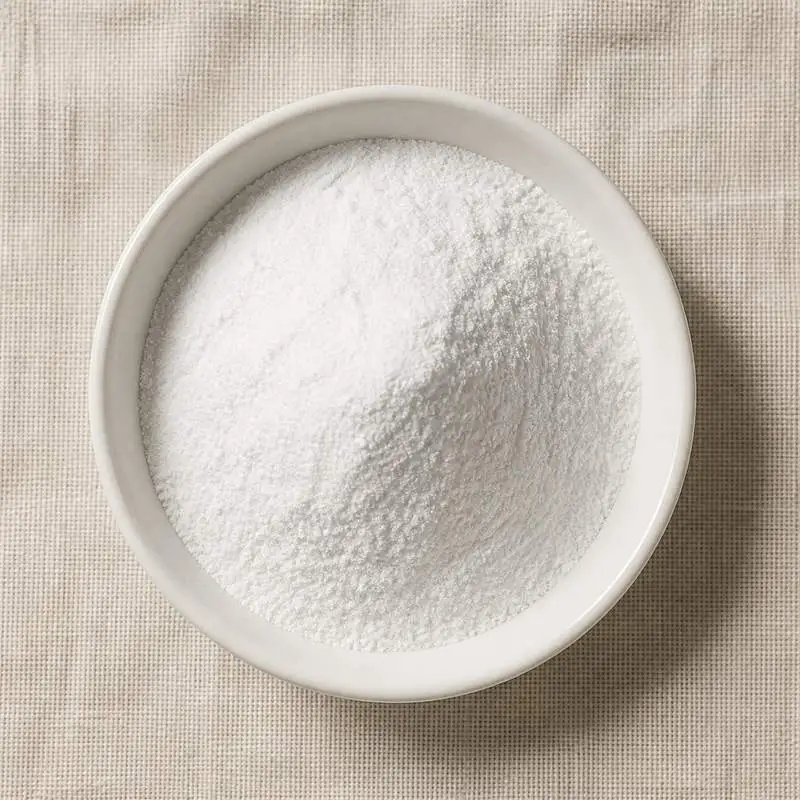
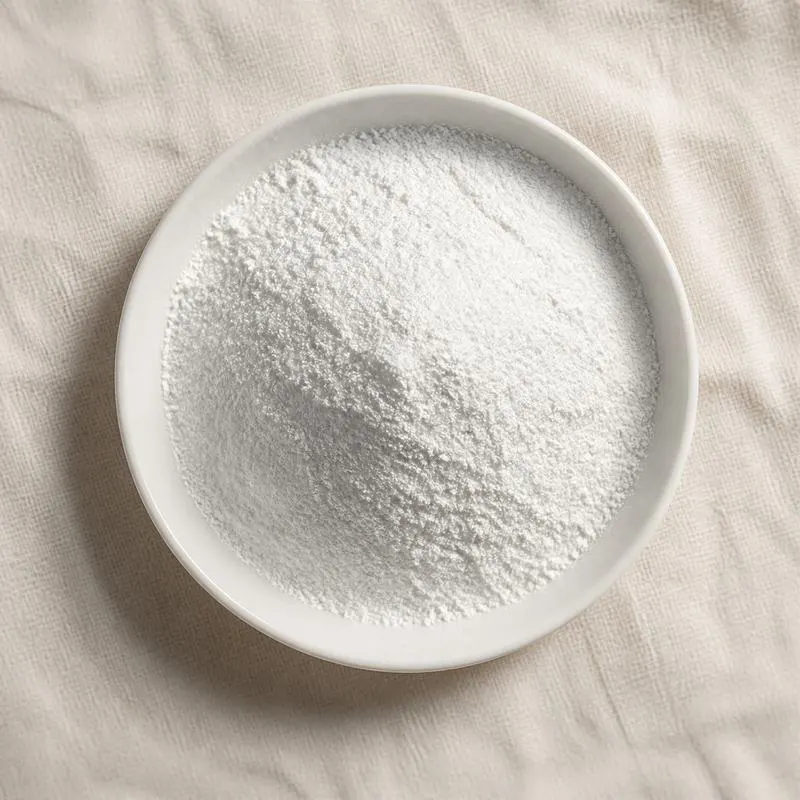
The material comes as a white, very light powder or as granules, with a bulk density often below 0.2 grams per cubic centimetre in powder form. It is insoluble in water and in acids other than hydrofluoric acid, and dissolves only slowly in strong alkali. It is hygroscopic by design, holding several percent of adsorbed water at equilibrium without becoming wet to the touch, and is stable to heat well beyond any food process temperature.
We source bulk Precipitated Silica from top China manufacturers for our partners. The manufacturer is in Jiangsu. A smaller requirement can ship in a combined container with other ingredients.
Please send the grade you need, the volume and your destination port, and we will come back with a solution and a price.
or call +86-21-6858 0751
- Function
- Nutraceutical
Specifications
| Item | Specification |
|---|---|
| Appearance | White fine amorphous powder, free of grit |
| Identification | Positive for silicate, amorphous by X-ray diffraction |
| Assay as SiO2, ignited basis | 99.0 percent minimum |
| Loss on drying, 105 degrees Celsius, 2 hours | 7.0 percent maximum |
| Loss on ignition, 1000 degrees Celsius | 8.5 percent maximum on the dried basis |
| pH, 5 percent aqueous suspension | 5.5 to 8.5 |
| Specific surface area | 150 to 250 square metres per gram |
| Oil absorption | 200 ml per 100 g minimum |
| Mean particle size | 5 to 15 micrometres |
| Soluble ionisable salts as sodium sulphate | 5.0 percent maximum |
| Arsenic | 3.0 mg/kg maximum |
| Lead | 3.0 mg/kg maximum |
| Mercury | 1.0 mg/kg maximum |
| Crystalline silica | Not detected by X-ray diffraction |
Common Markets Grades
Food grade precipitated silica is graded principally on physical properties rather than assay, since purity is high across the board. The controlling parameters are specific surface area, oil absorption capacity, mean particle size and the bulk density that follows from them. Low structure grades with modest surface area are specified as free flow agents in dense powders; high structure, high oil absorption grades are specified as carriers, where the silica must hold 50 percent or more of its own weight in liquid flavour, vitamin oil or choline chloride and still pour as a dry powder.
Physical form is the second axis. Fine milled powder is the standard, micronised grades are used where the silica must not be perceptible in a fine powder blend, and granulated or spray dried beads are used where dust control and dosing accuracy matter more than surface area. Beyond food, the same plants make dentifrice grades controlled on abrasivity and refractive index, rubber reinforcement grades controlled on structure and moisture, and matting grades for coatings, but these carry different specifications and are not interchangeable with food material. Food grade is distinguished by its heavy metal, soluble ionisable salt and loss on ignition limits and by compliance with the relevant additive specification monographs.
Applications
- Anticaking in powdered seasonings, soup bases and spice blends, where it keeps hygroscopic powders free flowing through storage and dosing
- Flow aid in table salt, icing sugar and grated cheese, preventing bridging in hoppers and consumer packs
- Carrier for liquid flavours, essential oils and oleoresins, converting a liquid into a dry, dosable powder
- Carrier for fat soluble vitamins and choline chloride in premix manufacture, where high oil absorption grades hold the liquid load
- Tabletting and capsule manufacture, where it acts as a glidant that improves die filling and weight uniformity
- Defoaming in fermentation, brewing and syrup processing, usually as the silica component of a compound antifoam
- Beer stabilisation, where silica hydrogels and xerogels adsorb haze forming proteins during filtration
- Instant beverage and dairy powders, where it limits caking and improves dispersion on reconstitution
- Animal feed premixes, where it carries liquid additives and keeps mineral blends flowing
- Dentifrice manufacture, where cleaning and thickening grades act as the abrasive and rheology system in toothpaste
China Manufacturers of Precipitated Silica
Top Precipitated Silica manufacturers in China.
Company names and logos are the property of the manufacturers themselves. They are listed here because our own directory records them as producing this ingredient. A listing is not an endorsement by them, and we do not represent them or speak on their behalf.
Regulatory Status
In the United States 21 CFR 172.480 permits silicon dioxide as a food additive, allows its use as an anticaking agent and stabiliser in food at a level not exceeding 2 percent of the food, and lists it as a general purpose food additive with defined limitations. It is also cleared as a component of food contact materials and as a processing aid in a number of specific applications, and silica aerogel and related forms appear under separate provisions. Manufacturers are expected to meet the Food Chemicals Codex monograph for silicon dioxide, which sets assay, loss on drying, loss on ignition and impurity criteria. Use in dietary supplements as an excipient falls under current good manufacturing practice at 21 CFR Part 111.
In the European Union Regulation (EC) No 1333/2008 authorises silicon dioxide as food additive E 551 and sets its conditions of use in Annex II, principally as an anticaking agent in powdered and granular foods, in food supplements and as a carrier. Purity criteria are laid down in Commission Regulation (EU) No 231/2012, which specifies the material as amorphous silicon dioxide produced by the wet or thermal route and sets limits for loss on drying and ignition, for soluble ionisable salts and for heavy metals. The European Food Safety Authority has re-evaluated E 551 and has issued opinions addressing particle size characterisation and the nanoscale fraction, and the specification has been amended accordingly. JECFA has evaluated silicon dioxide, amorphous, and maintains a specification monograph for it in the Combined Compendium of Food Additive Specifications, and Codex Alimentarius lists silicon dioxide, amorphous in the General Standard for Food Additives as an anticaking agent for the food categories in which its use is permitted.
Manufacturing Process
Precipitated silica is made by the wet route from sodium silicate, itself produced by fusing quartz sand with sodium carbonate in a furnace and dissolving the resulting glass in hot water under pressure to give waterglass. The silicate solution is filtered and diluted to a working concentration and charged to a stirred precipitation reactor holding an initial charge of hot water.
Precipitation is the step that sets every physical property of the finished product. Dilute sulphuric acid and further sodium silicate are metered simultaneously into the vessel at controlled temperature, agitation and pH, so that silicic acid is released, polymerises into primary particles and then aggregates. The rate of addition, the electrolyte concentration, the temperature and the pH profile determine primary particle size, aggregate structure, surface area and oil absorption, which is why the same plant can make free flow, carrier and dentifrice grades from identical raw materials. At the end of the cycle the batch is acidified to a final pH and cured.
The slurry is then filtered on filter presses or belt filters and washed extensively with water to remove sodium sulphate, since residual soluble salts are the main purity limit in the finished product. The washed filter cake is reslurried and dried, by spray drying where a low density powder with retained structure is wanted, or by rotary or flash drying where a denser product is acceptable. Dried silica is milled in air jet or mechanical mills to the target particle size, classified, and for granulated grades compacted or agglomerated. The product is screened, checked for metal and packed in valve bags or lined big bags, with dust control equipment throughout because of the very low bulk density.