Purple Sweet Potato Anthocyanin
Purple sweet potato anthocyanin is the purified pigment fraction isolated from the storage root of Ipomoea batatas and sold on assay rather than on shade alone. The anthocyanins present are cyanidin and peonidin 3-sophoroside-5-glucosides, and the great majority of them are acylated on the sophorose unit with caffeic, ferulic or p-hydroxybenzoic acid. Many carry two acyl groups, and this double acylation is what distinguishes the material: the acyl residues stack over the flavylium ring and shield it from hydration, giving heat, light and pH stability well beyond that of grape or elderberry anthocyanins.
Two markets buy the same substance for different reasons. As a colour it delivers violet and purple shades that hold through pasteurisation and into the mildly acid range where simpler anthocyanins turn grey. As a standardised botanical active it is formulated into supplements on the strength of its anthocyanin content, and specifications for that use quote assay by chromatography rather than colour value.
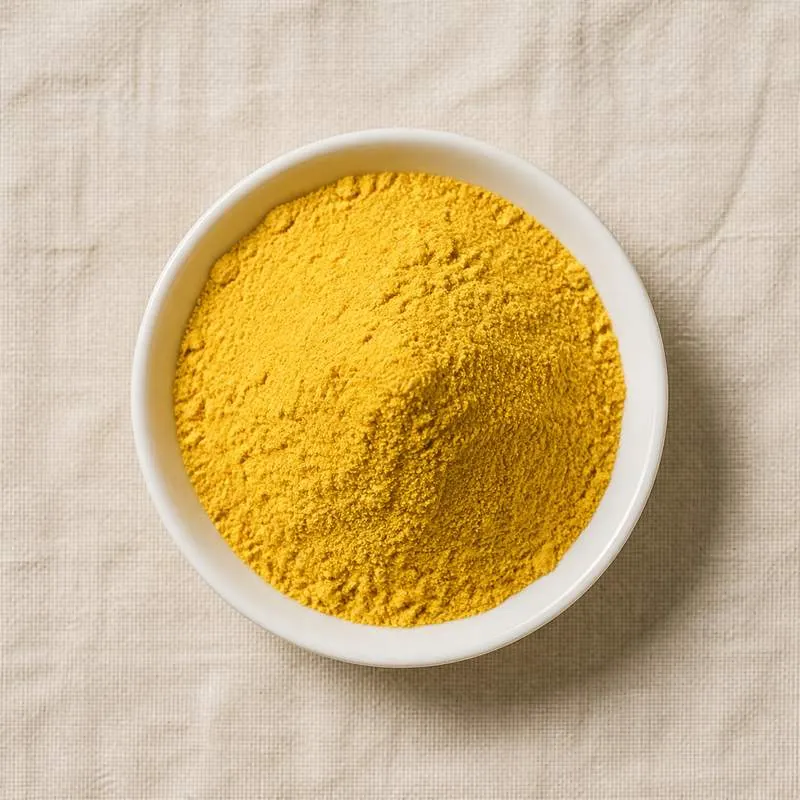
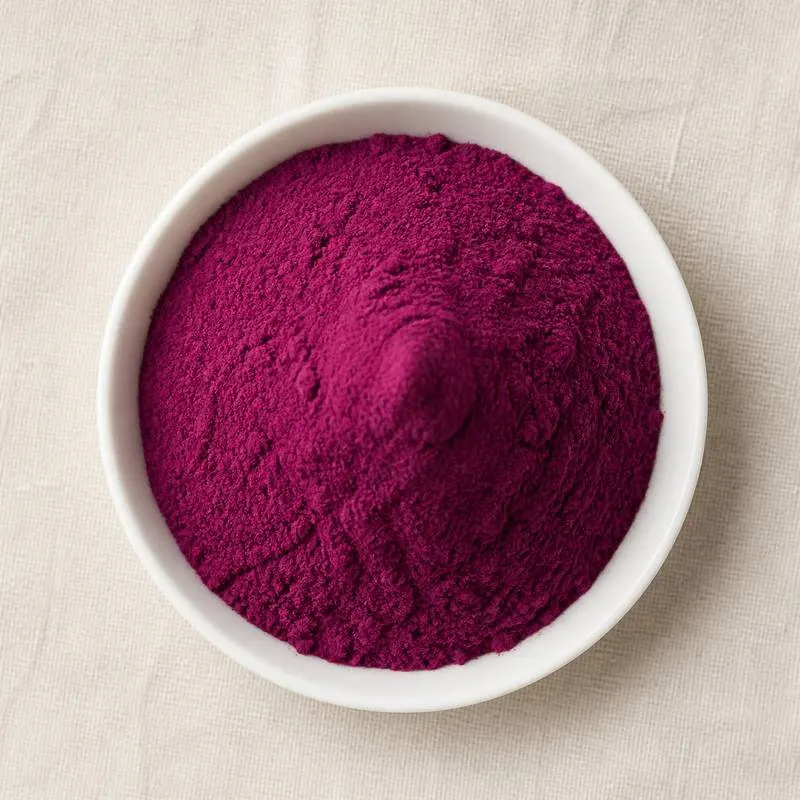
It reaches the market as a dark purple hygroscopic powder, typically standardised at 5 to 25 percent total anthocyanins on a maltodextrin carrier, and as a high assay grade above that for supplement work. It is freely soluble in water and dilute alcohol and insoluble in fats. Sulphur dioxide bleaches it, active chlorine destroys it, high levels of ascorbic acid accelerate its degradation, and iron and aluminium ions complex with it to give a dull slate colour.
We source bulk Purple Sweet Potato Anthocyanin from top China manufacturers for our partners. The manufacturer is in Liaoning. A smaller requirement can ship in a combined container with other ingredients.
Please send the grade you need, the volume and your destination port, and we will come back with a solution and a price.
or call +86-21-6858 0751
- Function
- Colorant
Specifications
| Item | Specification |
|---|---|
| Appearance | Dark purple hygroscopic powder |
| Total Anthocyanins as cyanidin 3-glucoside | 15.0% minimum |
| Identification | Absorption maximum at 525 to 535 nm in acidified methanol |
| Acylated Anthocyanins as share of total | 80% minimum |
| Loss on Drying | 5.0% maximum |
| Sulphated Ash | 5.0% maximum |
| pH, 1% aqueous solution | 2.5 to 4.0 |
| Solvent Residue, ethanol | 0.5% maximum |
| Lead | 2 mg/kg maximum |
| Arsenic | 1 mg/kg maximum |
| Cadmium | 1 mg/kg maximum |
| Total Plate Count | 1000 cfu/g maximum |
| Yeast and Mould | 100 cfu/g maximum |
| Salmonella | Absent in 25 g |
Common Markets Grades
Colour grades are specified on colour value, measured as E1% 1cm near 530 nm in an acidified buffer, at 25, 50 and 100 on maltodextrin. Assay grades are specified instead on total anthocyanins by the pH differential method or by chromatography, commonly at 5, 10, 15 and 25 percent expressed as cyanidin 3-glucoside, and these are the grades bought for supplement and nutraceutical formulation. The two specifications are not interchangeable, and a purchase order should state which basis applies.
Above these sit high purity fractions at 50 percent and beyond, produced by additional chromatographic polishing and used in research and in speciality supplement work. Carrier choice, maltodextrin or a starch free alternative, is the remaining variable in powders, and organic certified material is produced on segregated lines. Because the powder is strongly hygroscopic, packaging with a moisture barrier and a stated water activity is part of the specification rather than an afterthought.
Applications
- Dietary supplements in capsule and tablet form, standardised on anthocyanin content
- Gummy supplements, where the pigment survives depositing temperatures
- Functional beverages and powder drink mixes positioned on anthocyanin content
- Fruit flavoured soft drinks and acidified juices, giving a stable violet through pasteurisation
- Fruit yoghurt, drinking yoghurt and fermented milk
- Confectionery jellies and hard boiled sweets in purple and grape shades
- Ice cream, sorbet and frozen desserts in taro and ube profiles
- Bakery products and steamed buns, tinting the crumb through the oven or steamer
- Tablet coatings and capsule shells requiring a natural purple
- Blending component in compound colours, supplying the blue red note in burgundy and grape shades
China Manufacturers of Purple Sweet Potato Anthocyanin
Top Purple Sweet Potato Anthocyanin manufacturers in China.

Company names and logos are the property of the manufacturers themselves. They are listed here because our own directory records them as producing this ingredient. A listing is not an endorsement by them, and we do not represent them or speak on their behalf.
Regulatory Status
In the United States, anthocyanin preparations from purple sweet potato are handled as colour additives exempt from certification when they are added to give colour. 21 CFR Part 73 lists vegetable juice colour and dehydrated vegetable juice colour, and the Food and Drug Administration has additionally acted on petitions covering sweet potato derived anthocyanin preparations; the applicable listing depends on the material and how it is made, so the supplier declaration should name it. Where the same material is sold as a dietary ingredient rather than as a colour, it is handled under the dietary supplement framework instead.
In the European Union anthocyanins are the food colour E 163, authorised under Regulation (EC) No 1333/2008 with identity and purity criteria in Regulation (EU) No 231/2012. A purified anthocyanin fraction of this kind falls squarely within E 163 rather than within the colouring foodstuff category, because the pigment has been selectively separated from the rest of the plant material. JECFA has evaluated anthocyanins, and provisions appear in the Codex General Standard for Food Additives.
Manufacturing Process
Purple fleshed sweet potato roots, or the pigmented process water from a sweet potato starch plant, provide the feedstock. Whole roots are washed, sorted and milled, then extracted with acidified water or dilute food grade ethanol at temperatures below about 60 degrees Celsius; the acid holds the anthocyanins in their stable flavylium form and the low temperature limits degradation. Starch plant side streams are taken directly to clarification, since the pigment is already in solution.
The clarified liquor is loaded onto a food grade adsorption resin that binds the anthocyanins while starch, sugars, salts and the earthy root aroma are washed to drain. The pigment is eluted with acidified ethanol and the solvent recovered under vacuum at low temperature. For assay grades a second purification follows, on a polishing resin or by preparative chromatography, which raises total anthocyanins by removing residual phenolics and carbohydrate. The purified concentrate is standardised to the declared assay or colour value with citric acid and carrier, then spray dried at a low outlet temperature or freeze dried where the highest assays are required, and packed under a moisture barrier.