Rattan Tea Extract
Rattan tea extract is prepared from the leaves and tender stems of Ampelopsis grossedentata, a climbing vine of the grape family drunk as a herbal tea in southern China and known there as vine tea or teng cha. Its defining constituent is dihydromyricetin, a dihydroflavonol also called ampelopsin, which can account for a quarter or more of the dry leaf and is present at a concentration found in no other commercially harvested plant.
The extract is traded as a standardised botanical rather than as a technological food ingredient. Dihydromyricetin content is the basis of purchase, and the commercial positioning covers alcohol recovery and liver comfort supplements, general antioxidant blends and, in Asian markets, instant tea products. The leaf also carries myricetin, myricitrin and other flavonoids, which are reported alongside the main marker.
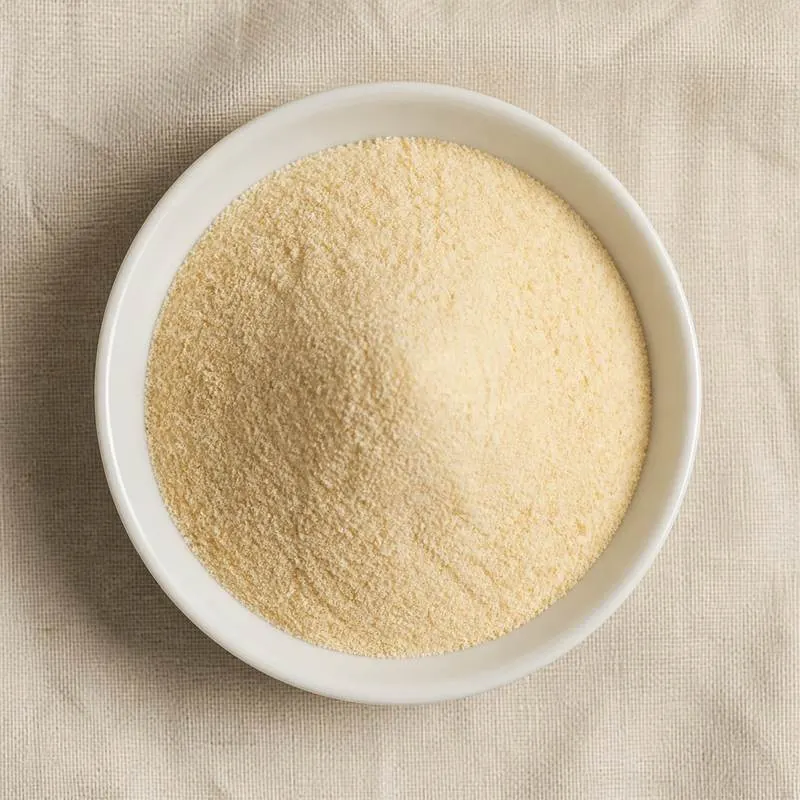
Commercial material is a pale yellow to off white powder for high assay grades and a light brown powder for lower assay leaf extracts. Dihydromyricetin is only sparingly soluble in cold water, dissolves readily in hot water and in ethanol, and recrystallises on cooling, which is both the basis of its purification and a formulation constraint. It is stable in the dry state but oxidises and darkens in alkaline solution, so aqueous applications are held on the acid side.
We source bulk Rattan Tea Extract from top China manufacturers for our partners. The manufacturer is in Jiangsu. A smaller requirement can ship in a combined container with other ingredients.
Please send the grade you need, the volume and your destination port, and we will come back with a solution and a price.
or call +86-21-6858 0751
- Function
- Plant extract
Specifications
| Item | Specification |
|---|---|
| Appearance | Pale yellow to off white fine powder |
| Odour and Taste | Slight characteristic tea aroma, bitter with sweet aftertaste |
| Dihydromyricetin (HPLC) | ≥ 98.0% |
| Total Flavonoids | ≥ 98.5% |
| Identification | Conforms by HPLC retention and UV spectrum |
| Melting Range | 245 to 252°C |
| Loss on Drying | ≤ 3.0% |
| Residue on Ignition | ≤ 0.5% |
| Particle Size | 100% through 80 mesh |
| Residual Ethanol | ≤ 0.5% |
| Lead | ≤ 2.0 mg/kg |
| Arsenic | ≤ 1.0 mg/kg |
| Cadmium | ≤ 1.0 mg/kg |
| Total Plate Count | ≤ 1,000 cfu/g |
| Yeast and Mould | ≤ 100 cfu/g |
| E. coli | Negative |
| Salmonella | Absent in 25 g |
Common Markets Grades
Standardisation is on dihydromyricetin by HPLC, with grades at 20, 50, 80, 90 and 98 percent, the highest of these being an essentially isolated compound rather than a botanical extract. Total flavonoid grades measured by the ultraviolet method are quoted separately and give higher figures on the same batch, so the specification names the assay. Simple ratio extracts at 4:1 and 10:1 are sold for tea and traditional preparations.
Physical grades cover spray dried powder at 80 mesh, crystalline material for the high assay products, micronised versions where dissolution rate matters, and instant tea granules made from the whole leaf extract without purification. Water dispersible forms complexed with cyclodextrin or spray dried onto modified starch are made for beverage use, since the free compound settles out of cold water. Wild harvested and cultivated leaf are distinguished on the certificate.
Applications
- Hangover and alcohol recovery supplements in capsule and liquid shot form, the principal outlet for the extract
- Liver support formulations, combined with milk thistle, kudzu and amino acids
- Dietary supplements standardised on dihydromyricetin content for general antioxidant positioning
- Instant herbal tea granules and tea bags in Chinese markets, made from the unpurified leaf extract
- Functional beverages and ready to drink teas, dosed as a dispersible grade
- Sports nutrition and recovery products positioned on antioxidant activity
- Functional confectionery including jellies and chewables in the recovery category
- Skin care formulations, where the flavonoid fraction is used for radical scavenging and soothing activity
- Oral care products, formulated on the antimicrobial character of the flavonoid fraction
China Manufacturers of Rattan Tea Extract
Top Rattan Tea Extract manufacturers in China.

Company names and logos are the property of the manufacturers themselves. They are listed here because our own directory records them as producing this ingredient. A listing is not an endorsement by them, and we do not represent them or speak on their behalf.
Regulatory Status
In the United States rattan tea extract is sold as a dietary ingredient under the Dietary Supplement Health and Education Act, and dihydromyricetin preparations have been the subject of new dietary ingredient notifications on that basis. There is no food additive regulation, no colour additive listing and no entry among substances generally recognised as safe, so use as a general food ingredient would require a GRAS conclusion. Claims are confined to structure and function statements, and any claim to prevent or treat intoxication would move a product into the drug category.
In the European Union the extract carries no E number because it is not an additive. Ampelopsis grossedentata has no established record of significant consumption in the Union before May 1997, so both the leaf and purified dihydromyricetin fall within the scope of Regulation 2015/2283 on novel foods, and marketing as a food or supplement ingredient depends on an authorisation covering the specific preparation and conditions of use. Regulation 1223/2009 governs cosmetic use. Codex has no standard covering the material and the Joint FAO WHO Expert Committee has not evaluated it.
Manufacturing Process
Vine tea leaves and tender stems are harvested in spring and early summer, withered, and either steamed or pan fired briefly to stop enzymatic browning, then dried in warm air. The characteristic white bloom on the dried leaf is crystallised dihydromyricetin that has migrated to the surface. The dried leaf is milled to a coarse cut and extracted in counter current flow with hot water at 80 to 95 degrees Celsius, or with aqueous ethanol where a higher yield of the less polar flavonoids is wanted.
The hot liquor is separated on a decanter centrifuge and clarified by plate and membrane filtration, then cooled slowly. Because dihydromyricetin is far less soluble cold than hot, a large part of it crystallises directly from the cooled liquor, and this crude crop is the basis of the high assay grades. The crystals are recovered on a centrifuge, redissolved in hot aqueous ethanol, treated with activated carbon to remove colour and recrystallised, sometimes twice, to reach 98 percent. Mother liquor and the remaining extract are concentrated in a falling film vacuum evaporator and spray dried to give the lower assay and instant tea grades. All finished powder is sieved, assayed by HPLC and packed under a moisture and light barrier.