Rice Bran Extract
Rice bran extract is a concentrated preparation obtained from the bran layer of Oryza sativa, the outer fraction removed during the milling of brown rice to white. Which constituents it carries depends on the solvent used. Lipophilic extraction gives gamma-oryzanol, a mixture of ferulic acid esters of triterpene alcohols and phytosterols, together with tocopherols and tocotrienols. Aqueous and enzymatic extraction gives instead arabinoxylan, ferulic acid, phytic acid, inositol and soluble peptides.
Functionally the lipophilic fraction is an antioxidant and a nutraceutical active, and gamma-oryzanol in particular is the compound most rice bran extracts are standardised on. The water soluble fraction is used as a soluble fibre and, in modified arabinoxylan form, in immune positioned supplements. Neither fraction has a technological role as a food additive.
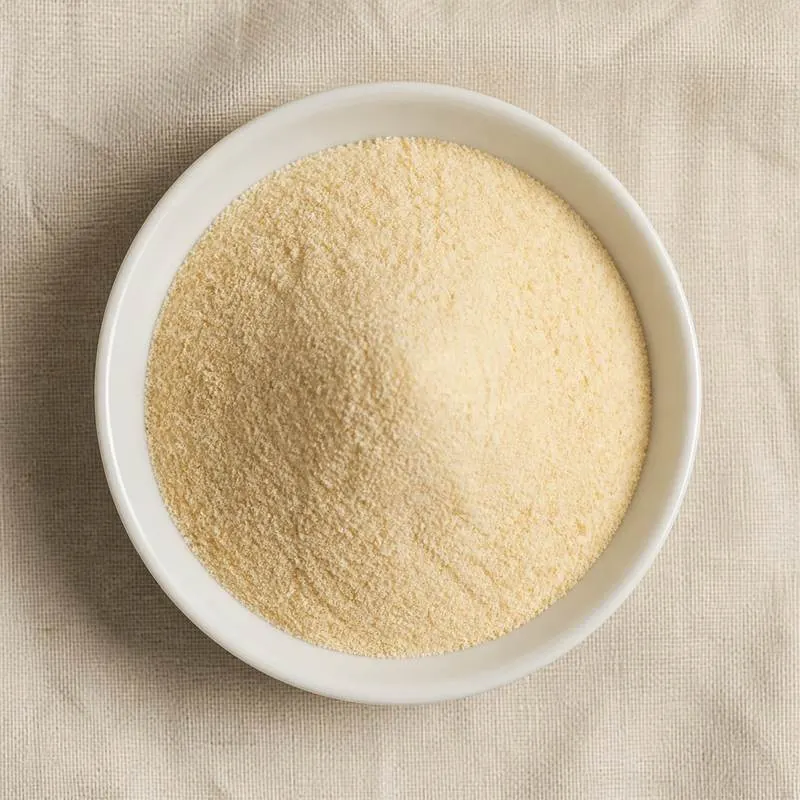
Gamma-oryzanol grades are off white to pale beige crystalline or amorphous powders, practically insoluble in water and soluble in ethanol, hexane and vegetable oils. Water soluble grades are light brown hygroscopic powders that dissolve readily in warm water. The critical raw material issue is rancidity: bran contains an active lipase that begins hydrolysing its own oil within hours of milling, so bran must be heat stabilised before it can be used at all.
We source bulk Rice Bran Extract from top China manufacturers for our partners. The manufacturer is in Zhejiang. A smaller requirement can ship in a combined container with other ingredients.
Please send the grade you need, the volume and your destination port, and we will come back with a solution and a price.
or call +86-21-6858 0751
- Function
- Plant extract
Specifications
| Item | Specification |
|---|---|
| Appearance | Off white to pale beige fine powder |
| Odour and Taste | Faint characteristic cereal, no rancid note |
| Gamma-oryzanol (HPLC) | ≥ 98.0% |
| Identification | Conforms by HPLC and UV absorption at 315 nm |
| Melting Range | 135 to 140°C |
| Acid Value | ≤ 2.0 mg KOH/g |
| Loss on Drying | ≤ 1.0% |
| Residue on Ignition | ≤ 0.5% |
| Particle Size | 100% through 80 mesh |
| Residual Hexane | ≤ 25 mg/kg |
| Residual Ethanol | ≤ 0.5% |
| Lead | ≤ 1.0 mg/kg |
| Arsenic (inorganic) | ≤ 0.2 mg/kg |
| Cadmium | ≤ 0.5 mg/kg |
| Total Plate Count | ≤ 1,000 cfu/g |
| Yeast and Mould | ≤ 100 cfu/g |
| Salmonella | Absent in 25 g |
Common Markets Grades
Gamma-oryzanol is traded at 90, 98 and 99 percent as an isolated material, and as standardised rice bran extracts at 5, 10 and 20 percent for blending. Tocotrienol rich fractions from the same feedstock are quoted separately on total tocotrienol content, commonly 20 to 70 percent, with the tocopherol to tocotrienol ratio stated. Ferulic acid at 98 percent is another isolated article derived from the bran phenolics.
Water soluble grades cover arabinoxylan preparations, in which the hemicellulose is partially hydrolysed by fungal enzyme to a lower molecular weight product, standardised on total polysaccharide, and rice bran protein and peptide isolates quoted on protein content and degree of hydrolysis. Stabilised rice bran itself, simply heat treated and milled, is traded as a whole food ingredient. Physical forms are crystalline and spray dried powders at 80 mesh, oil dispersions for softgel filling, and liquid concentrate. Organic certified and non-GMO documented material is common across the range.
Applications
- Dietary supplements in capsule and softgel form standardised on gamma-oryzanol content
- Sports nutrition products, where gamma-oryzanol is a long established ingredient in strength formulations
- Cholesterol management formulations, where the sterol ester fraction is the active
- Immune support supplements built on enzymatically modified rice bran arabinoxylan
- Edible oils and fat blends, where the extract slows the onset of rancidity
- Bakery and confectionery fats, extending shelf life without a synthetic antioxidant declaration
- Skin care emulsions and sun care products, using gamma-oryzanol as an antioxidant and ultraviolet absorber
- Hair care preparations, where the ferulate esters give conditioning and photoprotection
- Functional beverages and fibre fortified drinks, using the water soluble arabinoxylan fraction
- Animal feed and pet food, where stabilised bran and its extracts serve as energy and antioxidant sources
China Manufacturers of Rice Bran Extract
Top Rice Bran Extract manufacturers in China.

Company names and logos are the property of the manufacturers themselves. They are listed here because our own directory records them as producing this ingredient. A listing is not an endorsement by them, and we do not represent them or speak on their behalf.
Regulatory Status
In the United States rice bran and stabilised rice bran are conventional foods. Rice bran oil and gamma-oryzanol rich fractions are used as food ingredients and dietary ingredients, with several rice bran derived preparations the subject of GRAS notices to the Food and Drug Administration for defined food uses, to which the agency responded without objection. There is no general food additive regulation and no colour additive listing for the extract, so the basis of food use is the applicable GRAS conclusion, while supplement use rests on the Dietary Supplement Health and Education Act. Inorganic arsenic in rice and rice derived ingredients is a standing agency concern and is a routine specification point.
In the European Union rice bran extract carries no E number because it is not an additive. Rice bran and conventional extracts of it have a history of consumption and are generally not novel foods, while concentrated gamma-oryzanol preparations and enzymatically modified arabinoxylan made by processes without a use history fall within Regulation 2015/2283 and require authorisation for the specific preparation. Maximum levels for inorganic arsenic in rice and rice products are set under Regulation 1881/2006 as amended, which flows through to bran derived ingredients since bran concentrates the element. Codex has a standard for rice and a code of practice for arsenic reduction in rice, and the Joint FAO WHO Expert Committee has evaluated inorganic arsenic as a contaminant.
Manufacturing Process
Fresh bran leaving the rice mill is stabilised within hours, most often by extrusion or by steam heating, which inactivates the lipase and prevents the free fatty acid rise that would otherwise make the material unusable. Stabilised bran is then either pressed and solvent extracted to yield crude rice bran oil, or held for aqueous processing.
Gamma-oryzanol is recovered from the alkali refining stage of rice bran oil. When crude oil is neutralised with caustic soda, the oryzanol partitions into the soap stock along with the free fatty acids, and that soap stock is the industrial feedstock. It is acidified to split the soaps, the oil phase separated, and the crude oryzanol precipitated by adjusting pH and solvent composition in an alcohol system. The crude solid is recovered on a centrifuge, dissolved in hot ethanol or acetone, treated with activated carbon and recrystallised, often twice, to reach 98 percent. Crystals are washed, dried under vacuum at low temperature and milled. Water soluble arabinoxylan grades follow a different route in which defatted bran is treated with a fungal hemicellulase, the hydrolysate clarified by centrifugation and filtration, concentrated by vacuum evaporation or ultrafiltration and spray dried.