Snow Pear Flavour
Snow pear flavour is a compounded fruit flavouring built to reproduce the aroma of the Chinese snow pear, Pyrus bretschneideri, a crisp white fleshed pear that is milder, sweeter and more watery than the European dessert pear. The flavour is used chiefly in Chinese beverage, confectionery and throat soothing products, where snow pear carries a traditional association with clearing heat and easing the throat.
The profile is built on a small number of characterising compounds. Ethyl 2,4 decadienoate, generally called pear ester, supplies the unmistakable ripe pear top note and is used at very low concentration because its odour threshold is so low. Around it sit short chain acetate and butanoate esters for fruitiness, hexanal and the hexenals for the green cut fruit note, and decalactone and linalool traces for the sweet, slightly floral body that separates snow pear from a Western pear direction. Sugars and acids are not part of the flavouring and are formulated separately in the finished product.
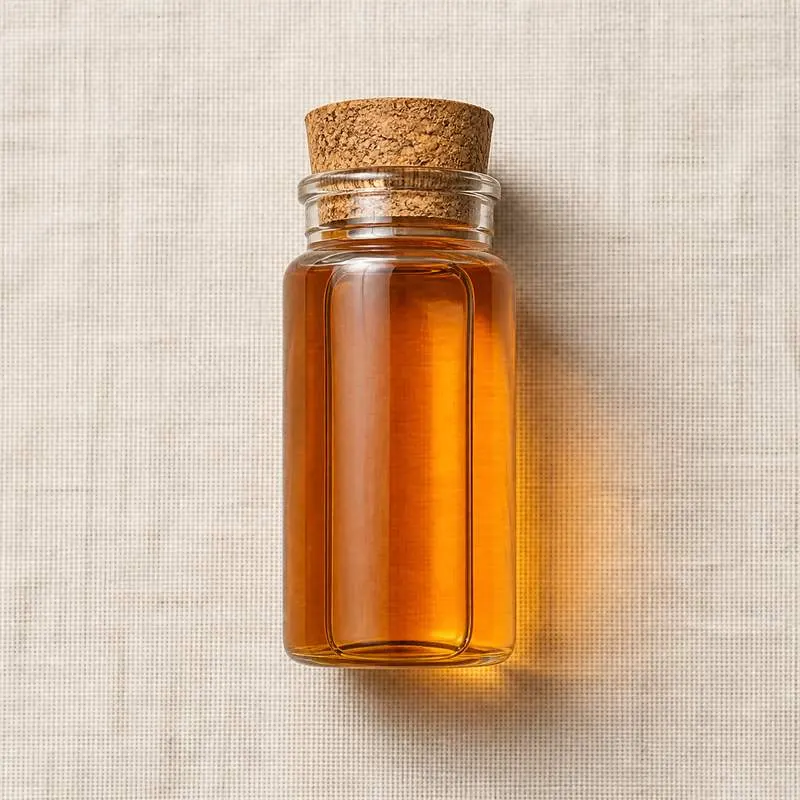
Three formats cover the trade: a liquid in propylene glycol, ethanol or triacetin, an emulsion for cloudy beverages, and a spray dried powder for dry mixes and confectionery. The characterising esters are volatile and hydrolyse slowly in acid, so a beverage flavour is specified for a stated pH range, and heat treatment during pasteurisation is accounted for by an overage or by an encapsulated grade.
We source bulk Snow Pear Flavour from top China manufacturers for our partners. The manufacturer is in Tianjin. A smaller requirement can ship in a combined container with other ingredients.
Please send the grade you need, the volume and your destination port, and we will come back with a solution and a price.
or call +86-21-6858 0751

- Function
- Flavours and Aromas
Specifications
| Item | Specification |
|---|---|
| Appearance | Clear colourless to pale yellow liquid, or free flowing white powder |
| Odour and Taste | Characteristic ripe snow pear, sweet and fruity, no solvent or fermented note |
| Identification | Gas chromatography profile conforms to retained reference |
| Specific Gravity at 25 C | 1.020 to 1.080 for liquid grades |
| Solubility | Clear solution at declared dosage in the specified carrier |
| Moisture, powder grades | Not more than 4.0% |
| Total Oil Load, powder grades | Not less than 10% as declared |
| Acid Value | Not more than 3.0 mg KOH/g |
| Heavy Metals | Not more than 10 mg/kg |
| Lead | Not more than 1.0 mg/kg |
| Arsenic | Not more than 0.5 mg/kg |
| Total Plate Count | Not more than 1,000 cfu/g |
| Yeast and Mould | Not more than 50 cfu/g |
| Salmonella | Absent in 25 g |
Common Markets Grades
Grades divide first by declaration. A natural grade is compounded from natural esters, pear juice concentrate, fruit distillate and natural aroma chemicals so that it may be declared as natural flavouring, while a nature identical or artificial grade reaches a comparable profile with synthesised aroma chemicals at a fraction of the cost and is the usual choice for confectionery and low priced beverage. Grades with a fruit juice component are quoted separately, since the juice contributes taste and colour as well as aroma.
Format grades follow the application. Water soluble liquids on propylene glycol or ethanol go into clear beverages, oil soluble grades into fat systems and hard candy, and weighted emulsions containing an ester gum or a permitted weighting agent into cloudy drinks where the flavour must stay suspended. Spray dried powders on maltodextrin or modified starch are used in powdered drink mixes and tablets, and heat stable encapsulated grades are made where the flavour must survive baking, extrusion or retorting. Strength is quoted as a recommended dosage in the finished product rather than as an assay.
Applications
- Still and carbonated soft drinks in pear and mixed fruit varieties
- Snow pear and herbal beverage drinks, where the flavour supports a traditional throat soothing positioning
- Throat lozenges, herbal candies and cough syrup style confectionery
- Hard boiled sweets, gummies and jellies, using a heat stable or encapsulated grade
- Yoghurt, drinking yoghurt and fruit preparations for dairy
- Powdered drink mixes and instant beverage sachets
- Bakery fillings, jams and canned fruit syrups where the natural fruit note is thin
- Frozen desserts, ice lollies and water ices
- Flavoured tea and infusion blends, added as a spray dried powder to the leaf
China Manufacturers of Snow Pear Flavour
Top Snow Pear Flavour manufacturers in China.

Company names and logos are the property of the manufacturers themselves. They are listed here because our own directory records them as producing this ingredient. A listing is not an endorsement by them, and we do not represent them or speak on their behalf.
Regulatory Status
Snow pear flavour is a flavouring rather than a food additive, so it carries no E number and is not the subject of an additive authorisation. In the European Union every flavouring substance in the formula must appear on the Union list of flavouring substances authorised for use in and on foods, and the flavourings framework additionally governs when the terms natural flavouring and natural pear flavouring may be used, the latter requiring that the flavouring component come almost entirely from the named source.
In the United States the FEMA GRAS programme covers the individual flavouring substances, or they appear among the synthetic flavouring substances permitted for food use, and labelling follows the natural and artificial flavour rules of 21 CFR 101.22, which determine whether the finished food may be described as naturally flavoured. Carriers and solvents such as propylene glycol and triacetin are separately permitted, and any weighting agent used in an emulsion must be authorised for beverage use in the destination market. Codex covers the class through its guidelines for the use of flavourings, with individual substances evaluated by JECFA.
Manufacturing Process
The natural components are prepared first. Pear juice is concentrated under vacuum and the aroma stripped from it during evaporation is captured and rectified to give a fruit distillate concentrated many times over the juice. Natural esters and lactones are obtained separately, most now by fermentation or by lipase catalysed esterification of a natural acid with a natural alcohol rather than by extraction, since the compounds are present in fruit at concentrations too low to recover economically.
Compounding is a weighing and blending operation carried out on a formula. The characterising esters, the green notes, the lactones and the solvent are weighed into a stainless blending vessel in a defined order, with the most powerful materials pre diluted so that they can be dosed accurately, and the batch is agitated, held to allow the blend to marry, then filtered and adjusted against a retained reference by a sensory panel supported by gas chromatography. Emulsion grades are then homogenised at high pressure with gum acacia or modified starch and a weighting agent. Powder grades are emulsified into a carrier slurry and spray dried, then sieved and packed with a moisture barrier under nitrogen.