Sodium Iron Chlorophyllin
Sodium Iron Chlorophyllin is a water-soluble chlorophyll derivative in which the native magnesium ion at the centre of the porphyrin ring has been replaced by iron, with the propionic acid side chains converted to their sodium salts.
The substitution shifts the visible spectrum and colour expression toward an olive-to-khaki green and produces a pigment with a distinctive earthy tonality. The iron analog is far less common in commerce than the standard sodium copper chlorophyllin, but it has a niche following in clean-label and metal-conscious formulations where copper is undesirable.
We source bulk Sodium Iron Chlorophyllin from top China manufacturers for our partners. The manufacturer is in Zhejiang. A smaller requirement can ship in a combined container with other ingredients.
Please send the grade you need, the volume and your destination port, and we will come back with a solution and a price.
or call +86-21-6858 0751
- Packaging
- 25 kg kraft paper bag with PE inner liner
- ISO 9001
- HACCP
- Halal
- Kosher
Specifications
Grades / Types Available: Food Grade, Feed Grade
| Item | Specification |
|---|---|
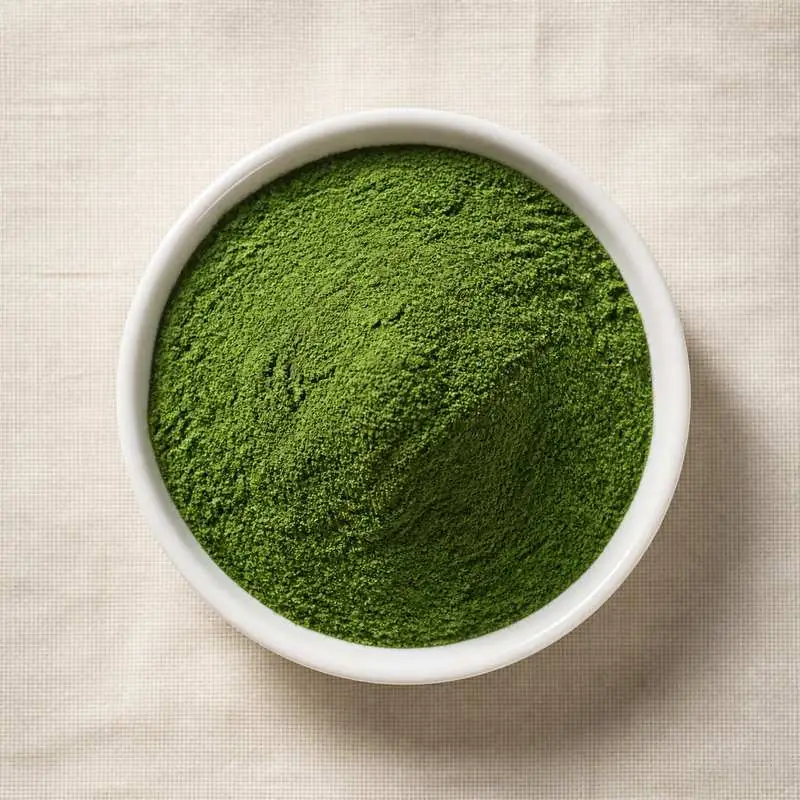
| Appearance | Dark green powder |
| Total Chlorophyllins | ≥ 90% |
| Iron Content | 3.0-6.0% |
| Solubility | Water-soluble |
| Heavy Metals (as Pb) | ≤ 5 mg/kg |
| Arsenic | ≤ 3 mg/kg |
| Purity/Assay | ≥ 90% (Food Grade) |
| pH | 6.0 - 8.0 (Food Grade) |
| Moisture/Loss on Drying | ≤ 10% (Food Grade) |
| Lead | ≤ 1 ppm (Food Grade) |
| Total Plate Count | ≤ 1000 cfu/g (Food Grade) |
| Yeast & Mold | ≤ 100 cfu/g (Food Grade) |
Common Markets Grades
Sodium Iron Chlorophyllin is graded by total dye content, typically expressed as the percentage of chlorophyllin on a dried basis and by E1%/1cm colour value at the visible absorption maximum near 405 nanometers (Soret band) and 630 nanometers.
Powder grades commonly run from 90 to 95 percent dye content with the balance composed of inorganic salts and residual moisture. Lower-strength powders standardised on dextrin or lactose carriers exist for formulators handling small dose loadings.
Liquid concentrates in water or hydroalcoholic solution carry 1 to 5 percent dye content for direct addition to aqueous food, cosmetic, or pharmaceutical bases. All grades are sensitive to acid and to prolonged light exposure and require appropriate packaging.
Because the iron analog is produced at much smaller global volume than the copper analog, lot-to-lot variability tends to be wider and certificate of analysis review is more important for users developing precise shade matches.
Applications
- Mint and herbal confectionery, including pastilles and breath fresheners in clean-label ranges
- Liqueurs and herbal aperitifs requiring an olive-green tone
- Pickled vegetables and brined products where copper additions are undesirable
- Functional beverages and shots positioning on iron content or copper avoidance
- Dietary supplement liquids, syrups, and tinctures
- Pharmaceutical syrups, oral rinses, and topical preparations
- Toothpaste, mouthwash, and oral-care gels
- Personal-care soaps, shampoos, and bath products
- Veterinary oral suspensions and palatant systems
- Internal deodorant tablets and chlorophyll-positioning supplements
- Educational and craft applications such as natural inks and dyes
- Wound-care and dermatological topical formulations in regions where permitted
China Manufacturers of Sodium Iron Chlorophyllin
Top Sodium Iron Chlorophyllin manufacturers in China.

Company names and logos are the property of the manufacturers themselves. They are listed here because our own directory records them as producing this ingredient. A listing is not an endorsement by them, and we do not represent them or speak on their behalf.
How We Help Source Sodium Iron Chlorophyllin
Direct Factory Sourcing
We run the whole process: selecting the manufacturer from the top Chinese food ingredient producers, negotiating the price, verifying quality, and coordinating the logistics. You deal with us instead of with several factories at once.
Original Packaging and Documents from the Manufacturer
The manufacturer sends your Sodium Iron Chlorophyllin out of its own factory in the original packing, through to your destination port. The COA, COO, MSDS, TDS and any certifications reach you from the manufacturer as well.
Free Samples and Lead Time
We send 100 to 500 g free for your own laboratory to test and you cover only the courier, usually within 2 to 3 working days. ETD is usually within 7 to 15 days once the order is confirmed, and we check that date against the factory's own manufacturing schedule before we give it to you.
Combined Shipment
We can load Sodium Iron Chlorophyllin together with other ingredients such as Beta Carotene, Caramel Colour and Lycopene into one 20' FCL. If your quantity is small, we can also ship LCL.
Regulatory Status
Sodium Iron Chlorophyllin sits in a narrower regulatory window than its copper counterpart.
In the European Union, the approved water-soluble chlorophyll derivative is the copper complex sodium copper chlorophyllin under E141(ii), and the iron analog is not separately listed for general food use. Its commercial use is therefore concentrated in cosmetics, oral care, supplements, and non-food applications, with food use evaluated case by case under regional rules.
The U.S. Food and Drug Administration does not list sodium iron chlorophyllin as an approved colour additive for general food use. Use in cosmetics, pharmaceuticals, and dietary supplements is subject to the relevant rules for each product category.
JECFA has reviewed chlorophyllin copper complexes and assigned them acceptable status as colours, but the iron analog has not received the same dedicated international evaluation. Halal and Kosher certifications can be arranged depending on the source biomass and processing aids.
Manufacturing Process
Production starts from a green plant biomass identical to that used for the copper analog, most commonly alfalfa meal, nettle, or silkworm-droppings extract.
The biomass is solvent-extracted with acetone or ethanol to release native chlorophyll alongside carotenoids and lipids. The crude extract is then saponified with sodium or potassium hydroxide, which hydrolyses the phytol ester and the methyl ester to give the water-soluble tetracarboxylate known as chlorophyllide.
Saponification simultaneously labilizes the central magnesium, which is removed under mild acidification to yield the metal-free pheophorbide intermediate. Controlled addition of an iron(II) salt under buffered conditions then inserts iron into the macrocycle, producing the iron chlorophyllin complex.
The crude iron chlorophyllin is purified by precipitation, washing, and ultrafiltration, then neutralised to the sodium salt and either spray-dried or finished as a concentrated liquid. Process control around the metal-exchange step is critical to suppress free iron carry-over and to keep the chromophore intact.