Phytol
Phytol is an acyclic diterpene alcohol, chemically 3,7,11,15-tetramethylhexadec-2-en-1-ol, with formula C20H40O and molar mass 296.5 g/mol. It is the long isoprenoid tail esterified to the porphyrin ring of chlorophyll, and it is released as a free alcohol when chlorophyll is hydrolysed, which is the source of essentially all commercial material.
Industrially its main significance is as a building block. Hydrogenation of phytol gives isophytol and phytanic derivatives that serve as the side chain in the synthesis of tocopherols and of vitamin K1, and that synthetic role accounts for the bulk of the volume produced. In flavour and fragrance work the alcohol itself is used at low levels for a soft green, faintly floral and balsamic note.
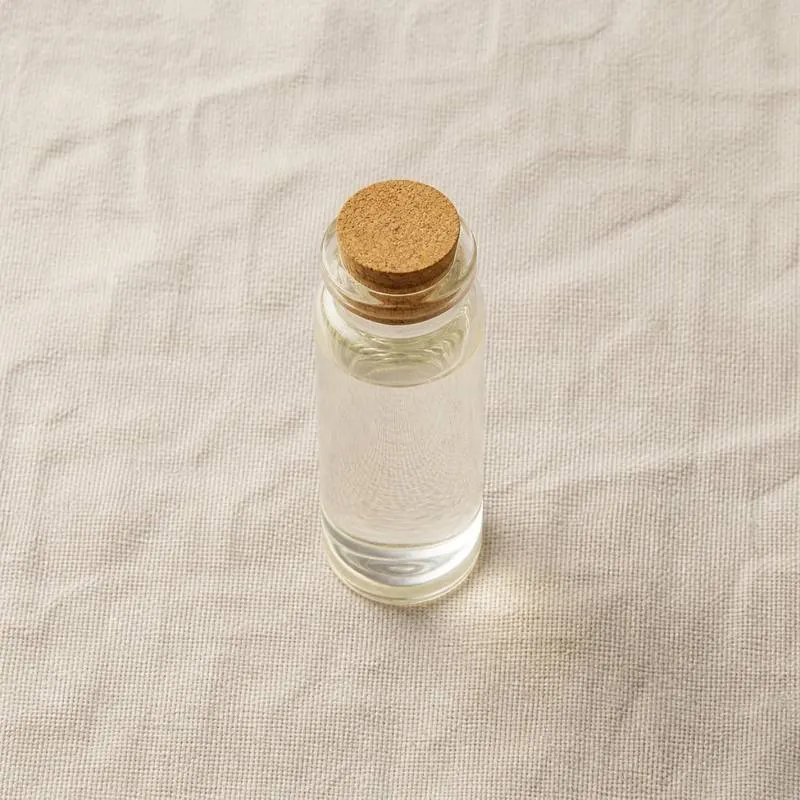
The material is a pale yellow viscous oily liquid, practically insoluble in water and miscible with ethanol, vegetable oils and most organic solvents. It carries an allylic double bond and a primary hydroxyl group, so it oxidises slowly in air to phytenal and related aldehydes and can isomerise between its E and Z forms. Commercial phytol is stabilised with a tocopherol antioxidant, filled under nitrogen and stored cool and away from light.
We source bulk Phytol from top China manufacturers for our partners. The manufacturer is in Zhejiang. A smaller requirement can ship in a combined container with other ingredients.
Please send the grade you need, the volume and your destination port, and we will come back with a solution and a price.
or call +86-21-6858 0751

- Function
- Plant extract
Specifications
| Item | Specification |
|---|---|
| Appearance | Pale yellow viscous oily liquid |
| Odour | Faint green, balsamic and floral |
| Assay (GC) | ≥ 97.0% |
| Identification | Conforms by GC-MS and infrared spectrum |
| E to Z Isomer Ratio | ≥ 95:5 |
| Specific Gravity at 20°C | 0.845 to 0.855 |
| Refractive Index at 20°C | 1.459 to 1.464 |
| Acid Value | ≤ 1.0 mg KOH/g |
| Water Content | ≤ 0.2% |
| Peroxide Value | ≤ 5.0 meq/kg |
| Residue on Ignition | ≤ 0.1% |
| Residual Solvent (hexane) | ≤ 25 mg/kg |
| Heavy Metals (as Pb) | ≤ 10 mg/kg |
| Lead | ≤ 1.0 mg/kg |
| Arsenic | ≤ 1.0 mg/kg |
Common Markets Grades
Trade covers technical grade material at around 90 to 97 percent used as a synthesis intermediate, and a higher purity grade at 97 percent or above for flavour, fragrance and research applications. Because the natural molecule has two stereocentres in the saturated chain and a defined geometry at the double bond, specifications state isomer composition: natural derived phytol is predominantly the E isomer with the R,R configuration, while synthetic material is often a mixture of isomers and is quoted with an E to Z ratio.
The only physical form is the neat oily liquid, packed in drums or in smaller light resistant containers under nitrogen. Dilutions in ethanol, triacetin or vegetable oil at 1 or 10 percent are prepared for flavour and fragrance compounding, since the neat material is used at very low dosage. Antioxidant stabilised and unstabilised versions are distinguished on the specification.
Applications
- Synthesis of tocopherols, where the phytyl chain is condensed with trimethylhydroquinone to build vitamin E
- Synthesis of vitamin K1, where phytol provides the phytyl side chain of phylloquinone
- Flavour compounding at trace levels, contributing a soft green balsamic background to tea, herbal and green notes
- Fragrance formulation, used in green, floral and marine accords for its dry woody green character
- Cosmetic emollients and skin conditioning bases, where the branched alcohol gives a light non-greasy feel
- Analytical reference material, since phytol is used as a marker of chlorophyll degradation in food and environmental samples
- Research preparations in lipid and isoprenoid biochemistry
China Manufacturers of Phytol
Top Phytol manufacturers in China.

Company names and logos are the property of the manufacturers themselves. They are listed here because our own directory records them as producing this ingredient. A listing is not an endorsement by them, and we do not represent them or speak on their behalf.
Regulatory Status
In the United States phytol is used as a synthetic flavouring substance and adjuvant. The Flavour and Extract Manufacturers Association programme for flavour ingredients recognised as safe for their intended use includes it, and the regulations covering the finished vitamins govern its main use as a chemical intermediate for tocopherol and vitamin K1 synthesis, rather than any listing for phytol itself. There is no colour additive listing and no direct food additive regulation permitting it as a functional additive.
In the European Union phytol is registered on the Union list of flavouring substances established under Regulation 1334/2008, so its use as a flavouring is permitted subject to the general conditions of that regulation. It has no E number because it is not a food additive. When used as an intermediate in vitamin manufacture, the relevant controls are those applying to the vitamin as a nutrient source under the food supplements and fortification regulations. The Joint FAO WHO Expert Committee has considered aliphatic acyclic terpene alcohols as a flavouring group, and Codex has no commodity standard covering the substance.
Manufacturing Process
The commercial route starts from chlorophyll rich plant material or from the chlorophyll containing fraction recovered as a by-product of vegetable oil refining and alfalfa or grass processing. The concentrate is saponified with alkali in an alcoholic medium, which cleaves the phytyl ester bond of chlorophyll and releases free phytol alongside the magnesium porphyrin fraction and fatty acid soaps. The mixture is acidified and the lipophilic phase separated by solvent extraction into hexane or a similar hydrocarbon.
The crude extract is washed to remove soap and salts, dried, and the solvent recovered under vacuum. Phytol is then separated from sterols, carotenoids and residual fatty material by fractional distillation under high vacuum in a short path or wiped film evaporator, which keeps the residence time short because the allylic alcohol degrades on prolonged heating. Where a high isomeric purity is required the distillate is further purified by preparative chromatography or by crystallisation of a derivative. A wholly synthetic route also exists, building the chain from acetone and acetylene chemistry through isophytol, and is used where isomer composition is less critical. Finished material is stabilised with tocopherol and filled under nitrogen.