Saccharin
Saccharin is 1,2-benzisothiazol-3(2H)-one 1,1-dioxide, the oldest of the synthetic high intensity sweeteners, first prepared in 1879. It is roughly 300 to 500 times as sweet as sucrose on a weight basis at typical use concentrations, with the multiple falling as concentration rises.
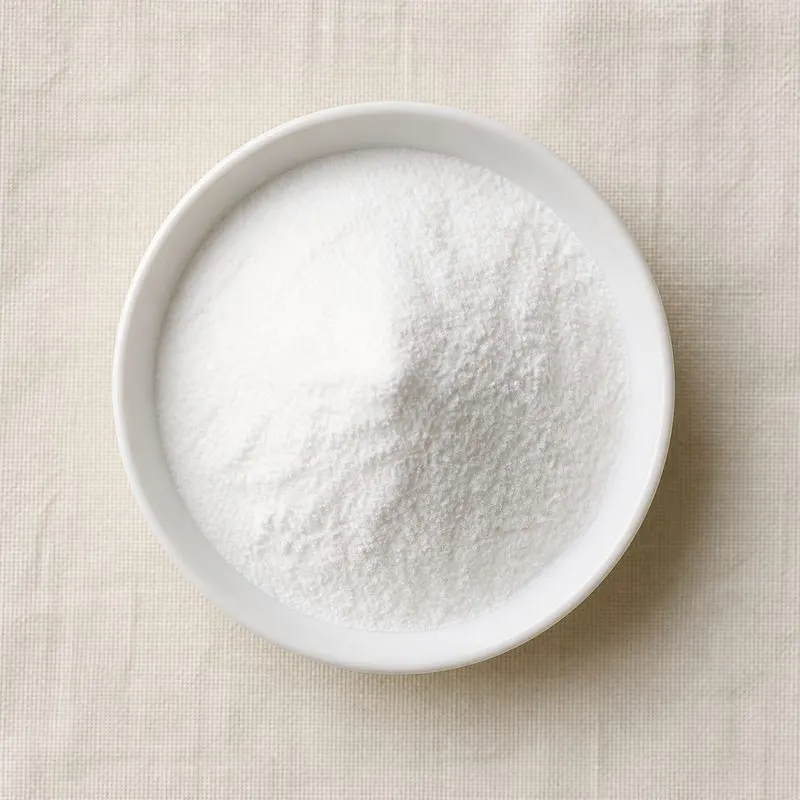
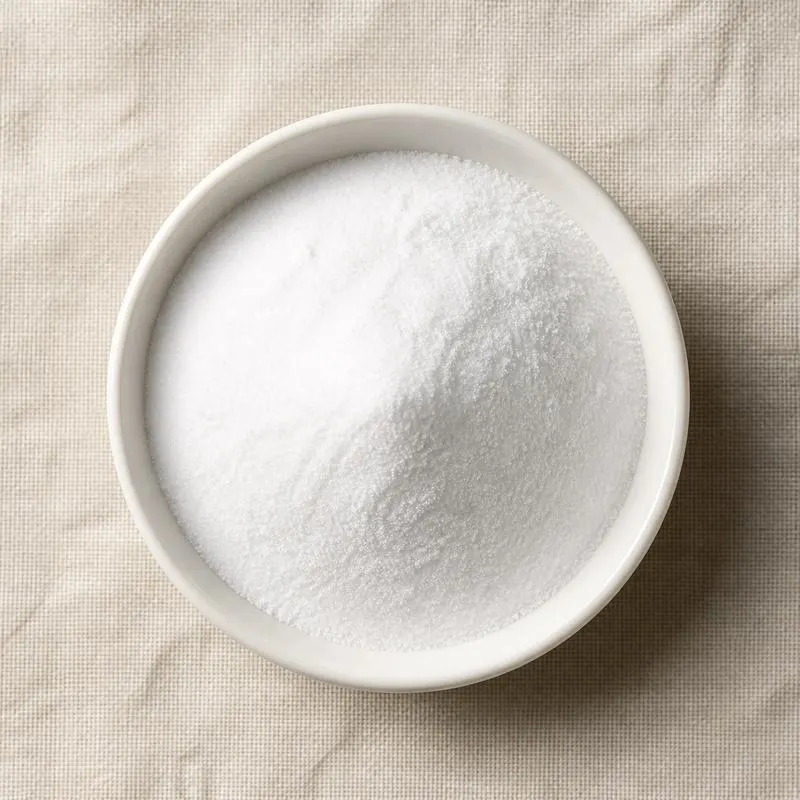
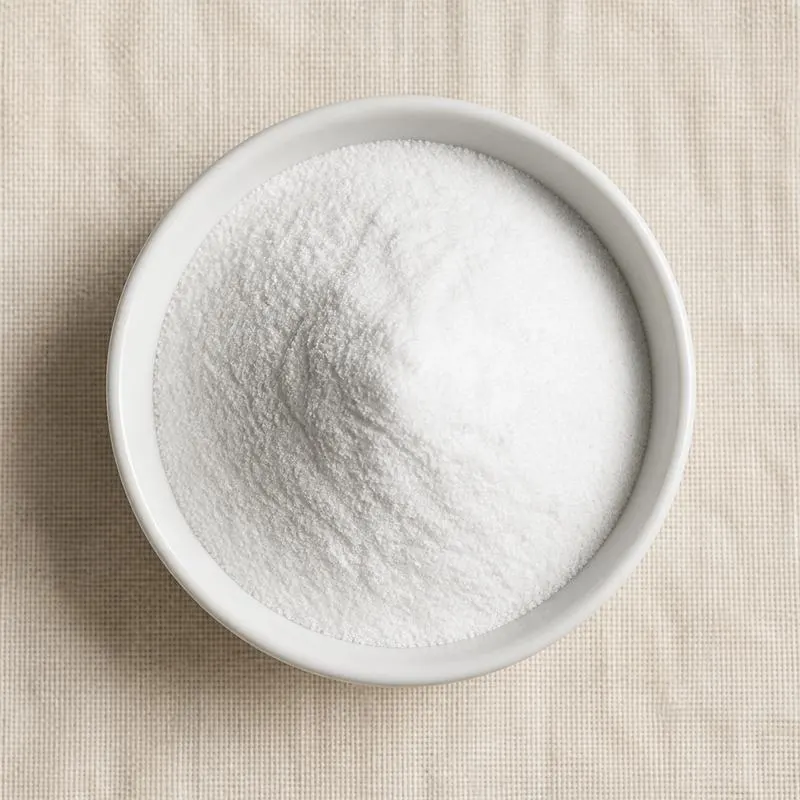
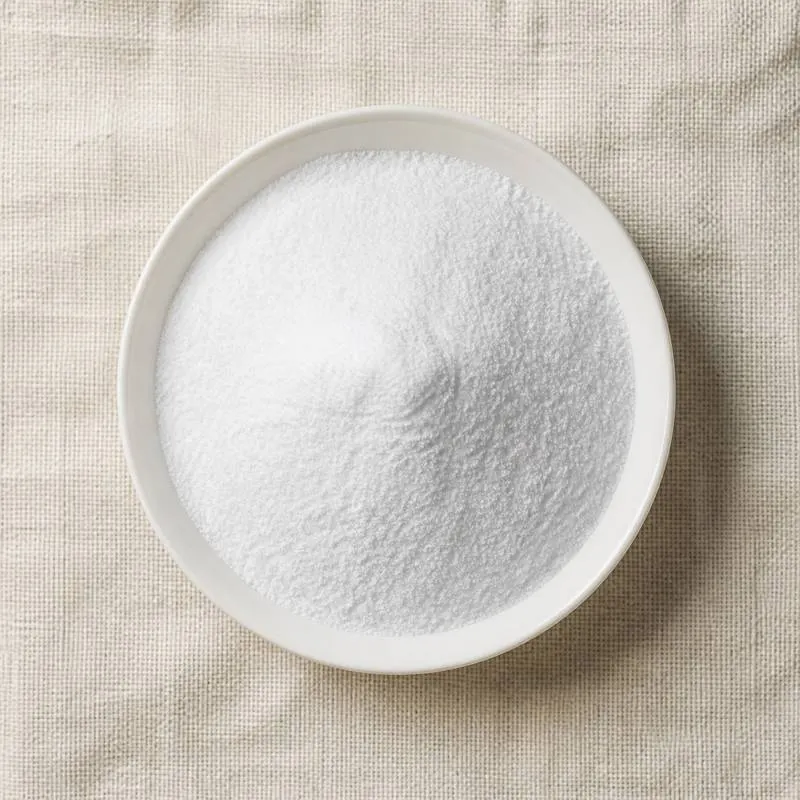
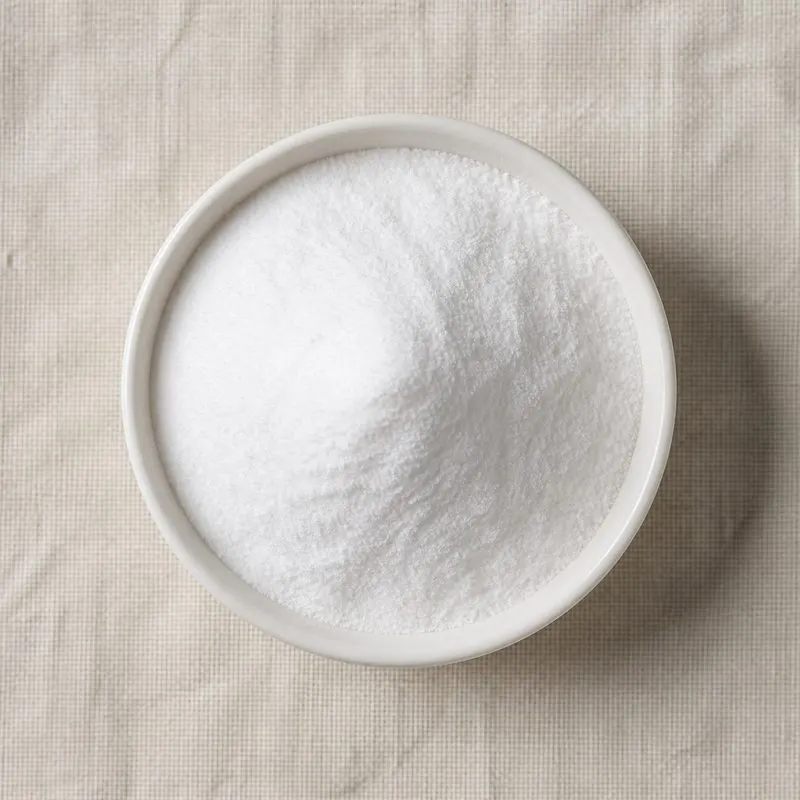
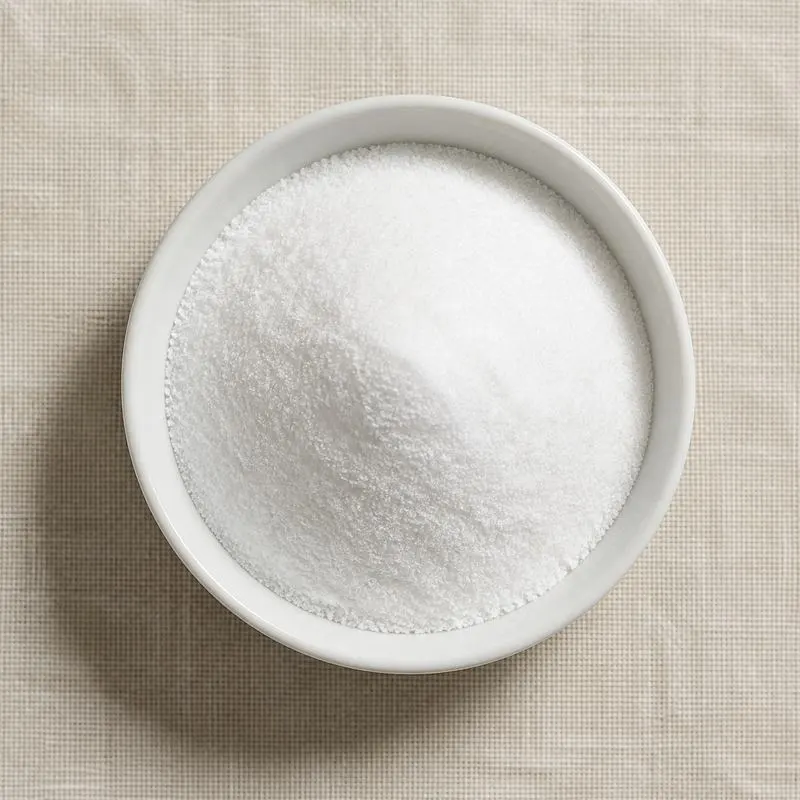
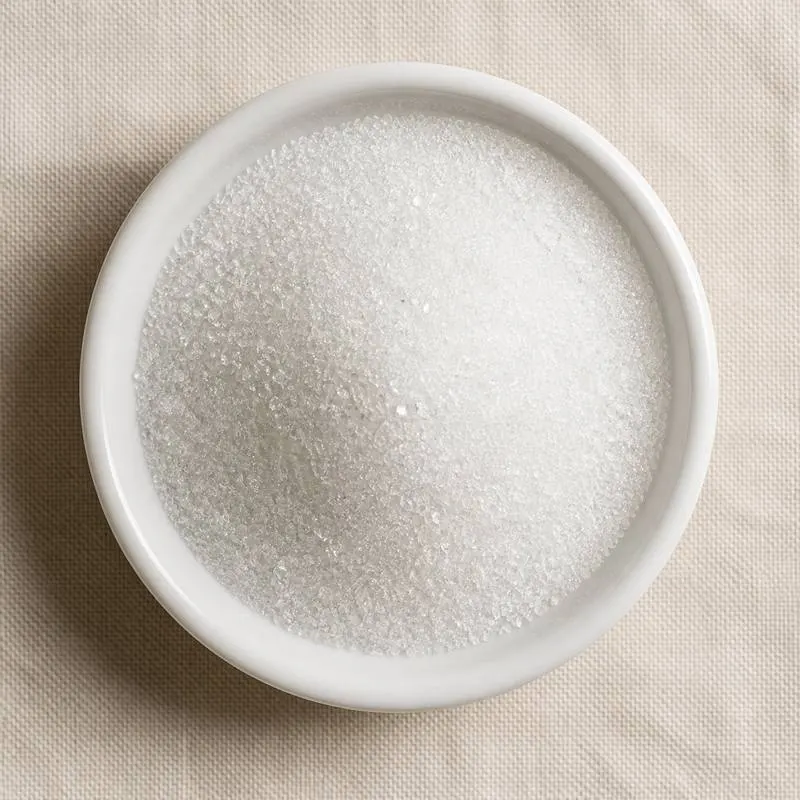
The free acid form is only sparingly soluble in water, so commercial trade is dominated by the sodium salt and, for reduced sodium applications, the calcium salt. Both salts are freely soluble and come as white crystalline powders or flat plate crystals. Saccharin contributes no calories, is not metabolised, and passes through the body unchanged.
Its sweetness has a rapid onset and a persistent bitter and metallic aftertaste that becomes pronounced above roughly 0.02 percent in solution. Formulators therefore use it in blends, most commonly with cyclamate at a ratio near one part saccharin to ten parts cyclamate, or with aspartame or acesulfame potassium, where the off-note of each is partly suppressed by the other. It is exceptionally stable, tolerating strong acid, prolonged storage, baking and retort temperatures without loss of sweetness.
We source bulk Saccharin from top China manufacturers for our partners. The manufacturer is in Tianjin. A smaller requirement can ship in a combined container with other ingredients.
Please send the grade you need, the volume and your destination port, and we will come back with a solution and a price.
or call +86-21-6858 0751
- Function
- Sweetener
Specifications
| Item | Specification |
|---|---|
| Appearance | White crystals or crystalline powder, odourless or faintly aromatic |
| Assay, sodium saccharin, dried basis | 99.0 to 101.0 percent |
| Identification | Infrared spectrum conforms to reference; positive salicylic acid test |
| Loss on drying, dihydrate | 15.0 percent maximum |
| Melting range, free acid | 226 to 230 degrees Celsius |
| pH, 10 percent aqueous solution | 6.0 to 7.0 |
| Readily carbonisable substances | Passes test |
| Toluenesulphonamides, ortho and para | 10 mg/kg maximum |
| Benzoate and salicylate | Passes test, none detected |
| Selenium | 30 mg/kg maximum |
| Heavy metals, as Pb | 10 mg/kg maximum |
| Lead | 1.0 mg/kg maximum |
| Arsenic | 3.0 mg/kg maximum |
| Residue on ignition, free acid | 0.2 percent maximum |
Common Markets Grades
Three forms are traded. Insoluble saccharin, the free acid, is used where sodium must be excluded and where the material is dispersed rather than dissolved. Sodium saccharin is the dominant commercial article and is offered as the dihydrate, the standard beverage and tabletop material, and as a partially or fully dehydrated anhydrous powder for dry blends where added water would cause caking. Calcium saccharin serves low sodium diets and is sold as a hydrated powder.
Sodium saccharin is graded by crystal habit rather than by assay, since assay is uniformly held at not less than 99 percent. Common designations are granular or plate crystal for direct dissolution, and 4 to 8 mesh, 20 to 40 mesh and fine powder grades milled for tabletting and dry mix work. Pharmaceutical grade material is made to USP and European Pharmacopoeia monographs, and a separate feed grade is produced for use in piglet starter diets.
Applications
- Tabletop sweetener tablets and sachets, usually blended with a bulking agent such as dextrose or lactose
- Diet carbonated soft drinks, generally in a blend with cyclamate or aspartame that suppresses the metallic aftertaste of each component
- Fruit flavoured drink powders and concentrates, where its stability through long ambient storage outperforms aspartame
- Toothpaste, mouthwash and dental gels, sweetening a base that carries no fermentable carbohydrate
- Pharmaceutical syrups, chewable tablets and lozenges, masking the bitterness of active ingredients
- Canned and preserved fruit and pickled vegetables, holding sweetness through retort processing and acid storage
- Chewing gum and sugar free confectionery, contributing early sweetness that persists past the sugar alcohol release
- Piglet feed, where the sweetener improves feed intake at weaning
- Electroplating brighteners and other technical applications outside food, made to a separate specification
Brands Using Saccharin
Widely-distributed consumer products that list Saccharin on the ingredient label.
Brand names, product names and logos are the property of their owners. They appear here as published evidence that the ingredient is used, taken from the brand's own label or website. Their appearance is not an endorsement, and it does not mean the brand buys from us or from any manufacturer listed on this site.
China Manufacturers of Saccharin
Top Saccharin manufacturers in China.
Company names and logos are the property of the manufacturers themselves. They are listed here because our own directory records them as producing this ingredient. A listing is not an endorsement by them, and we do not represent them or speak on their behalf.
Regulatory Status
In the United States 21 CFR 180.37 permits saccharin and its ammonium, calcium and sodium salts as non nutritive sweeteners and sets out the permitted foods and use levels. The warning label requirement introduced in 1977 was repealed by Congress in 2000, and saccharin was removed from the national list of substances reasonably anticipated to be a human carcinogen in the same year after the bladder tumour findings in rats were shown to arise by a mechanism that does not operate in humans.
In the European Union saccharin and its sodium, potassium and calcium salts are authorised as E 954 under the food additive framework, with permitted categories and maximum levels laid down in the additives annex and purity criteria in the specifications regulation. JECFA has evaluated saccharin and maintains a specification monograph, and Codex lists it among the permitted sweeteners in the General Standard for Food Additives.
Manufacturing Process
The dominant industrial route is the Remsen Fahlberg process from toluene. Toluene is reacted with chlorosulphonic acid to give a mixture of ortho and para toluenesulphonyl chlorides. The para isomer crystallises and is removed by chilling and filtration, leaving the ortho isomer as an oil. The ortho toluenesulphonyl chloride is treated with aqueous ammonia to form ortho toluenesulphonamide.
The methyl group of the sulphonamide is then oxidised to a carboxylic acid, historically with potassium permanganate and in modern plants by catalytic or electrochemical oxidation, yielding ortho sulphamoylbenzoic acid. Acidification cyclises this intermediate to insoluble saccharin, which precipitates and is filtered, washed and dried. To make the sodium salt, the free acid is neutralised with sodium hydroxide or sodium carbonate, the solution is decolourised over activated carbon and filtered, then crystallised under controlled cooling, centrifuged, dried and screened to the required crystal size. An alternative route from methyl anthranilate, the Maumee process, operates in some plants and gives a product with fewer aromatic by-products.