Sodium Starch Octenyl Succinate
Sodium starch octenyl succinate is the sodium salt of a starch half-ester formed by reacting food starch with octenyl succinic anhydride, and is the same additive as starch sodium octenyl succinate, INS 1450 and E1450. It is frequently abbreviated in trade documents to OSA starch.
Chemically it is an ordinary starch backbone carrying a light scatter of substituted units, each bearing a succinate linkage to a branched octenyl chain, with the free carboxyl group present as the sodium salt. The substitution level is low, so bulk properties such as iodine staining and enzymatic digestibility are largely unchanged, but the introduced hydrocarbon chains make the polymer interfacially active. In an oil and water system it migrates to the interface, lowers interfacial tension and forms a thick hydrated layer around each droplet that resists coalescence, an effect the parent starch has no capacity for.
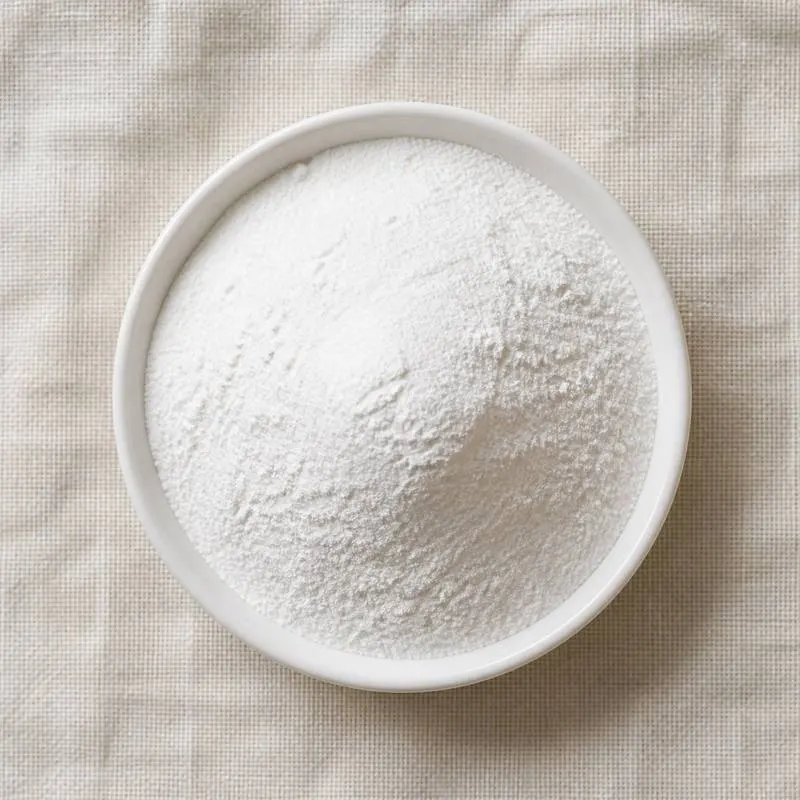
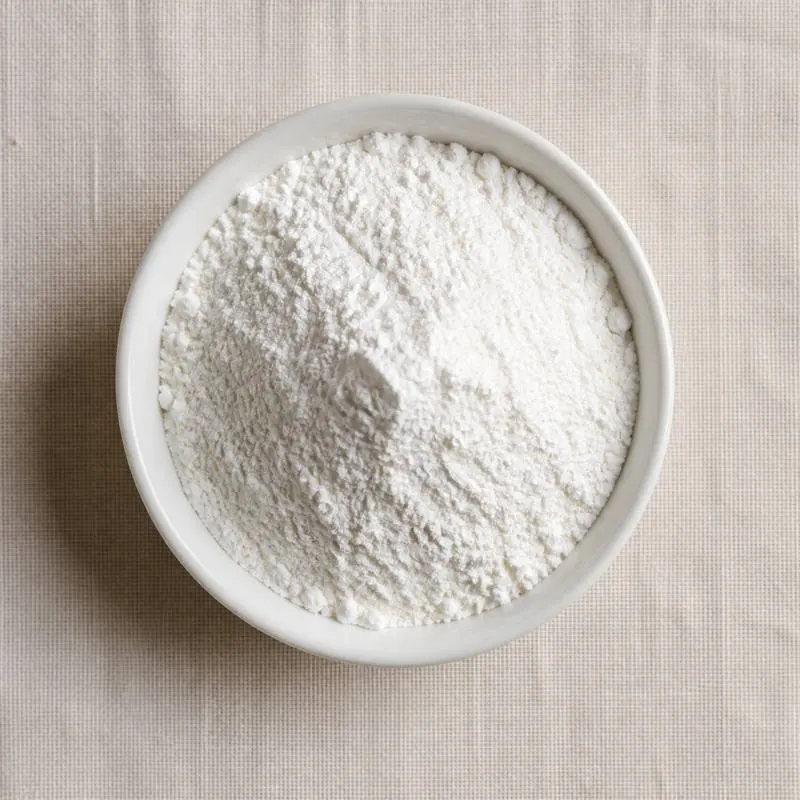
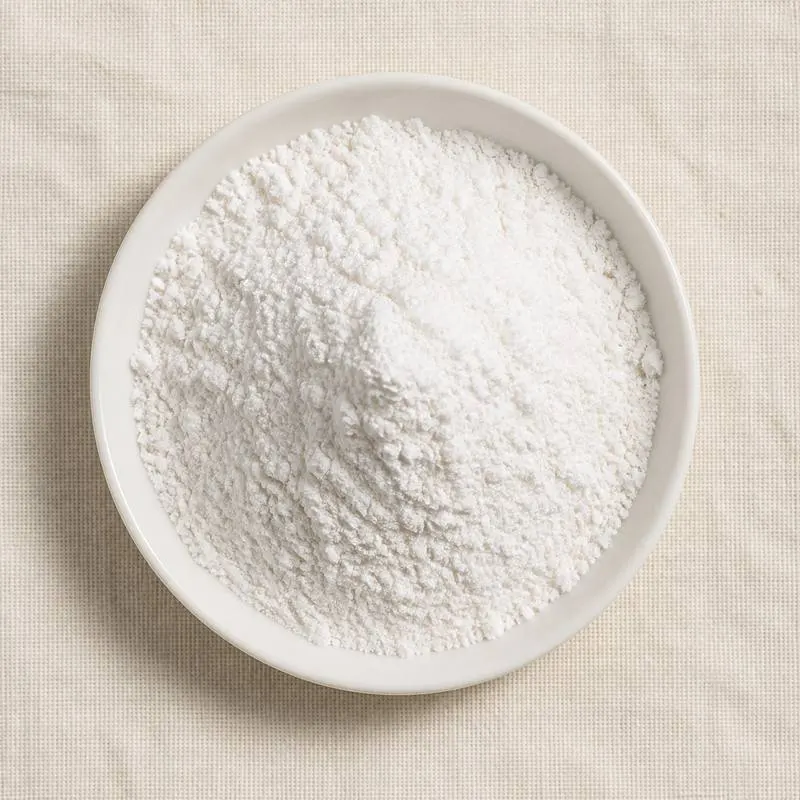
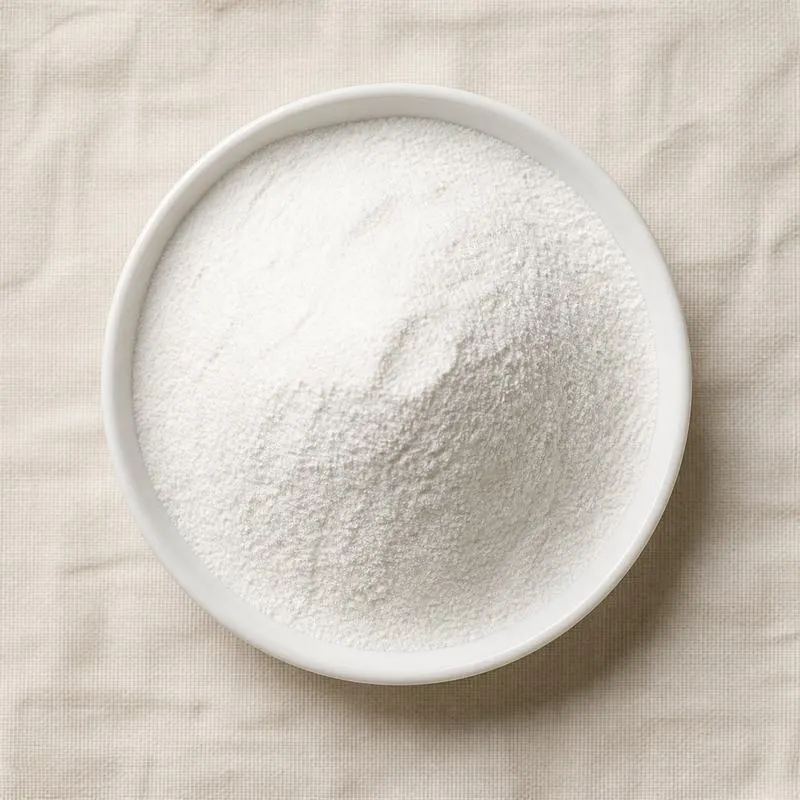
Commercial material is a white to pale cream powder with a faint characteristic odour. Spray dried grades dissolve directly in cold water to a low viscosity solution that becomes tacky as it dries, which is the property encapsulation relies on. Granular grades remain insoluble until cooked. Solutions are mildly acidic, and emulsification performance falls away below about pH 3 as the carboxylate groups become protonated.
We source bulk Sodium Starch Octenyl Succinate from top China manufacturers for our partners. The manufacturer is in Zhejiang. A smaller requirement can ship in a combined container with other ingredients.
Please send the grade you need, the volume and your destination port, and we will come back with a solution and a price.
or call +86-21-6858 0751
- Function
- Texturisers
Specifications
| Item | Specification |
|---|---|
| Appearance | White to pale cream free-flowing powder |
| Odour | Faint characteristic, free of foreign odour |
| Identification | Positive starch reaction with iodine solution |
| Octenyl Succinate Groups | Not more than 3.0% |
| Residual Octenyl Succinic Acid | Not more than 0.3% |
| Moisture | Not more than 8.0% |
| pH, 20% solution | 3.0 to 5.5 |
| Solution Viscosity, 40% solids at 25 degrees Celsius | 200 to 600 mPa s |
| Cold Water Solubility | Not less than 95% |
| Ash, sulphated | Not more than 1.0% |
| Bulk Density | 0.45 to 0.65 g/mL |
| Sulphur Dioxide | Not more than 30 mg/kg |
| Lead | Not more than 0.5 mg/kg |
| Arsenic | Not more than 0.5 mg/kg |
| Total Plate Count | Not more than 5,000 CFU/g |
| Yeast and Mould | Not more than 100 CFU/g |
| Salmonella | Absent in 25 g |
Common Markets Grades
Material is ordered by function rather than by a single assay. Low viscosity spray dried grades, thinned before esterification, are the encapsulation and beverage emulsion workhorses and are described by solution viscosity at 30 or 40 percent solids, oil load capacity, bulk density and reconstitution behaviour. Higher viscosity spray dried grades are used where some thickening is wanted alongside emulsification. Granular grades that have not been pregelatinised, sometimes additionally cross-linked with phosphate, serve as texturisers and as particle stabilisers.
Beyond viscosity, buyers distinguish base starch, since waxy maize dominates but tapioca and rice bases are used where a non-maize or hypoallergenic declaration is needed. Non-genetically-modified and organic-compatible declarations follow the base starch. Substitution level is not a differentiating specification, because every food grade is made at or below the same regulatory reagent ceiling.
Applications
- Citrus and cola flavour emulsions for carbonated drinks, holding the oil phase dispersed through the shelf life of the concentrate and the finished beverage
- Spray dried encapsulation of flavour oils, where the film forms a low oxygen permeability glass around the payload
- Microencapsulation of omega-3 oils, carotenoids and oil-soluble vitamins for powder blending
- Instant powdered beverages and creamers, re-forming the fat emulsion when water is added
- Emulsified sauces, dressings and dips as a partial replacement for egg yolk or gum emulsifiers
- Nutritional and clinical powders requiring a stable dispersed lipid phase after reconstitution
- Cloud emulsions supplying opacity to juice drinks and squashes
- Fat reduced dairy and dessert systems, where the granular grades supply a creamy body
- Frying batters and coatings, improving adhesion and limiting oil uptake
- Tablet and granule coatings in supplement manufacture, using the film-forming behaviour of the dried solution
China Manufacturers of Sodium Starch Octenyl Succinate
Top Sodium Starch Octenyl Succinate manufacturers in China.

Company names and logos are the property of the manufacturers themselves. They are listed here because our own directory records them as producing this ingredient. A listing is not an endorsement by them, and we do not represent them or speak on their behalf.
Regulatory Status
In the United States the food starch-modified regulation at 21 CFR 172.892 covers it, permits treatment of food starch with octenyl succinic anhydride at up to 3 percent on the starch and sets a limit on residual octenyl succinic acid. The label declaration is modified food starch. The regulation also provides for the aluminium salt, which is a distinct substance from the sodium form.
In the European Union the additive is authorised as E1450 starch sodium octenyl succinate, with identity and purity criteria laid down in the additive specifications, including the maximum octenyl succinate group content and the residual free acid limit. Modified starches are generally permitted at quantum satis across the food categories in which they are allowed, and appear in the ingredient list as modified starch. Use in foods intended for infants and young children is limited to defined categories and levels rather than being unrestricted. Codex and JECFA list the substance as INS 1450 within the general standard for food additives, with JECFA specifications covering the same reagent and residue controls.
Manufacturing Process
Production starts from a refined starch, normally waxy maize because its all-amylopectin structure gives clear low viscosity solutions. For the emulsifying grades the starch is thinned first, either by holding an acidified slurry below the gelatinisation temperature until the target molecular weight is reached or by dosing a controlled amount of alpha amylase, then washing the acid or deactivating the enzyme. The thinned starch is reslurried at around 35 to 40 percent solids and held at pH 8 to 8.5 with dilute sodium hydroxide at 30 to 40 degrees Celsius.
Octenyl succinic anhydride is added slowly over three to eight hours while the pH is held by continuous caustic addition, since both the esterification and the competing hydrolysis of the anhydride generate acid. Reagent dosing stays within the permitted maximum on starch dry basis. The finished slurry is neutralised with dilute hydrochloric acid, then washed thoroughly on hydrocyclones or a vacuum belt filter, which removes sodium chloride and the free octenyl succinic acid formed by hydrolysis. Emulsifying grades are then steam jet cooked to disperse the starch completely and spray dried into a cold water soluble powder; granular grades bypass the cook and are dewatered, flash dried, milled and sifted. Every lot is checked for octenyl succinate content and residual free acid.