White Vinegar
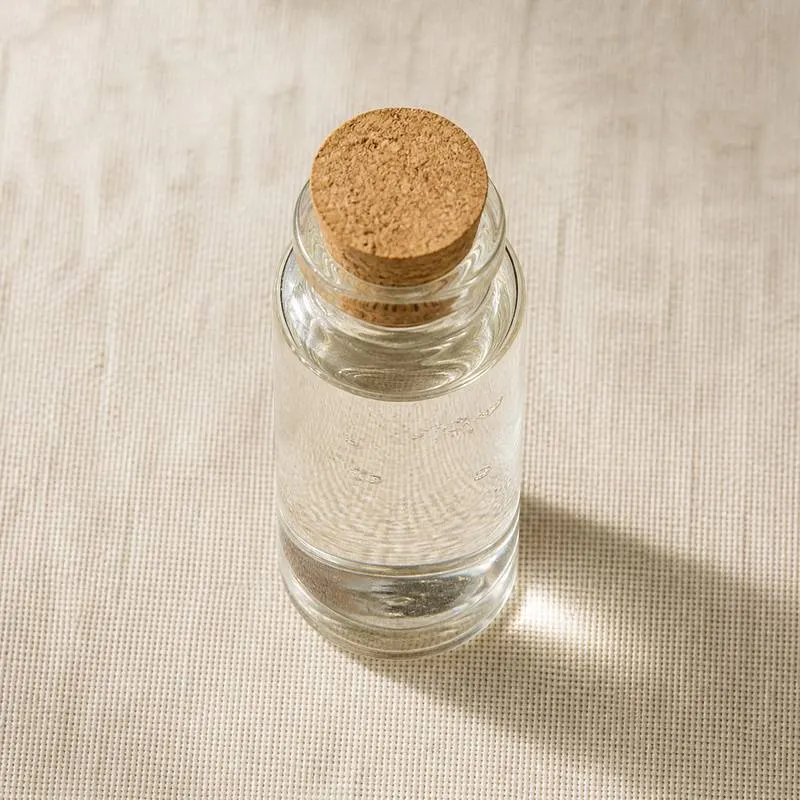
White vinegar is a clear, colourless aqueous solution of acetic acid produced by the acetous fermentation of dilute ethanol, usually distilled after fermentation to strip colour and congeners. It is the plainest of the vinegars in flavour terms, which is exactly why food manufacturers use it: it delivers acidity and antimicrobial effect without the malt, fruit or wood notes that a cider, wine or rice vinegar carries.
The commercial material is a water white liquid with a pungent acetic odour and a sharp, clean sour taste. Trade strength is expressed as grain or as percentage acidity, with 5 percent acetic acid being the household and general food standard and higher strengths sold for industrial dilution. It is fully miscible with water and ethanol, stable indefinitely at ambient temperature in the absence of air, and holds its acidity through pasteurisation and retort processing.
Its functional value in a formulation comes from pH depression rather than from flavour. Dropping product pH below about 4.6 puts a food outside the growth range of Clostridium botulinum, and the undissociated acetic acid molecule itself is inhibitory to moulds, yeasts and many spoilage bacteria, which is the basis of pickling and of most shelf stable sauces.
We source bulk White Vinegar from top China manufacturers for our partners. The manufacturer is in Henan. A smaller requirement can ship in a combined container with other ingredients.
Please send the grade you need, the volume and your destination port, and we will come back with a solution and a price.
or call +86-21-6858 0751
- Function
- Acidulant
Specifications
| Item | Specification |
|---|---|
| Appearance | Clear colourless liquid, free of sediment |
| Odour and taste | Characteristic pungent acetic, clean sour |
| Total acidity as acetic acid | 5.0 percent minimum, or as ordered up to 20 percent |
| Residual ethanol | Not more than 0.5 percent by volume |
| Colour, APHA | Not more than 20 |
| Non volatile residue | Not more than 0.2 g per 100 mL |
| Sulphate as SO4 | Not more than 100 mg/kg |
| Chloride as Cl | Not more than 100 mg/kg |
| Heavy metals as Pb | Not more than 1 mg/kg |
| Lead | Not more than 0.5 mg/kg |
| Arsenic | Not more than 0.5 mg/kg |
| Total Plate Count | Not more than 100 CFU/mL |
| Yeast and Mould | Not more than 10 CFU/mL |
| Acetic acid bacteria, mother formation | Absent after pasteurisation |
Common Markets Grades
White vinegar is graded almost entirely by acidity. Table and general food grade is standardised at 5 percent acetic acid, equivalent to 50 grain. Manufacturing grades run at 10, 12, 15 and 20 percent for dilution at the point of use, which cuts freight on what is otherwise mostly water. A distilled grade, produced by distilling the fermented liquor, is specified where absolute clarity and the absence of colour or residual sugars matter; an undistilled but filtered grade is cheaper and acceptable where a faint colour is tolerable.
The other distinction that buyers draw is the origin of the alcohol feedstock. Vinegar fermented from grain, cane or fruit derived ethanol may be labelled as a fermentation vinegar, while a solution of synthetic acetic acid in water is not vinegar at all in most jurisdictions and must be declared as diluted acetic acid. Non brewed condiment and spirit vinegar labels turn on this distinction, so the certificate of analysis normally states the feedstock.
Applications
- Pickled vegetables and pickle brines, where acidity below pH 4.6 both preserves the pack and firms the tissue
- Mayonnaise, salad dressings and emulsified sauces, contributing the acid phase that stabilises the emulsion and inhibits spoilage organisms
- Tomato ketchup, barbecue and brown sauces, balancing sweetness and holding the pack acidified
- Mustard preparation, where the acid slows the enzymatic reaction that would otherwise blow off the pungency
- Marinades for meat and poultry, where acid denatures surface protein and improves seasoning penetration
- Bakery mould inhibition, either directly or as the feedstock for buffered vinegar and cultured dextrose systems
- Cured and cooked meats as a clean label alternative to added preservatives, using concentrated or dried vinegar
- Cheese making, as a direct acidulant for fresh acid set cheeses such as paneer and queso blanco
- Canned and retorted vegetables, adjusting pH so heat process schedules can be shortened
- Household and food plant cleaning, where mild acidity dissolves lime scale and mineral deposits
Brands Using White Vinegar
Widely-distributed consumer products that list White Vinegar on the ingredient label.
Brand names, product names and logos are the property of their owners. They appear here as published evidence that the ingredient is used, taken from the brand's own label or website. Their appearance is not an endorsement, and it does not mean the brand buys from us or from any manufacturer listed on this site.
China Manufacturers of White Vinegar
Top White Vinegar manufacturers in China.

Company names and logos are the property of the manufacturers themselves. They are listed here because our own directory records them as producing this ingredient. A listing is not an endorsement by them, and we do not represent them or speak on their behalf.
Regulatory Status
In the United States vinegar is treated as a food rather than as a food additive. The Food and Drug Administration has no formal standard of identity for vinegar but applies a long standing compliance policy that requires vinegar sold as such to contain at least 4 grams of acetic acid per 100 millilitres and to be produced by fermentation, with the source declared in the name. Acetic acid itself is affirmed as generally recognised as safe under 21 CFR 184.1005, and a solution of synthetic acetic acid must be labelled as diluted acetic acid rather than as vinegar.
In the European Union vinegar is a food in its own right and carries no E number, so it does not require additive authorisation when used as an ingredient. Regulation (EC) No 1333/2008 separately authorises acetic acid as the additive E260. The wine legislation sets compositional expectations for wine vinegar, and general food law together with national and Codex regional standards covers other vinegars. The Codex Alimentarius regional standard for vinegar sets minimum acidity and prohibits topping up fermented vinegar with synthetic acetic acid.
Manufacturing Process
White vinegar is made by the aerobic oxidation of ethanol to acetic acid by Acetobacter and Gluconacetobacter species. A dilute alcohol feed, typically neutral grain or cane spirit cut back to 8 to 12 percent alcohol and supplemented with nitrogen and phosphate nutrients, is charged to a submerged culture acetator. Air is dispersed through the broth by a high shear rotor, and the strongly exothermic oxidation is held near 30 degrees Celsius by internal cooling coils. The vessel is run semi continuously, with a portion of the finished charge drawn off and replaced by fresh alcohol once the residual ethanol falls to a set point, which keeps the culture active.
Raw vinegar leaving the acetator is clarified. The classical route is distillation, which removes colour, residual nutrient salts and fermentation congeners and yields the water white product the trade calls distilled white vinegar. Where distillation is not used, the liquor is fined, then filtered through diatomaceous earth and a membrane or sheet filter. The clarified vinegar is standardised to the ordered acidity with demineralised water, pasteurised or sterile filtered, and filled.