Zero Calorie Sugar
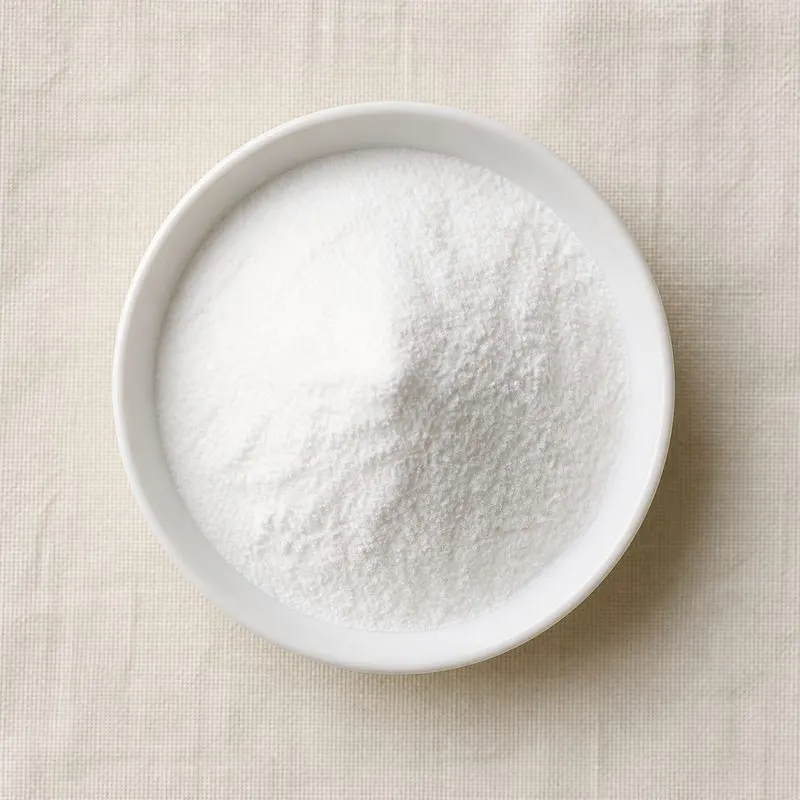
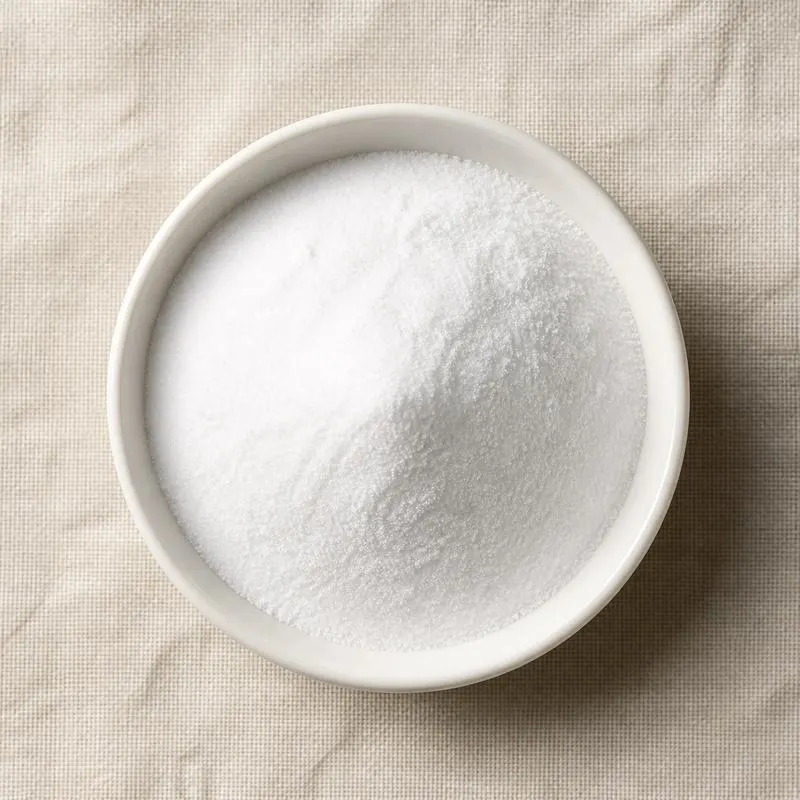
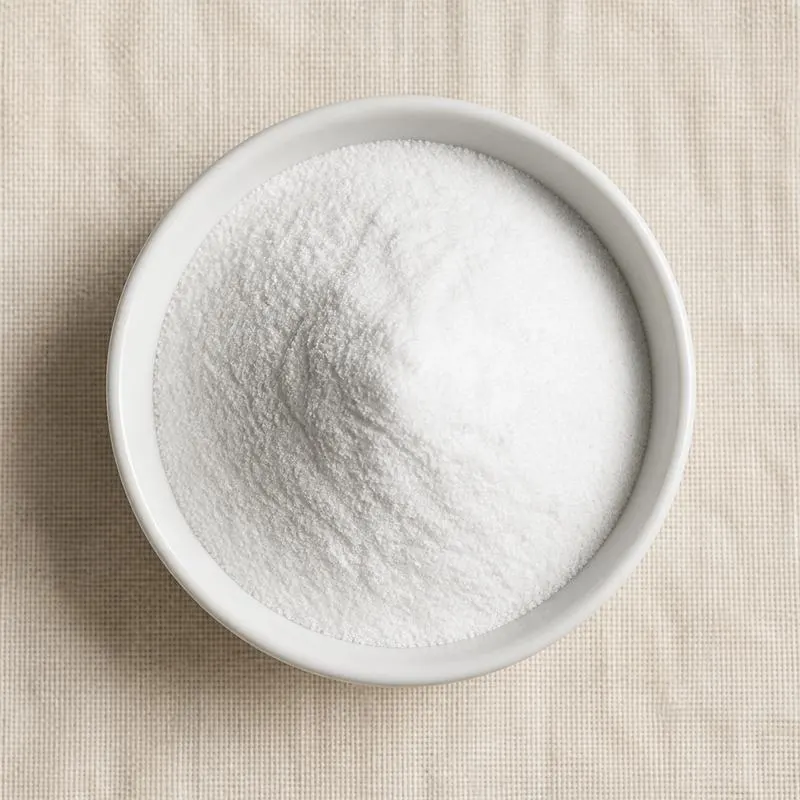
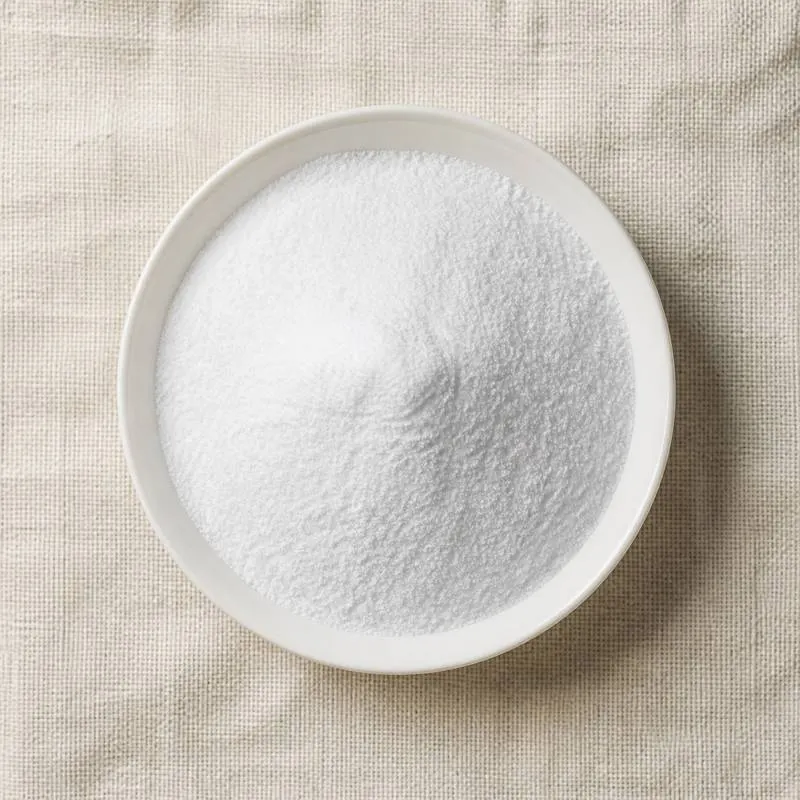
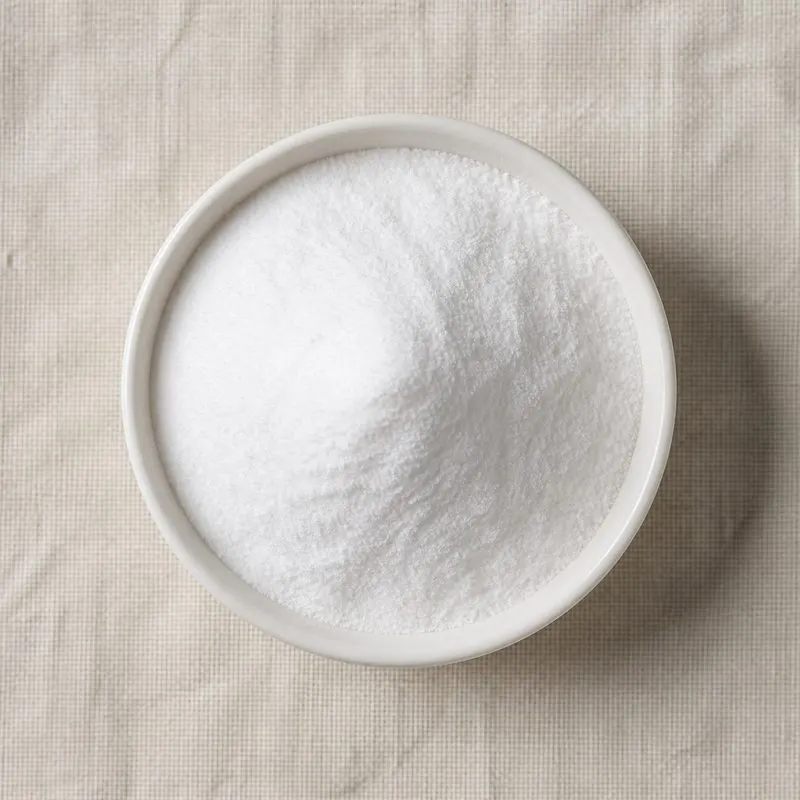
Zero calorie sugar is a granulated bulk sweetener formulated to replace sucrose spoon for spoon while contributing no metabolisable energy. It is a blend rather than a single substance. The bulk is almost always erythritol, the only common polyol that is absorbed in the small intestine and excreted unchanged in urine and therefore carries essentially no calorie contribution, and the sweetness gap between erythritol and sucrose is closed with a high intensity sweetener, typically steviol glycosides, monk fruit extract or sucralose, dosed at a fraction of a percent.
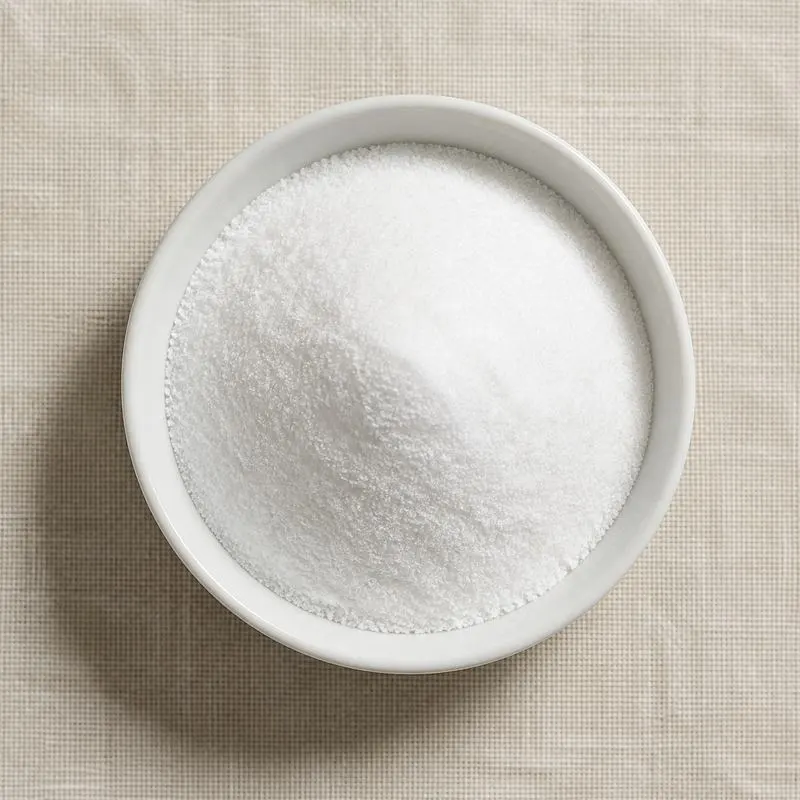
The crystal is sized and shaped to match granulated sugar so that a volumetric measure gives the same result, since erythritol has a lower bulk density than sucrose and an unmatched crystal would under deliver on a cup for cup basis. Some formulations add a small proportion of soluble fibre such as inulin or resistant dextrin to rebuild the bulk and mouthfeel that sugar solids would have provided.
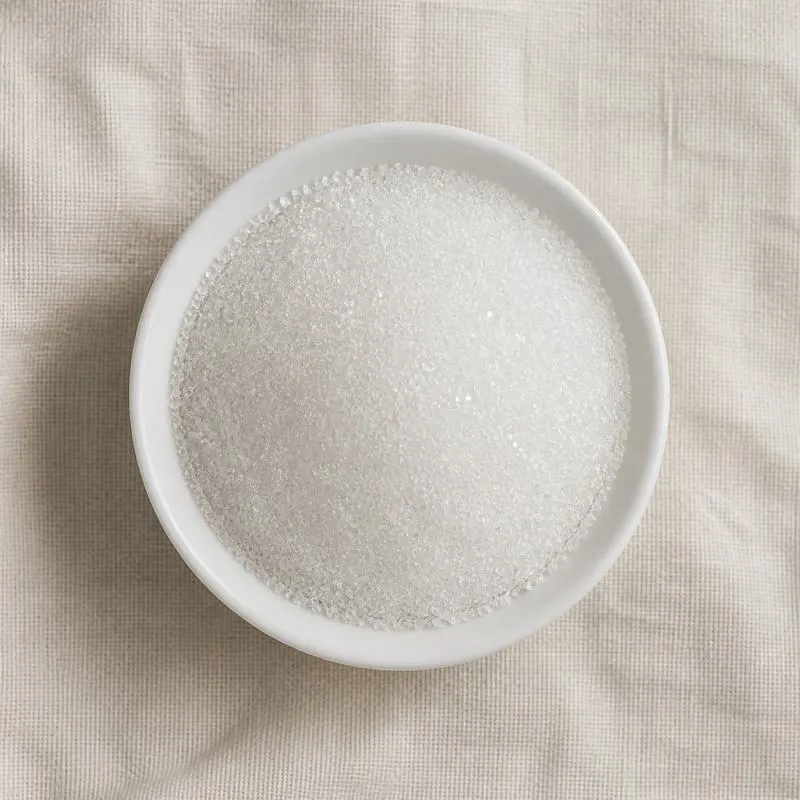
The product is a white free flowing crystalline granulate, freely soluble in water though less so than sucrose, with a pronounced negative heat of solution that gives a cooling sensation on the tongue. It is non hygroscopic, does not brown in a Maillard reaction, is not fermented by yeast and is not metabolised by oral bacteria. Those properties make it a straightforward replacement in cold and short bake applications and a poor one in yeast raised doughs, caramel work and anything relying on sugar to brown or to hold moisture.
We source bulk Zero Calorie Sugar from top China manufacturers for our partners. The manufacturer is in Inner Mongolia. A smaller requirement can ship in a combined container with other ingredients.
Please send the grade you need, the volume and your destination port, and we will come back with a solution and a price.
or call +86-21-6858 0751
- Function
- Sweetener
Specifications
| Item | Specification |
|---|---|
| Appearance | White free flowing crystalline granulate, free of lumps and foreign matter |
| Odour and taste | Odourless, clean sweet taste with cooling effect |
| Erythritol content, dry basis | 98.0 percent minimum of the bulk phase |
| High intensity sweetener | Declared level, plus or minus 10 percent of target by HPLC |
| Sweetness equivalence to sucrose | 1.0 to 1.0 by volume, confirmed by sensory panel |
| Particle size, through 20 mesh | 95 percent minimum |
| Loss on drying | 0.3 percent maximum |
| Sulphated ash | 0.1 percent maximum |
| Reducing sugars, as glucose | 0.3 percent maximum |
| Ribitol and glycerol | 0.1 percent maximum |
| Lead | 0.5 mg/kg maximum |
| Arsenic | 0.5 mg/kg maximum |
| Total plate count | 1000 cfu/g maximum |
| Yeast and mould | 100 cfu/g maximum |
| Salmonella | Absent in 25 g |
Common Markets Grades
Grades are defined by the sweetness equivalence and by the identity of the high intensity component. One to one grades are formulated to match sucrose by volume and are the retail standard; two to one and higher concentrated grades are made for industrial use where the formulator adjusts bulk separately. Stevia sweetened, monk fruit sweetened and sucralose sweetened versions are traded as distinct lines because the label proposition differs, and blends of two intense sweeteners are used where the aftertaste of either alone is objectionable.
Particle size runs from a coarse granulated crystal matching table sugar, through a fine caster equivalent for baking, to a milled powder equivalent to icing sugar. Fibre bearing grades built on inulin or resistant dextrin allow a dietary fibre declaration but bring a digestive tolerance limit of their own. Organic certified and non genetically modified certified lines are produced where the erythritol and the botanical sweetener can be sourced to those standards.
Applications
- Retail table top sweetener sold as a direct volumetric replacement for granulated sugar in home cooking
- Coffee and tea sweetening, where the crystal dissolves in hot liquid without the aftertaste of an intense sweetener used alone
- Reduced sugar biscuits, muffins and cakes, providing bulk that a high intensity sweetener alone cannot supply
- No bake desserts, cheesecakes and chilled mousses, dissolved into a cold base
- Sugar free confectionery and chocolate, ground into the fat phase as the bulk sweetener
- Protein bars, granola and keto positioned products, contributing sweetness and structure at low digestible carbohydrate
- Beverage powders and drink mixes, where the granulate carries the intense sweetener and dissolves cleanly
- Frozen desserts, where erythritol depresses the freezing point and the cooling effect suits a cold product
- Diabetic ranges, where the blend has no effect on blood glucose and no fermentable carbohydrate load
China Manufacturers of Zero Calorie Sugar
Top Zero Calorie Sugar manufacturers in China.

Company names and logos are the property of the manufacturers themselves. They are listed here because our own directory records them as producing this ingredient. A listing is not an endorsement by them, and we do not represent them or speak on their behalf.
Regulatory Status
The blend has no regulatory identity of its own; each component is regulated separately and declared on the label. In the United States erythritol is affirmed as generally recognised as safe under 21 CFR 184.1852, sucralose is a permitted food additive under 21 CFR 172.831, and steviol glycosides purified to not less than 95 percent and monk fruit extract are each the subject of generally recognised as safe notifications to the Food and Drug Administration. The descriptor sugar free or no calorie may be used only where the product meets the nutrient content claim definitions in 21 CFR 101.60.
In the European Union erythritol is authorised as E 968, sucralose as E 955 and steviol glycosides obtained from stevia leaf as E 960a under the food additives framework, with purity criteria in the specifications regulation. Erythritol is exempt from the polyol laxation warning that applies to other polyols in beverages, although EU rules restrict its use in drinks. Monk fruit extract is not authorised as a sweetener in the European Union, so EU formulations use stevia or sucralose instead. JECFA maintains specification monographs for erythritol, sucralose and steviol glycosides, and Codex lists them among the permitted additives in the General Standard for Food Additives.
Manufacturing Process
The erythritol base is manufactured separately by fermentation. A glucose syrup from hydrolysed starch is fed to an osmophilic yeast, most commonly a Moniliella or Yarrowia strain, which converts the glucose to erythritol in an aerobic fed batch fermentation. The broth is separated from the biomass, decolourised over activated carbon, demineralised on ion exchange, concentrated by evaporation, then crystallised under controlled cooling, centrifuged and dried.
Blending is the second stage. The erythritol crystal is screened to the required particle size distribution, oversize being milled and returned. The high intensity sweetener is prepared as a premix, diluted into a portion of the erythritol so that a few hundred grams of active can be distributed uniformly through a tonne of base, and any fibre component is dosed in at the same point. The batch is blended in a ribbon or conical screw mixer to a validated time, and blend uniformity is verified by assaying the intense sweetener in samples drawn from several positions in the mixer. Where the crystals must be locked together to prevent segregation on transport, the blend is instead agglomerated in a fluid bed with a water or solution binder, then dried and screened. The finished granulate passes a magnet and metal detector before packing into moisture barrier bags.