Sucralose
Sucralose is a high-intensity sweetener produced by selectively chlorinating sucrose at three positions of the disaccharide backbone. The substitution converts a familiar sugar molecule into a non-nutritive sweetener that is roughly 600 times sweeter than sucrose on a weight basis.
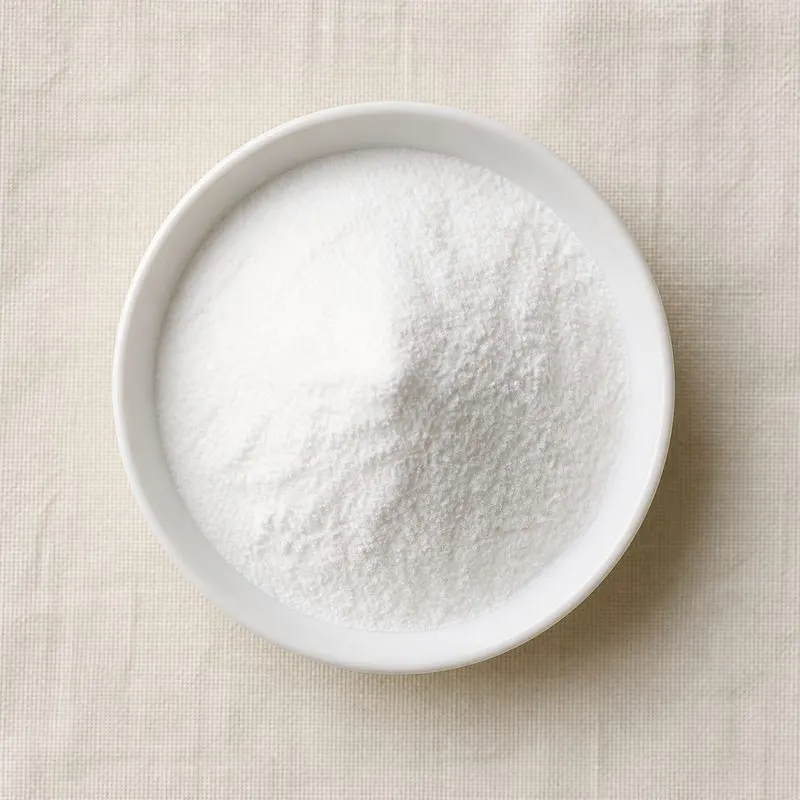
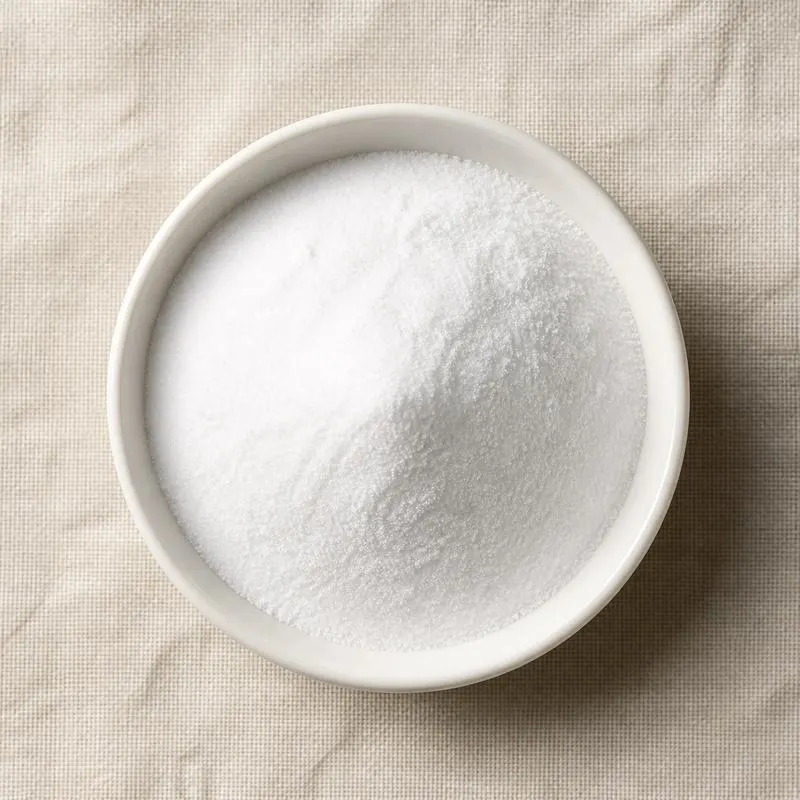
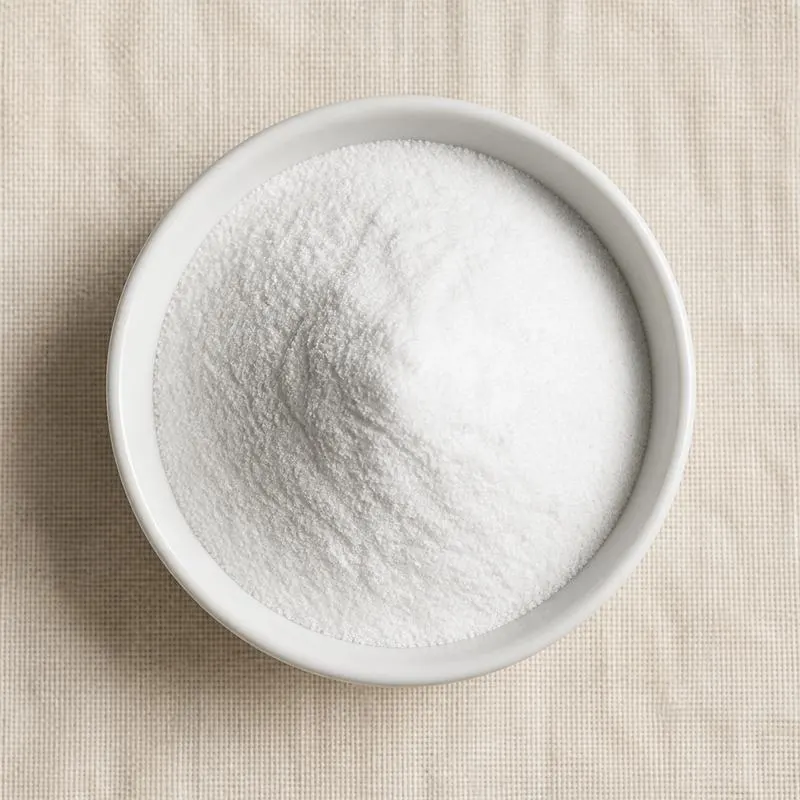
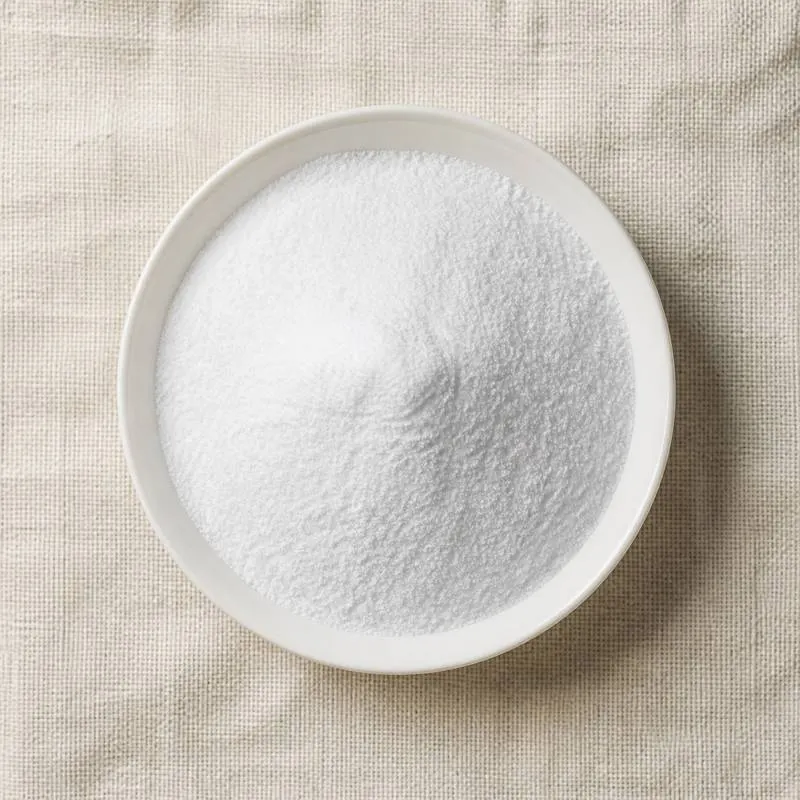
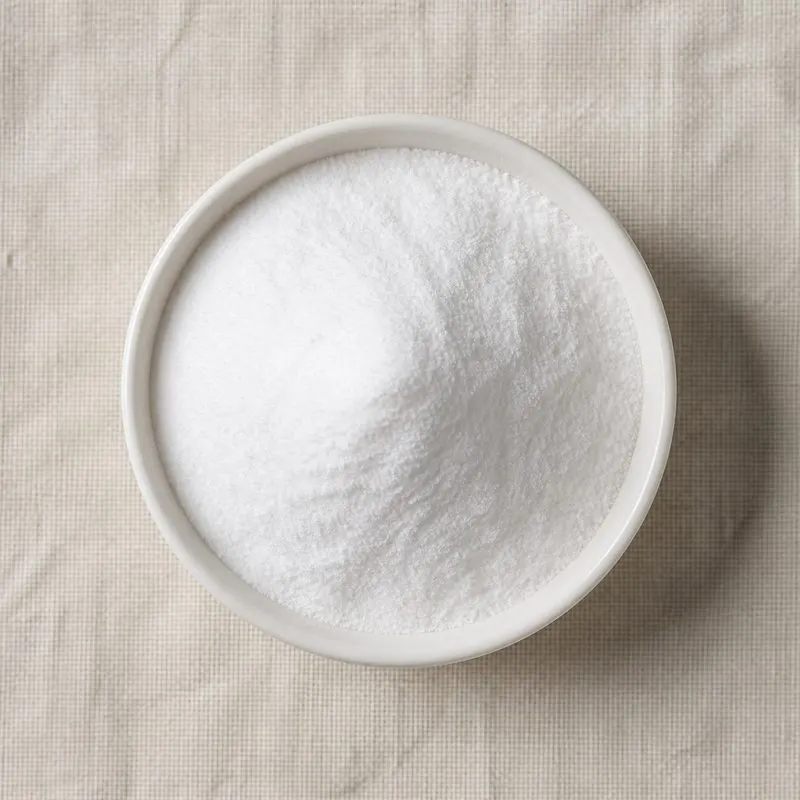
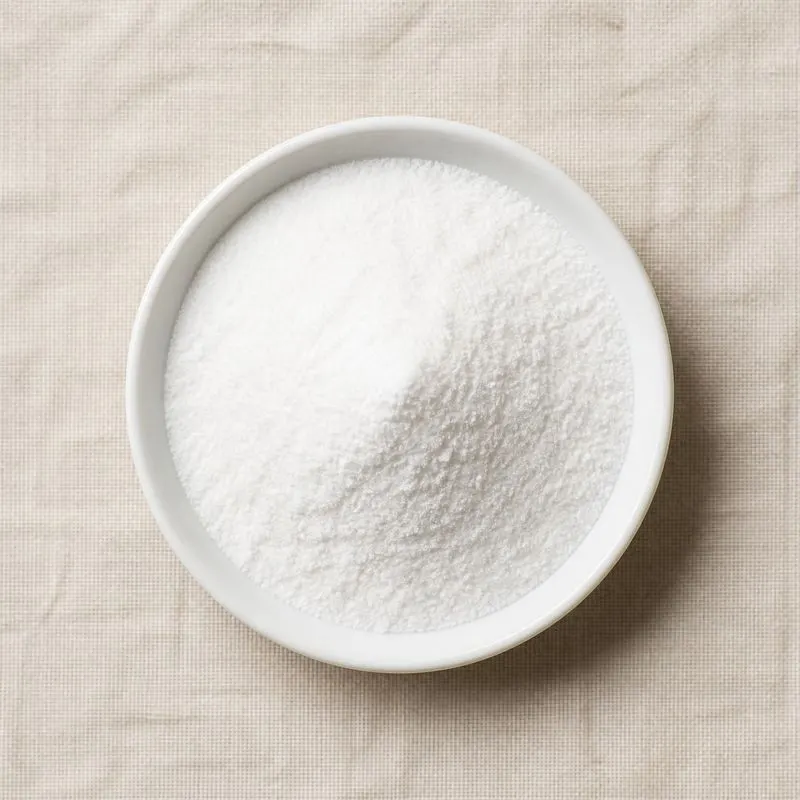
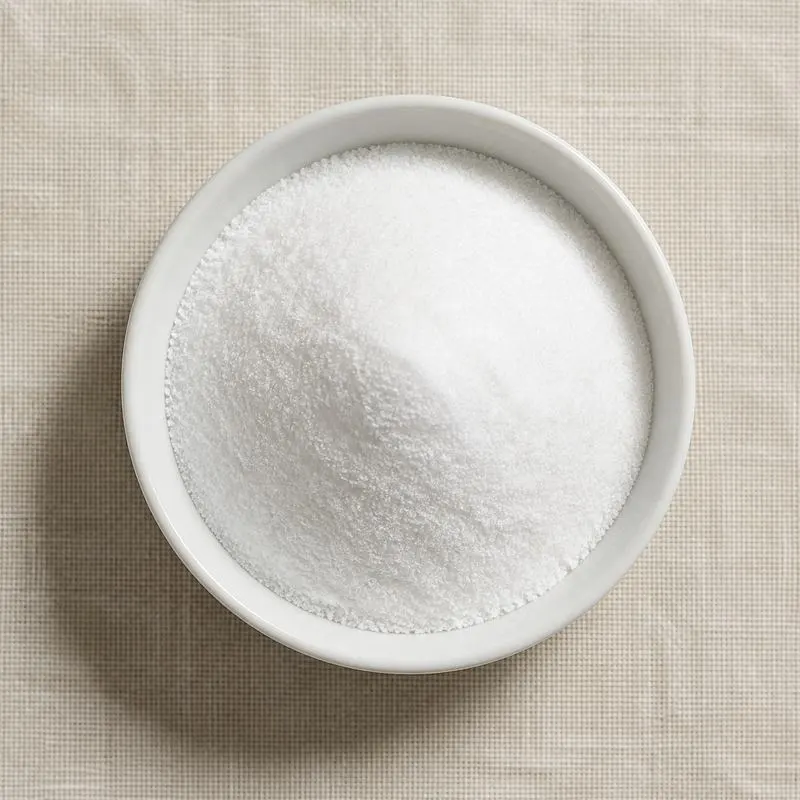
The compound has the molecular formula C₁₂H₁₉Cl₃O₈ and a molar mass of 397.64 g/mol. It is a white to off-white crystalline powder, freely soluble in water, ethanol, and methanol.
Sucralose retains a clean, sucrose-like sweetness profile with no metallic or licorice aftertaste, and it tolerates baking temperatures and acidic beverage matrices without measurable loss of sweetness.
We source bulk Sucralose from top China manufacturers for our partners, working with several of them. The manufacturers are mostly in Shandong, Jiangsu and Guangdong. For this ingredient the minimum order is 500 kg and a 20-foot container takes 18 MT, and a smaller requirement can ship in a combined container with other ingredients.
Please send the grade you need, the volume and your destination port, and we will come back with a solution and a price.
or call +86-21-6858 0751
- Minimum order
- 500 kg
- Qty in 20' FCL
- 18 MT
- Packaging
- 25 kg kraft paper bag with PE inner liner
- Function
- Sweetener
- ISO 9001
- HACCP
- Halal
- Kosher
Specifications
| Item | Specification |
|---|---|
| Appearance | White to off-white crystalline powder, practically odourless |
| Assay (on the anhydrous basis) | 98.0-102.0% |
| Specific Rotation | +84.0° to +87.5° (10% w/v aqueous solution, 20°C) |
| Water (Karl Fischer) | ≤ 2.0% |
| Residue on Ignition | ≤ 0.7% |
| pH (10% Solution) | 5.0-8.0 |
| Other Chlorinated Disaccharides | ≤ 0.5% |
| Hydrolysis Products (chlorinated monosaccharides) | ≤ 0.1% |
| Triphenylphosphine Oxide | ≤ 150 mg/kg |
| Methanol | ≤ 0.1% |
| Heavy Metals (as Pb) | ≤ 10 mg/kg |
| Lead | ≤ 1 mg/kg |
| Arsenic (as As) | ≤ 3 mg/kg |
| Particle Size | ≥ 95% through 60 mesh (micronized grade ≥ 95% through 100 mesh) |
| Total Plate Count | ≤ 250 CFU/g |
Common Markets Grades
Sucralose is produced almost exclusively as a single food-grade quality at 98 percent minimum assay on the anhydrous basis.
Two physical forms dominate commercial use. A fine micronized powder is preferred for tablet blends, dry sachets, and powdered beverage mixes where uniform dispersion at very low dosage matters. A coarser crystalline grade is preferred for liquid systems and direct dissolution into syrups.
Pharmaceutical-grade material meeting USP, BP, and Ph. Eur. monographs is used in oral solutions, chewable tablets, and lozenges. The pharmacopoeial specifications add tighter limits on related chlorinated impurities and residual solvents.
Applications
- Carbonated soft drinks, energy drinks, and flavoured waters as the primary or co-sweetener
- Tabletop sweetener sachets, tablets, and liquid drops for retail consumer use
- Dairy products including flavoured yogurts, drinkable yogurts, and protein milkshakes
- Baked goods, muffins, and breakfast cereals where heat stability is required
- Sugar-free chewing gum, hard candies, and mints
- Frozen desserts, ice cream, and frozen novelty bars in reduced-sugar formulations
- Fruit preserves, jellies, jams, and low-calorie syrups
- Sauces, salad dressings, and condiments such as ketchup and barbecue sauce
- Nutritional supplements: protein powders, meal-replacement shakes, and sports drinks
- Pharmaceutical syrups, pediatric suspensions, chewable vitamins, and effervescent tablets
- Oral-care products including toothpaste and mouthwash
- Tabletop sugar-replacement blends with bulking agents such as maltodextrin or erythritol
Brands Using Sucralose
Widely-distributed consumer products that list Sucralose on the ingredient label.
- SplendaSplenda Sweetener Packets ↗Ingredients listed verbatim: 'Dextrose, Maltodextrin, Splenda Sucralose'.Label verified 2026-05-24
- SplendaSplenda Liquid Sweetener ↗Ingredients on product page: 'water, Splenda sucralose, malic acid, sodium benzoate (preservative), and potassium sorbate (preservative)'.Label verified 2026-05-24
- Coca-Cola (Powerade)Powerade Zero ↗Ingredient panel lists 'NATURAL FLAVORS, SUCRALOSE, ACESULFAME POTASSIUM' among less-than-0.5% components.Label verified 2026-05-24
- Hershey'sHershey's Sugar Free Chocolate Syrup ↗SmartLabel page lists 'sucralose' among the ingredients of Hershey's Sugar Free Chocolate Syrup; 'sucralose ... about 200 times as sweet as sugar'.Label verified 2026-05-24
- Hershey's (Reese's)Reese's Sugar Free Peanut Butter Cups ↗SmartLabel product page lists sucralose as a sweetener ingredient in Reese's Sugar Free Peanut Butter Cups.Label verified 2026-05-24
- Yoplait (General Mills)Yoplait Light Very Vanilla ↗Ingredient panel verbatim: '...Citric Acid, Sucralose, Natural and Artificial Flavor, Tricalcium Phosphate, Potassium Sorbate Added to Maintain Freshness, Acesulfame Potassium...'.Label verified 2026-05-24
- Premier ProteinPremier Protein Vanilla Shake (11 fl oz) ↗Ingredient panel verbatim: '...CELLULOSE GEL AND CELLULOSE GUM, SALT, SUCRALOSE, ACESULFAME POTASSIUM, CARRAGEENAN...'.Label verified 2026-05-24
- Storck (Werther's Original)Werther's Original Caramel Chocolate Sugar Free Hard Candies ↗Caramel Chocolate Sugar Free variant ingredient list verbatim: 'ISOMALT, BUTTER, CREAM, COCOA EXTRACT, SALT, NATURAL AND ARTIFICIAL FLAVORS, CARAMEL COLOR, SOY LECITHIN EMULSIFIER, ACESULFAME K, SUCRALOSE'.Label verified 2026-05-24
- Snapple (Keurig Dr Pepper)Snapple Zero Sugar Peach Tea ↗A zero-sugar peach iced tea, formerly Diet Snapple Peach, listing sucralose and acesulfame potassium among its ingredients.Label verified 2026-05-24
- Snapple (Keurig Dr Pepper)Snapple Zero Sugar Lemon Tea ↗A zero-sugar lemon iced tea listing sucralose alongside acesulfame potassium in its ingredients.Label verified 2026-05-24
- PepsiCo (Gatorade)Gatorade Zero (Thirst Quencher) ↗Gatorade Zero ingredient panel lists 'sucralose' and 'acesulfame potassium' as the sweeteners after water, citric acid, natural flavour, electrolytes and modified food starch.Label verified 2026-05-24
- PepsiCo (Gatorade)Propel Fitness Powder Packets ↗Gatorade FAQ/Propel product page confirms 'Propel Fitness Powder is sweetened with Acesulfame Potassium (Ace-K) and sucralose'.Label verified 2026-05-24
Brand names, product names and logos are the property of their owners. They appear here as published evidence that the ingredient is used, taken from the brand's own label or website. Their appearance is not an endorsement, and it does not mean the brand buys from us or from any manufacturer listed on this site.
China Manufacturers of Sucralose
Top Sucralose manufacturers in China.
 Anhui Jinhe Industrial Co., Ltd.5 ingredients in the directory
 JK Sucralose Inc.1 ingredient in the directory
- L&P Food Ingredient Co., Ltd.9 ingredients in the directory
 Nantong Changhai Food Additive Co., Ltd.8 ingredients in the directory
 Newtrend Group5 ingredients in the directory
 Shandong Kanbo Biochemical Technology Co., Ltd.1 ingredient in the directory
 Sunvision Sweet Co., Ltd.1 ingredient in the directory
 Techno (Fujian) Food Ingredients Co., Ltd.4 ingredients in the directory
 Unitech Chemicals (Zibo) Co., Ltd.2 ingredients in the directory
Company names and logos are the property of the manufacturers themselves. They are listed here because our own directory records them as producing this ingredient. A listing is not an endorsement by them, and we do not represent them or speak on their behalf.
How We Help Source Sucralose
Direct Factory Sourcing
We run the whole process: selecting the manufacturer from the top Chinese food ingredient producers, negotiating the price, verifying quality, and coordinating the logistics. You deal with us instead of with several factories at once.
Original Packaging and Documents from the Manufacturer
The manufacturer sends your Sucralose out of its own factory in the original packing, through to your destination port. The COA, COO, MSDS, TDS and any certifications reach you from the manufacturer as well.
Free Samples and Lead Time
We send 100 to 500 g free for your own laboratory to test and you cover only the courier, usually within 2 to 3 working days. ETD is usually within 7 to 15 days once the order is confirmed, and we check that date against the factory's own manufacturing schedule before we give it to you.
Combined Shipment
We can load Sucralose together with other ingredients such as Stevia, Erythritol and Maltitol into one 20' FCL. If your quantity is small, we can also ship LCL.
Regulatory Status
Sucralose is approved for use in over 80 countries as a tabletop and food-additive sweetener.
In the European Union it carries the E number E955 under Regulation (EC) No 1333/2008, with use levels defined per food category in Annex II.
The U.S. Food and Drug Administration first approved sucralose in 1998 for fifteen food categories and extended approval to a general-purpose sweetener in 1999 (21 CFR 172.831). JECFA evaluated the substance and assigned acceptable status under the Codex framework.
Pharmacopoeial monographs appear in the United States Pharmacopeia (USP), the British Pharmacopoeia (BP), the European Pharmacopoeia (Ph. Eur.), and the Japanese Pharmaceutical Excipients. Halal and Kosher certifications are commonly available because the manufacturing process uses no animal-derived inputs.
Manufacturing Process
Industrial sucralose synthesis starts from sucrose and proceeds through a multi-step selective chlorination sequence originally developed by Tate and Lyle in collaboration with Queen Elizabeth College, London in the 1970s.
The most common process protects the primary 6-hydroxyl of the glucose unit with an acetyl group, then chlorinates the 4, 1', and 6' positions using a chlorinating reagent such as thionyl chloride or a phosgene-based system in a polar aprotic solvent. Inversion of configuration at the 4-position converts the glucose moiety into a galactose moiety, giving the trichloro-galactosucrose structure.
The crude product is deacetylated under mild alkaline conditions, neutralised, and purified by sequential crystallisation. Residual solvents and chlorinated by-products are removed to meet pharmacopoeial limits.
Final material is dried, milled to the target particle size, and screened. Production is concentrated in a small number of plants in the United States, India, and China.