Ammonium Carbonate
Ammonium carbonate, known in the bakery trade as baker's ammonia or hartshorn, is a chemical leavening agent that is not in practice a single compound. Commercial material is a variable double salt of ammonium bicarbonate and ammonium carbamate, with the composition drifting toward the bicarbonate on storage as ammonia is lost, so it is bought and sold on ammonia content rather than on a molecular formula.
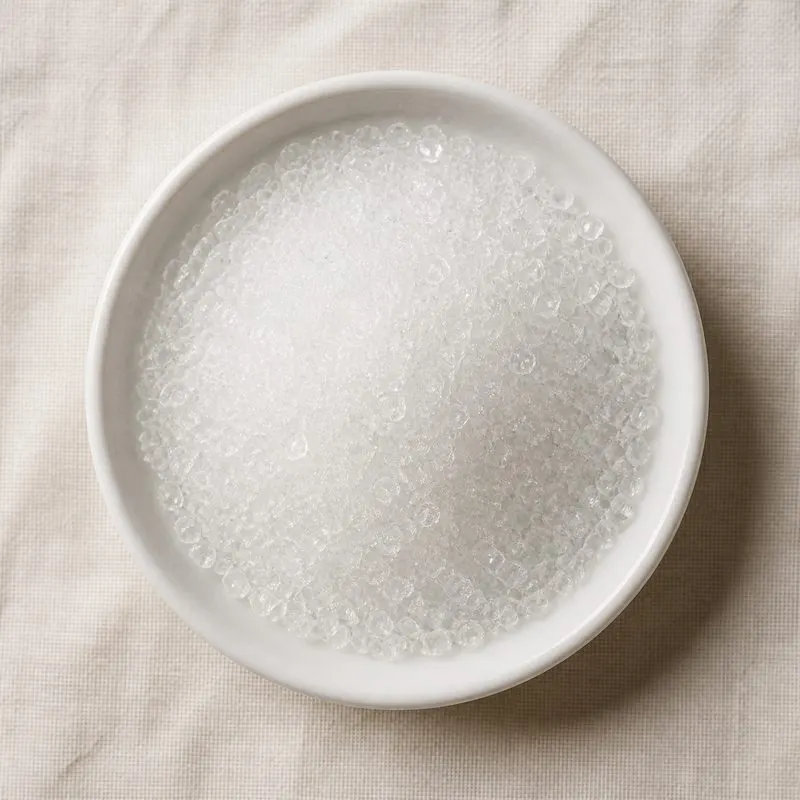
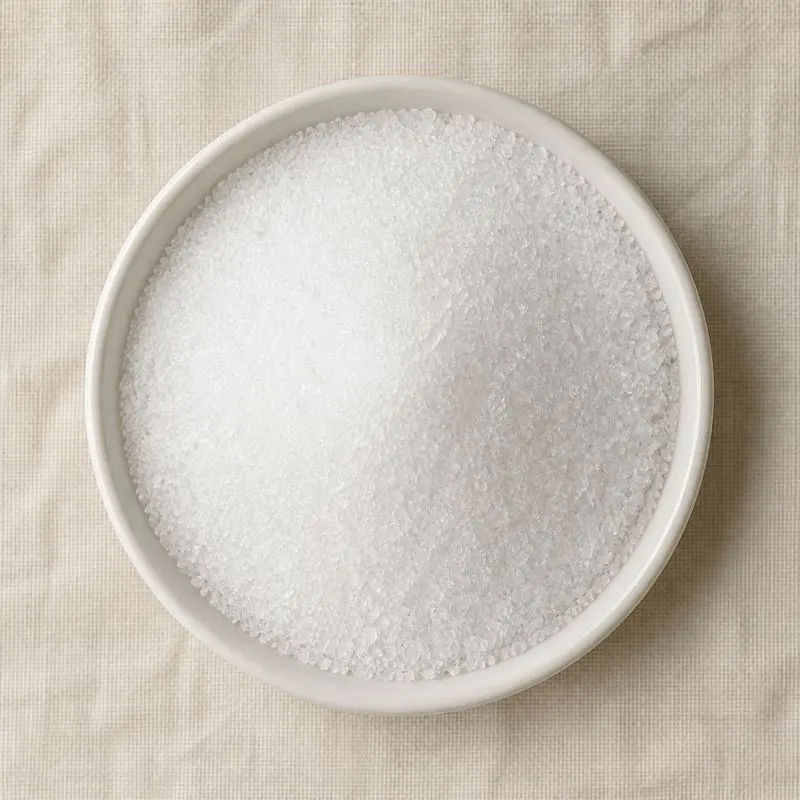
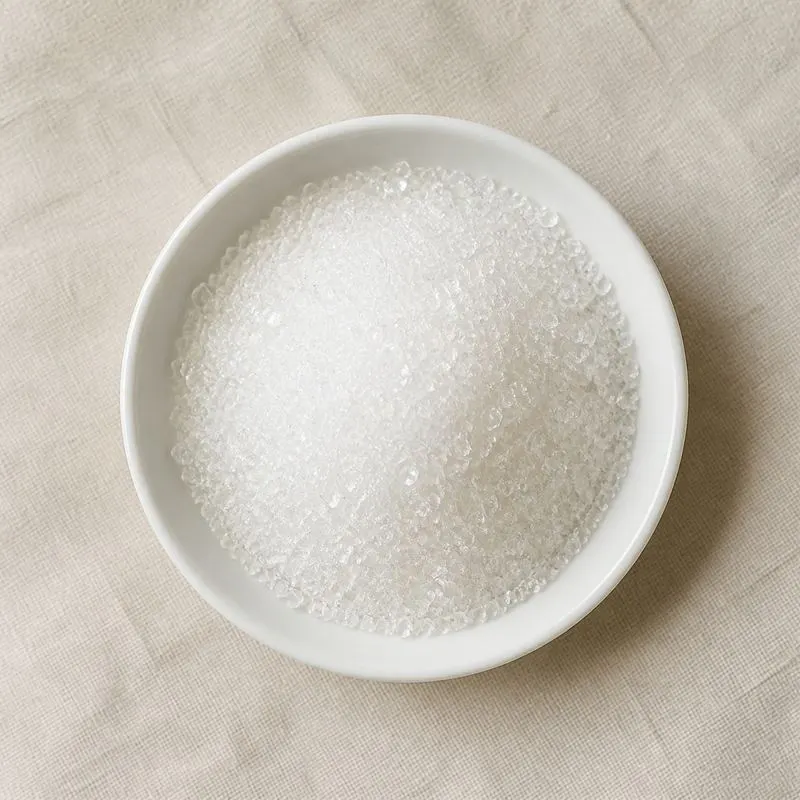
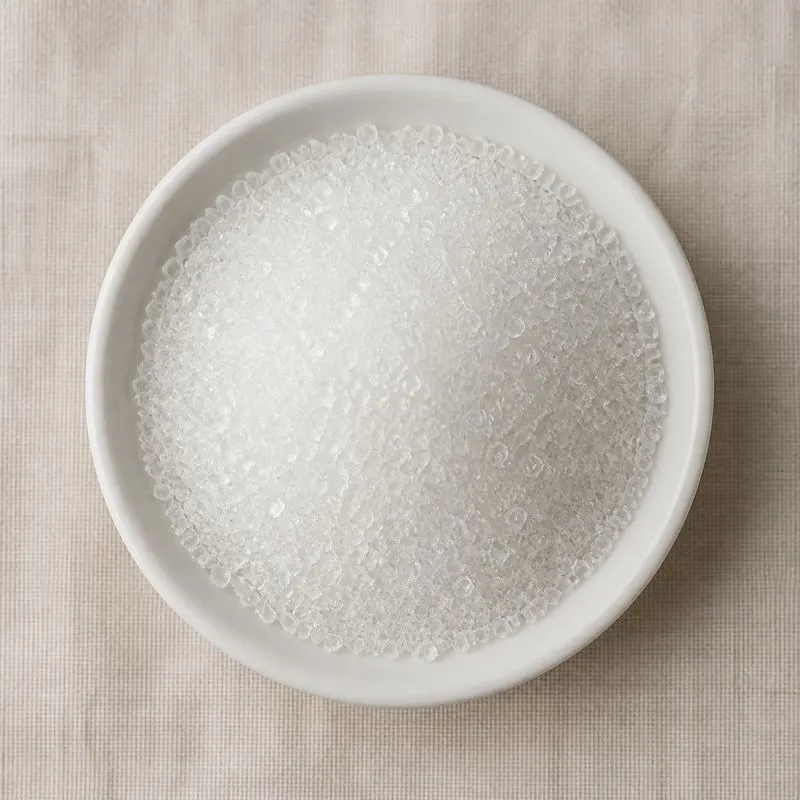
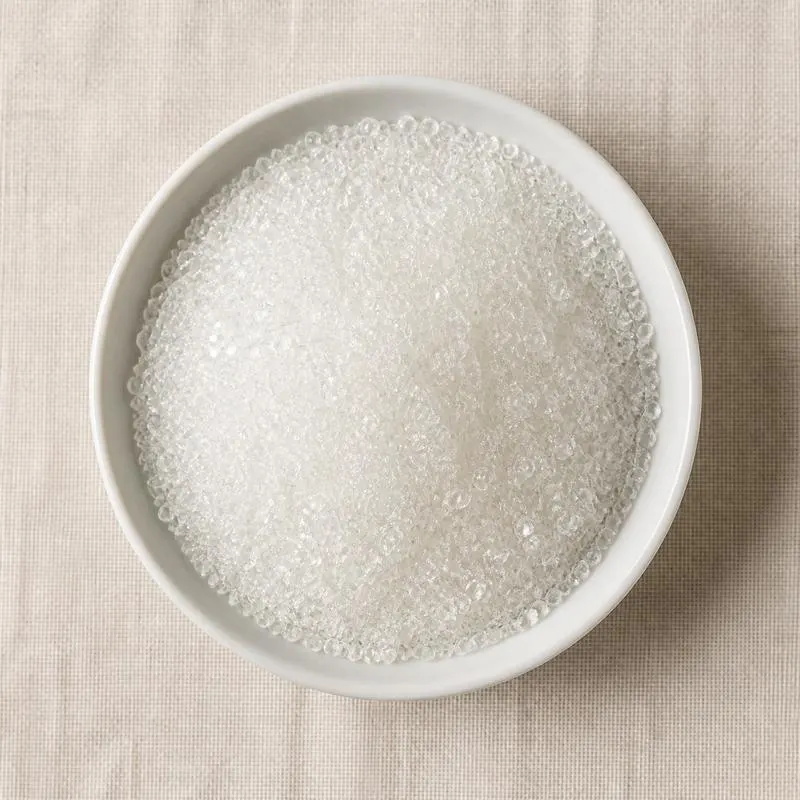
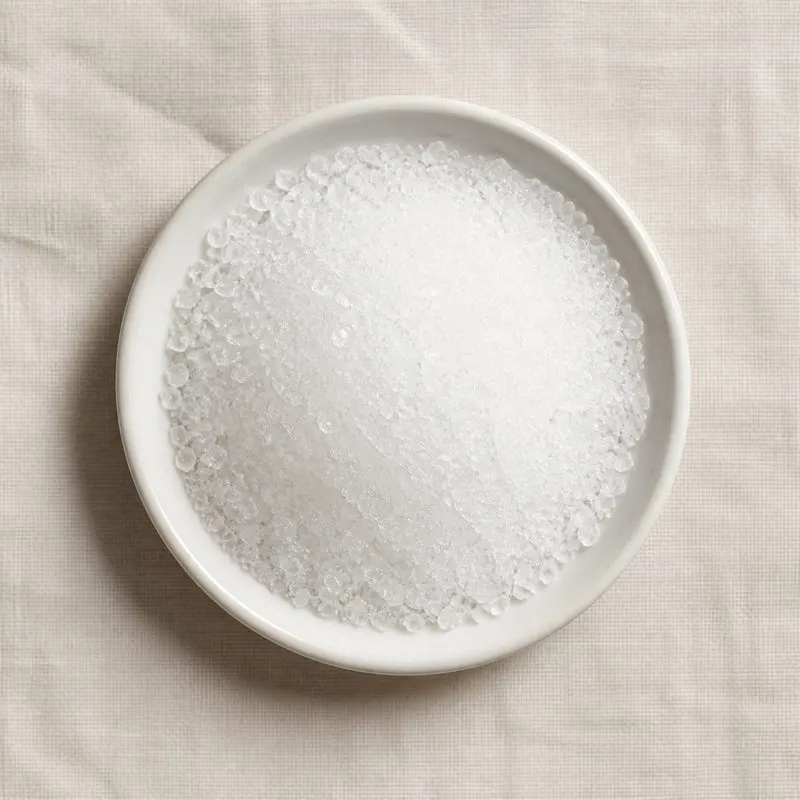
It is a hard white crystalline mass, lump or powder with a strong ammoniacal odour that is noticeable as soon as the container is opened. It is soluble in water, giving an alkaline solution around pH 8.5 to 9.5, and decomposes in warm water with visible gas evolution. The solid is unstable at ambient temperature and slowly sublimes, which is why it must be stored cool and tightly closed.
Its functional advantage is that it decomposes completely on heating into ammonia, carbon dioxide and water, leaving no salt residue. That gives a clean flavour, a pale crumb and no alkaline aftertaste, unlike sodium bicarbonate. The corresponding limitation is absolute: ammonia must be able to leave the product during baking, so the salt is confined to thin, low moisture goods and is unusable in cakes and breads, where trapped ammonia would be tasted.
We source bulk Ammonium Carbonate from top China manufacturers for our partners. The manufacturer is in Shandong. A smaller requirement can ship in a combined container with other ingredients.
Please send the grade you need, the volume and your destination port, and we will come back with a solution and a price.
or call +86-21-6858 0751
- Function
- Acidulant
Specifications
| Item | Specification |
|---|---|
| Appearance | White crystalline mass, lump or powder |
| Odour | Strongly ammoniacal |
| Assay as Ammonia | 30.0 to 34.0 percent NH3 |
| Identification | Positive for ammonium and for carbonate |
| pH, 5 percent solution | 8.5 to 9.5 |
| Non-volatile Residue | Not more than 0.05 percent |
| Water Insoluble Matter | Not more than 0.02 percent |
| Chloride | Not more than 0.003 percent |
| Sulphate | Not more than 0.005 percent |
| Iron | Not more than 5 mg per kg |
| Lead | Not more than 2 mg per kg |
| Arsenic | Not more than 3 mg per kg |
| Heavy Metals as Pb | Not more than 10 mg per kg |
Common Markets Grades
Food grade ammonium carbonate is essentially a single product, specified on ammonia content, typically 30 to 34 percent NH3, rather than on assay of a defined salt. It is traded as lump, as a coarse crushed grade and as a milled powder. Lump keeps longest because the low surface area slows sublimation, while powder disperses evenly into a dry mix but loses strength faster and must be used within a shorter shelf life.
Technical grade of similar ammonia content is sold into rubber, ceramics and fire extinguishing formulations with looser limits on chloride, sulphate and heavy metals. There is also a pharmaceutical grade to pharmacopoeia monographs used in expectorant preparations and smelling salts. No coated or encapsulated version is made, because the whole purpose of the salt is that it decomposes early and completely in the oven.
Applications
- Crackers, biscuits and thin cookies, as the leavening that gives a short, crisp, friable bite with no residual alkalinity
- Wafers and ice cream cones, where complete decomposition keeps the baked sheet pale and clean tasting
- Springerle, speculoos and other traditional European spiced biscuits, where it is the historic and expected raising agent
- Choux pastry, for the vigorous early gas release that sets the hollow interior
- Fried dough and churro type products, where rapid expansion in the first seconds of frying produces an open crumb
- Extruded and sheeted savoury snacks, to control expansion and texture
- Chinese and East Asian fried and baked pastries, as a traditional leavening giving a characteristic crisp structure
- Smelling salts and expectorant preparations, the pharmaceutical outlet
- Rubber compounding and ceramic body formulation, as a blowing and burnout agent outside food
China Manufacturers of Ammonium Carbonate
Top Ammonium Carbonate manufacturers in China.

Company names and logos are the property of the manufacturers themselves. They are listed here because our own directory records them as producing this ingredient. A listing is not an endorsement by them, and we do not represent them or speak on their behalf.
Regulatory Status
In the United States ammonium carbonate is affirmed as generally recognised as safe under 21 CFR 184.1137, with functions given as leavening agent and pH control agent, for use at levels consistent with good manufacturing practice. It also carries a United States Pharmacopeia monograph covering the pharmaceutical grade, and it must meet the Food Chemicals Codex monograph, which specifies the material on ammonia content and on the limits for non-volatile residue.
In the European Union Regulation (EC) No 1333/2008 authorises it as food additive E 503(i) and permits it quantum satis in the bakery categories where it is used, while Regulation (EU) No 231/2012 sets the identity and purity criteria. JECFA has evaluated the ammonium carbonates and concluded that no numerical limit is required, and the substance is listed in the Codex General Standard for Food Additives as a raising agent, acidity regulator and stabiliser.
Manufacturing Process
The classical route is a sublimation. A mixture of ammonium sulphate and calcium carbonate is heated in a retort, and the ammonium carbonate that forms sublimes and is condensed as a hard white cake in a cooled chamber, leaving calcium sulphate behind. The cake is broken out, crushed and screened. This process is still used but is energy intensive.
The dominant modern route reacts gaseous ammonia and carbon dioxide in the presence of a controlled quantity of water. The gases are fed to a reactor or absorption tower where they combine to give a mixture of ammonium carbamate and ammonium bicarbonate, and the water content and the ammonia to carbon dioxide ratio are what fix the final composition and therefore the ammonia assay. The product is condensed or crystallised, separated, and dried very gently, since even moderate warming drives off ammonia and downgrades the material. Because the salt sublimes at ambient temperature, the process ends with immediate packing into airtight, moisture proof containers, and the whole handling train from dryer to pack is kept cool and enclosed. Lots are assayed for ammonia at packing, and the declared figure is tied to a short retest interval.