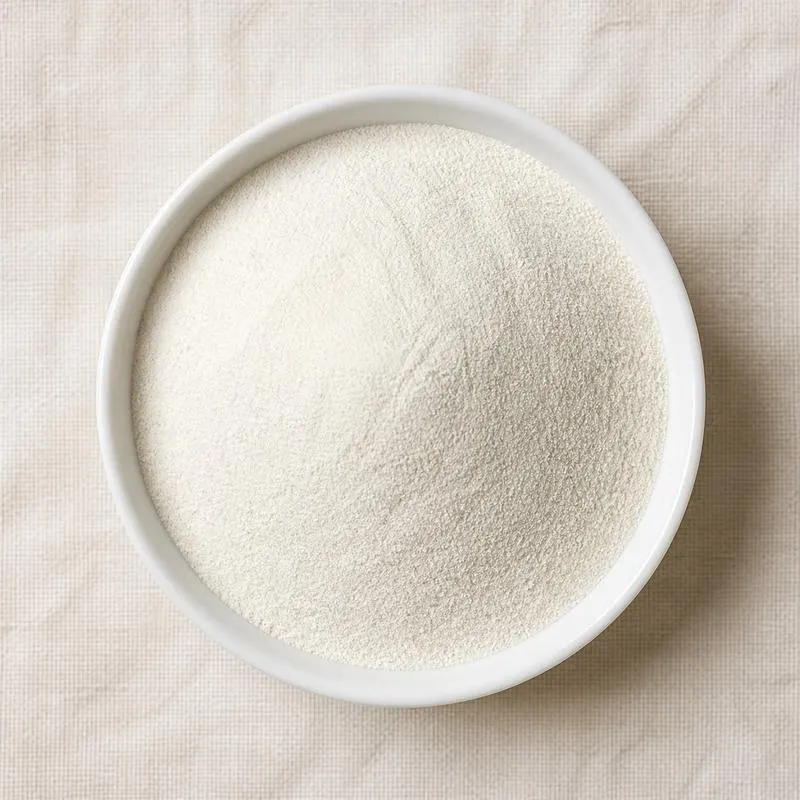
Beef Powder Seasoning
Beef powder seasoning is a compound seasoning of the bouillon type, formulated to be used in place of salt and stock rather than as a flavour concentrate. It differs from a beef flavour powder in both composition and dosage: a flavour is dosed at a fraction of a percent and supplies aroma alone, while a seasoning of this kind is dosed at around 1 percent in a soup or 1 to 2 percent on the weight of a stir fried dish and supplies salt, savoury taste, aroma and colour together.
A representative formulation is 40 to 55 percent salt, 10 to 20 percent monosodium glutamate with a small addition of disodium 5 ribonucleotides, sugar, a starch or maltodextrin bulking agent, beef extract or cooked beef powder, a fat fraction of beef tallow or hydrogenated vegetable oil, dried onion and garlic, spice, caramel colour and an anticaking agent.
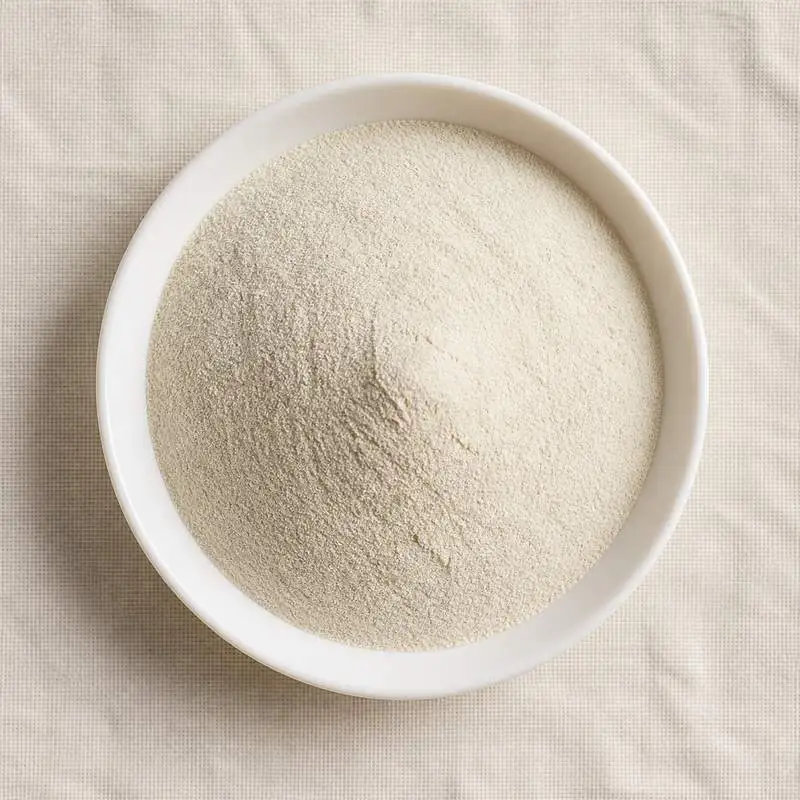
It is a free flowing tan to brown powder or a coarse granule. The salt, glutamate and sugar dissolve in hot water while the fat, starch and any meat solids disperse, giving the slightly turbid broth expected of a stock. Fat content and the hygroscopic salt fraction make caking the main storage problem, so the product is packed in a moisture barrier.
We source bulk Beef Powder Seasoning from top China manufacturers for our partners. The manufacturer is in Shandong. A smaller requirement can ship in a combined container with other ingredients.
Please send the grade you need, the volume and your destination port, and we will come back with a solution and a price.
or call +86-21-6858 0751
- Function
- Flavours and Aromas
Specifications
| Item | Specification |
|---|---|
| Appearance | Free flowing tan to brown powder or granule, free from lumps |
| Odour and flavour | Characteristic beef broth on reconstitution at 1 percent |
| Identification | Sensory comparison with retained standard |
| Moisture | Not more than 4.0 percent |
| Salt, as sodium chloride | 40.0 to 55.0 percent |
| Monosodium glutamate | To formula, within plus or minus 2.0 percent absolute |
| Fat content | 2.0 to 10.0 percent as declared |
| Particle size | 95 percent through 30 mesh |
| Lead | Not more than 1.0 mg per kg |
| Arsenic | Not more than 0.5 mg per kg |
| Total plate count | Not more than 10000 cfu per g |
| Yeast and mould | Not more than 100 cfu per g |
| Escherichia coli | Absent in 1 g |
| Salmonella | Absent in 25 g |
Common Markets Grades
The principal grades differ by savoury strength and by meat content. Higher glutamate and ribonucleotide levels allow a lower dosage and are used by industrial buyers; catering and retail grades are more heavily salt and starch extended. Grades containing genuine beef extract or cooked beef powder at a few percent give the fullest profile and require species declaration and, in many markets, import documentation. Grades built on yeast extract, vegetable protein hydrolysate and reaction flavour alone carry no meat, and are sold for vegetarian use and for markets where animal material is restricted.
Clean label versions replace the added glutamate and ribonucleotides with yeast extract and fermented flavourings, and reduced sodium versions substitute part of the sodium chloride with potassium chloride, usually with a bitterness masking component. Physical form runs from a fine powder for dry mixes to a granulated or agglomerated version that wets without lumping, and the same formulation is often compressed into cubes. Halal and kosher lines are produced and certified separately.
Applications
- Household and catering cooking, as an all purpose seasoning replacing salt and stock in stir fries, soups and braises
- Beef noodle soup and broth preparation in restaurant kitchens
- Compressed bouillon cubes and jelly stock pots, where the same blend is bound with fat and pressed
- Dry soup, gravy and sauce mixes sold to retail
- Marinades and brines for meat, where it supplies salt and savoury character in one addition
- Fillings for dumplings, buns and pies
- Prepared and frozen ready meals, where it standardises seasoning across batches
- Snack and extruded product seasonings, blended with additional carrier and spice
- Instant rice, congee and noodle cup formats
- Institutional and military ration packs requiring a shelf stable seasoning
China Manufacturers of Beef Powder Seasoning
Top Beef Powder Seasoning manufacturers in China.
Company names and logos are the property of the manufacturers themselves. They are listed here because our own directory records them as producing this ingredient. A listing is not an endorsement by them, and we do not represent them or speak on their behalf.
Regulatory Status
In the United States the blend is a food rather than an additive, and its position follows that of its components. Monosodium glutamate is generally recognised as safe under 21 CFR 182.1 and must be declared by its specific name; disodium inosinate and disodium guanylate serve as permitted flavour enhancers; spices and natural seasonings fall under 21 CFR 182.10 and their oleoresins under 21 CFR 182.20; caramel colour is a colour additive exempt from certification; and silicon dioxide and the other anticaking agents are used within the limits of their own regulations. Where the seasoning contains beef derived material, the product may fall under USDA Food Safety and Inspection Service jurisdiction for labelling. Manufacture is subject to the preventive controls rules of the Food Safety Modernization Act.
In the European Union every additive in the blend, including glutamate, the ribonucleotides, caramel colour and the anticaking agent, must be authorised for the food category under Regulation (EC) No 1333/2008 and declared with its E number, while Regulation (EC) No 1334/2008 governs flavourings. Beef derived ingredients bring the product within Regulation (EC) No 853/2004 and the associated import controls, and quantitative ingredient declaration applies where beef is named or depicted on the pack. Soya, wheat, milk, celery and mustard derived components must be declared under Regulation (EU) No 1169/2011. Codex Alimentarius covers the flavour enhancers and colours in the General Standard for Food Additives.
Manufacturing Process
Production is a dry blending operation built around materials bought in as finished ingredients. Salt is dried and screened to a consistent particle size so it does not segregate from the finer components. Beef extract, which is produced separately by simmering beef in water and concentrating the broth under vacuum, arrives as a paste and is either plated onto part of the starch carrier in a ribbon blender or bought already spray dried. Fat is either dosed as a powdered fat on a carrier or sprayed molten onto the dry blend.
Salt, glutamate, ribonucleotides, sugar, carrier, meat and vegetable powders, spice, colour and anticaking agent are weighed to formula, with the minor components at inclusions below one percent premixed into a portion of the carrier so they distribute evenly. The batch is combined in a ribbon or plough shear blender, and where a granulated product is wanted it is then passed through a fluid bed granulator with a fine water or fat spray and dried back. The blend is sieved to break agglomerates, passed over a magnet and through a metal detector, and packed into moisture barrier film, lined drums or cube presses. Release testing covers moisture, sodium chloride, particle size, bulk density, a sensory comparison against a retained standard and the microbiological limits.