Bisdemethoxycurcumin
Bisdemethoxycurcumin is a diarylheptanoid pigment with the molecular formula C19H16O4 and a molar mass of 308.33, one of the three curcuminoids that together make up the yellow colouring fraction of turmeric, the rhizome of Curcuma longa. It differs from curcumin by the absence of both methoxy groups on the aromatic rings, and from demethoxycurcumin by the absence of one, which shifts its absorbance slightly and changes its stability behaviour.
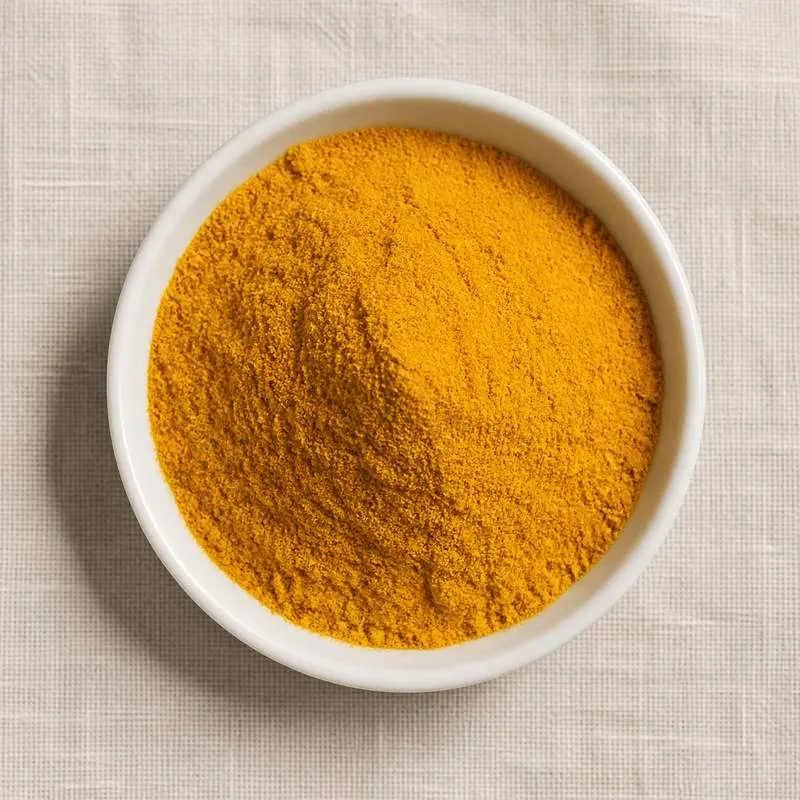
In a typical turmeric oleoresin it is the minority component, present at roughly five to ten percent of the total curcuminoids, so it has to be separated chromatographically rather than simply crystallised out. The isolated compound is an orange yellow crystalline powder, essentially insoluble in water, soluble in ethanol, acetone and dimethyl sulphoxide, and soluble in dilute alkali where it forms a red brown solution.
Like the other curcuminoids it exists in a keto enol equilibrium, is markedly more stable in acid than in neutral or alkaline conditions, and degrades on prolonged exposure to light. Compared with curcumin it shows somewhat better resistance to alkaline degradation, which is one reason the individual curcuminoid is separated at all rather than being used within the mixed extract.
We source bulk Bisdemethoxycurcumin from top China manufacturers for our partners. The manufacturer is in Zhejiang. A smaller requirement can ship in a combined container with other ingredients.
Please send the grade you need, the volume and your destination port, and we will come back with a solution and a price.
or call +86-21-6858 0751
- Function
- Plant extract
Specifications
| Item | Specification |
|---|---|
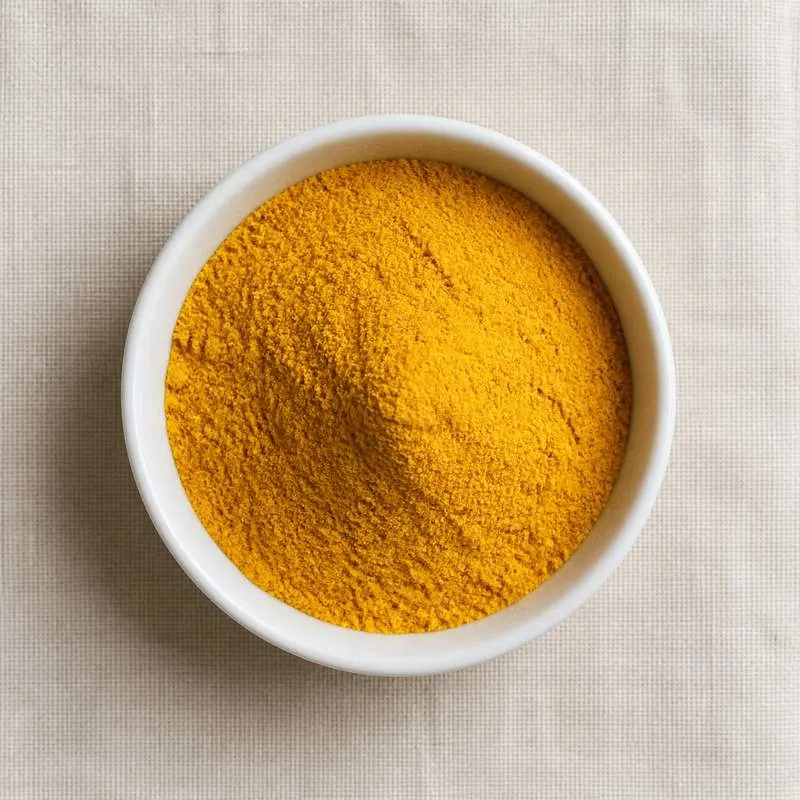
| Appearance | Orange yellow crystalline powder |
| Chemical Name | 1,7-Bis(4-hydroxyphenyl)hepta-1,6-diene-3,5-dione |
| Identification | HPLC retention and UV maximum near 419 nm match reference |
| Assay | ≥ 98.0% (HPLC) |
| Curcumin | ≤ 1.0% |
| Demethoxycurcumin | ≤ 1.0% |
| Melting Range | 222 °C to 227 °C |
| Loss on Drying | ≤ 1.0% |
| Residue on Ignition | ≤ 0.5% |
| Residual Ethanol | ≤ 0.5% |
| Residual Ethyl Acetate | ≤ 0.5% |
| Lead | ≤ 2.0 mg/kg |
| Arsenic | ≤ 1.0 mg/kg |
| Total Plate Count | ≤ 1,000 cfu/g |
| Yeast and Mould | ≤ 100 cfu/g |
| Escherichia coli | Negative in 1 g |
| Salmonella | Negative in 25 g |
Common Markets Grades
The compound is traded on purity by HPLC. The standard commercial grades are 95 and 98 percent, produced by chromatographic separation from a curcuminoid concentrate, with 99 percent and above sold in small quantities as an analytical reference standard. Below that sit curcuminoid mixtures in which bisdemethoxycurcumin is one declared component alongside curcumin and demethoxycurcumin, with the three reported as a ratio rather than as separate assays.
Beyond assay, lots divide on particle size, with standard 80 mesh powder, micronised material for dispersion and a granulated form for tabletting. Water dispersible presentations are traded as separate items, including cyclodextrin inclusion complexes, solid dispersions on a polymer carrier and phospholipid complexes, all of which carry a much lower nominal assay because the carrier is the greater part of the mass. Residual solvent documentation is central to the specification, since the separation route uses organic solvents throughout.
Applications
- Capsule and tablet supplements, dosed as a defined single curcuminoid rather than as a mixed turmeric extract
- Water dispersible beverage premixes, where the compound is delivered as a cyclodextrin or phospholipid complex
- Joint comfort and inflammation targeted formulations, blended with boswellia extract or omega 3 sources
- Sports nutrition and recovery products, where the single curcuminoid is the differentiating claim
- Functional foods such as bars and chews, added after the heat step to limit thermal loss
- Skin care serums and creams, formulated at acidic pH and protected from light to hold colour and assay
- Analytical reference material for quantifying individual curcuminoids in turmeric raw material
- Research and formulation development work, where the isolated compound is compared against curcumin
- Pet supplements, included in joint support products alongside glucosamine sources
Brands Using Bisdemethoxycurcumin
Widely-distributed consumer products that list Bisdemethoxycurcumin on the ingredient label.
Brand names, product names and logos are the property of their owners. They appear here as published evidence that the ingredient is used, taken from the brand's own label or website. Their appearance is not an endorsement, and it does not mean the brand buys from us or from any manufacturer listed on this site.
China Manufacturers of Bisdemethoxycurcumin
Top Bisdemethoxycurcumin manufacturers in China.

Company names and logos are the property of the manufacturers themselves. They are listed here because our own directory records them as producing this ingredient. A listing is not an endorsement by them, and we do not represent them or speak on their behalf.
Regulatory Status
In the United States, 21 CFR 73.600 and 73.615 approve turmeric and turmeric oleoresin as colour additives exempt from certification, and turmeric also counts as a spice and a flavouring. Curcuminoid preparations are marketed as dietary ingredients under the Dietary Supplement Health and Education Act, with finished products made under 21 CFR Part 111. An isolated single curcuminoid at high purity is a different product from turmeric oleoresin, so it does not automatically inherit the colour additive listing, and suppliers position it as a dietary ingredient rather than as a colour.
In the European Union curcumin is authorised as a food colour under E 100, and the specification for E 100 is written around curcumin obtained from turmeric rhizome, with the accompanying curcuminoids present as part of the colouring matter. An isolated bisdemethoxycurcumin preparation is not the same product as the authorised additive and is used as a food supplement ingredient rather than as a colour, which brings preparations without a history of consumption in the Union within the scope of the novel food regulation. Codex covers curcumin as a food colour in its general standard for food additives and JECFA has issued a specification for curcumin, but not a separate one for the isolated bisdemethoxy analogue.
Manufacturing Process
Production starts from turmeric oleoresin, itself obtained by extracting dried milled Curcuma longa rhizome with a solvent such as ethanol, ethyl acetate or acetone and stripping the solvent. The oleoresin is de oiled to remove the turmerone rich volatile fraction, and the remaining curcuminoid concentrate is crystallised from an alcohol solvent to give a mixed curcuminoid solid, conventionally around ninety five percent total curcuminoids in which curcumin is the largest component.
Separating the individual curcuminoids requires chromatography, since the three co crystallise. The mixed solid is dissolved and loaded onto a preparative column, most often silica or a reversed phase medium, and eluted with a solvent gradient that resolves curcumin, demethoxycurcumin and bisdemethoxycurcumin in turn. The fraction containing the target compound is collected, concentrated under vacuum with solvent recovery, and crystallised, then recrystallised where the higher grades are required. The crystals are washed, dried under vacuum at moderate temperature away from light, milled, sieved, checked for residual solvents and packed in aluminium foil laminate bags inside light protective fibre drums.