Turmeric Oleoresin
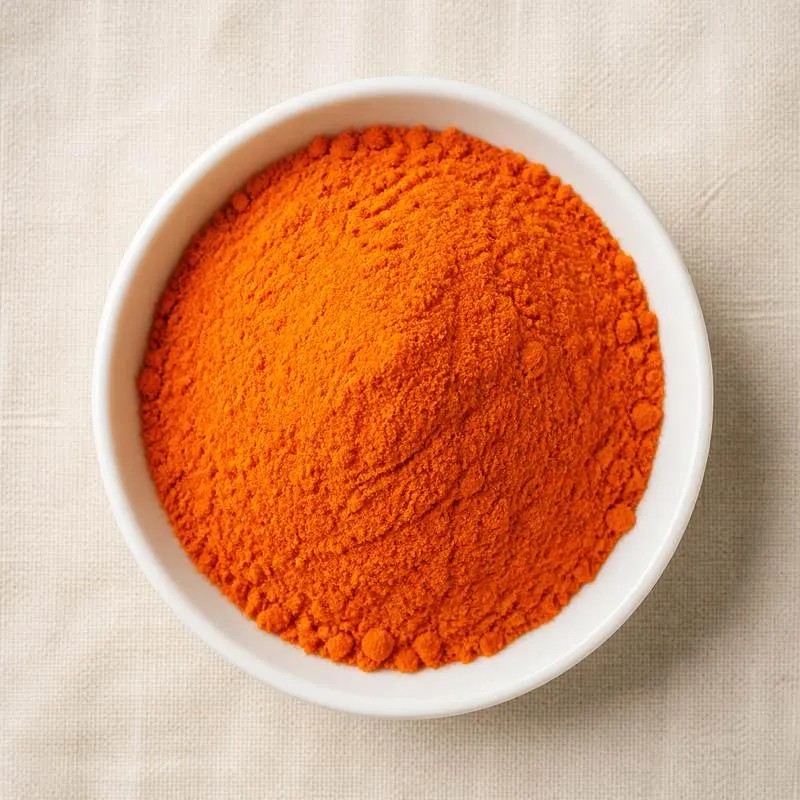
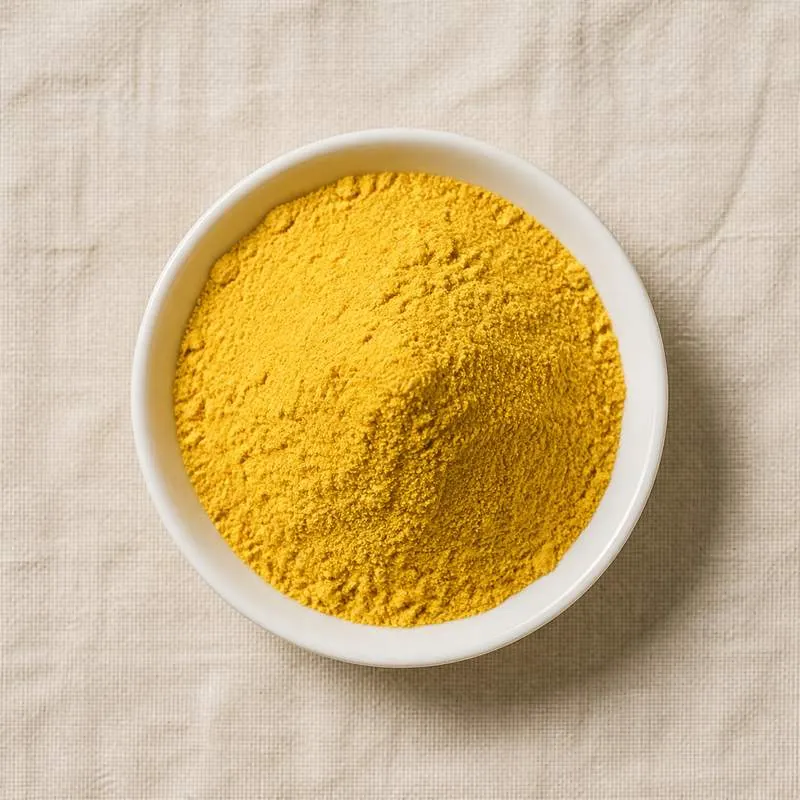
Turmeric oleoresin is the concentrated extract of the dried rhizome of Curcuma longa L., containing the yellow curcuminoid pigments together with the volatile oil and resin of the spice. The colouring principles are curcumin, demethoxycurcumin and bisdemethoxycurcumin, which give a bright lemon to orange-yellow. In the European Union the purified pigment is listed as curcumin, E100, while oleoresin turmeric is also used as a spice extract for flavour.
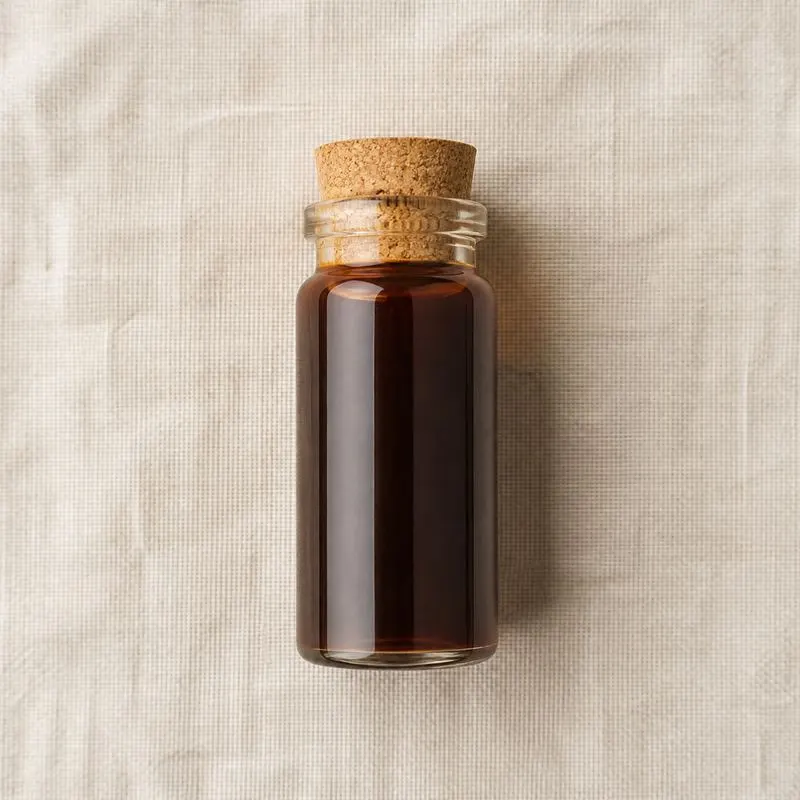
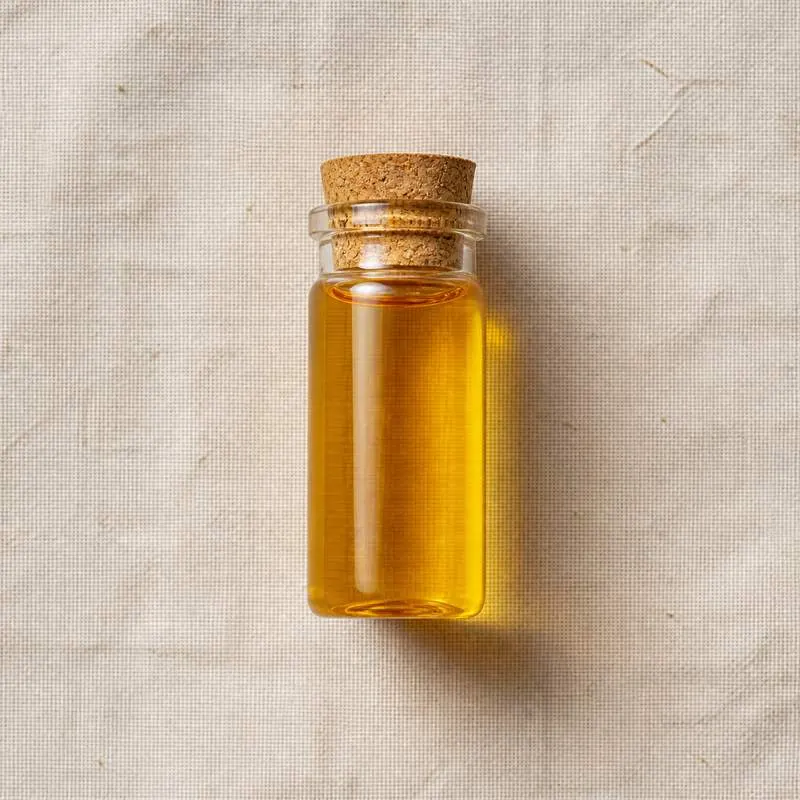
The oleoresin is a viscous orange-red to deep orange liquid or semi-solid that separates on standing and is redispersed by warming and stirring before use. It is soluble in edible oils, in ethanol and in propylene glycol, and is practically insoluble in water, so aqueous applications call for a polysorbate-emulsified liquid, a water-dispersible powder or an alkali-solubilised form. Strength is stated as total curcuminoid content, commonly 25 to 95 per cent depending on how far the material has been purified.
Colour is bright and clean at acid to neutral pH and shifts to a redder, duller tone above about pH 8, where curcumin also degrades more quickly. The pigment is highly sensitive to light and moderately sensitive to sulphur dioxide and to certain metal ions, which is why encapsulated and light-protected forms account for a large share of dry applications.
We source bulk Turmeric Oleoresin from top China manufacturers for our partners. The manufacturer is in Hebei. A smaller requirement can ship in a combined container with other ingredients.
Please send the grade you need, the volume and your destination port, and we will come back with a solution and a price.
or call +86-21-6858 0751
- Function
- Colorant
Specifications
| Item | Specification |
|---|---|
| Appearance | Orange-red to deep orange viscous liquid or semi-solid |
| Total Curcuminoids | 25.0 to 40.0 per cent (oleoresin grade) |
| Identification | Absorption maximum at 420 to 430 nm in ethanol |
| Volatile Oil | 10 to 25 per cent by volume |
| Solubility | Soluble in ethanol and edible oil, insoluble in water |
| Moisture | Not more than 2.0 per cent |
| Ash | Not more than 1.0 per cent |
| Residual Solvent | Not more than 50 mg/kg total |
| Refractive Index at 20 degrees Celsius | 1.510 to 1.560 |
| Lead | Not more than 2 mg/kg |
| Arsenic | Not more than 3 mg/kg |
| Total Plate Count | Not more than 1000 cfu/g |
| Yeast and Mould | Not more than 100 cfu/g |
| Salmonella | Absent in 25 g |
Common Markets Grades
Oleoresin turmeric as extracted runs 25 to 40 per cent total curcuminoids and retains the turmeric volatile oil, so it carries flavour as well as colour and is used where both are wanted. Decolourised turmeric oleoresin, the fraction left after crystallising out the curcumin, is sold as a flavour material with little colour. Purified curcumin, crystallised and recrystallised to 95 per cent or higher total curcuminoids, is the colour-only article and is what most colour specifications call for.
Delivery forms follow the application. Oil-soluble grades are standardised in vegetable oil or polysorbate. Water-dispersible liquid grades are emulsified with polysorbate 80 and are used in beverages and brines. Powder grades at 5 to 20 per cent curcuminoids are spray dried on maltodextrin, modified starch or gum arabic, and encapsulated grades with a heavier wall are produced where light and oxidative fading during dry storage set shelf life.
Applications
- Mustard, pickles and relishes, the classic application, where turmeric supplies the expected yellow
- Curry powders, spice blends and seasoning pastes, contributing both colour and the characteristic turmeric note
- Butter, margarine and dairy spreads in oil-soluble form
- Cheese, processed cheese and analogue cheese in yellow shades, often blended with annatto or paprika
- Bakery goods, cake mixes and icings needing an egg-yellow tone
- Snack seasonings and extruded snack coatings, using the powder grade
- Soups, sauces, ready meals and instant noodle seasoning
- Beverages and flavoured waters, using the polysorbate-emulsified grade
- Confectionery and ice cream in lemon and mango shades
- Dietary supplements, where curcuminoid content is the functional claim rather than the colour
China Manufacturers of Turmeric Oleoresin
Top Turmeric Oleoresin manufacturers in China.
Company names and logos are the property of the manufacturers themselves. They are listed here because our own directory records them as producing this ingredient. A listing is not an endorsement by them, and we do not represent them or speak on their behalf.
Regulatory Status
In the European Union, curcumin is authorised as the food colour E100 under the Union list of food additives, with purity criteria including limits on residual extraction solvents set out in the specifications regulation. Oleoresin turmeric used for flavour rather than colour falls instead under the flavourings framework as a spice extract, and the intended function determines which set of rules applies.
In the United States, 21 CFR Part 73 lists turmeric and turmeric oleoresin as colour additives exempt from certification, and the FDA separately affirms turmeric as a spice and natural seasoning. Curcumin used in dietary supplements is handled as a dietary ingredient rather than as a colour. JECFA has evaluated curcumin and published specifications for it, and Codex includes curcumin among the permitted colours in the General Standard for Food Additives.
Manufacturing Process
Dried turmeric rhizomes are cleaned, milled to a coarse powder and extracted with a food-approved solvent, most often ethanol, ethyl acetate, acetone or hexane, in a countercurrent battery or percolation extractor. Supercritical carbon dioxide is used where a solvent-free product is specified, though it recovers the volatile oil more efficiently than it does the curcuminoids and is often paired with a co-solvent. The miscella is filtered and the solvent removed under vacuum in a falling-film evaporator followed by a thin-film or wiped-film finisher, leaving a residual solvent level within the limits of the relevant specification.
The crude oleoresin is then either standardised with vegetable oil and packed, or taken on to purified curcumin. For the purified route the oleoresin is dissolved in a hot solvent and crystallised on cooling, the curcuminoid crystals are separated on a filter or centrifuge, washed and recrystallised, and the mother liquor is recovered as decolourised turmeric oleoresin. Crystals are vacuum dried, milled to the required particle size and blended to a target assay, and dispersible forms are made downstream by emulsification or by spray drying with a carrier.