Black Cumin Seed Oil
Black cumin seed oil is the fixed oil expressed from the seed of Nigella sativa, an annual of the Ranunculaceae family grown across the Middle East, North Africa, India and parts of eastern Europe. Despite the common name the plant is unrelated to true cumin, and the seed is also traded as black seed, kalonji and habbatus sauda.
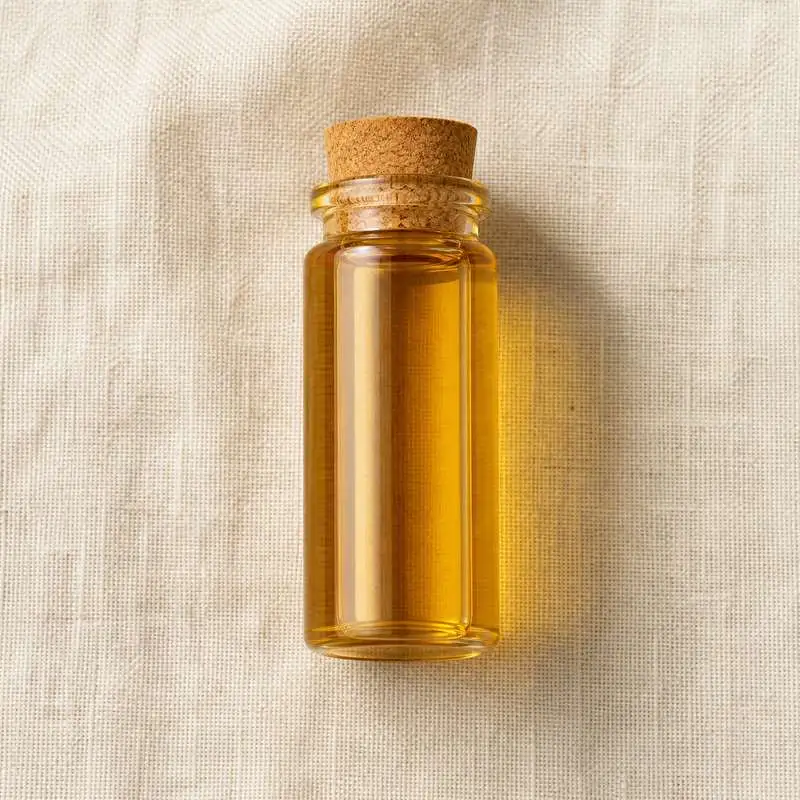
The oil is a dark amber to brownish yellow liquid with a pungent, peppery, faintly bitter aroma. Its fatty acid profile is dominated by linoleic acid at around fifty to sixty percent and oleic acid at twenty to twenty five percent, with palmitic acid making up most of the saturated fraction. What distinguishes it from other seed oils is the volatile fraction it carries, containing thymoquinone, para cymene, alpha thujene and carvacrol, of which thymoquinone is the marker compound the trade quotes.
Thymoquinone decides how the oil is handled. It is light sensitive and volatile, degrading on exposure to ultraviolet light and lost during high temperature deodorisation, so the commercial oil is almost always cold pressed rather than refined and is packed in amber glass or opaque containers under nitrogen. The high linoleic content also makes the oil prone to oxidation, which limits shelf life and calls for cool storage.
We source bulk Black Cumin Seed Oil from top China manufacturers for our partners. The manufacturer is in Guangdong. A smaller requirement can ship in a combined container with other ingredients.
Please send the grade you need, the volume and your destination port, and we will come back with a solution and a price.
or call +86-21-6858 0751
- Function
- Plant extract
Specifications
| Item | Specification |
|---|---|
| Appearance | Clear dark amber to brownish yellow oil |
| Odour and Taste | Characteristic pungent, peppery, slightly bitter |
| Botanical Source | Nigella sativa seed, cold pressed |
| Thymoquinone | ≥ 0.5% (HPLC or GC) |
| Linoleic Acid (C18:2) | 50% to 60% |
| Oleic Acid (C18:1) | 18% to 26% |
| Acid Value | ≤ 4.0 mg KOH/g |
| Peroxide Value | ≤ 10.0 meq/kg |
| Refractive Index (20 °C) | 1.470 to 1.480 |
| Saponification Value | 185 to 200 mg KOH/g |
| Iodine Value | 115 to 135 g I₂/100 g |
| Unsaponifiable Matter | ≤ 2.0% |
| Moisture and Volatiles | ≤ 0.2% |
| Lead | ≤ 0.1 mg/kg |
| Arsenic | ≤ 0.1 mg/kg |
| Aflatoxin B1 | ≤ 2 μg/kg |
Common Markets Grades
Cold pressed unrefined oil is the reference grade and the great majority of the trade, specified on thymoquinone content as well as on the usual oil parameters. Common declarations run from 0.5 percent thymoquinone for standard pressed oil up to 3 percent and above for enriched material produced by blending in a concentrated volatile fraction or by supercritical carbon dioxide extraction. Refined oil exists but is a minor item, since deodorisation strips both the aroma and the marker compound.
Beyond thymoquinone the trade separates grades by seed origin, with Egyptian, Ethiopian, Indian and Turkish seed each giving a recognisable profile, and by whether the oil is filtered or left unfiltered with its natural sediment. Softgel fill grade is a distinct specification with tighter peroxide and moisture limits, since the oil has to survive gelatin encapsulation. Organic certified oil is widely available, and cosmetic grade is sold against the same analytical figures with a different documentation package.
Applications
- Encapsulated supplements in softgel form, the largest outlet, sold on the declared thymoquinone figure
- Liquid supplement oils taken directly by spoon, where the peppery flavour is part of the product identity
- Honey and syrup blends, in which the oil is emulsified into honey to soften its bitterness
- Culinary finishing oil in Middle Eastern and South Asian cooking, drizzled rather than heated
- Bread and flatbread toppings, used alongside whole black seed for aroma
- Skin care serums and balms, particularly in products aimed at problem skin
- Hair and scalp oils, a long established traditional application
- Massage and body oil blends, where it is diluted into a lighter carrier oil
- Pet supplements, dosed into coat and skin support products
Brands Using Black Cumin Seed Oil
Widely-distributed consumer products that list Black Cumin Seed Oil on the ingredient label.
- Amazing HerbsPremium Black Seed Oil Softgels 500 mg ↗Two softgel serving supplies 1,000 mg of black cumin seed oil pressed from Nigella sativa seeds as the only active ingredient.Label verified 2026-08-31
- HimalayaBlack Seed Oil Softgels ↗Each softgel carries 1,000 mg of cold-pressed, unrefined organic black cumin seed oil from Nigella sativa, retaining its thymoquinone.Label verified 2026-08-31
Brand names, product names and logos are the property of their owners. They appear here as published evidence that the ingredient is used, taken from the brand's own label or website. Their appearance is not an endorsement, and it does not mean the brand buys from us or from any manufacturer listed on this site.
China Manufacturers of Black Cumin Seed Oil
Top Black Cumin Seed Oil manufacturers in China.

Company names and logos are the property of the manufacturers themselves. They are listed here because our own directory records them as producing this ingredient. A listing is not an endorsement by them, and we do not represent them or speak on their behalf.
Regulatory Status
In the United States, black cumin seed and its cold pressed oil are foods used under the general provisions of the Federal Food, Drug and Cosmetic Act, and the oil is also marketed as a dietary ingredient with finished products made under 21 CFR Part 111. Nigella sativa is recognised as a spice and natural flavouring, and Nigella preparations appear among the flavouring materials listed by the Flavour and Extract Manufacturers Association. The Food and Drug Administration has acted against black seed oil products carrying disease claims, so claim control is the practical regulatory constraint on the category.
In the European Union black cumin seed has a history of consumption as a spice and is treated as a food, and cold pressed oil produced by conventional pressing is marketed as a food ingredient rather than as a food additive, so no E number applies. Preparations concentrated in thymoquinone to a degree not achieved by traditional pressing, or produced by supercritical extraction to an atypical composition, fall within the scope of the novel food regulation and require assessment. Health claims for the species are unauthorised. Codex has no commodity standard specific to black cumin seed oil, and it is traded against the general quality parameters set out in the Codex standard for named vegetable oils not covered by individual standards. JECFA has issued no additive specification for it.
Manufacturing Process
Cleaned seed is destoned, aspirated to remove hulls and field debris, and conditioned to a moisture level suited to pressing. Cold pressing is done on a slow running screw press with the barrel temperature held down so the volatile fraction is not driven off and thymoquinone is not degraded. That limits the yield to well below the seed's total oil content, but preserves the character on which the product is sold. The press cake retains a substantial oil fraction and is sold separately as a protein feed material or milled for cosmetic use.
The pressed oil is settled in tanks to drop the coarse solids, then either filtered on a plate or bag filter and filled directly as unrefined oil, or left unfiltered where a natural sediment is acceptable. Where a higher thymoquinone figure is required the seed or the press cake is extracted with supercritical carbon dioxide, which recovers the volatile fraction selectively at low temperature, and the concentrate is blended back into pressed oil to the target declaration. Finished oil is blanketed with nitrogen and filled into amber glass, opaque plastic or lined steel drums and held cool and dark.