Calcium Hydrogen Phosphate
Calcium hydrogen phosphate, CaHPO4, known in trade as dicalcium phosphate, is the dibasic calcium salt of orthophosphoric acid, sold as the anhydrous salt and as the dihydrate, and used as a mineral fortificant, a tablet excipient and a slow acting leavening acid.
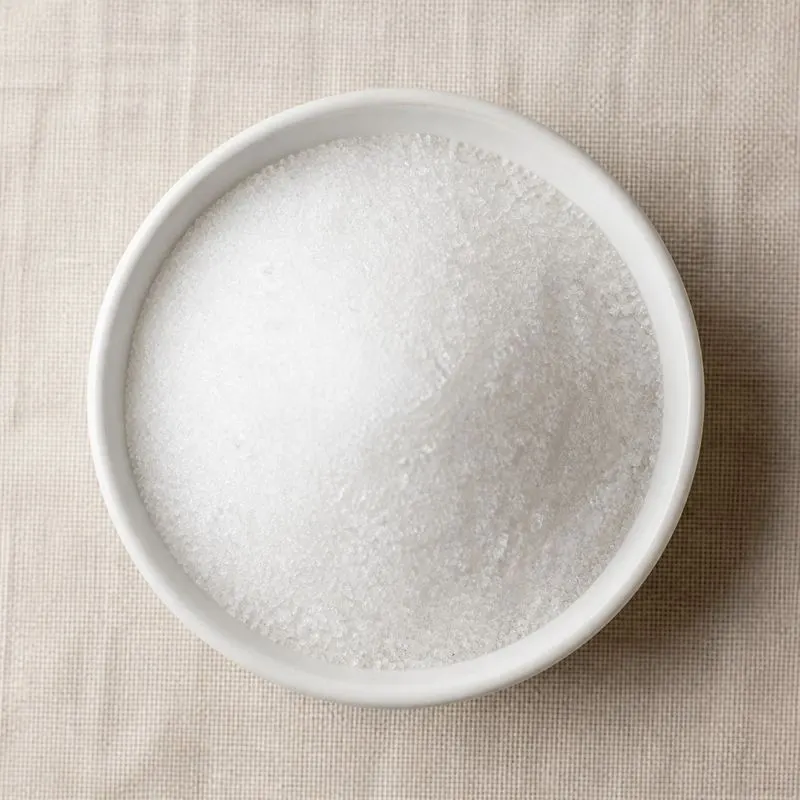
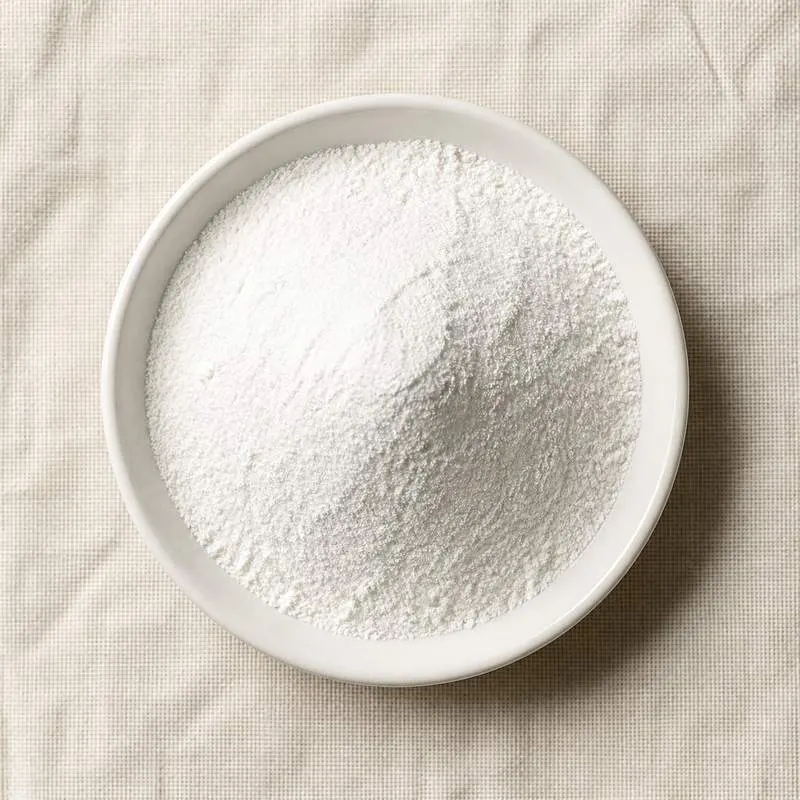
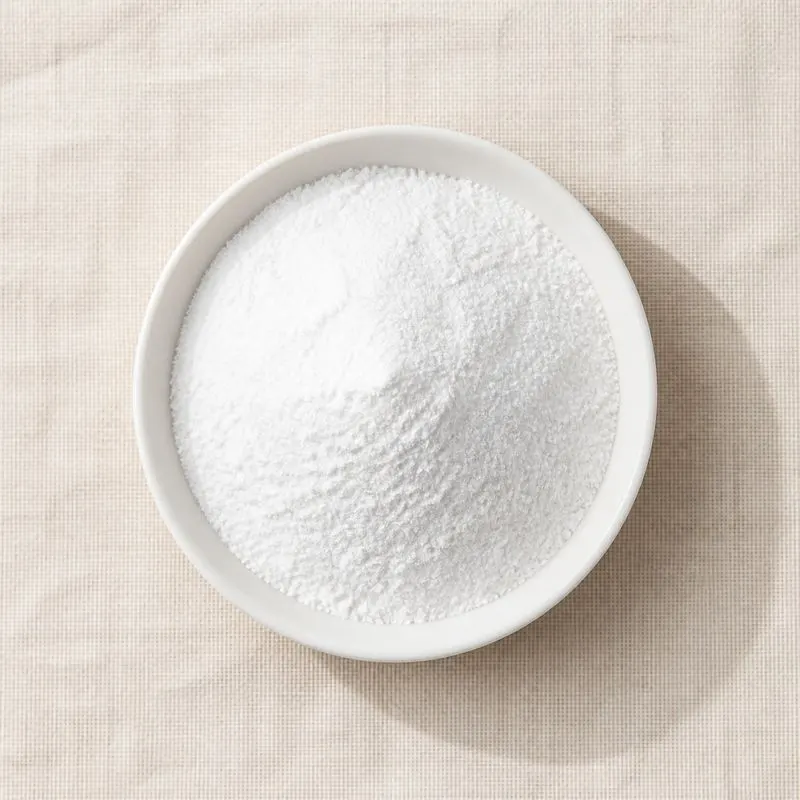
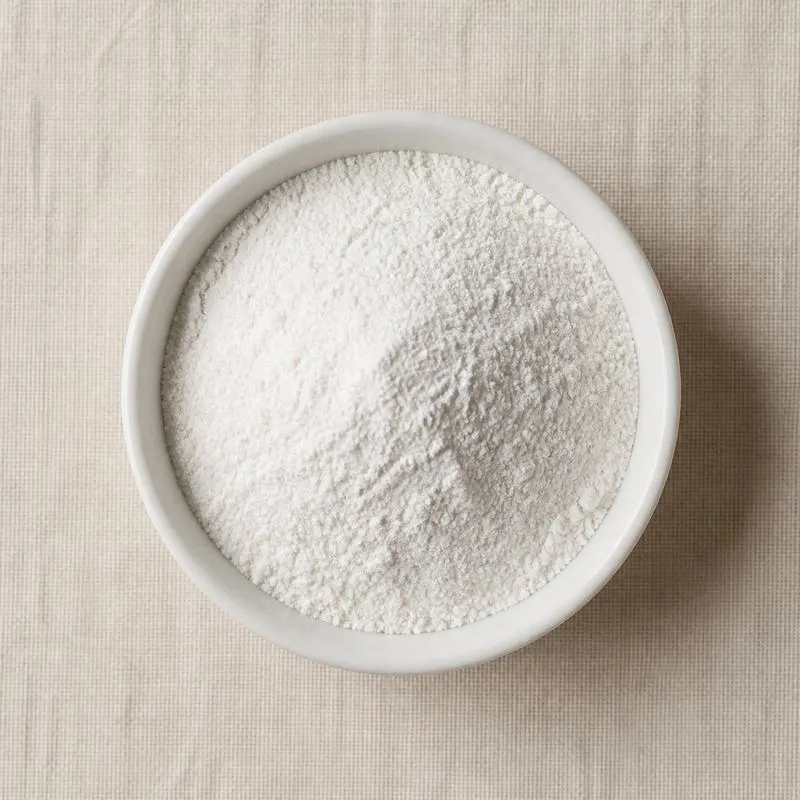
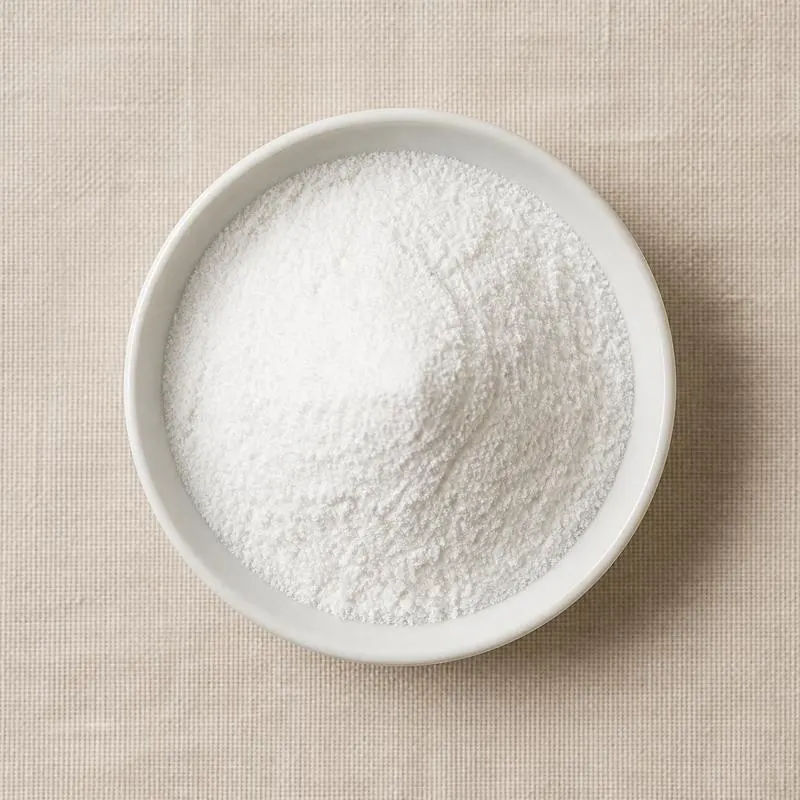
It is a white, odourless, tasteless crystalline powder, practically insoluble in water and in ethanol but readily soluble in dilute hydrochloric acid, which is what makes it available as a source of calcium and phosphorus in the stomach while contributing nothing to the taste or the water phase of the food it is added to. A slurry is close to neutral, at about pH seven, so unlike the monobasic salt it does not acidify a system into which it is dosed.
Its behaviour as a leavening acid is unusual and depends on its insolubility. At room temperature the anhydrous salt reacts hardly at all with sodium bicarbonate, but above about sixty degrees Celsius it becomes reactive and releases carbon dioxide, so it functions as a purely heat activated acid and is used to supply the last part of the lift during baking. The dihydrate loses its water of crystallisation on heating and converts to the anhydrous form and then to pyrophosphate, so drying temperatures are controlled closely in manufacture.
We source bulk Calcium Hydrogen Phosphate from top China manufacturers for our partners. The manufacturer is in Jiangsu. A smaller requirement can ship in a combined container with other ingredients.
Please send the grade you need, the volume and your destination port, and we will come back with a solution and a price.
or call +86-21-6858 0751
- Function
- Mineral salt
Specifications
| Item | Specification |
|---|---|
| Appearance | White odourless crystalline powder or granule |
| Identification | Positive for calcium and for orthophosphate |
| Assay as CaHPO4 | 98.0 to 103.0% on the ignited basis |
| Calcium content | Not less than 28.0% on the anhydrous basis |
| pH of 10% aqueous slurry | 6.5 to 7.5 |
| Loss on ignition at 800 degrees Celsius | Not more than 8.5% for the anhydrous grade |
| Acid insoluble matter | Not more than 0.2% |
| Chloride | Not more than 0.1% |
| Sulphate | Not more than 0.5% |
| Fluoride | Not more than 50 mg/kg |
| Heavy metals as lead | Not more than 10 mg/kg |
| Lead | Not more than 2.0 mg/kg |
| Arsenic | Not more than 3.0 mg/kg |
| Cadmium | Not more than 1.0 mg/kg |
Common Markets Grades
Anhydrous and dihydrate grades are separate products with different specifications, different bulk densities and different applications, and they are not interchangeable. The anhydrous salt is the leavening and fortification grade and is more stable in a mix, while the dihydrate is the direct compression and toothpaste grade. Within each, food grade is made to a food chemicals codex or equivalent monograph, pharmaceutical grade to a pharmacopoeial monograph with tighter limits and a defined particle shape, and feed grade to a much less demanding specification from unpurified acid and phosphate rock.
Particle engineering is the main commercial differentiator in food and pharmaceutical use. Milled powders are used for dry blending and for nutritional premixes, granulated and spray agglomerated grades for direct compression tabletting where flow and compressibility matter more than assay, and coarse free flowing grades for dust free handling. Coated versions are offered where reaction with bicarbonate has to be delayed further still.
Applications
- Calcium and phosphorus fortification of cereals, flours, plant based drinks and nutrition products
- Heat activated leavening in baking powders and prepared mixes, releasing gas only at oven temperature
- Direct compression tablets and capsules, as the standard mineral diluent and binder
- Toothpaste, as a mild polishing abrasive that is compatible with fluoride in the dihydrate form
- Chewing gum, as a texturising and buffering filler
- Bread and bakery improvers, as a dough conditioner and yeast nutrient
- Dairy analogues and plant based beverages, where calcium has to be added without altering flavour
- Food supplement tablets sold as calcium and phosphorus sources
- Animal feed and pet food, as a bulk mineral supplement in feed grade
China Manufacturers of Calcium Hydrogen Phosphate
Top Calcium Hydrogen Phosphate manufacturers in China.
Company names and logos are the property of the manufacturers themselves. They are listed here because our own directory records them as producing this ingredient. A listing is not an endorsement by them, and we do not represent them or speak on their behalf.
Regulatory Status
In the United States dicalcium phosphate is affirmed as generally recognised as safe for use as a nutrient supplement, dough conditioner, firming agent and leavening agent and appears among the direct food substances affirmed as generally recognised as safe in 21 CFR Part 184 under the name calcium phosphate, dibasic. It is a permitted source of calcium and phosphorus in fortified foods, and where it is used in a standardised food such as enriched flour the relevant standard of identity in 21 CFR Part 137 governs the nutrient level. Pharmacopoeial monographs cover its use as an excipient, and it is declared on a food label by name.
In the European Union, Regulation (EC) No 1333/2008 authorises it as a food additive within the calcium phosphates group under the E number E341, specifically E341(ii), and sets maximum levels by food category expressed as phosphorus pentoxide, with purity criteria in Regulation (EU) No 231/2012. Following the European Food Safety Authority's group reassessment of the phosphates, the permitted level in a food covers all added phosphate together. The annexes to Regulation (EC) No 1925/2006 and to the food supplements directive separately list it as an authorised source of calcium and of phosphorus for nutritional purposes. Codex includes the calcium phosphates in its general standard for food additives, and the Joint FAO WHO Expert Committee on Food Additives has published specifications for the salt and evaluated the phosphates as a group.
Manufacturing Process
Food and pharmaceutical grade dicalcium phosphate is precipitated from solution. Purified phosphoric acid is reacted with a calcium source, either milk of lime, calcium carbonate slurry or a calcium chloride solution, in a stirred reactor at a calcium to phosphorus ratio of one to one. Because the product is nearly insoluble it precipitates as it forms, and the crystal habit, hydration state and particle size are set by the temperature, the rate of addition, the degree of supersaturation and the seed crystals present, all of which are controlled tightly since they determine how the finished powder flows and compresses.
The slurry is aged to complete crystal growth, then separated on a filter or centrifuge and washed to remove soluble impurities. Drying is the critical step: the dihydrate is dried gently, usually in a flash or fluid bed dryer at a controlled inlet temperature, to preserve its water of crystallisation, whereas the anhydrous grade is produced by drying harder or by calcining the dihydrate. The dried solid is milled and classified to the target size distribution, or granulated and spray agglomerated where a directly compressible grade is required, and is then screened, checked for assay, loss on ignition, fluoride and heavy metals, and packed into lined paper sacks or fibre drums.